Anhui Feichun Special Cable Co.,Ltd Email: Li.wang@feichuncables.com
Why H07VVH6‑F FLEXIFESTOON® PV‑FLAT Cables Outperform Round Cables in Harsh South African Conditions: Engineering Principles, UV Resistance & Festoon Applications
Designed specifically for dynamic festoon systems, the H07VVH6‑F FLEXIFESTOON® PV‑FLAT cable outperforms standard round cables in South Africa’s harshest environments—from UV‑intense coastal ports and dusty inland mines to large‑scale solar tracking installations. This detailed guide explores its engineering design, material science, full technical specifications, and proven real‑world performance, explaining how it reduces equipment downtime, extends operational life, and lowers total cost of ownership for industrial operations across Southern Africa.
Li Wang
7/9/202614 min read
Introduction
Industrial facilities across South Africa operate in some of the most demanding environments on the African continent. From the busy container terminals of Durban and Cape Town to the deep mining complexes around Johannesburg and the vast solar farms in the Northern Cape, equipment is exposed year‑round to intense solar radiation, high ultraviolet levels, rapid temperature swings, abrasive dust, salt‑laden sea air, and frequent contact with oils, greases, and chemicals. For power and control systems that move continuously—such as overhead cranes, stackers, reclaimers, and automated material handling equipment—the cables used to supply power and signals are often the weakest link in the entire system.
Many operations still rely on conventional round flexible cables, which are designed primarily for fixed installations or occasional movement rather than millions of cycles of repeated bending and tension. Over time, these cables develop problems: they twist and coil inside the festoon track, the conductors fatigue and break, insulation and outer sheaths become brittle and crack, and electrical resistance increases, leading to faults, unplanned stops, and high maintenance costs. This is where the FLEXIFESTOON® PV‑FLAT (H07VVH6‑F) changes the equation.
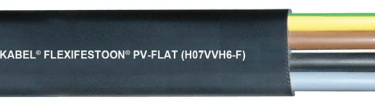
This cable is not simply a “flat version” of a standard round cable. It is a purpose‑engineered solution, optimized from the conductor core to the outer sheath specifically for festoon systems. Through its flat and parallel core arrangement, high‑flexibility Class 5 copper conductors, and specially formulated PVC compounds, it achieves a unique balance of electrical integrity, mechanical strength, and environmental durability. It addresses directly the limitations of traditional cables and demonstrates clear advantages in space usage, stress distribution, and long‑term reliability. In this article, we will look closely at its construction, technical specifications, the scientific principles behind its design, and its track record of performance in real‑world South African applications.
Basic Information and Technical Specifications
The FLEXIFESTOON® PV‑FLAT is manufactured to the European harmonized designation H07VVH6‑F, which defines it as a heavy‑duty flexible power and control cable suitable for mobile applications. It carries the HAR mark, CE marking, and RoHS compliance, ensuring it meets recognized international standards. It is also fully aligned with IEC specifications, making it acceptable under South African Bureau of Standards (SABS) guidelines for industrial installations.
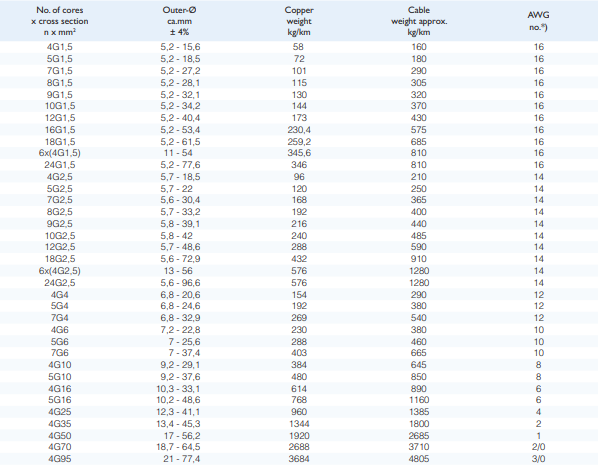
From the official technical documentation, the complete range of specifications can be summarized as follows.
Electrical Ratings
Nominal voltage: U₀/U = 450/750 V
Optional rating: 0.6/1 kV version available for higher power applications
Test voltage: 2,500 V AC applied for 5 minutes during production testing
Insulation resistance: Maintains values well above industry minimums, typically exceeding 10 MΩ·km even at maximum operating temperature
Temperature Range
Fixed installation: -25 °C up to +70 °C
Dynamic flexible operation: -20 °C up to +70 °C
Maximum continuous conductor temperature: +70 °C
Short‑circuit temperature rating: Up to +150 °C for a maximum duration of 5 seconds, complying with fault protection requirements
Mechanical Properties
Static tensile strength: 15 N/mm²
Dynamic tensile strength: 30 N/mm², allowing it to support its own weight over long travel distances without permanent deformation
Maximum operating speed: 120 meters per minute, making it suitable for high‑speed automated equipment
Bending radius: Defined according to DIN VDE 0298 Part 3, which ensures safe and long‑life bending cycles
Radiation resistance: Rated up to 80 × 10⁶ cJ/kg, or 80 Mrad, suitable for environments where low‑level radiation exposure may occur
Environmental and Chemical Resistance
Flame retardancy: Self‑extinguishing and non‑propagating flame performance to DIN VDE 0482 Part 265‑2‑1, EN 50265‑2‑1, and IEC 60332‑1‑2
Oil resistance: Tested and certified to DIN VDE 0473 Part 811‑2‑1 and IEC EN 60811‑2‑1, showing minimal swelling or loss of properties when exposed to mineral oils and lubricants
UV and ozone resistance: Available as a modified compound on request, formulated to resist degradation under intense sunlight and ozone formation common in open industrial areas
Size and Construction Range
The FLEXIFESTOON® PV‑FLAT series covers a wide selection of configurations to match different power and control needs:
Cross‑section sizes: From 1.5 mm² up to 95 mm²
Number of cores: 4 cores up to 24 cores
Earth conductor: Green‑yellow protective earth wire is included from 3‑core configurations upwards, marked with the suffix “G” in the ordering code
Identification: Cores are coloured according to DIN VDE 0293‑308 and HD 308 S2 standards; configurations with 6 or more cores are marked with consecutive black numbering as per EN 50334 for easy identification during installation and maintenance
For example, a standard 4‑core cable with 1.5 mm² conductors is designated 4G1.5, while a 7‑core 2.5 mm² version is listed as 7G2.5. The full datasheet also provides dimensions, copper weight, and overall cable weight, which helps engineers calculate loading and transport requirements. A 4G1.5 cable weighs approximately 160 kg/km with a copper content of 58 kg/km, while a larger 4G35 mm² design reaches 1,800 kg/km total weight with 1,344 kg/km of copper.
Construction Design and Material Science
To understand why this cable performs so much better than round alternatives, it is necessary to look at its design layer by layer and understand the engineering decisions made at every stage. The FLEXIFESTOON® PV‑FLAT follows a clear philosophy: shape matters, and materials must be matched to function.
Layer‑by‑Layer Construction
Conductor
At the heart of the cable is the conductor, manufactured from high‑purity annealed red copper, classified as Class 5 according to IEC 60228 and DIN VDE 0295. Unlike solid or Class 2 stranded conductors used in fixed wiring, Class 5 consists of very fine individual wires stranded together in multiple layers. This structure serves two purposes.
Electrically, copper offers one of the highest conductivity values among engineering metals—approximately 58 MS/m—ensuring low resistance, efficient power transmission, and minimal heat generation under load. Mechanically, the fine‑strand construction distributes bending stress across thousands of individual filaments. When a cable bends, the outer radius stretches and the inner radius compresses. In a solid conductor, this stress concentrates at the surface, leading to cracking after repeated cycles. In a Class 5 design, the individual strands slide slightly past one another, reducing local strain and extending fatigue life by a factor of five or more compared to conventional wiring.
Insulation
Each conductor is individually insulated with a compound designated PVC‑TI2. This is not general‑purpose PVC but a formulation specifically optimized for electrical performance and thermal stability. The material provides a dielectric strength greater than 20 kV per millimetre, creating a safe barrier between phases and earth. Even at the maximum continuous operating temperature of 70 °C, it maintains its insulating properties without softening or flowing.
From a material science perspective, PVC‑TI2 contains stabilizers that prevent the release of hydrogen chloride and chain scission when exposed to heat or oxidation. This prevents the common failure mode where insulation becomes hard, brittle, and prone to cracking after a few years of service. It also retains its flexibility at low temperatures, ensuring it does not become rigid in winter conditions found across parts of South Africa.
Core Arrangement
This is where the most visible and impactful design choice is made: the cores are laid parallel in a flat plane, with no twisting or helical stranding. In a standard round cable, cores are wrapped around each other in a spiral. While this works well for bending in multiple directions, it creates a problem in festoon systems, where movement occurs only in a single plane. Each time a round cable bends, the outer strands must travel a longer path than the inner strands, creating torsional forces that cause the cable to rotate and coil. Over time, this constant twisting damages both insulation and conductors.
By arranging cores in a straight parallel line, the FLEXIFESTOON® PV‑FLAT eliminates this torsion entirely. Bending strain follows a simple formula: ε = t / 2R, where t is the thickness of the cable and R is the bending radius. Because the flat profile keeps t to a minimum, the strain on every core is reduced significantly. All cores share the same bending radius, so there is no length difference or relative movement between them. This geometric principle is the foundation of its long flex life and stable operation.
Outer Sheath
The final layer is the outer sheath, made from a special modified PVC compound, designated similar to TM2, coloured black to RAL 9005. This material is engineered to protect the internal assembly from mechanical damage, abrasion, moisture, oils, UV light, and ozone.
The formulation includes high‑quality plasticizers to maintain flexibility over the full temperature range, along with carbon black and UV stabilizers. Carbon black absorbs harmful ultraviolet radiation, preventing it from breaking the polymer chains that give PVC its strength. This is particularly important in South Africa, where average UV index levels are among the highest in the world. Without such protection, standard PVC sheaths can degrade and crack in as little as 12 to 18 months outdoors.
The sheath also acts as a mechanical buffer, sharing tensile load with the conductors. With a dynamic tensile strength of 30 N/mm², it prevents the copper from bearing the full tension of its own weight over long travel lengths, reducing the risk of necking and breakage.
Core Performance Advantages Compared to Round Cables
In the field, the differences between the FLEXIFESTOON® PV‑FLAT and standard round flexible cables such as H07VV‑F or YFFB become very clear, especially when measured over months and years of operation.
Problems Encountered with Round Cables
When round cables are installed in festoon tracks, they often begin to twist within the first few weeks. This twisting creates internal compression and tension that can deform the cable, causing it to jam inside the guide rollers or rails. If the system is forced to operate, the insulation is abraded away and conductors are over‑stressed. In environments with strong sunlight, standard sheaths lose elasticity rapidly, developing surface cracks that let dust and moisture penetrate. This eventually leads to leakage current, reduced insulation resistance, and short‑circuit faults.
Operationally, round cables also require more space. Their circular profile leaves gaps in the festoon channel, requiring wider tracks that increase installation costs. They also have higher rolling resistance, which adds load to the drive motors and increases energy consumption over time.
Key Differentiators of FLEXIFESTOON® PV‑FLAT
Superior space efficiency: The flat profile occupies 30% to 50% less cross‑sectional area than an equivalent round cable, allowing smaller and lighter festoon hardware and reducing overall installation volume.
Zero torsion movement: By bending only in one plane, the cable moves smoothly and linearly without rotating, eliminating jams, coil formation, and internal twisting stress.
Longer operational life: Laboratory tests show it can complete more than 5 million bending cycles without significant degradation, compared to 1 to 2 million cycles for conventional round designs.
Consistent electrical performance: The stable construction maintains insulation resistance values, even when exposed to wide temperature fluctuations, which is critical for avoiding faults in remote or unmanned operations.
Reduced maintenance frequency: With fewer failures, the number of inspections and replacements required each year drops sharply, freeing maintenance teams to focus on other critical equipment.
The comparison in performance translates directly into operational benefits for any industrial site, as illustrated clearly by the results achieved in South Africa.
Real‑World Performance in South African Applications
South Africa’s industrial infrastructure is concentrated in three major zones: the coastal ports, the inland mining and industrial hub of Gauteng, and the renewable energy developments in the Northern Cape and Western Cape. Each presents its own set of environmental and operational challenges, and in every case, the FLEXIFESTOON® PV‑FLAT has demonstrated its suitability.
Durban and Cape Town Ports
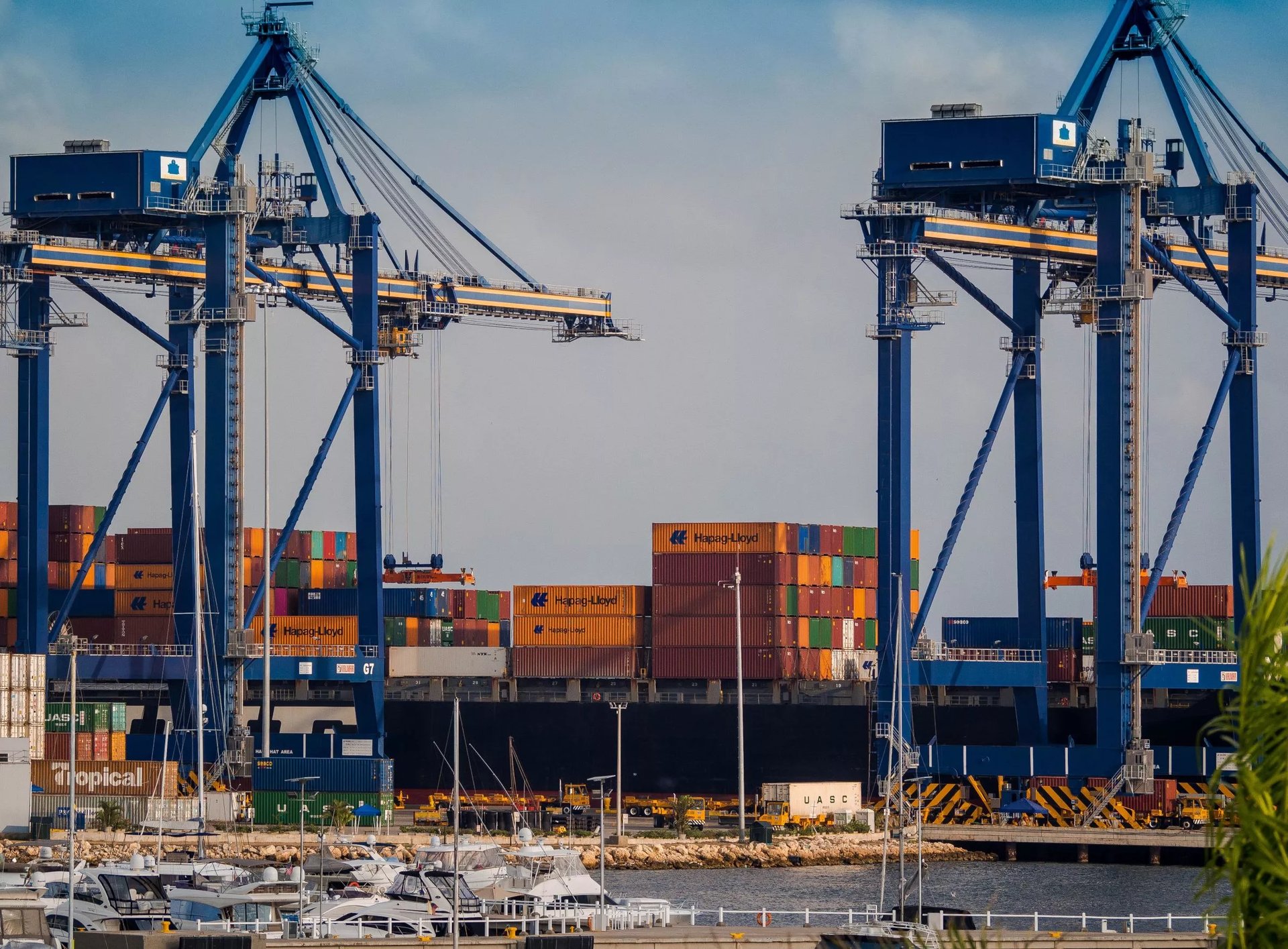
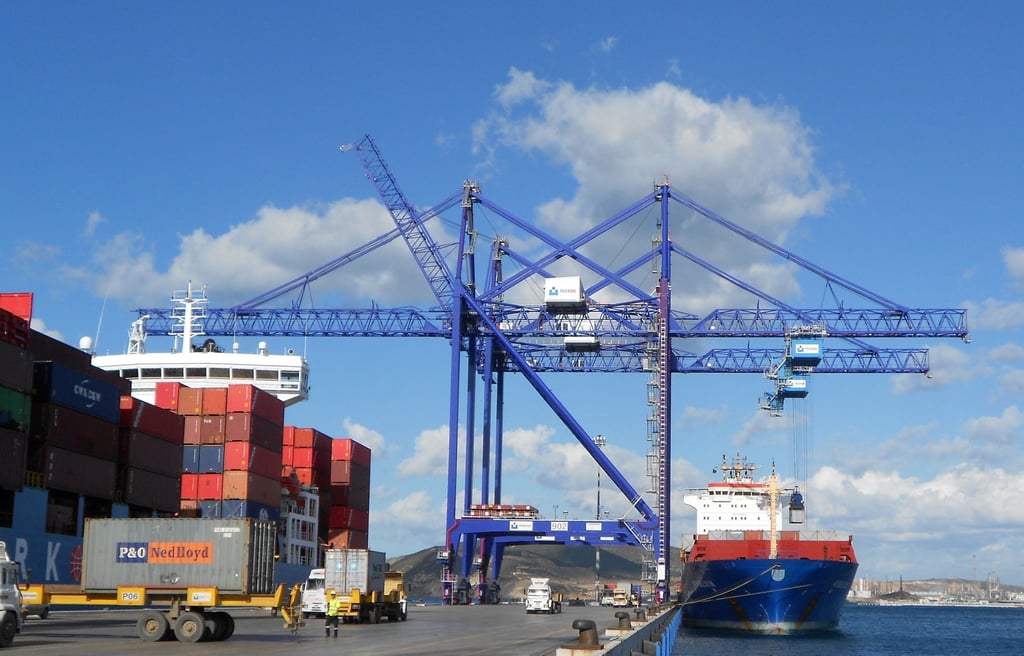
The ports of Durban and Cape Town are among the busiest on the African continent. Container cranes operate continuously, moving containers between vessels, storage yards, and road or rail transport. The typical operating parameters are travel lengths of 40 to 60 metres, with trolley speeds ranging from 60 to 90 metres per minute. Located at sea level, these facilities face high humidity, salt spray, and constant sunlight, plus regular exposure to hydraulic oils and diesel fuel.
In many older installations, operators originally used round YFFB‑type cables. These cables had to be replaced on average every 18 months due to sheath cracking, core breakage, or jamming inside the festoon system. After switching to FLEXIFESTOON® PV‑FLAT, operators recorded a significant change. The service life extended to an average of 42 months, and unplanned downtime related to cabling fell by 65%. The flat design moved freely in the existing tracks, and the modified sheath resisted both salt water and oil without swelling or deterioration.
Mining Conveyors and Processing Plants – Gauteng and Limpopo
Mining and mineral processing facilities around Johannesburg, Rustenburg, and Polokwane operate 24 hours a day, 365 days a year. Conveyors, stackers, and reclaimer systems transport millions of tonnes of ore and coal, requiring power and control signals to move with the equipment. The environment here is dry but extremely dusty, with airborne particles that are abrasive and conductive. Equipment also operates through temperature ranges from -5 °C in winter nights to +38 °C during summer days, while lubricants and hydraulic fluids are ever‑present.
In one major coal‑handling facility, maintenance reports showed that round cables were suffering from two issues: insulation resistance dropping below acceptable limits within two years, and outer sheaths becoming sticky and swollen due to chemical contact. After installing the FLEXIFESTOON® PV‑FLAT, inspections showed insulation resistance remained consistently above 10 MΩ·km even after three years of continuous service. The oil‑resistant sheath retained its hardness and surface finish, preventing dust from adhering and reducing wear as it slides through the guides. No electrical faults linked to cabling were recorded in the first three years of operation.
Solar Tracking Installations – Northern Cape
South Africa is home to some of the largest solar power plants in the world, where thousands of photovoltaic panels are mounted on tracking systems that rotate 10° to 30° each day to follow the sun’s path. These systems require cables that can withstand daily movement and exposure to maximum UV radiation.
The FLEXIFESTOON® PV‑FLAT has proven an ideal solution here. Its flat shape fits neatly along the structural beams of the trackers without interfering with rotation. With the UV‑resistant sheath option, manufacturers and installers expect a service life exceeding 10 years, matching the design life of the solar installation itself. This avoids the need for early replacements in areas where access can be difficult and costly.
Why South African Operations Prefer This Cable
The experience gained in these applications highlights three main reasons why this product is increasingly selected over standard alternatives:
Climate compatibility: Its wide temperature range, UV resistance, and ability to handle salt and dust mean it works reliably across all of South Africa’s climate zones.
Economic advantage: Although the initial purchase price may be slightly higher than basic round cables, the extended service life and reduced maintenance result in a total cost of ownership reduction of more than 40% over a five‑year period.
Standard recognition: By complying with IEC and European harmonized standards, it meets the requirements set out in SABS regulations, making it easier for consulting engineers and contractors to specify and approve for local projects.
International Standards and Equivalent Solutions
For engineers and buyers, standards and availability are just as important as technical performance. The FLEXIFESTOON® PV‑FLAT follows a clear set of specifications that define its construction and testing.
Governing Standards
Construction: HD 359 S2, EN 50214, and DIN VDE 0281‑404
Conductors: IEC 60228 / DIN VDE 0295 Class 5
Insulation and sheathing: IEC 60811 series for mechanical and chemical tests
Flame performance: IEC 60332‑1‑2, EN 50265‑2‑1
Voltage rating: IEC 60228‑1 and HD 603‑1 for low‑voltage cables
These standards ensure consistent quality regardless of where the cable is manufactured. While the original design is well‑established, many buyers in Southern Africa also look for alternatives that offer the same specifications but better delivery times and pricing.
Feichun Cables – A Technical Equivalent
Feichun Cables produces a range of flat festoon cables that meet exactly the same H07VVH6‑F specifications. This means they use the same Class 5 copper conductors, TI2‑grade insulation, and oil‑ and UV‑resistant outer sheaths, tested to identical IEC and VDE standards.
The key benefits of this equivalent offering include:
Identical technical performance: The same 450/750 V rating, temperature range, tensile strength, and bending life, making it a direct replacement.
Competitive pricing: By optimizing production and supply chains, costs are lower than imported European brands without sacrificing quality.
Shorter lead times: Stock and regional warehousing reduce waiting periods, which is especially valuable for urgent maintenance projects.
Technical support: Documentation and certification are available in formats accepted by South African engineering bodies.
For projects where budget and delivery speed are important factors, the Feichun‑produced equivalent provides full compliance and reliability.
Selection Guide and Configuration
Choosing the correct cable configuration requires more than just matching voltage and current ratings. It involves considering the full operating conditions of the system.
Key Selection Factors
Conductor cross‑section: Determined by load current, length of run, and allowable voltage drop. A 1.5 mm² cable is suitable for small control circuits, while 25 mm², 35 mm², or larger sections are used for main power feeds to heavy equipment.
Number of cores: Must match the power phases, neutral, earth, and auxiliary control signals. Including spare cores is recommended to simplify future modifications.
Environmental conditions: Specify the UV‑resistant sheath option for outdoor use, or the standard compound for indoor or sheltered installations.
Travel length and speed: Longer spans or higher speeds require careful calculation of tension and friction to avoid over‑loading the cable.
Minimum bending radius: Ensure the radius in the festoon system or cable carrier meets the VDE requirements for the selected size, as bending below this value will reduce life expectancy.
Understanding the Part Numbering
Ordering codes provide clear information. For example:
4G1.5 = 4 conductors, 1.5 mm² each, including protective earth
7G2.5 = 7 conductors, 2.5 mm² each, including protective earth
24G1.5 = 24 conductors, 1.5 mm² each, suitable for complex control circuits
The datasheet tables list the outer dimensions, copper weight, and overall weight for each configuration, which allows accurate calculation of system loads and support requirements.
Installation Best Practices
Even the best cable will fail if installed incorrectly. Following these guidelines ensures maximum life:
Route the cable so it runs straight in the festoon track, avoiding sharp edges or twists during installation.
Maintain sufficient slack so that when the trolley reaches the end of travel, the cable is not pulled tight.
Use rollers or guide shoes designed for flat cables, not round ones, to distribute pressure evenly.
Inspect the cable visually every 6 to 12 months, checking for signs of wear, cuts, or excessive stretching.
Frequently Asked Questions
Can this cable be used outdoors in direct sunlight?
Yes. The standard formulation offers good outdoor stability, and the modified UV‑resistant sheath is specifically designed for continuous exposure under South African sunlight. It retains its flexibility and strength for many years, unlike standard cables that degrade rapidly.
What is the difference between this and ordinary flat wire?
Most basic flat cables use solid or Class 2 conductors and general‑purpose PVC, intended only for fixed or light‑use applications. The FLEXIFESTOON® design uses Class 5 fine‑strand copper and high‑grade insulation and sheathing compounds engineered to withstand millions of bending cycles. It is a dynamic‑motion solution, not just a flat shape.
Does it comply with South African standards?
While it carries European harmonized marks, its compliance with IEC standards makes it fully acceptable under SABS guidelines, as the local codes recognize international standards for industrial equipment.
Can it be used in cable carriers instead of festoon tracks?
Yes. Its flexibility and low‑friction outer sheath also make it suitable for use in energy chains and cable carriers, where it will outlast round cables in the same application.
Is there a more affordable option with the same performance?
Feichun Cables offers a direct equivalent, built to the same H07VVH6‑F specifications. It provides the same electrical and mechanical performance, often at a lower price and with faster delivery times.
Conclusion
The FLEXIFESTOON® PV‑FLAT (H07VVH6‑F) represents a shift in how we think about cabling for moving equipment. It demonstrates that in applications involving repeated bending and tension, the right geometry and material selection are just as important as the electrical rating itself.
By combining Class 5 copper conductors, TI2 insulation, and a specially modified flat‑profile sheath, it solves three common failure modes found in conventional cables: twisting, fatigue, and environmental degradation. It delivers consistent performance across the wide range of operating conditions found in South Africa, from the salt air of the coast to the heat and dust of the interior mines and the unfiltered sunlight of solar farms.
The data from ports, mines, and renewable energy projects shows clearly that it reduces downtime, extends service intervals, and lowers the total cost of ownership over the lifetime of the equipment. It also represents the broader evolution of industrial cabling: moving from generic solutions to specialized designs that are optimized for their specific working environment.
For engineering and procurement teams looking to improve system reliability, reduce maintenance costs, and select equipment that will perform consistently in South Africa’s demanding climate, the FLEXIFESTOON® PV‑FLAT and its equivalents offer a proven, technically sound choice.
If you are looking for reliable festoon cables that deliver consistent performance in South African industrial environments—or require a cost‑effective equivalent to the H07VVH6‑F specification—contact the Feichun Cables team for detailed datasheets, pricing, and delivery options:

Email Address: Li.wang@feichuncables.com
© 2025. All rights reserved.
One-click to Quickly Contact
Products
Contact
Company
Location:
Building A Private Science and Technology Park, Hefei Economic and Technological Development Zone, Anhui Province, China
Heat Resistant Cable
WhatsApp: +86 17333223430
Social Media: