Anhui Feichun Special Cable Co.,Ltd Email: Li.wang@feichuncables.com
VAROLEX® VSD 3C+3E 90°C Flexible Cable for Fixed Applications: Superior EMC, Thermal Stability & Bearing Protection in African Industrial Environments
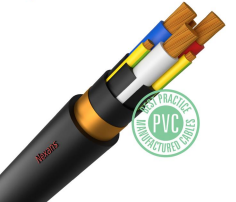
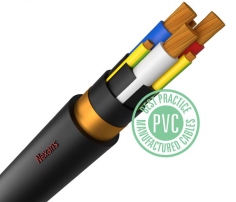
VAROLEX® VSD 3C+3E 90°C Flexible Cable for Fixed Applications is a specialist power cable developed under the AS/NZS standard framework, engineered specifically for variable speed drive systems. Balancing semi‑rigid construction, long‑term thermal stability, and advanced electromagnetic compatibility, it features Class 5 flexible copper conductors, X‑90 cross‑linked polyethylene insulation, PVC bedding, copper tape screening, and a durable PVC outer sheath. This article explains its engineering principles, material science, full technical specifications, and proven performance across heavy industries in South Africa and Australia, including mining, ports, and water treatment. It also introduces Feichun’s equivalent cable solution, offering the same compliance and reliability at competitive lead times and cost.
Li.Wang
7/6/202616 min read
Introduction
The adoption of Variable Speed Drives (VSDs) across modern industry has transformed the way we control electric motors. By adjusting frequency and voltage output, VSDs deliver significant energy savings, smoother operation, and better process control compared to traditional direct‑on‑line starting. In resource‑rich economies such as Australia and South Africa, where mining, bulk material handling, and water infrastructure operate around the clock, these benefits translate directly into lower operating costs and higher productivity. However, the electrical characteristics of VSD systems also introduce challenges that standard power cables are not designed to handle.
Standard 50 Hz power cables are built to operate under sinusoidal voltage conditions. When connected to a VSD, they are exposed to high‑frequency Pulse Width Modulation (PWM) waveforms, which produce rapid voltage changes, or high dv/dt rates, often exceeding 1 kV per microsecond. These steep‑fronted pulses travel along the cable as if it were a transmission line. When they reach the motor terminals, a mismatch in impedance between the cable and the motor causes the pulses to reflect. This reflection can double or even triple the terminal voltage, creating repeated stress on the motor insulation. At the same time, high‑frequency common‑mode currents flow through the cable and find paths through the motor bearings, causing electrical discharge machining that gradually erodes the bearing surfaces. Electromagnetic Interference (EMI) radiated from the cable can also disrupt sensitive control systems, encoders, and communication networks, leading to unplanned downtime and maintenance costs.
This is where VAROLEX® VSD 3C+3E 90°C Flexible Cable enters the picture. It is not simply a standard shielded cable with minor upgrades. It is a purpose‑built solution designed specifically to match the electrical, thermal, and mechanical demands of modern VSD installations. Developed in accordance with Australian and New Zealand standards, it has been tested and proven in some of the harshest operating environments in the world, including those found across Southern Africa. This article explores its construction, design logic, technical specifications, and real‑world performance, providing engineers and procurement teams with a clear understanding of why it is the preferred choice for critical drive applications.
Product Overview and Technical Specifications
Core Definition and Design Philosophy
VAROLEX® VSD 3C+3E 90°C Flexible Cable for Fixed Application is a low‑voltage, multi‑core power cable rated at 0.6/1 kV. Its design focus is not on extreme flexibility for continuous movement, but rather on providing the right balance of semi‑rigidity, ease of installation, long‑term reliability, and optimized electrical performance. It is intended exclusively for fixed installation, where it will remain in place for many years while operating under continuous load and elevated temperatures.
From the outset, the design addresses the specific electrical environment created by VSDs. It combines materials and geometry that reduce capacitance, control impedance, and provide low‑impedance paths for high‑frequency currents. This approach changes the cable from a simple conductor of power into an integrated component of the drive system itself.
Standards and Compliance
Compliance with recognized standards is essential for acceptance in industrial projects, particularly in South Africa where regulations are strictly enforced by the South African Bureau of Standards (SABS). VAROLEX® is manufactured to two primary standards: AS/NZS 1125, which governs conductor construction and dimensions, and AS/NZS 5000.1, which specifies requirements for thermosetting insulated cables rated up to 19/33 kV.
These standards are harmonized with their South African equivalents: SANS 60228 matches AS/NZS 1125, and SANS 5000.1 aligns fully with AS/NZS 5000.1. For electromagnetic compatibility, the cable supports compliance with SANS 61000‑6‑2 for industrial immunity and SANS 61000‑6‑4 for emission limits. This alignment means that VAROLEX® can be specified directly in South African projects without additional testing or qualification barriers. It is also referenced in guidelines published by the South African Institute of Electrical Engineers (SAIE) as a recommended cable type for VSD circuits.
Electrical, Thermal and Mechanical Ratings
The cable is designed to operate reliably under the following conditions:
Rated Voltage: U₀/U (Uₘ) = 0.6/1 kV, suitable for standard low‑voltage distribution systems.
Maximum Continuous Operating Temperature: 90 °C, allowing higher current capacity than standard 70 °C cables.
Short‑Circuit Temperature: 250 °C for a maximum duration of 5 seconds, providing a safety margin during fault conditions.
Conductor Class: Class 5 flexible copper, with Class 6 available upon request for larger cross‑sections.
Flexibility Classification: Semi‑rigid, optimized for routing through cable trays, conduits, and confined spaces without being overly prone to stretching or deformation.
Full Technical Data
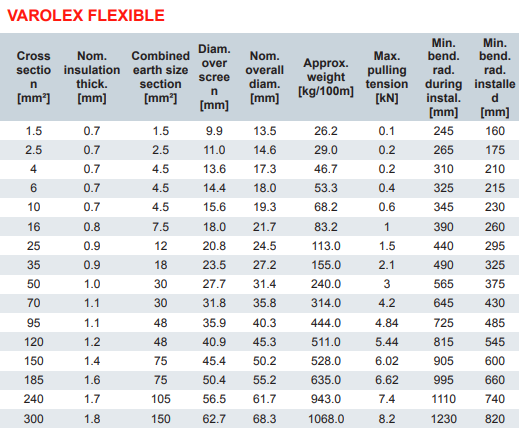
The complete dimensional and performance data, as provided in the manufacturer’s specification sheet, is summarized below. The cross‑section range covers from 1.5 mm² up to 300 mm², suitable for motors from small auxiliary drives up to large industrial units.
*Note: For 1.5 mm² and 2.5 mm², separate split earth cores are not feasible, so a single consolidated earth conductor is used while maintaining the required cross‑sectional area.
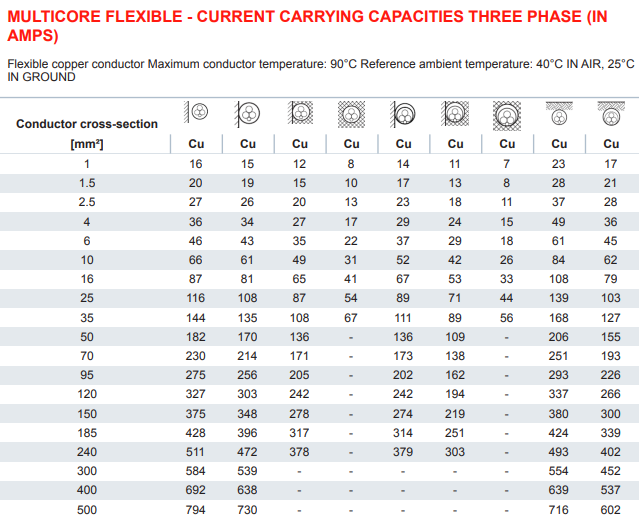
Current‑carrying capacity is based on a maximum conductor temperature of 90 °C, with reference ambient conditions of 40 °C for installation in air and 25 °C for direct burial. These values are adjusted for different installation methods, including open trays, enclosed conduits, and areas surrounded by thermal insulation, ensuring engineers can select the correct size for any specific environment.
Structural Design and Material Science
To understand how VAROLEX® performs, it is necessary to look at its construction layer by layer and examine the science behind each material choice. Every component is selected not only for its individual properties but also for how it works in combination with the rest of the cable.
Conductor Layer
The innermost element is the conductor, manufactured from high‑purity annealed copper with a conductivity rating of at least 100 % IACS. It is constructed as a Class 5 stranded circular compacted design.
From an electrical perspective, this construction reduces both DC and AC resistance. The multi‑stranded structure increases the effective surface area of the conductor, which helps mitigate the skin effect at higher frequencies. In a solid conductor, high‑frequency currents tend to concentrate near the outer surface, reducing the effective cross‑section available and increasing losses. In a stranded Class 5 conductor, the current distributes more evenly, keeping losses low and preventing localized overheating.
Mechanically, the fine strands allow the cable to bend and flex without damaging the copper. This is critical during installation and also provides resistance to fatigue in environments where minor vibration is present. The circular shape ensures consistent electrical geometry, which is essential for stable impedance characteristics.
Insulation Layer
Surrounding each core is insulation made from X‑90 cross‑linked polyethylene, commonly referred to as XLPE. This is the most important material choice for VSD performance.
Unlike thermoplastic materials such as PVC, XLPE is a thermoset polymer. During manufacturing, chemical cross‑linking creates a three‑dimensional molecular network that gives the material superior thermal stability. It can operate continuously at 90 °C without deforming or losing its electrical properties, whereas PVC begins to soften and degrade at temperatures above 70 °C.
Electrically, X‑90 insulation has a low dielectric constant of approximately 2.3 to 2.5 and a very low dissipation factor. This results in lower cable capacitance compared to standard insulated cables. Lower capacitance changes the characteristic impedance of the cable, bringing it closer to the impedance of the motor windings. This reduces the magnitude of voltage reflection when PWM pulses reach the motor terminals, limiting peak voltages to below twice the rated value instead of the three or four times often seen with ordinary cables.
Bedding Layer
Once the three phase cores and three earth cores are laid up together, they are surrounded by an extruded PVC bedding layer. This layer serves both mechanical and electrical functions.
Mechanically, it fills the gaps between the individual cores, creating a smooth, round outer surface. This ensures that the screen and outer sheath are applied evenly, preventing points of stress or weakness. It also acts as a cushion, absorbing mechanical shocks and protecting the insulation from abrasion or compression during installation and operation.
Electrically, the bedding maintains the consistent spacing between conductors. This geometric stability ensures that the capacitance and inductance values remain uniform along the entire length of the cable, which is vital for predictable transmission‑line behavior.
Screening Layer
Over the bedding lies the copper tape screen, applied helically with an overlap of at least 20 %. This forms a continuous, closed conductive layer around the entire core assembly.
The function of the screen is to provide electromagnetic shielding. When high‑frequency currents flow through the conductors, they create electric and magnetic fields. Without shielding, these fields radiate outward, causing interference. The copper tape forms a Faraday cage, containing these fields within the cable. It also provides a low‑impedance path for common‑mode currents, allowing them to return to the drive unit safely rather than finding alternative paths through the motor bearings or surrounding equipment.
Copper tape offers better performance than traditional copper braid in this application. At frequencies between 10 kHz and 30 kHz, which are typical for VSD switching, copper tape has a lower transfer impedance. This means it is more effective at diverting noise currents and reducing both radiated and conducted emissions. Braid screens have gaps between the wires, which become less effective at higher frequencies, while the continuous overlap of the tape provides full coverage along the entire cable length.
Outer Sheath
The outermost layer is an extruded PVC sheath manufactured to AS/NZS 5000.1 specifications. It provides the final line of defense against the external environment.
This compound is formulated to resist abrasion, moisture, oils, and chemical agents commonly found in industrial and mining sites. It also offers good resistance to ultraviolet radiation, which is essential in regions like South Africa where cables may be installed outdoors or in unshaded areas. With a minimum tensile strength of 12.5 MPa and elongation at break of 150 %, it can withstand pulling forces and bending without cracking or splitting.
The 3C+3E Symmetrical Earthing Design
One of the most distinctive features of VAROLEX® is its 3C+3E configuration: three phase conductors and three equally distributed earth conductors. This differs significantly from the conventional design of three phases plus a single central earth.
Symmetry is the key here. By placing the earth cores around the perimeter of the assembly, the electrical geometry is balanced. This means the capacitance between each phase conductor and the surrounding screen is almost identical. In a standard cable, the single earth creates an asymmetrical field, leading to unequal capacitance and higher common‑mode impedance.
Lower common‑mode impedance means that high‑frequency noise currents return through the dedicated earth path instead of through the motor shaft and bearings. This directly reduces shaft voltage and the circulating currents that cause bearing damage. It also improves the overall EMC performance of the system, as the noise is contained within the cable structure.
Engineering Performance and Core Benefits
The combination of materials and construction gives VAROLEX® a set of advantages that address exactly the limitations of standard cables in VSD circuits.
Compatibility with PWM Output
The most immediate benefit is its ability to handle the steep‑fronted pulses produced by modern inverters. When a PWM pulse travels along a cable, it behaves as a wave. The magnitude of the reflected wave depends on the difference between the cable’s characteristic impedance and the motor’s surge impedance. VAROLEX® is designed with a lower capacitance and optimized inductance, bringing its impedance into closer alignment with typical low‑voltage motors.
This impedance matching reduces the reflection coefficient, so the voltage at the motor terminals is limited to less than twice the line voltage. In practical terms, this means the motor insulation is exposed to far less stress, extending its working life and reducing the risk of premature failure.
Superior Electromagnetic Compatibility
EMC performance is not just about avoiding interference; it is about ensuring the entire plant operates reliably. The copper tape screen, together with the symmetrical earthing, creates a very effective barrier against both outgoing emissions and incoming noise.
Testing shows that the screening provides attenuation of up to 60 dB across the frequency range relevant to VSD operation. This prevents the cable from acting as an antenna that would otherwise disrupt PLCs, speed encoders, and communication systems. In busy industrial environments, this means fewer false alarms, fewer communication errors, and fewer unplanned stops.
Protection Against Bearing Damage
One of the most common maintenance issues in VSD installations is the gradual failure of motor bearings. This occurs because high‑frequency common‑mode voltages create a potential difference between the motor shaft and its frame. When this voltage exceeds the dielectric strength of the grease film, it discharges in the form of sparks, melting tiny pits in the bearing raceways. Over time, this creates a pattern known as fluting, which leads to vibration, noise, and eventual breakdown.
VAROLEX® addresses this by providing a low‑impedance path for these currents. The 3C+3E design and continuous copper screen divert the noise currents away from the shaft, reducing shaft voltage by as much as 80 % to 90 %. In field applications, this has been shown to reduce bearing failures by more than 80 %, extending the interval between overhauls and lowering maintenance costs significantly.
Long‑Term Thermal Stability
The X‑90 insulation allows the cable to run hotter without aging prematurely. In many parts of South Africa, summer ambient temperatures can reach 35 °C or higher, and underground environments in mines may remain consistently warm. A 70 °C cable running under these conditions operates close to its thermal limit, which accelerates oxidation and reduces its service life.
With a 90 °C rating, VAROLEX® retains a safety margin. It can carry the same current as a smaller cross‑section standard cable or carry higher current in the same size, offering flexibility in design. According to thermal aging models, XLPE insulation can provide a service life of more than 25 years under continuous duty, making it a cost‑effective choice for long‑term infrastructure projects.
Applications and South African Industry Case Studies
While VAROLEX® was originally developed for the Australian market, its design characteristics align perfectly with the demands of Southern African industries. South Africa’s economy relies heavily on mining, bulk logistics, and water management, all sectors where reliability and efficiency are critical.
Northern Cape – Iron Ore Mining
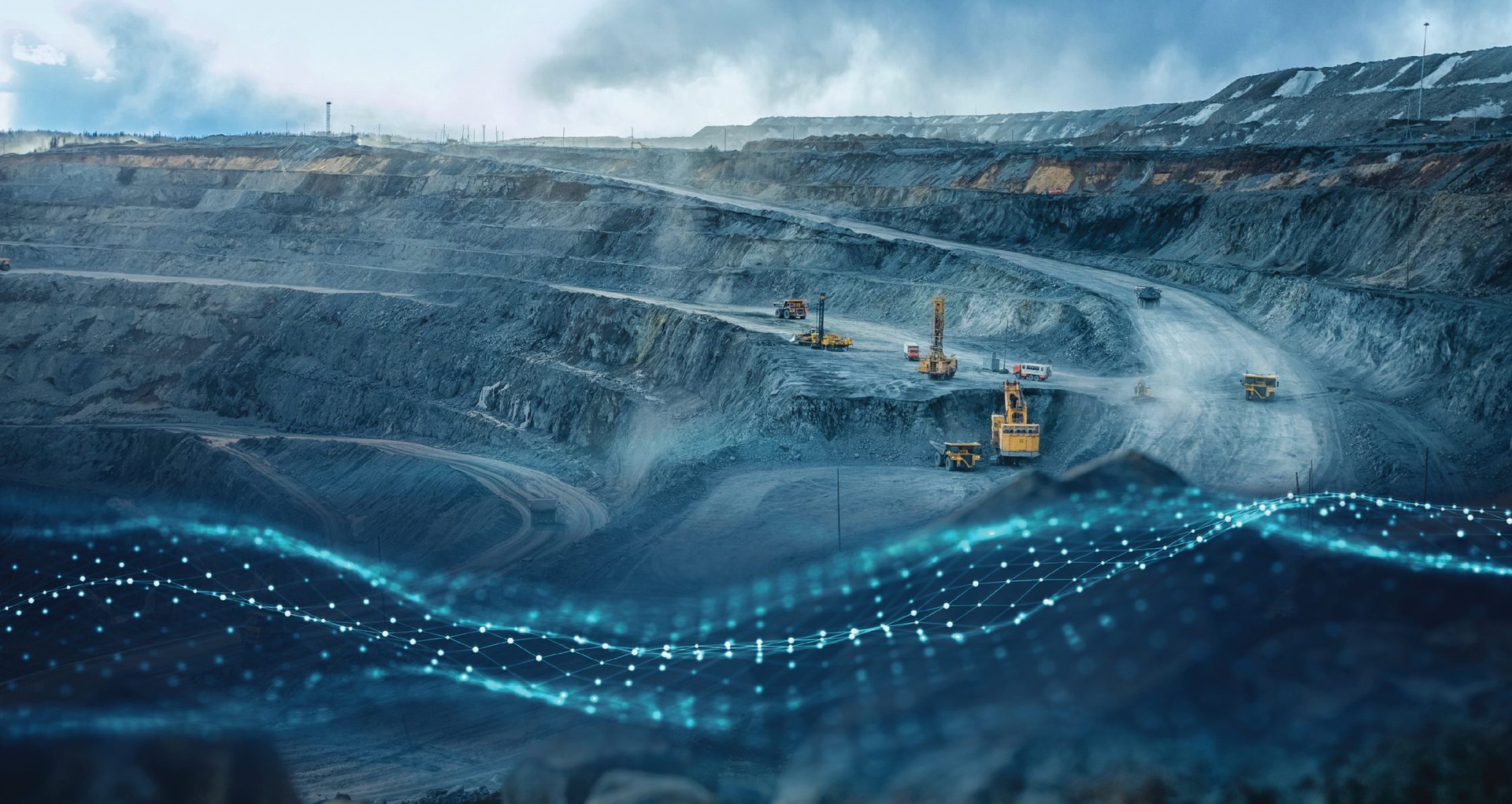
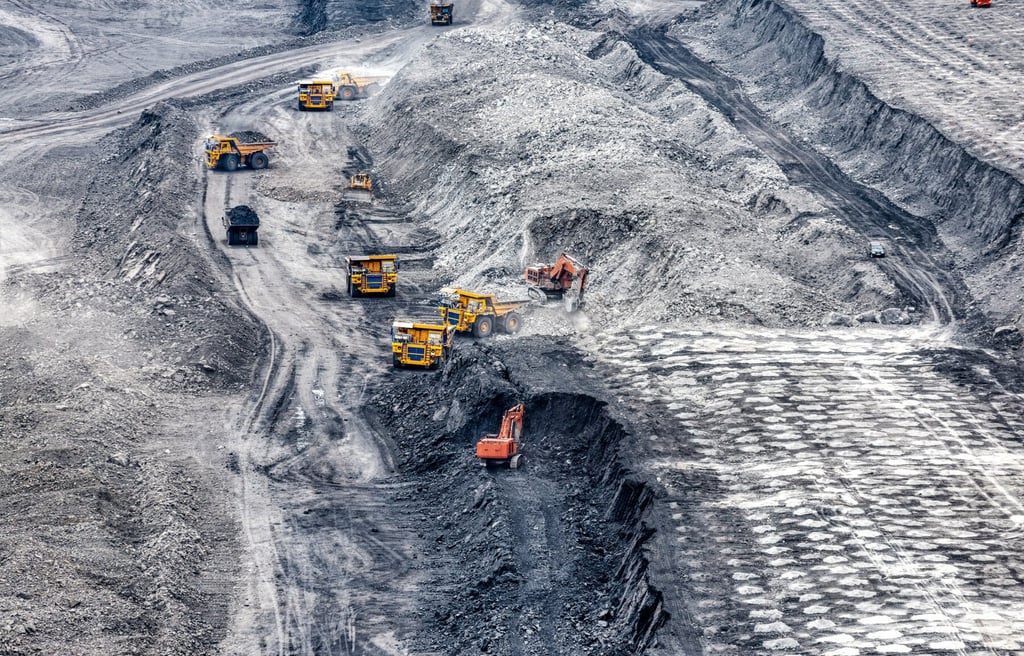
The Northern Cape province hosts some of the largest open‑pit iron ore mines in the world. Long overland conveyor belts, sometimes several kilometers in length, are used to transport ore from the mine face to processing plants or export terminals. These conveyors are almost exclusively driven by VSDs to provide soft starting, speed regulation, and energy savings.
In the past, installations using standard unshielded or braid‑shielded cables frequently experienced issues. EMI from the cables would interfere with the speed encoders, belt alignment sensors, and SCADA communication links. This resulted in unexpected speed fluctuations or emergency stops, which can damage mechanical components and cause production delays.
When VAROLEX® was introduced, the change was noticeable almost immediately. The copper tape screen reduced the radiated emissions, allowing the automation systems to operate without interference. The stable impedance characteristics also reduced voltage spikes, which had previously been blamed for occasional motor insulation failures. The mines found that maintenance visits related to electrical issues dropped significantly, and overall system availability improved.
Mpumalanga – Coal Mining
Underground coal mines in Mpumalanga present a different set of challenges. The environment is dusty, humid, and warm, with equipment operating 24 hours a day. VSDs control main ventilation fans, dewatering pumps, and underground conveyors. These systems must run continuously, as any interruption can affect air quality or flood protection.
Here, the thermal stability of X‑90 insulation is the main advantage. Standard cables operating at or near their temperature limit in these conditions degrade faster, leading to increased insulation resistance over time and eventual faults. VAROLEX®’s 90 °C rating allows it to operate safely, even in higher ambient temperatures. Its robust construction also resists the physical wear and tear associated with underground installation, while the low‑capacitance design ensures that earth‑leakage currents remain low, preventing nuisance tripping of protective devices.
Limpopo – Platinum and Base Metal Mining
In Limpopo, large‑scale platinum mines use heavy machinery such as hoists, semi‑autogenous grinding mills, and primary crushers. These machines are driven by medium‑sized and large motors connected to VSDs. The biggest problem encountered here was the high rate of motor bearing replacement. In some operations, bearings were failing every 12 to 18 months, requiring costly dismantling and replacement.
Analysis confirmed that the root cause was shaft voltage and bearing currents. After switching to VAROLEX® 3C+3E, the symmetrical earthing design reduced the common‑mode impedance, providing a better return path for the high‑frequency noise. Measurements taken after installation showed shaft voltages falling from over 40 V to less than 5 V. As a result, bearing life extended to more than five years, reducing maintenance costs by an estimated 70 % and increasing the availability of these critical assets.
Major Ports and Bulk Terminals
At ports such as Richards Bay and Durban, large bulk handling equipment including stacker‑reclaimers, ship loaders, and conveyor systems rely on VSDs for precise control. These machines operate in coastal environments, where humidity and salt air can accelerate corrosion, and where communication and positioning systems must work accurately to ensure efficient loading and unloading.
VAROLEX®’s screening ensures that high‑frequency noise does not interfere with radar positioning, weighing systems, or wireless communication links. The overall construction also provides good resistance to corrosion and moisture ingress. Because it meets both AS/NZS and SANS standards, it is easily approved for use in these large‑scale infrastructure projects, where compliance and reliability are mandatory.
Municipal Water and Wastewater
In cities such as Johannesburg and Cape Town, water and wastewater treatment plants use large pumping stations equipped with VSDs to manage variable demand. These installations are often located below ground or in enclosed buildings, where ventilation may be limited.
The combination of 90 °C insulation and low capacitance makes VAROLEX® well suited here. The higher temperature rating allows the cables to carry full load even in warm pump rooms. Low capacitance reduces leakage currents, which is important for the proper operation of residual current devices. The screen also prevents noise from the drives from affecting the flow meters, level sensors, and remote monitoring systems that control the water network.
Equivalent Solution – Feichun VSD 3C+3E 90°C Cable
While VAROLEX® is a well‑established and reliable product, there are often requirements for alternative suppliers that offer the same technical performance with better availability and pricing. Feichun Cables has developed an equivalent product that matches the specifications and construction of VAROLEX® exactly.
Technical Equivalence
Feichun’s VSD 3C+3E 90°C cable follows the same design principles and materials:
Conductors: Class 5 stranded copper, meeting AS/NZS 1125.
Insulation: X‑90 XLPE, rated for 90 °C continuous operation.
Bedding and Sheath: PVC compounds complying with AS/NZS 5000.1.
Screen: Copper tape with 20 % minimum overlap.
Configuration: Symmetrical 3C+3E layout, with consolidated earth for smaller cross‑sections.
All dimensional parameters, bending radii, pulling tensions, and current‑carrying capacities match the original specification. This means it can be used as a direct replacement without requiring changes to design calculations or installation procedures.
Key Advantages
The main benefits of specifying Feichun’s equivalent cable are commercial and logistical. It offers the same performance and compliance at a more competitive price point. Manufacturing capacity is flexible, allowing shorter lead times, which is often critical in fast‑track projects or when emergency replacements are required. It also supports the same standards, making it acceptable for use in South Africa, Australia, and across the Middle East.
Feichun’s product undergoes third‑party testing to confirm electrical, thermal, and mechanical properties, ensuring consistency with the requirements of engineers and procurement teams.
Selection Guide and Installation Best Practices
Choosing the right cable and installing it correctly is essential to achieving the performance benefits described.
How to Select the Right Size
When selecting cross‑section, the primary considerations are current rating, voltage drop, cable length, and ambient conditions. For VSD applications, additional factors apply. It is recommended that for motors of 4 kW and above, or where the cable length exceeds 20 meters, a dedicated VSD cable such as VAROLEX® or its equivalent should be specified rather than a standard cable.
Longer cable runs increase the magnitude of voltage reflection, so the improved impedance characteristics become even more important. The current‑carrying capacity tables provided in the specification sheet should be used, applying correction factors for high ambient temperatures or enclosed installation.
Installation Guidelines
During installation, the cable must be handled according to the mechanical limits given. The minimum bending radius during pulling is 8 times the overall diameter, reducing to 5 times the diameter once installed. Exceeding these limits can deform the screen or damage the insulation.
Maximum pulling tension should not be exceeded, as excessive force can stretch the copper conductors and increase their resistance. Earthing is also important: the screen should be earthed at both ends to provide the best EMC performance, while the three earth cores should be connected securely to the protective earth terminals at both the drive and motor ends to ensure low‑impedance return paths.
Routing the cable separately from low‑voltage signal cables where possible further reduces the risk of cross‑interference, although the screening already provides a high level of protection.
Frequently Asked Questions
Is this cable suitable for moving applications such as trailing cables?
No. VAROLEX® is classified as semi‑rigid and designed exclusively for fixed installation. It is not intended for repeated flexing or continuous movement, which would eventually cause fatigue in the conductors and screen.
Can I use this cable in place of a standard 4‑core shielded cable?
Yes, it can be used as a physical replacement, but it offers much more than just a shield. The symmetrical 3C+3E layout, low capacitance insulation, and optimized screening make it a better choice specifically for VSD circuits, where standard shielded cables still may not resolve issues of bearing currents or voltage spikes.
Is copper tape screening better than copper braid for this use?
For VSD frequencies, yes. Copper tape provides lower transfer impedance and better coverage, making it more effective at containing high‑frequency noise. Braid is more flexible but less efficient at the frequencies generated by modern inverters.
Does this cable require special termination glands?
No, standard industrial cable glands suitable for armoured or screened cables can be used. The key is to ensure good electrical contact between the gland and the copper screen to maintain the continuity of the shielding layer.
Is Feichun’s version a true direct replacement?
Yes. It matches the construction, materials, ratings, and dimensions exactly. It meets the same standards, so it can be specified in the same projects without technical or compliance concerns.
Conclusion
VAROLEX® VSD 3C+3E 90°C Flexible Cable represents a shift in how we think about power cables in variable speed drive systems. It is not merely a conductor of electricity but a system component designed to work with the unique electrical characteristics of modern inverters. Through its careful selection of materials, symmetrical geometry, and attention to electromagnetic behavior, it addresses problems that standard cables cannot solve.
In South Africa and other resource‑intensive regions, the ability to reduce unplanned downtime, extend equipment life, and lower maintenance costs is directly linked to profitability. By limiting voltage spikes, reducing EMI, and eliminating the root causes of bearing failure, this cable delivers long‑term value far beyond its initial purchase price. It aligns with international and local standards, making specification and approval straightforward.
When engineers and procurement teams choose VAROLEX® or its equivalent from Feichun, they are choosing a solution that has been proven in real‑world conditions, delivering reliable performance even in the most demanding industrial environments.
Contact Information
If you are looking to source VAROLEX®‑equivalent VSD cables, request technical data sheets, or obtain pricing and delivery information for projects across Southern Africa, the Middle East, and beyond, please contact the Feichun Cables technical and sales team:
Email Address: Li.wang@feichuncables.com
© 2025. All rights reserved.
One-click to Quickly Contact
Products
Contact
Company
Location:
Building A Private Science and Technology Park, Hefei Economic and Technological Development Zone, Anhui Province, China
Heat Resistant Cable
WhatsApp: +86 17333223430
Social Media: