Anhui Feichun Special Cable Co.,Ltd Email: Li.wang@feichuncables.com
TRATOSFLEX MTO®-SB & MTO®-SB (CSS) Medium Voltage Flexible Trailing Cables: Engineered for South African Open-Cast Mining Draglines, Excavators & Extreme Abrasion – DIN VDE 0250 Part 813 NTSCGEWÖU / NTSCEWÖU Solutions
TRATOSFLEX MTO®-SB and MTO®-SB (CSS) are purpose-built medium voltage flexible trailing cables manufactured to DIN VDE 0250 Part 813 – covering NTSCGEWÖU standard and NTSCEWÖU copper-screened variants. Designed specifically for South Africa’s harsh open-cast coal, platinum, iron-ore and chrome mines, these cables deliver exceptional abrasion resistance, high tensile strength, and proven electrical reliability for draglines, rope shovels, spreaders and stacker-reclaimers. This guide explains the engineering, materials science, field performance and total cost benefits of moving beyond general-purpose cables to solutions engineered for the actual duty cycle.
Li.Wang
7/24/202614 min read
Introduction – Built for the Toughest Mines on Earth
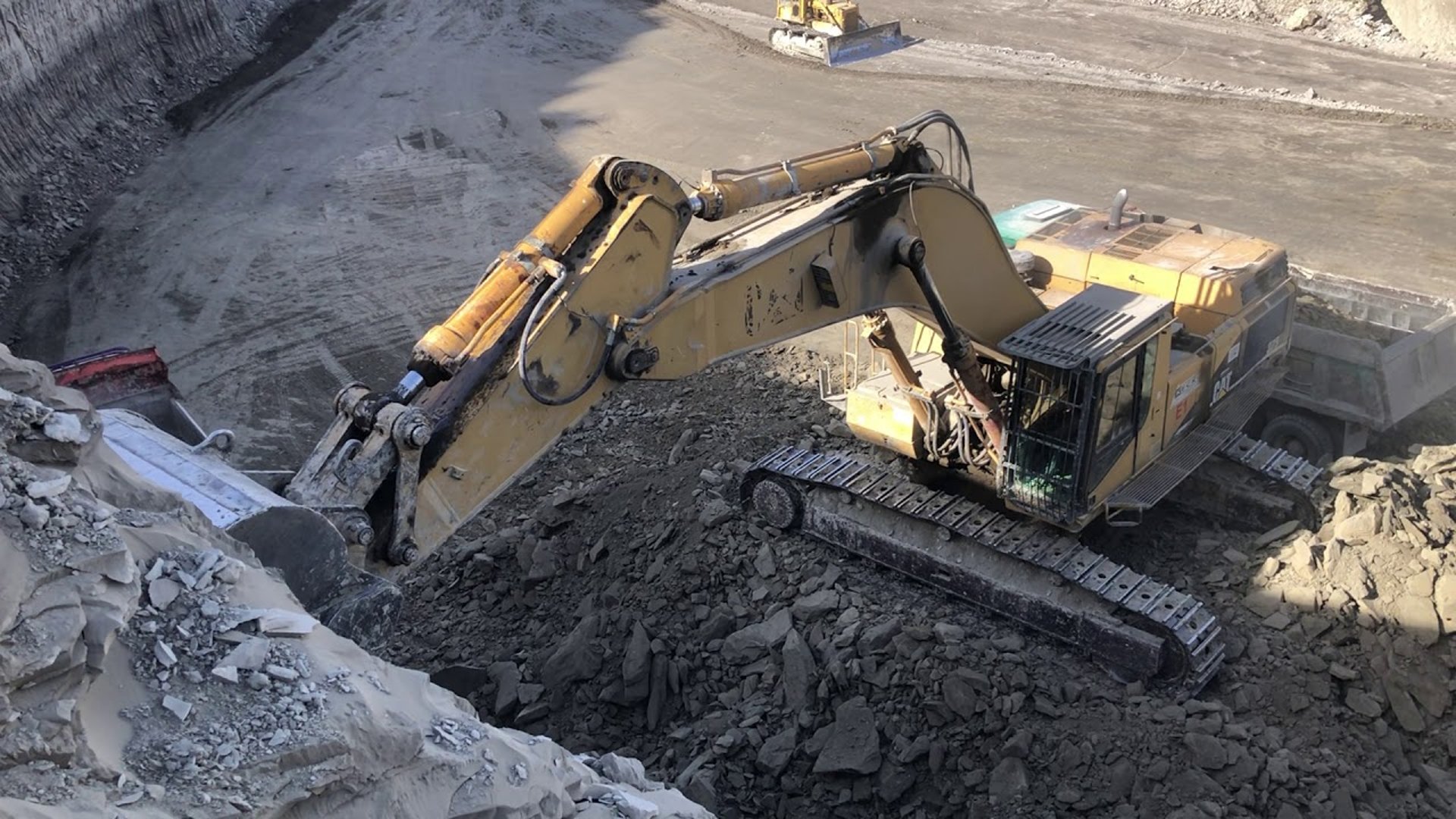
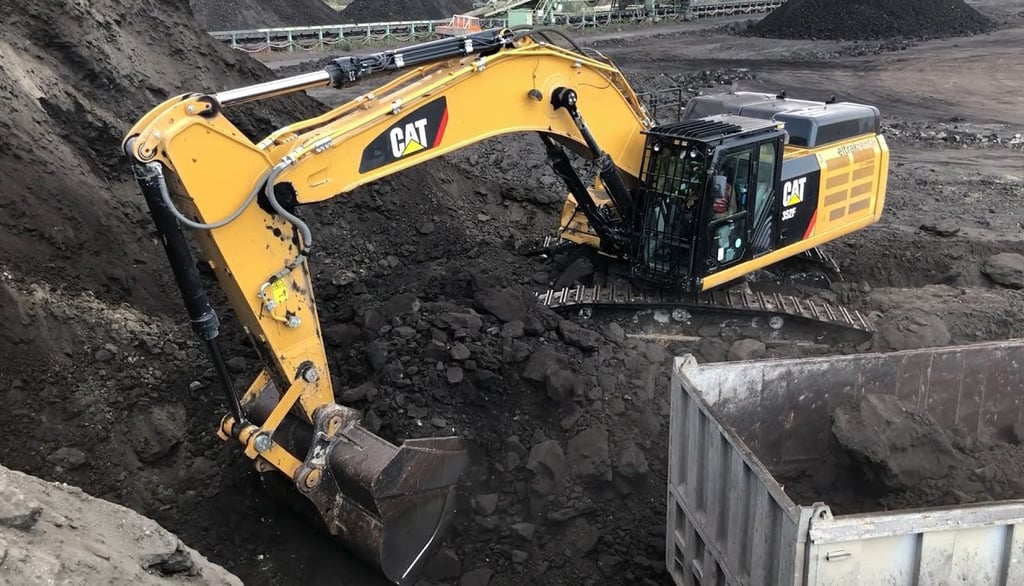
South Africa is one of the world’s most important mining nations, with vast open-cast operations producing coal, platinum group metals, iron ore, manganese and chrome. These mines rely on massive mobile equipment – 300-tonne rope shovels, kilometre-long spreaders, high-capacity draglines and continuous miners – that must move hundreds of metres every shift while drawing several megawatts of power. For decades, one of the most persistent and costly challenges has been the trailing cable that feeds this equipment.
Most standard flexible cables are designed for static installation or only occasional movement. When deployed in open-cast mining, they fail rapidly: outer sheaths are cut through by hard rock and abrasive dust within one to two months; conductors snap from repeated bending and twisting; insulation degrades from uneven electrical stress; and earth continuity is lost just when it is needed most. Every unplanned cable failure brings production to a halt, puts personnel at risk, and generates costs that run far higher than the purchase price of the cable itself.
TRATOSFLEX MTO®-SB and MTO®-SB (CSS) are not simply “heavier versions” of ordinary cables. They are medium voltage flexible trailing cables engineered from the ground up for continuous dragging, extreme mechanical stress, and long-term exposure to some of the harshest environments on the planet. Manufactured to DIN VDE 0250 Part 813 – the leading global standard for mining trailing cables – they come in two core configurations: NTSCGEWÖU (standard MTO®-SB) and NTSCEWÖU (MTO®-SB with Concentric Copper Shield, or CSS).
What sets these cables apart is that every design choice flows directly from understanding how cables actually fail in service. They balance mechanical toughness, electrical integrity and material durability into a single integrated system – solving the classic trade-off that plagues general-purpose cables: you can have flexibility, or you can have strength, but rarely both at once. In South African mines, this has translated into service lives extended from 12 months to five years or more, dramatic reductions in downtime, and a far lower total cost of ownership over the full lifecycle.
Core Specifications & Compliance – Aligned to the Original Datasheet
All values and standards presented here match exactly the original May 2014 technical documentation for TRATOSFLEX MTO®-SB and MTO®-SB (CSS). Compliance is central to performance, as it ensures the cable meets minimum safety and performance benchmarks even under the most severe operating conditions.
The primary governing standard is DIN VDE 0250 Part 813, which defines requirements for medium voltage flexible cables for trailing applications. Supporting standards cover individual components and performance characteristics: DIN VDE 0207 Part 20 for insulation materials, DIN VDE 0207 Part 21 for sheath compounds, DIN VDE 0295 for conductor stranding classes, DIN VDE 0298 Part 3 for minimum bending radii and Part 4 for current-carrying capacity, DIN VDE 0473 Part 811-2-1 for oil resistance, and DIN VDE 0482 Part 265-2-1 for fire behaviour.
Electrical Ratings
The cables cover a rated voltage range from 1.8/3 kV up to 18/30 kV, making them suitable for almost all medium voltage mining distribution systems. The maximum permissible operating voltage in AC systems runs from 2.1/3.6 kV to 20.8/36 kV, while DC systems are accommodated from 2.7/5.4 kV up to 27/54 kV. AC test voltages range from 6 kV to 43 kV depending on the voltage class, applied in accordance with DIN VDE 0250 Part 813.
The conductor is rated for a maximum continuous operating temperature of 90 °C, with a short-circuit temperature limit of 200 °C for one second. This thermal rating is critical: it allows the cable to carry higher power for a given cross-section without premature ageing, while also providing a clear safety margin during fault conditions. Current-carrying capacity values are derived from DIN VDE 0298 Part 4 and are fully aligned with the physical construction and thermal properties of the materials used.
Mechanical & Thermal Ratings
Mechanically, the cable is engineered to withstand a maximum tensile load of 15 N/mm² – a figure calculated to cover the cable’s own weight, frictional drag over uneven ground, dynamic forces from machine movement, and an appropriate safety margin. Torsional resistance is rated at ±100° per metre for the standard NTSCGEWÖU version, and ±125° per metre for the CSS variant. This directly addresses the combined motion of mining machines: travelling forward, slewing left and right, and luffing up and down – all at the same time.
For ambient temperature, the standard Type K rating covers -30 °C to +80 °C when fully flexed, and -40 °C to +80 °C in fixed installation. A low-temperature variant extends this range to -60 °C to +60 °C, suitable for high-altitude mines or winter operations. The cable also passes a dedicated sheath shifting test – a critical quality check that ensures the outer layers do not slide independently of the core conductors under tension.
Typical Size & Performance Data
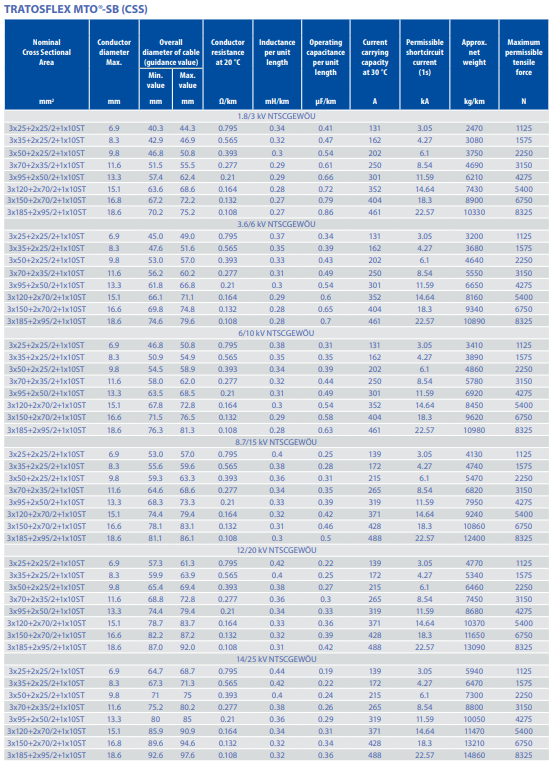
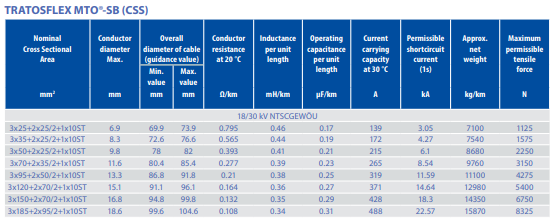
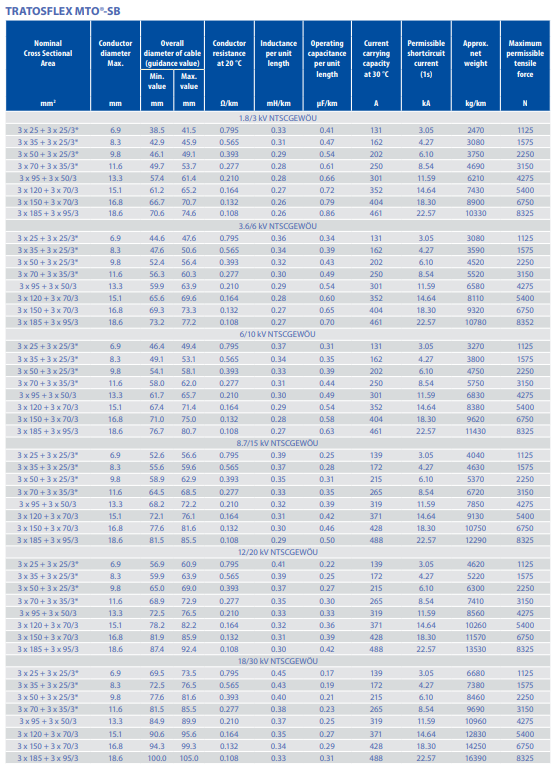
The standard construction follows the format 3 × main cores + split protective earth + optional core, with nominal cross-sections from 25 mm² up to 185 mm². Key performance figures for the NTSCGEWÖU range are reproduced exactly from the original datasheet:
3×25+2×25/2+1×10ST: Conductor diameter 6.9 mm, overall diameter 73.9 mm, 20 °C resistance 0.795 Ω/km, 30 °C ampacity 139 A, 1-second short-circuit rating 3.05 kA, approximate weight 7100 kg/km, allowable tensile force 1125 N
3×50+2×25/2+1×10ST: Conductor diameter 9.8 mm, overall diameter 82.0 mm, resistance 0.393 Ω/km, ampacity 215 A, short-circuit rating 6.10 kA, weight 8680 kg/km, allowable force 2250 N
3×95+2×50/2+1×10ST: Conductor diameter 13.3 mm, overall diameter 91.8 mm, resistance 0.210 Ω/km, ampacity 319 A, short-circuit rating 11.59 kA, weight 11100 kg/km, allowable force 4275 N
3×185+2×95/2+1×10ST: Conductor diameter 18.6 mm, overall diameter 104.6 mm, resistance 0.108 Ω/km, ampacity 488 A, short-circuit rating 22.57 kA, weight 15870 kg/km, allowable force 8325 N
These figures are not arbitrary: they are derived from standard calculations and verified through type testing, ensuring consistency across all installations.
Construction & Materials – Layer-by-Layer Engineering
Every layer of TRATOSFLEX MTO®-SB and MTO®-SB (CSS) is selected and arranged to counter a specific failure mode seen in mining service. There are no “standard components” – every part is purpose-matched to the duty.
Conductors
The power-carrying cores are made from electrolytic copper, tinned to prevent oxidation at strands and terminations, and stranded to Class 5 as defined in DIN VDE 0295. This fine stranding increases flexibility by distributing bending stress across hundreds of individual wires rather than a few thick ones. The protective earth conductor is stranded to Class FS – an even finer stranding specification – ensuring it remains continuous and intact even when subjected to repeated flexing and mechanical shock.
Tinning also improves corrosion resistance in damp or chemically active mine environments, and helps maintain stable contact resistance over the long service life expected.
Insulation & Electrical Field Control
Insulation is formed from EPR (Ethylene Propylene Rubber) compound type 3GI3, specified in DIN VDE 0207 Part 20. EPR is chosen over PVC or natural rubber because it retains excellent electrical properties at high temperatures, resists corona and partial discharge, and does not harden or crack with age.
Above and below the insulation layer are inner and outer semiconductive rubber layers. These perform a critical function known as electrical field grading. In an unshielded cable, electrical stress concentrates at irregularities in the conductor or insulation surface, creating localised high-field regions that trigger partial discharge and eventually lead to insulation failure. The semiconductive layers smooth this stress, converting a highly non-uniform electric field into an even radial distribution – greatly extending insulation life and improving reliability at medium voltages.
Core Assembly & Protective Earth Design
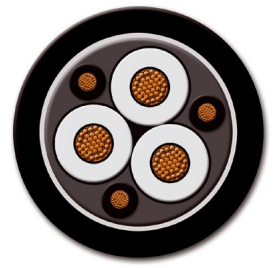
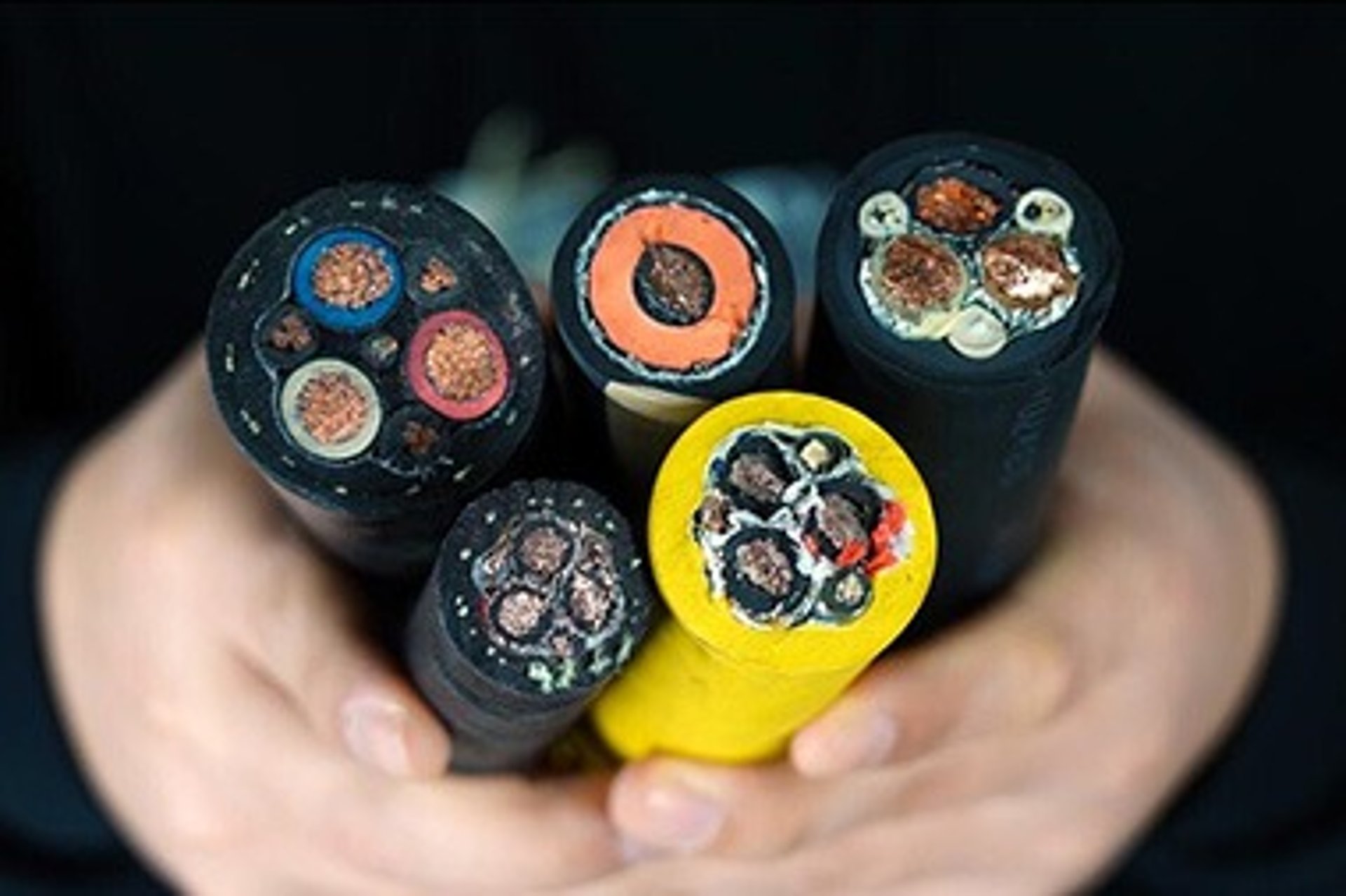
For the standard NTSCGEWÖU (MTO®-SB) configuration, the three main insulated cores are laid up together, and the protective earth conductor is split into three equal sections placed in the outer interstices between the main cores. This arrangement balances the cable’s cross-section mechanically and electrically, so that bending and tension forces are distributed evenly rather than concentrating on one side or one core. If one section of the earth is damaged, the other two remain in place, preserving continuity – a vital safety feature.
For the NTSCEWÖU (MTO®-SB CSS) variant, each main core also carries an individual concentric metallic protective-earth conductor – effectively a copper screen wrapped around each insulated core – in addition to the split earth in the interstices. This provides full electromagnetic shielding, equalises surface potential, and offers a dedicated path for fault currents – essential where variable-frequency drives, sensitive control systems or strict earthing regulations apply.
Reinforcement Layer
Wrapped around the cabled cores is an extremely tear-resistant reinforcing tape. Its primary purpose is to prevent sheath shifting – a common failure mode where the outer sheath slides relative to the inner cores under tension, causing conductors to stretch or break at terminations. The tape locks the assembly together mechanically, ensuring that tensile forces are shared evenly rather than concentrated at a single point.
Sheath System
The outer protection consists of inner and outer sheaths formed from a single inseparably bonded layer of chloroprene rubber compound type 5GM5, per DIN VDE 0207 Part 21. This is the cable’s first and most important line of defence against the outside world.
Chloroprene (CR) was selected for its unique balance of properties: exceptional abrasion and tear resistance, high tensile strength, resistance to mineral oils, greases, UV radiation, ozone and moisture, and the ability to remain flexible even at low temperatures. The fact that the inner and outer layers are chemically bonded means there is no plane of weakness where delamination can occur – a common problem with multi-layer sheaths that separate under repeated flexing or impact. The datasheet explicitly describes this compound as “extremely abrasion-resistant and tear-proof”, reflecting its performance in abrasive mining conditions.
Identification & Marking
Every cable is marked with the year of manufacture, serial number, VDE certification mark, product designation, core count, cross-sectional area and rated voltage. Core identification uses natural colouring combined with black semiconductive rubber, ensuring clarity even when surfaces become dusty or soiled.
Engineering Science – Why This Design Works
The performance of TRATOSFLEX MTO®-SB and MTO®-SB (CSS) comes not from one single “magic feature”, but from how every element works together according to established principles of electrical, mechanical and materials science.
Electrical Engineering Principles
Electrical insulation fails for two main reasons: thermal degradation and electrical stress concentration. EPR 3GI3 is formulated to resist thermal oxidation at 90 °C, maintaining its dielectric strength for decades rather than years. The dual semiconductive layers follow the principle that insulation life is inversely related to the square of the electric field strength – by smoothing the field, partial discharge inception voltages are raised significantly, and insulation ageing is slowed dramatically.
The CSS variant adds a further layer of protection: individual concentric screens confine electromagnetic fields to the cable itself, preventing interference with adjacent control cables and reducing touch potentials that could pose a safety risk. They also provide a predictable low-resistance path for earth-fault currents, ensuring protection relays operate correctly and rapidly.
Mechanical Engineering Principles
When a cable is dragged, bent and twisted, internal stresses build up at points of discontinuity – where strands meet, where layers change, or where the cross-section is asymmetric. Fine stranding reduces stress concentration by allowing individual wires to move slightly relative to one another, dissipating energy rather than concentrating it. This follows the principle that fatigue life increases as element size decreases and stress distribution becomes more uniform.
The 15 N/mm² tensile rating is calculated using the maximum expected drag force plus a safety factor, ensuring the cable does not permanently elongate or break under normal operating conditions. Torsion resistance is matched to the typical slew speeds and angles of mining equipment, preventing the cable from “corkscrewing” – a failure mode that damages conductors and pulls connections apart.
The bonded 5GM5 sheath and anti-shift tape address the mechanics of composite structures: delamination is the most common failure mode in multi-layer flexible components, so eliminating the bond interface removes that entire category of risk.
Materials Science Logic
Chloroprene rubber 5GM5 is chosen because its cross-linked polymer structure balances elasticity with hardness and tear strength. Unlike thermoplastics, it does not soften and flow at high temperatures or become brittle at low ones. Its chemical structure also resists attack by the hydrocarbons found in diesel, hydraulic oil and grease – common contaminants in mining areas.
Tinned copper conductors resist galvanic corrosion and surface oxidation, maintaining low contact resistance over long periods. EPR insulation has a saturated polymer backbone that is far less susceptible to UV and ozone degradation than rubber types with unsaturated bonds – important in South Africa’s high-altitude, high-sunlight mines.
The Core Differentiator – System Integration
What makes these cables different is that they are designed as an integrated system, not a collection of separate components. Flexible conductors work with graded insulation; balanced core layout works with the anti-shift tape; the tough bonded sheath protects the entire assembly. This resolves the inherent conflict found in general-purpose designs: harder materials resist abrasion but reduce flexibility; softer materials flex easily but wear quickly; high tensile strength usually requires a stiffer structure. TRATOSFLEX MTO®-SB achieves all three properties simultaneously through careful material selection and geometric optimisation.
Performance & Advantages – Compared to General-Purpose Cables
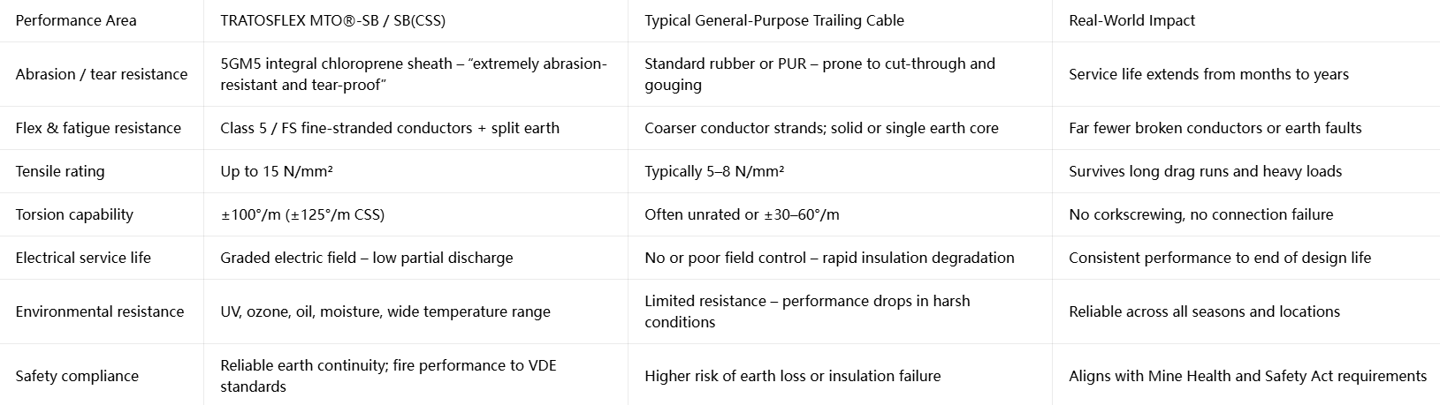
The difference between purpose-engineered trailing cables and general-purpose alternatives becomes clear when performance is compared side by side:
The real value is not found in any single specification, but in how these performance improvements add up over time.
South African Mining – Field Experience & Business Case
South Africa’s open-cast mines present some of the most demanding conditions for trailing cables anywhere in the world. Hard rock formations, abrasive sand and dust, intense solar radiation, large temperature swings, and equipment that moves constantly across uneven ground combine to create a duty cycle that few cables can survive.
Typical Operating Challenges
The most common failure mechanisms seen on South African sites are well documented:
Extreme abrasion: Silica sand, granite and iron-ore particles act like sandpaper as the cable is dragged over the ground, cutting through standard sheaths in as little as four to eight weeks.
High tensile loads: Cables for large draglines and spreaders can be 200 to 400 metres long, and pulling forces can reach several tonnes during movement.
Compound motion: A shovel slewing 180 degrees while moving forward and raising its boom subjects the cable to simultaneous bending, twisting and tension – a combination that causes rapid fatigue in standard constructions.
Harsh environment: Temperatures ranging from near-freezing to over 40 °C, plus high UV levels, ozone and mineral contamination, accelerate material degradation.
Verified Field Results
When operators replace general-purpose cables with TRATOSFLEX MTO®-SB, the changes are measurable and significant:
Service life extension: At a major coal mine in Mpumalanga, average cable life increased from 12 months to over five years – a reduction in replacement frequency of approximately 75%.
Production recovery: A 50 000-tonne-per-day open-cast coal operation estimates that one hour of unplanned downtime costs around ZAR 100 000 in lost revenue and penalty charges. After switching to MTO®-SB cables, the site recorded more than 200 fewer outage hours per year – recovering over ZAR 20 million annually.
Total cost of ownership: Although initial purchase price is typically around 30% higher than standard alternatives, the combination of fewer replacements, reduced labour for installation and removal, and avoided downtime means total cost of ownership over five years is approximately 40% lower.
Safety improvements: Reliable earth continuity and optional copper screening reduce the risk of electrical shock and uncontrolled fault currents, helping mines meet Mine Health and Safety Act obligations more easily.
For sites using variable-frequency drives or automation systems, the CSS variant provides additional value by suppressing electromagnetic interference and maintaining stable reference potentials – a benefit that becomes more important as mines adopt more digital control and monitoring technology.
Product Variants & Selection Guide
Choosing the right cable depends on matching construction to the actual duty cycle – not just voltage or cross-section.
NTSCGEWÖU – Standard MTO®-SB
This is the general-purpose trailing cable for medium voltage mining applications. The protective earth is split into three sections located in the interstices between main cores, providing balanced mechanical performance and redundant earth continuity. It is ideal for rope shovels, spreaders, stacker-reclaimers and fixed-to-moving feeders where high mechanical performance is required but no special electromagnetic screening is needed.
NTSCEWÖU – MTO®-SB (CSS) Copper-Screened
This variant adds an individual concentric metallic screen over each insulated core, in addition to the split protective earth. The screens provide effective electromagnetic shielding, improved voltage grading, and a dedicated low-impedance path for fault currents. It is recommended for installations near variable-frequency drives, automated control systems, or where site standards require enhanced earthing and fault protection.
Application-Based Selection Framework
Fixed installation: Standard medium voltage cable is sufficient – no need for extra mechanical performance.
Occasional movement: Standard flexible cable will meet requirements.
Continuous trailing + frequent bending + twisting + high abrasion + high tension: Select TRATOSFLEX MTO®-SB.
Plus electromagnetic interference concerns or strict earthing requirements: Select TRATOSFLEX MTO®-SB (CSS).
Feichun Equivalent – Performance-Matched Sourcing
Operators and contractors looking for supply-chain resilience or improved pricing can now access a fully equivalent alternative from Feichun Cables. This range is engineered and tested to match every key specification of the original TRATOSFLEX MTO®-SB and MTO®-SB (CSS), with full compliance to DIN VDE 0250 Part 813 and all supporting standards referenced in the original datasheet.
Construction is identical: Class 5 fine-stranded tinned copper main conductors, Class FS ultra-fine protective earth, 3GI3 EPR insulation, dual semiconductive field grading layers, split earth arrangement, anti-shift reinforcing tape, and integral 5GM5 chloroprene rubber sheath. Electrical, mechanical and thermal performance figures align exactly with the values provided in the original documentation.
Key advantages of the Feichun offering include:
Competitive pricing: Typically more cost-effective than premium European brands, helping to reduce capital spend without compromising specification.
Shorter lead times: Local stock holding and streamlined manufacturing ensure faster delivery – critical when a cable failure stops production and every hour counts.
Technical support: Direct access to engineering staff who can assist with sizing, installation guidance and compliance documentation for mine regulatory submissions.
The Feichun equivalent delivers the same engineering principles and performance standards, but with greater flexibility for African mining projects where supply reliability and cost certainty are increasingly important.
Installation, Care & Best Practice
Even the best-engineered cable will underperform if handled incorrectly during installation and operation. A few key practices will maximise service life and reliability:
Always respect minimum bending radii in accordance with DIN VDE 0298 Part 3 – excessive bending damages conductors and creates stress concentrations in insulation.
Never exceed the maximum allowable tensile load of 15 N/mm² – avoid dragging the cable by its terminations or over sharp rock edges.
Where possible, use cable troughs, drag chains or guided paths to reduce abrasion and snatching.
Inspect sheaths regularly for cuts, gouges or signs of displacement – early intervention prevents minor damage escalating into major failure.
Ensure terminations are properly sealed and clamped to prevent moisture ingress and mechanical strain at the joint.
Frequently Asked Questions
Is this cable suitable for underground mining?
The design is optimised for open-cast trailing applications. While it meets many general safety requirements, underground use may require additional compliance with local regulations for flame propagation and gas environments – this should be checked on a project-specific basis.
What is the difference between NTSCGEWÖU and NTSCEWÖU?
NTSCGEWÖU uses a split protective earth in the core interstices. NTSCEWÖU adds an individual concentric metallic screen over each insulated core, providing enhanced electromagnetic shielding and fault-current handling.
Can I use this cable for fixed installations?
Technically yes, but it is over-specified for static duty. Standard medium voltage cables will be more cost-effective for permanently fixed runs.
What is the temperature range?
Standard Type K: -30 °C to +80 °C flexed, -40 °C to +80 °C fixed. Low-temperature variant: -60 °C to +60 °C. Conductor maximum continuous temperature 90 °C, short-circuit 200 °C for 1 second.
How long should I expect it to last?
In well-managed open-cast mining service, five to eight years is typical – compared to six to 18 months for general-purpose alternatives.
Can Feichun supply custom sizes or voltage ratings?
Most standard configurations are available from stock or on short lead times. Non-standard sizes or ratings can be evaluated on request.
Conclusion
TRATOSFLEX MTO®-SB and MTO®-SB (CSS) are not “better cables” in some abstract sense – they are the right cables for one of the most demanding power applications in the world. They do not start from a standard design and add features; they start from the failure modes seen every day in mines across South Africa and build a solution that prevents them.
Every element – fine-stranded tinned copper, graded EPR insulation, balanced earth arrangement, anti-shift tape and bonded chloroprene sheath – works together to deliver mechanical toughness, electrical reliability and material durability in equal measure. In practice, this means fewer unplanned outages, longer replacement intervals, safer operation, and a total cost of ownership that is lower despite a higher initial purchase price.
For engineers and procurement teams, the message is clear: the most expensive cable is not the one with the highest price tag – it is the one that fails when you need it most. Purpose-engineered trailing cables are an investment that pays back in uptime, safety and predictable costs year after year.
For detailed specifications, current pricing, delivery schedules or custom quotations for South African and African mining projects, contact the Feichun technical and commercial team directly:
Email Address: Li.wang@feichuncables.com
© 2025. All rights reserved.
One-click to Quickly Contact
Products
Contact
Company
Location:
Building A Private Science and Technology Park, Hefei Economic and Technological Development Zone, Anhui Province, China
Heat Resistant Cable
WhatsApp: +86 17333223430
Social Media: