Anhui Feichun Special Cable Co.,Ltd Email: Li.wang@feichuncables.com
TRATOSFLEX-ESDB-FO® Torsion-Resistant Reeling Cable: High Speed 300m/min, Optical Fibre Integration for Durban, Port Elizabeth & Heavy Industry
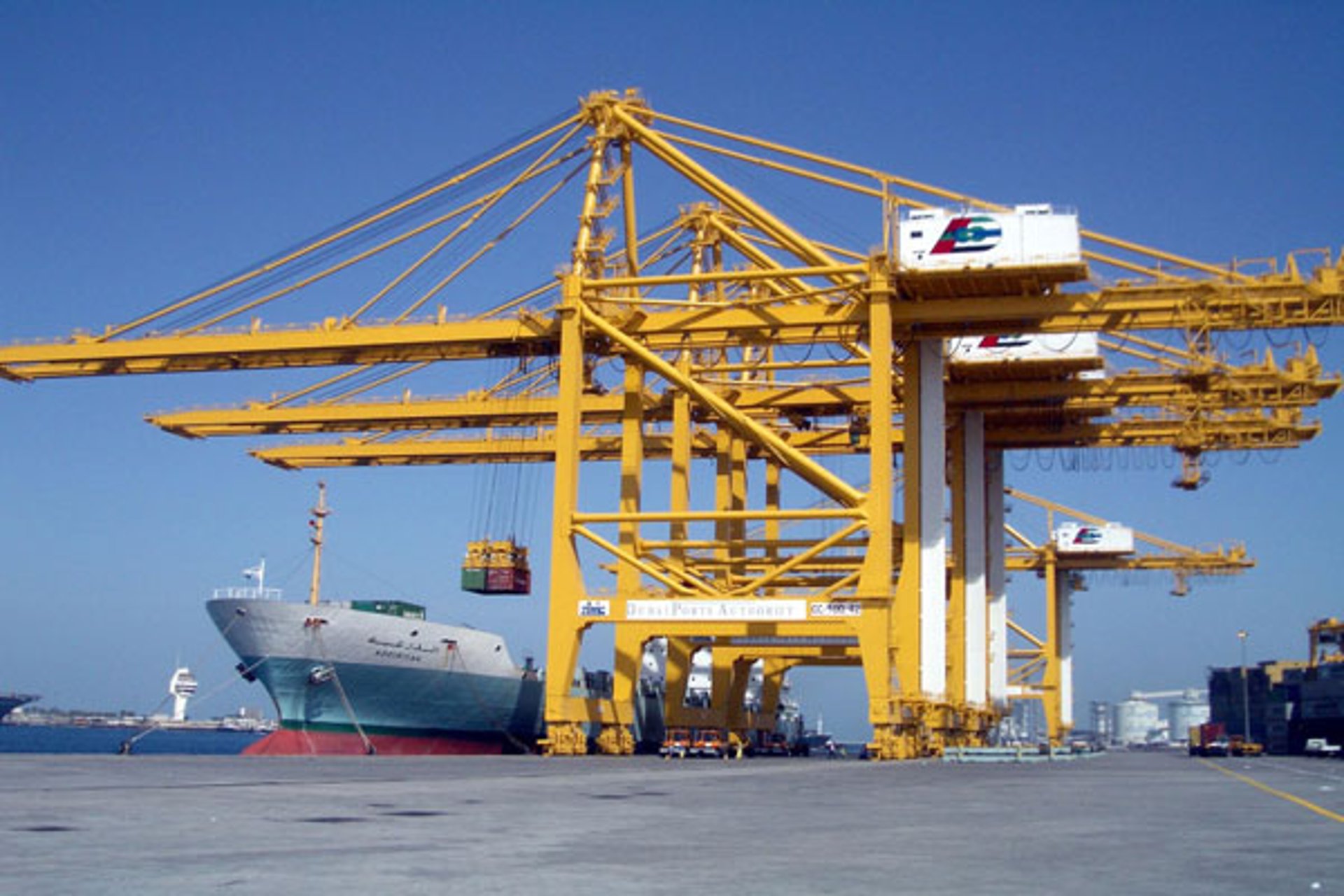
For port operators, mining engineers and heavy industry procurement teams across South Africa: TRATOSFLEX-ESDB-FO® is a purpose-built medium-voltage reeling cable engineered for 300m/min operation, extreme tensile loads and continuous torsion – with integrated optical fibre to deliver both power and high-speed data in a single assembly. It addresses the most common failure modes seen at terminals in Durban, Port Elizabeth and Richards Bay: twisting, core breakage, rapid sheath degradation and the complexity of separate cabling systems. Built around award-winning Tratos-JBA® materials, a fully locked anti-torsion structure and strict compliance with VDE, HD and SABS-aligned standards, this cable has proven its performance at landmark installations including Khalifa Port since 2012. Feichun offers a fully equivalent solution with matching technical performance, shorter lead times and competitive pricing for local projects.
Li.Wang
7/23/202615 min read
Introduction: The Cable Challenge for South Africa’s Modernising Infrastructure
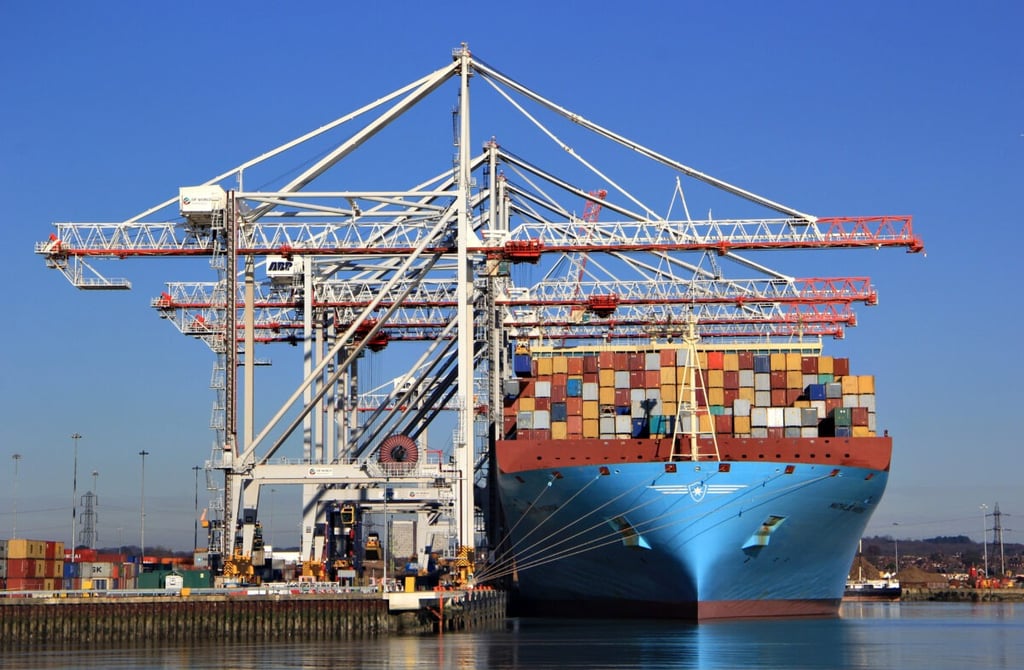
South Africa’s key logistics and industrial hubs – from the Port of Durban, Africa’s busiest container terminal, to the expanding facilities at Port Elizabeth and Richards Bay – are undergoing a steady shift toward higher throughput, greater automation and longer operational hours. Ship-to-shore cranes, automated stacking cranes, rubber-tyred gantries, bulk ship loaders and reclaimer systems are all being upgraded to move faster, lift heavier loads and run more reliably around the clock. But this transition places immense strain on one of the most critical components of every moving system: the reeling cable that delivers power and carries control signals to the equipment.
Standard medium-voltage reeling cables used in these applications have always struggled to keep pace with modern demands. Under high winding speeds, repeated flexing and constant twisting as equipment travels back and forth, internal components shift out of alignment, the cable develops a permanent “corkscrew” distortion, conductors fatigue and break, insulation tears and outer sheaths degrade rapidly under salt spray, ultraviolet radiation, abrasion and oil contamination. Operators are left dealing with unplanned downtime, frequent replacements, inflated maintenance budgets and the risk of safety incidents caused by failing cabling. Many sites also run separate power and fibre optic cables, doubling the installation work, creating more connection points that can fail and adding extra weight and bulk that places further stress on reels and guide systems.
TRATOSFLEX-ESDB-FO® was developed specifically to solve these exact problems. It is a medium-voltage flexible reeling cable with integrated optical fibres, designed from the ground up for end-feed and centre-feed monospiral reel systems operating at high speed, high tension and under continuous torsional load. It represents a major advance in reeling cable design, combining proprietary Tratos-JBA® elastomer technology – recognised with the UK Queen’s Award for Enterprise Innovation – a mechanically locked anti-torsion structure and purpose-built electrical insulation to deliver reliable performance where standard cables simply cannot survive. Every design choice is rooted in established electrical and mechanical engineering principles, and every performance claim is backed by verifiable testing and long-term real-world operation at major international facilities.
This article explains exactly how this cable is built, why each material and structural choice matters, how it performs against standard alternatives, and why it is particularly well suited to the conditions found across South Africa’s ports, mines and bulk handling operations. We also outline how Feichun’s equivalent range matches all key performance and compliance requirements, offering a practical alternative for projects seeking better availability and cost control.
Core Design & Engineering Principles: Built for Dynamic Stress
To understand why TRATOSFLEX-ESDB-FO® performs so differently from standard reeling cables, it is necessary to look beyond basic specifications and examine the engineering logic behind every layer and material choice. Most conventional reeling cables are built with static or low-speed use in mind, and their construction relies on components that move independently of one another once subjected to repeated winding and twisting forces. This relative movement is the root cause of almost all premature failures: as the cable flexes and twists, conductors, insulation and sheaths slide against each other, creating friction, fatigue and permanent deformation that eventually leads to breakdown.
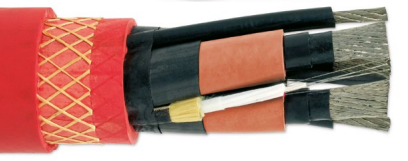
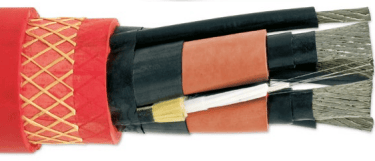
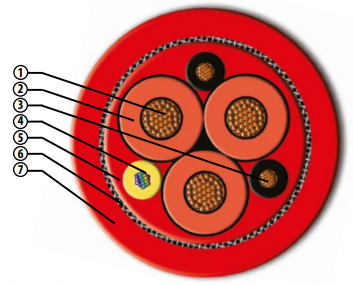
TRATOSFLEX-ESDB-FO® eliminates this failure pathway by adopting a fully integrated, mechanically stabilised design where every element works together as a single unit, rather than as separate parts stacked together. The cable is constructed in seven distinct layers, each selected and engineered to perform a specific function, with every choice aligned to the combined electrical, mechanical and environmental demands of high-speed reeling service.
Conductor Construction
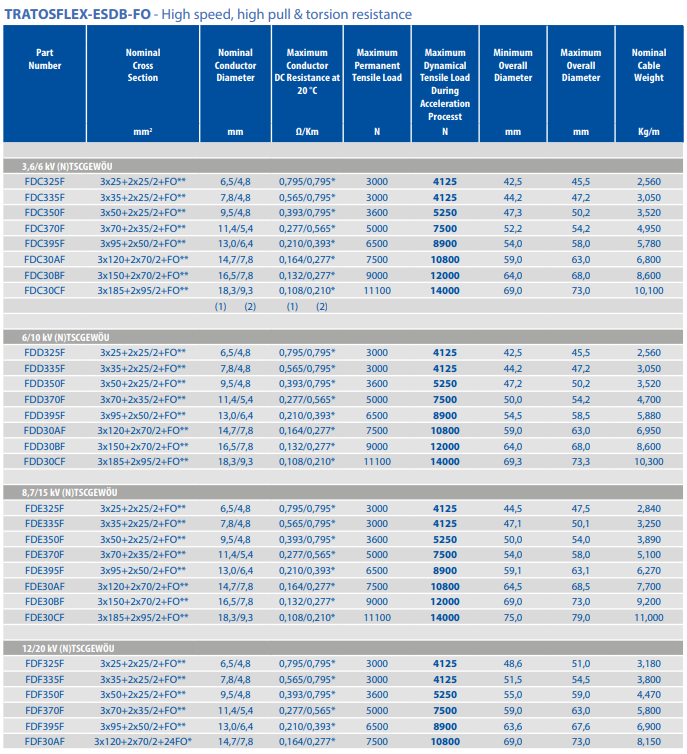
Starting from the centre of the cable, the first element is the conductor, manufactured from finely stranded annealed copper with a flexibility rating exceeding VDE 0295 Class 5. Standard Class 5 conductors are already designed for flexible applications, but this construction uses finer strands and a tighter pitch to reduce bending stress by spreading deformation across more individual wires. This follows the fundamental principle that repeated bending fatigue is directly proportional to the radius of the individual elements within a conductor; by keeping strand diameter small, peak stress at the point of flex is reduced significantly, extending the number of cycles the conductor can withstand before failure. This greater flexibility also lowers the minimum bend radius required, allowing the cable to be used on smaller diameter reels without excessive strain, and reduces the pulling force needed to wind and unwind the assembly. For example, the 3x25mm² phase conductor has a nominal diameter of 6.5mm and a maximum DC resistance of 0.795 ohms per kilometre at 20°C, while the 3x185mm² measures 18.3mm with a resistance of 0.108 ohms per kilometre – figures that confirm both electrical efficiency and mechanical pliability.
Electrical Insulation & Stress Control
Surrounding each phase conductor is a three-layer electrical stress control system: an inner semiconductive layer, the main insulation material Tratosflex-ESDB-I®, and an outer semiconductive layer. This design follows well-established electrical field theory, which shows that the interface between a round conductor and solid insulation creates areas of concentrated electrical stress that can lead to partial discharge, tracking and eventual insulation breakdown over time. The semiconductive layers conform perfectly to the surface of the conductor and the inner face of the insulation, creating a smooth, uniform electric field across the entire cross-section. The insulation material itself is formulated to match or exceed the performance of high-grade ethylene-propylene rubber (HEPR), offering excellent dielectric strength, high resistance to partial discharge and stable electrical properties even when subjected to continuous mechanical flexing, compression and temperature cycling.
Earth Conductor & Shielding
Bundled alongside the insulated phase conductors are the protective earth conductors, each also fitted with its own semiconductive layer. This is not a standard feature on most reeling cables, but it is critical for both electrical safety and mechanical consistency. The semiconductive layer ensures a controlled electrical path between the earth conductor and the outer semiconductive layer of the phase insulation, with a maximum resistance of 500 ohms specified between these two points when tested according to VDE 0472 Part 512. This guarantees effective electrostatic shielding, limits the risk of voltage build-up on the cable surface and provides a reliable low-resistance path for fault currents to flow safely back to the system earth. Mechanically, it also ensures consistent roundness and structural balance across the cable cross-section, preventing uneven compression and distortion as the cable is wound onto the reel. The earth conductors are typically arranged in parallel pairs – for instance, 2x25/2mm² or 2x50/2mm² – to deliver both sufficient current carrying capacity and structural symmetry.
Integrated Optical Fibre Unit
Integrated into the cable structure alongside the power and earth cores are the optical fibre units, placed in a central, mechanically neutral position within the cable core. Standard configuration uses 62.5/125µm multimode fibres, with options available for 50/125µm multimode or E9/125µm single-mode fibres, in counts ranging from 6 to 24 fibres as required. Locating the fibres in this central position means they experience the lowest possible levels of tensile, compressive and shear stress as the cable bends and twists. Each fibre is also buffered and stranded within its own protective sheath, ensuring that the optical path remains unaffected by the mechanical forces acting on the outer parts of the cable. This integrated arrangement removes the need for separate fibre cables, eliminates the risk of damage caused by two separate cables rubbing against each other or being routed differently, and ensures that control, video, sensor and automation data can be transmitted reliably alongside power, with no risk of electromagnetic interference from the high-voltage power cores.
Inner Sheath
Enclosing the entire cable core is the inner sheath, manufactured from Tratos-JBA-IS®, a red-coloured proprietary elastomer compound. This layer bonds all internal elements together into a single solid assembly, preventing relative movement between cores and fibres during operation. It also acts as a barrier against oil, grease and chemical ingress, and provides a degree of mechanical cushioning to absorb minor impacts and compression forces. The material is formulated to maintain consistent adhesion to all elements of the core while remaining flexible across the full operating temperature range from -40°C up to +80°C.
Anti-Torsional Protection Layer
Above the inner sheath sits the dedicated anti-torsional protection layer, the single most important feature that sets this cable apart from standard alternatives. This layer is constructed from high-tensile strength synthetic fibres arranged in a tightly locked braided or helical structure that resists relative rotation between the inner core and the outer sheath. When a standard cable is subjected to twisting forces as it passes over the reel or through guide rollers, the inner core and outer sheath rotate independently, building up torsional stress that eventually distorts the cable into a corkscrew shape. The anti-torsion layer works on the principle of differential rotation restriction: it allows the cable to bend freely around the reel, but resists the twisting forces that would otherwise separate the internal layers. Any torsional energy generated during operation is absorbed and dissipated through the structure rather than being transferred to the power cores, insulation or fibres. This is what allows the cable to operate reliably at speeds up to 300m/min on end-feed reels, 200m/min on centre-feed reels and 60m/min on random travel systems, where standard cables would fail within a fraction of the time.
Outer Sheath & Tratos-JBA® Technology
The outermost layer is the outer sheath, made from Tratos-JBA-OS®, another proprietary red elastomer compound that exceeds the performance requirements of the 5GM5 grade specified in VDE standards. This material is the result of years of research and development, and was the technology that earned Tratos the Queen’s Award for Enterprise Innovation in 2019. It is formulated using advanced polymer cross-linking and specialised filler systems to deliver a unique balance of properties that standard rubber compounds cannot match: exceptional resistance to ozone, ultraviolet light, salt spray, mineral oils, diesel and most common industrial chemicals; outstanding abrasion and tear resistance; and the ability to retain its flexibility and mechanical properties across an extremely wide temperature range. Where standard rubber sheaths harden, crack or degrade rapidly when exposed to the coastal conditions found around Durban and Port Elizabeth, or the temperature extremes of inland mining regions, Tratos-JBA® maintains its integrity for years of continuous service.
Every element of this design follows basic but rigorously applied principles: electrical stress is controlled and equalised, mechanical loads are distributed evenly and resisted by structures designed specifically for the forces involved, and materials are selected to withstand the exact environmental conditions the cable will encounter. The result is a cable that does not simply tolerate the demands of high-speed reeling – it is engineered to thrive under them.
Technical Specifications: Verified Performance & Compliance
All performance data for TRATOSFLEX-ESDB-FO® is established in accordance with recognised international standards, with full traceability for every parameter. The cable is designed and tested to VDE 0250 Part 813 and HD 620 S1 Page 9, with conductor construction conforming to VDE 0295. These standards form the basis of equivalent specifications referenced within South African SABS regulations, making the cable fully acceptable for use in local port, rail and mining projects.
Voltage & Electrical Ratings
Four standard voltage ratings are available to suit most common medium-voltage applications: 3.6/6kV, 6/10kV, 8.7/15kV and 12/20kV. Each rating is matched to a corresponding maximum continuous operating voltage and factory AC withstand test voltage: the 3.6/6kV cable operates at a maximum of 4.2/7.2kV and is tested at 11kV, the 6/10kV runs up to 6.9/12kV with a test level of 17kV, the 8.7/15kV reaches 10.4/18kV and is tested at 24kV, while the 12/20kV variant is rated for 13.9/24kV and undergoes a 29kV withstand test. These test voltages represent a significant safety margin above the maximum operating voltage, confirming the insulation system’s ability to withstand transient overvoltages and long-term electrical stress.
Temperature & Mechanical Ratings
Operating temperature ranges are specified as -40°C to +80°C for fixed installation conditions, and -30°C to +80°C during active operation. This range fully covers all climatic conditions encountered across South Africa, from cold winter nights on the Highveld to hot, humid summers along the coast, and the extreme temperature swings seen in some inland mining regions.
Mechanical performance is sized to match the demands of heavy lifting equipment. Permanent tensile load ratings range from 3000 newtons for the 3×25mm² construction up to 11100 newtons for the largest 3×185mm² size. The dynamic tensile load – the maximum force the cable can safely withstand during acceleration and deceleration cycles – is set at approximately 1.3 to 1.8 times the permanent load rating, ranging from 4125 newtons to 14000 newtons. This extra margin accounts for the inertial forces generated when large cranes and bulk handling equipment start and stop moving, which is one of the most common causes of premature cable failure in high-speed systems.
Full dimensional and electrical data is available for every part number, including nominal conductor diameter, maximum DC resistance at 20°C, minimum and maximum overall diameter and nominal weight per metre. For example, the 6/10kV 3×95+2×50/2+FO variant has a maximum conductor resistance of 0.210 ohms per kilometre for the phase cores and 0.393 ohms per kilometre for the parallel earth cores, an overall diameter between 54.5mm and 58.5mm and a nominal weight of 5.880kg per metre. This level of detailed data allows engineers to verify compatibility with existing reel dimensions, guide rollers, tensioning equipment and electrical protection settings before installation.
Speed & Application Limits
The cable is calibrated for three distinct operating modes based on reel configuration: end-feed monospiral reels allow maximum travel speeds of 300 metres per minute, centre-feed monospiral reels up to 200 metres per minute, and random travel or tender systems up to 60 metres per minute. These figures are not theoretical targets – they are derived from extensive cycle testing and proven real-world operation, and represent the speeds at which the cable maintains full mechanical and electrical integrity over its intended service life.
Real-World Value for South African Operations
The design and performance characteristics of TRATOSFLEX-ESDB-FO® align almost perfectly with the operating conditions and business priorities of port operators and heavy industry across South Africa.
At terminals in Durban, Port Elizabeth and Richards Bay, equipment operates in a harsh marine environment where salt spray, high ultraviolet levels and constant humidity accelerate the breakdown of standard cable sheaths. Crane speeds are being increased to improve vessel turnaround times, and automation systems are being rolled out to reduce reliance on manual operation and improve consistency. All these changes increase the mechanical and environmental stress placed on reeling cables, exactly the conditions this cable was engineered to handle.
For operators, the most immediate benefit is a substantial reduction in unplanned downtime. Standard reeling cables in these applications typically require replacement every 12 to 24 months, with unexpected failures often occurring between scheduled maintenance intervals. Every failure halts crane or reclaimer operation, disrupting vessel schedules, delaying cargo movement and creating ripple effects across the entire supply chain. TRATOSFLEX-ESDB-FO® has demonstrated service lives of five years or more in comparable high-speed port applications, including the automated terminal at Khalifa Port where installations commissioned in 2012 continue to operate reliably today. This extended service life, combined with the low probability of sudden failure, drastically improves overall equipment effectiveness and allows maintenance teams to plan replacements during scheduled shutdowns rather than reacting to emergencies.
The integrated optical fibre design also supports the broader push toward automation across South Africa’s logistics sector. Modern automated cranes rely on high-speed data links to transmit positioning information, video feeds, sensor readings and control commands between the fixed control room and moving equipment. When power and data are delivered in a single cable, installation becomes simpler and faster, and the number of potential failure points is reduced. The fibre units are protected from both mechanical damage and electrical interference, ensuring consistent signal quality even as equipment moves at full speed. This capability is particularly valuable as terminals upgrade to automated stacking cranes, remote-controlled ship-to-shore units and automated gate systems.
In mining and bulk handling applications – from coal and iron ore export terminals to inland mineral processing facilities – the cable’s resistance to abrasion, dust and oil contamination is equally important. The high tensile strength and anti-torsion design also make it suitable for long travel distances on large stacker-reclaimer systems, where cable lengths can exceed several hundred metres and weight and tension become critical design considerations.
When evaluating total cost of ownership, the higher initial purchase price of a high-performance cable is almost always offset by savings in maintenance labour, replacement parts, downtime and lost throughput. For a typical container crane operating at a major South African port, extending cable service life from 18 months to five years can reduce annual maintenance costs for that single item of equipment by more than 60%, while eliminating the revenue losses associated with even a few hours of unplanned downtime each year.
Feichun Equivalent Solution: Proven Performance, Practical Sourcing
For many project teams and procurement departments, specifying premium European cables can present challenges around cost, availability and delivery lead times. Feichun has developed a fully equivalent range of high-speed anti-torsion reeling cables that matches all key performance characteristics and compliance requirements of TRATOSFLEX-ESDB-FO®, while offering improved supply chain flexibility and competitive pricing.
Feichun’s equivalent range follows the same fundamental design principles: conductors with flexibility exceeding VDE 0295 Class 5, three-layer electrical stress control, dedicated anti-torsion construction and high-performance elastomer sheaths that meet or exceed 5GM5 grade requirements. All designs are engineered and tested to the same VDE, HD and IEC standards, with full documentation and test certificates provided for every batch. The full range of voltage ratings, conductor sizes and optical fibre configurations is available, allowing for direct like-for-like replacement without any need to modify reel dimensions, connection arrangements or system protection settings.
In addition to matching technical performance, Feichun’s offering delivers three key practical advantages for South African projects: significantly shorter lead times compared to long-distance supply from Europe, typically 20% to 35% lower total installed cost, and dedicated technical support available throughout the specification, installation and commissioning process. For urgent replacement projects or fast-tracked terminal upgrades, the ability to source fully compliant cable on short notice can be as important as the cable’s performance itself.
Selection Guide: Matching Cable to Application
Selecting the correct cable configuration begins with defining the system requirements and operating conditions clearly.
First, select the appropriate voltage rating based on the nominal system voltage and the level of safety margin required. For a 6.6kV system, the 8.7/15kV rating is often specified to provide extra insulation margin, while 12/20kV is the standard choice for 11kV installations.
Next, determine the required conductor cross-section based on continuous current rating, short-circuit withstand capacity and the maximum allowable tensile load for the reel system. It is important to confirm that the cable’s rated permanent and dynamic tensile loads are compatible with the maximum tension that will be applied during operation, particularly on long travel lengths or high-speed systems.
Choose the optical fibre type and count based on the data transmission requirements: multimode fibres are ideal for high-speed control links over shorter distances, while single-mode fibres should be selected for longer distances or future-proofing for higher bandwidth applications.
Match the speed rating to the reel design: up to 300m/min for end-feed monospiral reels, up to 200m/min for centre-feed monospiral reels and up to 60m/min for random travel or tender systems.
Finally, confirm compatibility with environmental conditions, including temperature range, exposure to salt, oil or chemicals, and minimum bend radius requirements for the reel and guide rollers. For fixed installation the minimum bend radius is six times the overall cable diameter, while during dynamic reeling operation this increases to 12 times the overall diameter to ensure stresses remain within safe limits.
Frequently Asked Questions
Is this cable approved for use in South African ports and mines?
The cable is designed and tested to widely accepted international standards that are referenced within South African SABS specifications, making it acceptable for use on most major projects and with all major engineering, procurement and construction contractors operating locally. Full compliance documentation is available for review and approval as part of the project specification process.
Can it be used as a direct replacement for standard reeling cables?
Yes, in almost all cases. The dimensional ranges, electrical performance and connection arrangements are directly compatible with standard cable designs, while the improved mechanical performance delivers greater reliability and longer life without requiring changes to existing installation hardware.
Will the optical fibres be damaged by repeated winding and twisting?
The fibre units are placed in a mechanically neutral position within the cable core and are individually buffered and reinforced. The complete assembly has been tested through more than 100,000 reeling cycles with no measurable change in optical performance, and the anti-torsion structure prevents twisting forces from reaching the fibre elements.
How does Feichun verify quality and performance?
Every production batch is subjected to a full schedule of factory tests including conductor resistance measurement, high-voltage withstand testing, dimensional verification and material property testing. Full test certificates and material traceability documentation are provided with every delivery.
What is the expected service life in typical South African port conditions?
With correct installation, tension control and routine inspection, service life of five years or more is typical – compared to 12 to 24 months for standard rubber-sheathed alternatives. Actual life will vary based on operating speed, cycle frequency and exposure to contaminants.
Conclusion
TRATOSFLEX-ESDB-FO® represents a deliberate, engineering-led solution to one of the most persistent problems in modern port and heavy industry operations. It is not simply an improved version of a standard cable – it is a complete redesign built around the specific forces and environmental conditions encountered in high-speed reeling service. By combining advanced conductor construction, precision electrical stress control, purpose-built anti-torsion reinforcement and award-winning Tratos-JBA® sheath technology, it eliminates the twisting, fatigue and degradation that causes standard cables to fail prematurely.
For South African operators, this technology offers more than just a longer-lasting cable. It provides a foundation for reliable automation, more predictable maintenance, better use of existing infrastructure and significantly lower total operating cost over the full lifecycle of the equipment. Whether upgrading existing terminals or designing new facilities, selecting reeling cable that is built for the actual demands of the application is one of the most cost-effective decisions an engineering team can make.
If you are planning upgrades at Durban, Port Elizabeth, Richards Bay or any mining or bulk handling facility, or if you are looking for a fully equivalent replacement cable with better availability and pricing, contact the Feichun team today for full technical data, detailed quotations and delivery schedules:
Email Address: Li.wang@feichuncables.com
© 2025. All rights reserved.
One-click to Quickly Contact
Products
Contact
Company
Location:
Building A Private Science and Technology Park, Hefei Economic and Technological Development Zone, Anhui Province, China
Heat Resistant Cable
WhatsApp: +86 17333223430
Social Media: