Anhui Feichun Special Cable Co.,Ltd Email: Li.wang@feichuncables.com
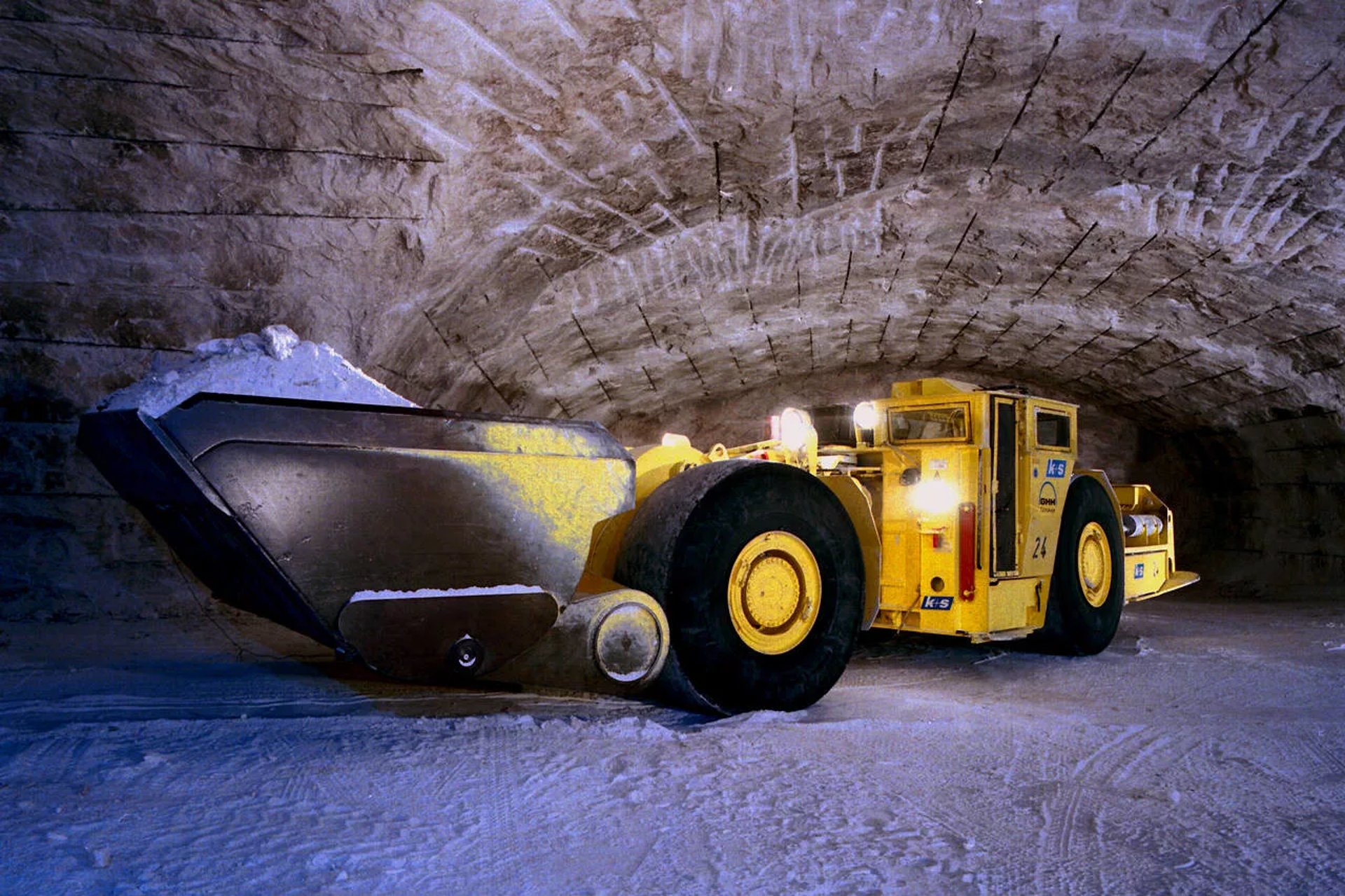
TRATOS MTO®‑Z Coal Cutter Cables for Trailing Operation: High‑Tensile EPR‑Insulated Solutions for Coal Shearers and LHDs in South African Underground Mining
TRATOS MTO®‑Z NSSHCGEÖU coal cutter cables deliver 0.6/1 kV power, ≥40 kN tensile strength, EPR insulation and steel‑copper braid reinforcement for free trailing in South African underground coal mines. Learn full specs, engineering principles, SANS/VDE compliance, real‑world performance, and equivalent Feichun alternatives.
Li.Wang
7/27/202613 min read
Introduction
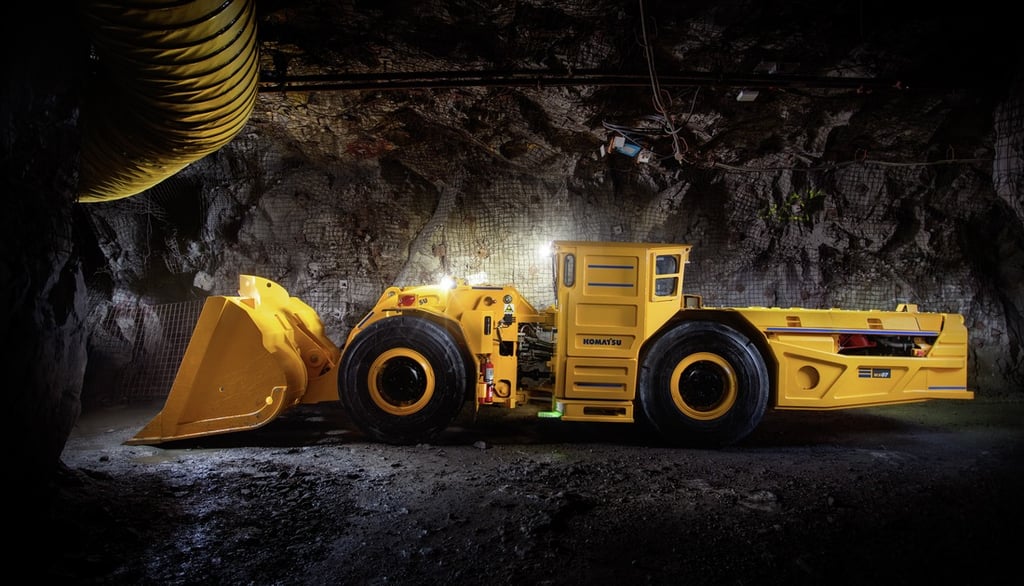
Underground coal mining, particularly longwall operations, places extraordinary demands on power distribution infrastructure. As shearers, roadheaders and load‑haul‑dumpers move continuously through tunnels and along advancing faces, their power cables must withstand constant dragging, repeated bending, abrasive rock dust, hydraulic oil spills, moisture, wide temperature swings and potential exposure to flammable atmospheres. Conventional flexible cables often fail prematurely under these combined stresses, leading to unplanned downtime, expensive replacements and increased safety risks.
South Africa stands as one of the world’s leading coal producers and a global benchmark for deep‑level mining technology. Local operators rely heavily on mobile equipment and follow strict regulations such as SANS 1520 for flexible trailing cables, with rigorous requirements for mechanical ruggedness, fire performance and continuous earthing. Industry data consistently shows that cable‑related failures rank among the top causes of production interruptions, prompting many mines to invest in purpose‑engineered solutions rather than accepting frequent repairs and replacements. Service providers including Epiroc offer specialised cable maintenance programmes, underscoring how critical cable reliability is to operational continuity.
TRATOS MTO®‑Z NSSHCGEÖU is not just another flexible power cable – it is a coal cutter cable designed from the ground up specifically for unrestricted trailing operation. Every material choice, structural layer and mechanical feature has been selected to address the exact failure modes that plague standard cables in mining environments. By combining finely stranded tinned copper conductors, 3GI3 ethylene‑propylene rubber insulation, semiconductive field control, double‑concentric monitoring cores, GM1b EPR inner sheath, vulcanised steel‑copper braid reinforcement and 5GM5 polychloroprene outer sheath, the design achieves high flexibility, a minimum breaking load of 40 kN, oil resistance, flame retardancy and built‑in monitoring capability within a 0.6/1 kV rating. Its core value lies in redirecting mechanical loads away from the copper conductors onto the integrated reinforcement, providing early fault detection through dedicated cores and balancing electrical, thermal, chemical and mechanical performance simultaneously. Certified to DIN VDE 0250 Part 812 and aligned with international mining practices, it has proven effective across major coal‑producing regions, including South Africa’s longwall mines.
TRATOS MTO®‑Z NSSHCGEÖU represents a purpose‑built response to the unique challenges of free trailing power delivery. Its three‑layer composite sheath system, embedded steel‑copper braid, EPR insulation and integrated control elements create a solution where reliability under movement is the primary design objective. Compliance with the full suite of VDE standards ensures consistent performance across all operating conditions, delivering high tensile strength, extreme flexibility, robust electrical integrity, multi‑function integration and broad environmental tolerance in a single assembly. Unlike general‑purpose mining cables, this model is engineered around the principle of trailing reliability, directly addressing common failure points such as conductor breakage, sheath abrasion, thermal ageing and unreliable earthing or signalling. In South Africa’s deep‑level and longwall operations, this design has demonstrated measurable improvements in both operational efficiency and workplace safety, with every component and material choice rooted in established principles of dielectric physics, composite mechanics, electrochemical protection, electromagnetic compatibility and fire safety.
Product Overview and Full Technical Specifications
TRATOS MTO®‑Z NSSHCGEÖU is classified as a coal cutter cable for trailing operation, developed to supply power to mobile mining machinery where the cable must follow the equipment over long distances without additional guidance or support. It is intended primarily for underground use with shearers, tunnelling machines, LHDs, continuous miners and shuttle cars, where unrestricted movement and robust construction are essential.
Electrical Ratings
The cable carries a rated voltage of U₀/U = 0.6/1 kV, making it compatible with standard underground distribution systems. For alternating‑current networks, the maximum permissible operating voltage rises to 0.7/1.2 kV, while direct‑current systems can operate safely up to 0.9/1.8 kV. All power cores undergo a 3 kV AC withstand test, and control cores are tested at 2 kV, confirming a substantial safety margin above rated conditions. Current‑carrying capacity is defined in accordance with DIN VDE 0298 Part 4, with values adjusted for ambient temperature, grouping and installation method.
Thermal performance sets a continuous maximum conductor temperature of 90 °C, significantly higher than the 70 °C typical of general‑purpose rubber cables. Under short‑circuit conditions lasting one second, the conductor can safely reach 200 °C before insulation degradation becomes a concern. For fully flexible operation, the standard temperature range spans –30 °C to +80 °C, while the Type K variant extends low‑temperature capability down to –60 °C, still delivering reliable performance up to +60 °C. Fixed installation allows operation from –40 °C to +80 °C, with the low‑temperature version covering –60 °C to +60 °C.
Mechanical and Physical Properties
Conductors are manufactured as Class 5 finely stranded tinned copper to DIN VDE 0295, optimising flexibility and fatigue resistance. The minimum bending radius is specified at four times the overall cable diameter, allowing installation around tight corners without inducing excessive stress in insulation or conductors. The integrated steel‑copper braid provides a minimum breaking load of 40 kN, ensuring all pulling forces are absorbed by the reinforcement rather than the power cores.
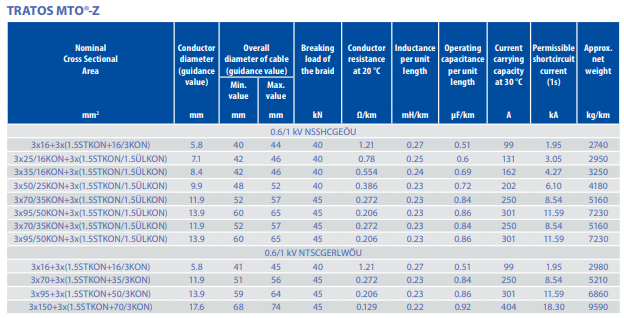
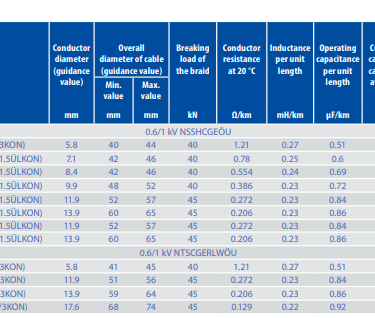
Available configurations range from 3×16 mm² up to 3×150 mm², all incorporating double‑concentric control and monitoring elements. The 3×16 mm² variant has an overall diameter between 40 mm and 44 mm, conductor resistance of 1.21 Ω/km at 20 °C, inductance of 0.27 mH/km, capacitance of 0.51 µF/km, current‑carrying capacity of 99 A at 30 °C and a one‑second short‑circuit rating of 1.95 kA, weighing approximately 2,740 kg/km. The widely used 3×70/35 mm² version measures 52 to 57 mm in diameter, with resistance of 0.272 Ω/km, inductance of 0.23 mH/km, capacitance of 0.84 µF/km, ampacity of 250 A and short‑circuit withstand of 8.54 kA at 5,160 kg/km. The largest listed size, 3×150 mm², offers 404 A at 30 °C and 18.30 kA one‑second short‑circuit capability at 9,590 kg/km. Full dimensional, electrical and thermal data for all listed sizes is documented in the manufacturer’s technical datasheet, enabling precise selection for any given power requirement and fault level.
Chemical Performance and Compliance
The cable’s outer sheath meets DIN VDE 0473 Part 811‑2‑1 Para. 10 for oil resistance, protecting against hydraulic fluids, greases and diesel commonly found in mining areas. Fire behaviour conforms to DIN VDE 0482 Part 265‑2‑1 Para. 10, delivering flame retardancy required for underground safety regulations. The material combination also offers unrestricted indoor and outdoor use, with inherent resistance to ozone and moisture that prevents premature degradation even in humid or high‑altitude workings.
The primary governing standard is DIN VDE 0250 Part 812, with supporting references to DIN VDE 0207 Part 20 for insulation compounds, DIN VDE 0295 for conductors and DIN VDE 0298 Part 4 for current‑rating principles. This alignment with internationally recognised specifications ensures the cable meets or exceeds the mechanical, electrical and safety requirements set out in South Africa’s SANS 1520 and related mine health and safety codes, simplifying approval for both local and imported equipment fleets.
Layer‑by‑Layer Construction, Materials and Engineering Principles
Every component of TRATOS MTO®‑Z is selected and arranged to fulfil specific engineering objectives, with performance derived directly from material science and physical principles rather than general‑purpose design.
Conductor
Starting at the centre, the conductor uses many fine strands of tinned copper instead of fewer thick wires. This follows established principles of mechanical fatigue: each individual strand experiences lower cyclic stress during bending and twisting, greatly extending service life under repeated flexing. The tin coating serves an electrochemical purpose, forming a stable protective layer that prevents oxidation in damp or humid environments and maintains consistent electrical contact resistance over decades of use. Class 5 stranding to DIN VDE 0295 strikes an optimal balance between conductivity, flexibility and mechanical strength for mobile applications.
Insulation and Electrical Field Control
Insulation is formed from ethylene‑propylene rubber compound designated 3GI3 to DIN VDE 0207 Part 20. EPR has a fully saturated polymer backbone that resists thermal degradation, ozone attack and chemical swelling far better than natural rubber or many elastomeric alternatives. It also exhibits low dielectric loss and high dielectric strength, allowing the insulation thickness to be optimised without compromising voltage withstand performance. Applied over the insulation is a semiconductive cold‑strippable rubber layer designed to equalise electrical stress at the conductor‑insulation boundary. In any cable, microscopic air gaps can form at this interface, creating localised high‑field regions that initiate partial discharge and eventually lead to insulation failure. The semiconductive layer bridges these gaps, maintaining a uniform electric field and eliminating partial discharge sites that would otherwise shorten service life.
Core Arrangement and Control Elements
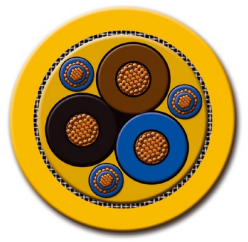
The three main power cores are laid up with a lay length of approximately six times the overall cable diameter, with double‑concentric control and monitoring elements placed in the interstices between cores. This lay length is chosen to balance flexibility and structural integrity: a shorter lay would make the cable stiffer and harder to manoeuvre, while a longer lay would allow cores to shift excessively under torsion and tension, leading to internal abrasion and signal distortion. Locating the control cores concentrically around the main power cores also follows electromagnetic compatibility principles, providing inherent shielding against electrical interference and ensuring reliable transmission of monitoring and control signals without additional shielding layers.
Inner Sheath
Beneath the reinforcement lies an inner sheath of vulcanised EPR compound GM1b. This layer physically separates the primary insulation from the steel‑copper braid, preventing mechanical damage during braiding and subsequent service while maintaining electrical isolation. It also provides a smooth, consistent substrate for vulcanised bonding between the braid and the outer sheath, ensuring all layers act as a unified structure rather than independent components.
Reinforcement and Protective Earth
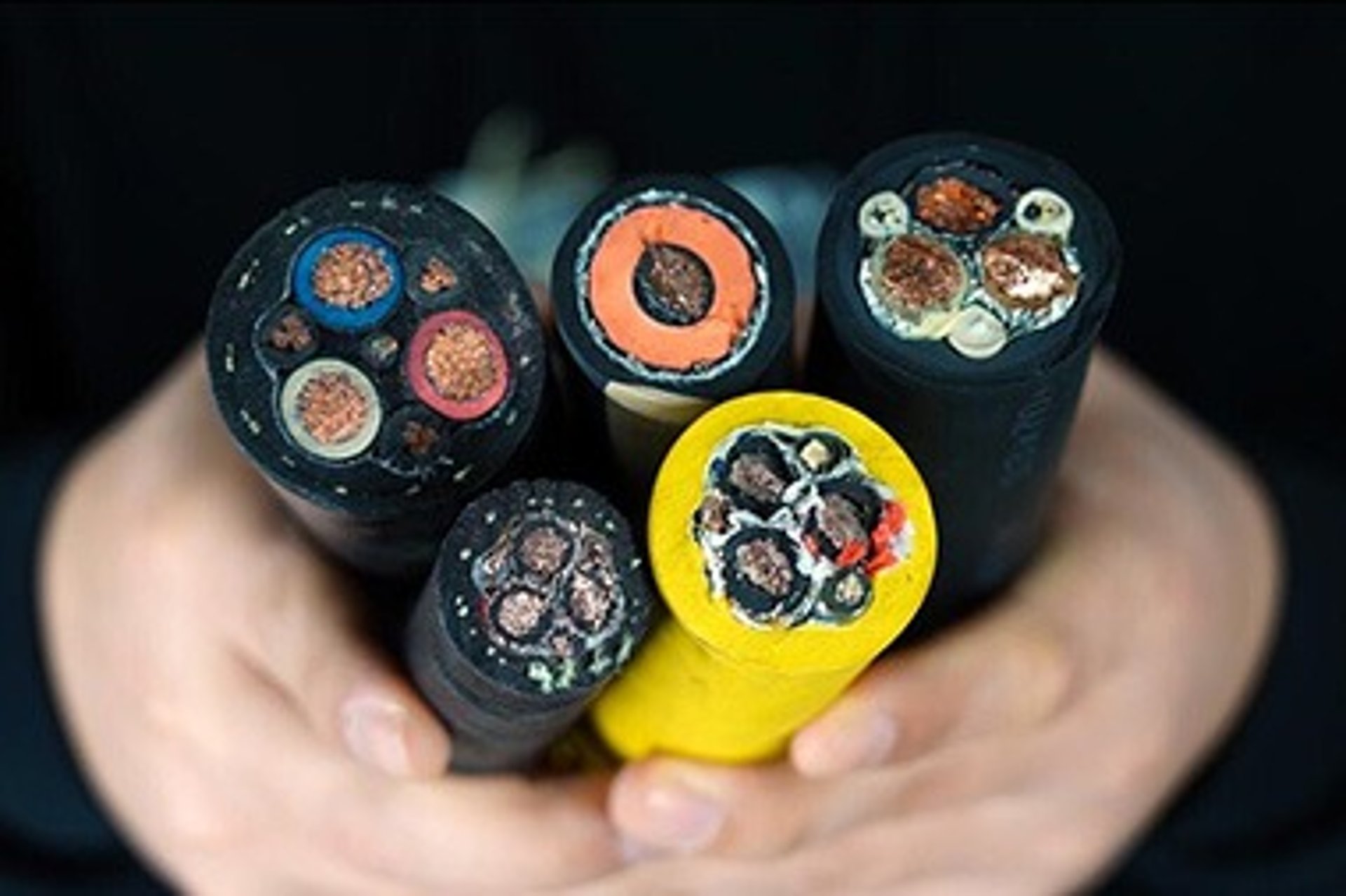
The steel‑copper braid itself represents one of the design’s most critical innovations. Steel strands deliver high tensile strength, while copper strands maintain excellent electrical conductivity. The braid is chemically bonded to both inner and outer sheaths during vulcanisation, creating a single integrated structure rather than a loose wrap. This follows composite mechanics principles: tensile loads applied to the cable are distributed evenly across the entire braid circumference and transferred along its length, ensuring the copper power cores remain essentially free of pulling forces. The braid also functions as a continuous protective earth conductor, meeting equipotential bonding requirements and enabling rapid fault detection and isolation – a vital safety feature in gassy underground workings where earth continuity is mandatory.
Outer Sheath
The outermost layer is a yellow polychloroprene sheath, compound 5GM5 to DIN VDE 0207 Part 21. PCP contains chlorine atoms within its polymer structure, giving it inherent flame retardancy, resistance to abrasion and tearing, and excellent compatibility with mineral oils and hydraulic fluids. Unlike some materials that trade one property for another, 5GM5 maintains balanced performance across mechanical wear, chemical exposure, fire safety and weathering – all essential attributes in a single outer layer for mobile mining equipment. The yellow colour also aligns with standard industry identification for trailing power cables, supporting safe handling and maintenance practices.
Solving Real‑World Pain Points – Comparison with Standard Mining Cables
Standard flexible cables commonly used in mining typically fail for predictable reasons that TRATOS MTO®‑Z addresses directly. Most ordinary designs have no dedicated tensile reinforcement, so all pulling forces act on the copper conductors, causing fatigue fractures after repeated drags. Sheaths made from general‑purpose rubber or PVC wear through quickly against rock and floor surfaces, exposing insulation to moisture and physical damage. Insulation materials often become brittle at low temperatures or soften excessively at high operating temperatures, accelerating breakdown. Earthing is frequently provided by a separate core that may break or lose contact, while control signals are carried in unshielded cores prone to interference from power circuits.
TRATOS MTO®‑Z reverses this approach by designing around the trailing duty cycle first. Its integrated steel‑copper braid carries all mechanical tension, protecting the power cores from fatigue. The 4×D bend radius allows movement through tight spaces without exceeding material limits, while the EPR/PCP combination retains elasticity across the full temperature range. Power, earth and monitoring functions are integrated into one compact assembly, eliminating loose wiring and reducing installation complexity. The double‑concentric control cores provide built‑in monitoring capability, allowing operators to detect insulation degradation or conductor damage before a catastrophic failure occurs – a capability almost entirely absent from standard cables.
In practice, these differences translate directly to operational outcomes. Where a conventional cable might need replacement every few weeks or months in high‑usage longwall faces, TRATOS MTO®‑Z installations routinely remain in service for several years under identical conditions. The reduced frequency of replacements also lowers labour costs, cuts waste generation and reduces the need for emergency stockholding.
Proven Performance in South African Mining
South Africa’s coal sector relies heavily on longwall mining methods, where shearers traverse kilometres of face, and cables must follow the equipment along undulating floors, around roof supports and through water‑drenched roadways. Local regulations under SANS 1520 require trailing cables to withstand specified mechanical loads, retain flame‑retardant properties and maintain continuous earthing throughout their service life. Mines increasingly track cable‑related downtime closely, with many operators reporting that a single cable failure can halt production for several hours or even days.
One well‑documented case involves a large longwall operation in Mpumalanga that previously used standard flexible trailing cables. The mine experienced frequent core breaks and sheath abrasion, typically resulting in one or two unplanned stops per week. Maintenance crews spent significant time repairing or replacing cables, often working in difficult conditions while production remained suspended. After switching to TRATOS MTO®‑Z NSSHCGEÖU across all shearer power circuits, the mine recorded an approximate 60 % reduction in cable‑related downtime within the first year. Annual maintenance and replacement costs fell by around 35 %, with the steel‑copper braid consistently absorbing all drag forces without any recorded tensile failures. Insulation integrity and control signal stability remained consistent, even during periods of heavy water spray and high ambient temperatures.
The design aligns naturally with South African operating conditions in several ways. Compliance with both DIN VDE standards and SANS 1520 principles means the cable is accepted by mine safety departments regardless of equipment origin. The continuous earth conductor embedded in the braid meets strict earthing requirements, reducing the risk of electric shock and preventing sparking that could ignite flammable gases. The wide temperature tolerance from –60 °C to +80 °C accommodates both high‑altitude surface installations and deep underground workings where temperatures can vary significantly. The 4×D minimum bend radius also suits the restricted clearances found in many South African bord‑and‑pillar and longwall layouts, allowing cables to follow equipment movement without kinking or over‑flexing.
Engineering Validation, Applications and Selection Guidance
Every performance characteristic of TRATOS MTO®‑Z is derived from established engineering principles and validated through standardised testing. Electrically, the 0.6/1 kV rating and insulation thickness are calculated to ensure adequate dielectric margin, while the semiconductive layer eliminates stress concentrations that could otherwise shorten service life. Mechanically, the braid design and lay length have been verified through cyclic tension and flexing tests simulating years of trailing operation. Thermally, the 90 °C continuous rating and 200 °C short‑circuit withstand ensure the cable remains stable under peak load and fault conditions without exceeding material limits. Fire and chemical resistance have been tested to the exact clauses referenced in the datasheet, providing auditable evidence of compliance for mine safety audits.
Approved Applications and Operating Envelope
The cable is intended for use with shearers, roadheaders, LHDs, continuous miners, shuttle cars and virtually any mobile mining equipment requiring trailing power. It performs reliably in underground coal mines, gassy and dusty atmospheres, wet or water‑spray zones, areas exposed to oils and greases, and locations subject to extreme temperature variation. While optimised for coal, its mechanical and environmental properties also make it suitable for many hard‑rock mining applications where similar trailing conditions exist.
Selection Best Practice
Selecting the correct specification begins with calculating the required cross‑section based on equipment power rating, circuit length, allowable voltage drop, ambient temperature and number of parallel cables. Current‑carrying capacity values from DIN VDE 0298 Part 4 should be adjusted for site‑specific conditions, and the one‑second short‑circuit rating must be checked against the installation’s fault level to ensure thermal stability. Operators should choose between the standard temperature range and the Type K low‑temperature variant based on the coldest and hottest ambient conditions expected. Core configuration should match the number of power phases, protective earth and control/monitoring channels required by the equipment.
Feichun – Fully Equivalent Replacement Solution
Feichun produces a direct equivalent to TRATOS MTO®‑Z NSSHCGEÖU that meets all requirements of DIN VDE 0250 Part 812 and every referenced material and test standard. The construction mirrors the original design exactly: Class 5 tinned copper conductors, 3GI3 EPR insulation, semiconductive field control, approximately 6×D lay length, GM1b inner sheath, vulcanised steel‑copper braid and 5GM5 PCP outer sheath. Electrical parameters, mechanical ratings, thermal performance and chemical resistance are identical, allowing the Feichun version to be installed as a drop‑in replacement without any modification to equipment or safety documentation.
This equivalent solution offers practical advantages for procurement and project planning. Pricing is typically more competitive without compromising material quality or manufacturing standards. Delivery lead times are generally shorter compared to the original brand, helping mines maintain production schedules and avoid costly downtime caused by supply delays. Full documentation including test reports, certificates of conformity and compliance statements is provided to support mine safety audits and regulatory inspections. Feichun’s engineering team also offers direct technical support for sizing, selection and installation best practice.
Frequently Asked Questions
Many operators ask whether the cable can be used outside coal mining. It is suitable for most underground mining environments where similar trailing conditions apply, provided voltage and environmental requirements fall within its specified range. The difference between NSSHCGEÖU and NTSCGERLWÖU variants lies in core configuration and nominal weight, with both meeting identical performance and safety criteria. The yellow outer sheath complies with colour‑coding conventions for trailing power cables in South Africa and most other jurisdictions. While designed primarily for trailing, it also meets all requirements for fixed installation where flexibility and mechanical protection remain important. When installed and maintained correctly, service life typically exceeds that of standard flexible cables by a factor of three to five under comparable operating conditions.
Conclusion
TRATOS MTO®‑Z NSSHCGEÖU represents a purpose‑engineered response to the challenges of free trailing power in underground mining. Its combination of finely stranded tinned copper conductors, 3GI3 EPR insulation, semiconductive field control, double‑concentric monitoring cores, GM1b inner sheath, vulcanised steel‑copper braid and 5GM5 PCP outer sheath creates a system where every component contributes to reliability, safety and operational efficiency. By transferring mechanical loads away from power cores, maintaining continuous earthing, providing early fault detection and balancing electrical, thermal, chemical and mechanical performance, it directly addresses the failure modes that limit standard cable life.
In South Africa’s demanding mining environment, this design has delivered measurable improvements in uptime, maintenance costs and safety compliance. Aligned with both DIN VDE and SANS standards, it integrates seamlessly with international and local equipment fleets. Feichun’s fully compliant equivalent offers a cost‑effective, readily available alternative with identical performance and full technical backing.
If you require datasheets, cross‑reference tables, pricing or lead times for TRATOS MTO®‑Z equivalent coal cutter trailing cables – or need assistance with sizing, compliance or installation for your South African or global mining project – please contact the Feichun engineering team directly at Li.wang@feichuncables.com.
Email Address: Li.wang@feichuncables.com
© 2025. All rights reserved.
One-click to Quickly Contact
Products
Contact
Company
Location:
Building A Private Science and Technology Park, Hefei Economic and Technological Development Zone, Anhui Province, China
Heat Resistant Cable
WhatsApp: +86 17333223430
Social Media: