Anhui Feichun Special Cable Co.,Ltd Email: Li.wang@feichuncables.com
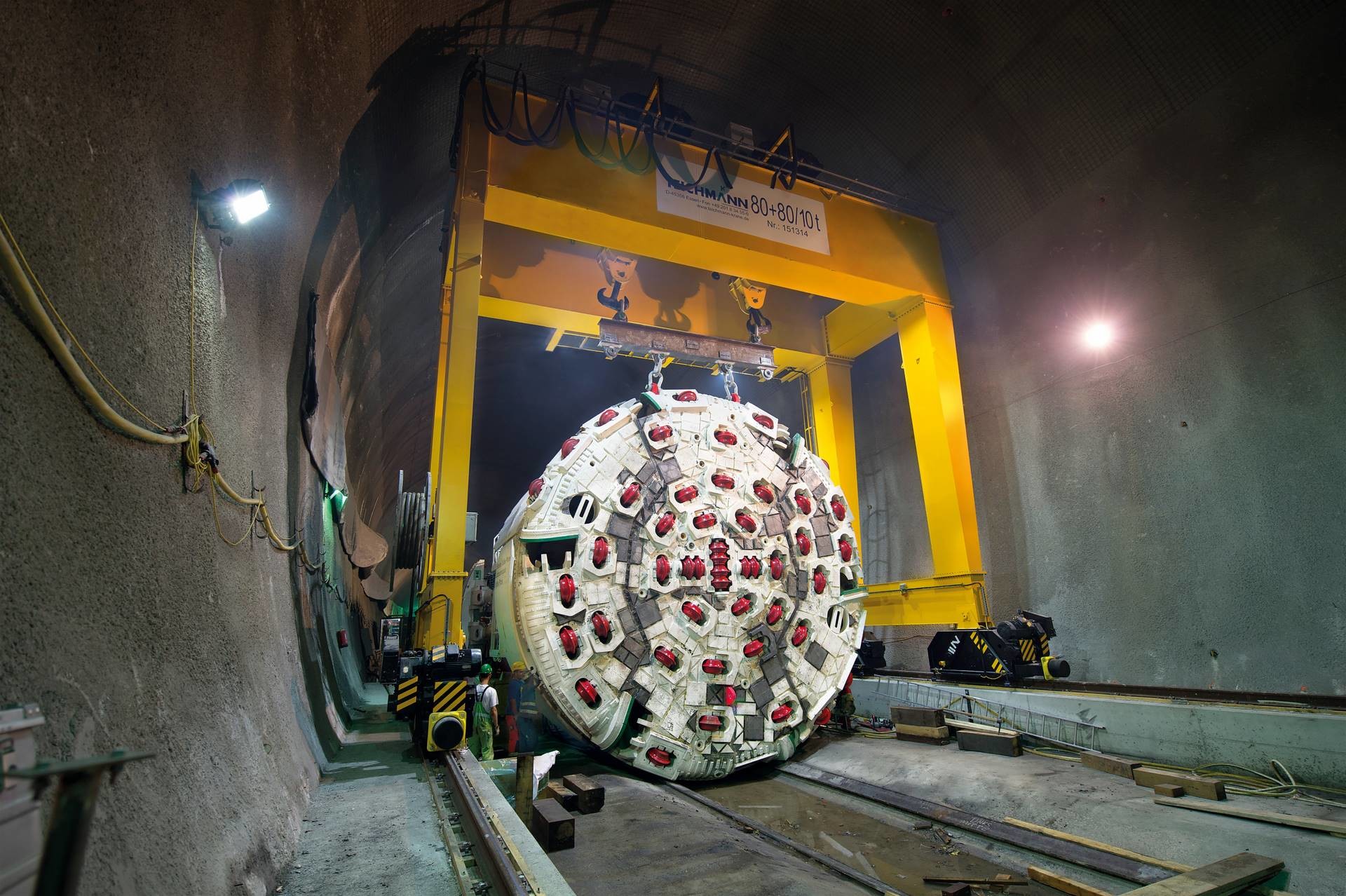
TRATOS MTO®‑TDM NTSCGECWÖU Medium Voltage Reeling Cables for Tunnel Driving Machines in Underground Mines: EPR‑PCP Construction, VDE 0250 Standards and South African Deep‑Level Mining Applications
TRATOS MTO®‑TDM (NTSCGECWÖU) is a DIN VDE 0250 Part 813 compliant medium‑voltage flexible reeling cable purpose‑built for Tunnel Driving Machines (TBMs) and underground mining. With Class 5 tinned copper, EPR 3GI3 insulation, PCP 5GM5 sheath, ±25°/m torsion resistance and 15 N/mm² tensile strength, it solves common failures of standard cables in dynamic, high‑stress, wet and abrasive environments. Proven in South Africa’s deep gold and platinum mines at depths of 2–4 km, meeting DMRE safety rules, delivering 3–5× longer life, 60 % fewer unplanned stops and around 30 % lower total cost. This guide covers design science, material principles, full specifications, selection guidance and Feichun equivalent replacement options.
Li.Wang
7/28/202611 min read
Introduction: The Cable That Keeps Deep Mining Moving
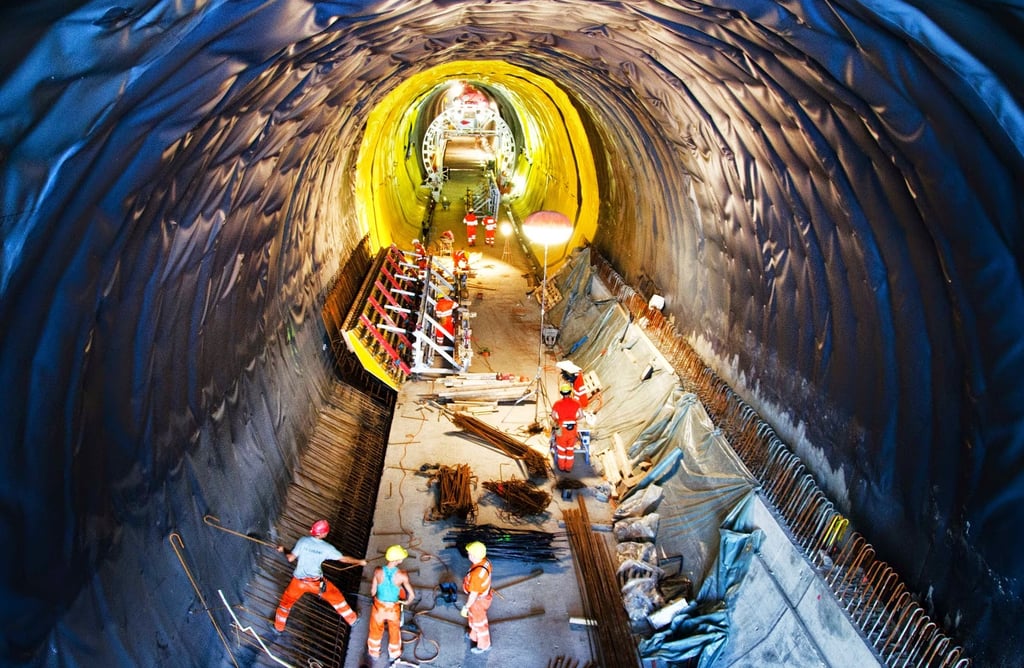
TRATOS MTO®‑TDM, designated NTSCGECWÖU, is not simply a heavier version of an ordinary medium‑voltage cable. It is a purpose‑engineered reeling system designed from the ground up to deliver reliable power to Tunnel Driving Machines and similar mobile equipment in underground mines and tunnel construction. Every element of its design answers a specific problem found in dynamic reeling service: repeated winding and unwinding, constant flexing, twisting, pulling, abrasion, moisture, oil mist, temperature swings and the electrical demands of medium‑voltage power transmission.
In South Africa, where some of the world’s deepest gold and platinum mines operate at depths between two and four kilometres, the challenges are especially severe. Heat, humidity, gas, dust and restricted access combine with the mechanical demands of long‑distance reeling to place enormous strain on power cables. Standard cables often fail within three to six months, with broken conductors, split sheaths or insulation breakdown causing costly downtime and safety risks. TRATOS MTO‑TDM was developed to address exactly these conditions, and it has been proven in service with major operators including Anglo American and De Beers.
This article explains what makes this cable different, how its materials and structure work from an engineering and scientific perspective, how it performs in South African deep‑level mines, how to select the right specification, and how Feichun Cables provides a fully compliant equivalent solution.
Core Identity, Standards and Full Technical Specifications
Official Designation and Compliance
The full product name is TRATOS MTO®‑TDM, with the type code NTSCGECWÖU. It is manufactured to DIN VDE 0250 Part 813, the primary German standard for medium‑voltage reeling and trailing cables used in mining and tunnelling. Supporting standards cover every aspect of its construction and performance: DIN VDE 0295 for conductor classification, DIN VDE 0207‑20 and 0207‑21 for rubber insulation and sheath compounds, DIN VDE 0298‑3 for bending radii, DIN VDE 0298‑4 for current‑carrying capacity, and DIN VDE 0473 / 0482 for oil resistance and fire behaviour.
Voltage ratings cover the range most commonly used for TBM power: rated voltage U₀/U at 3.6/6 kV, 6/10 kV and 12/20 kV. Maximum permissible operating voltages are higher: in AC systems up to 4.2/7.2 kV through 13.9/24 kV, and in DC systems up to 5.4/10.8 kV through 18/36 kV. AC test voltages range from 11 kV to 29 kV according to voltage class.
Standard core configuration follows the pattern three main power cores plus three earth/control cores plus monitoring elements, with main conductor cross‑sections from 25 mm² up to 120 mm², matched with appropriately sized protective conductors. Temperature performance is defined for two versions: the standard grade operates flexibly from –30 °C to +80 °C and fixed from –40 °C to +80 °C; the Type K low‑temperature version works reliably from –60 °C to +60 °C in both modes. Maximum continuous conductor temperature is 90 °C, and short‑circuit withstand is rated at 200 °C for one second.
Mechanical limits are set specifically for reeling duty: maximum tensile load 15 N/mm², torsional stress ±25 ° per metre, maximum travel speed 60 m/min, minimum bending radii per DIN VDE 0298‑3, and minimum spacing for S‑type direction changes at 20 times the overall cable diameter. Chemically, the cable is resistant to oil per DIN VDE 0473 Part 811‑2‑1 Paragraph 10, flame‑retardant per DIN VDE 0482 Part 265‑2‑1 Paragraph 10, and fully resistant to ozone and moisture for unrestricted indoor and outdoor use.
Typical Applications and Operating Profiles
The primary intended use is as reeling power supply cables for tunnel driving machines in underground mines and tunnel construction. In South Africa this translates directly to deep gold and platinum mines, long development drives, shaft sinking operations and hard‑rock tunnelling projects. The cable is designed to handle continuous winding and unwinding on motorised reels, where every cycle subjects the cable to combined tension, bending and torsion.
Typical operating conditions include high humidity, water spray, oil mist from machinery, coal or rock dust, variable temperatures and potential gas hazards. Unlike cables designed for fixed installation, TRATOS MTO‑TDM is built to retain its electrical and mechanical integrity over thousands of flex cycles without hardening, cracking or suffering internal damage.
Layer‑by‑Layer Construction, Materials and the Science Behind Each Choice
Full Build Breakdown
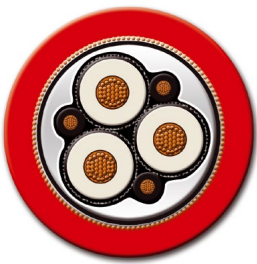
Starting from the centre and moving outwards, every layer is selected and engineered for a specific purpose:
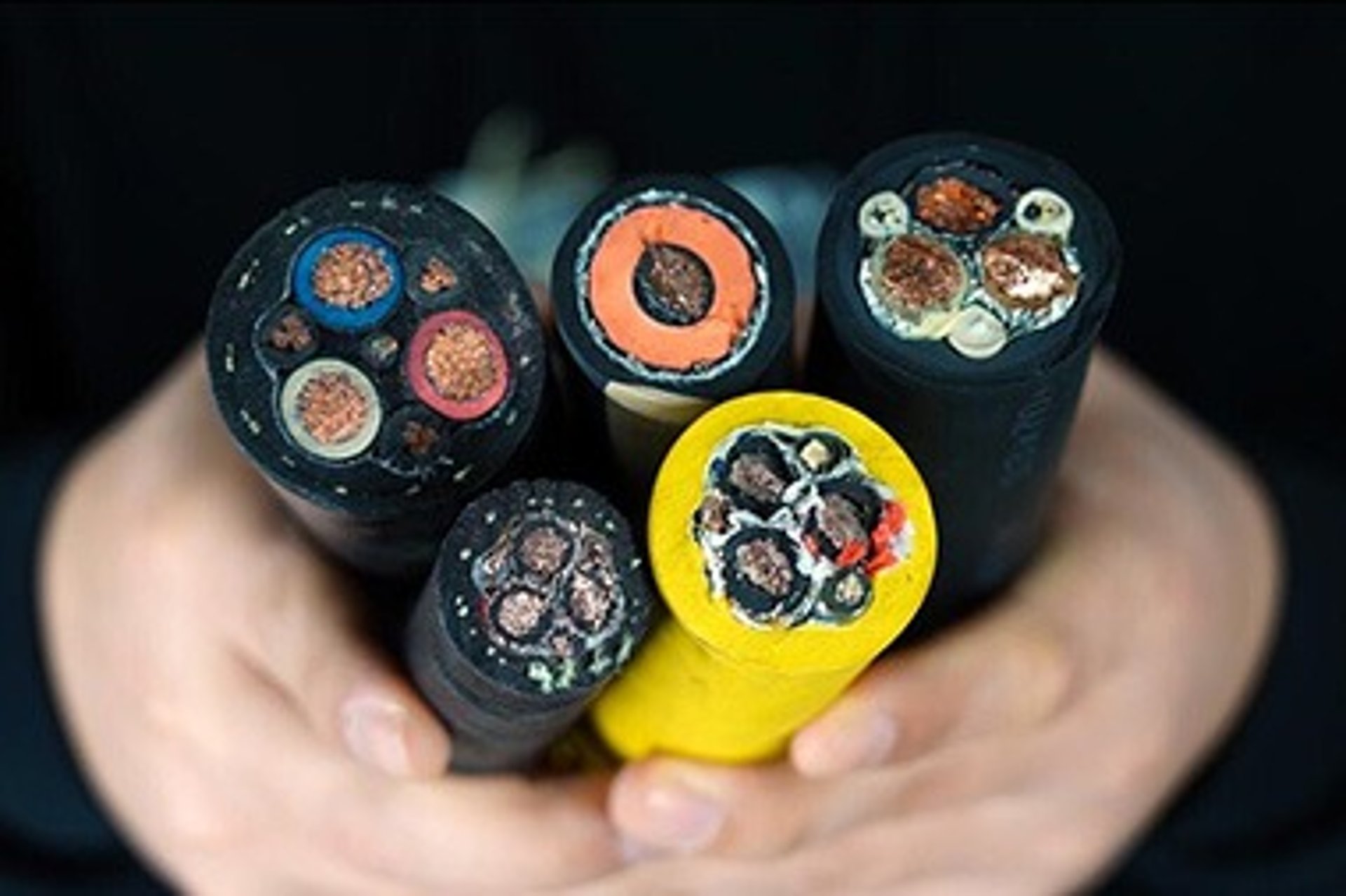
The conductor is finely stranded, tinned copper to Class 5 according to DIN VDE 0295. Many fine strands rather than fewer thick ones allow the conductor to flex repeatedly without work‑hardening or breaking. Tinning prevents oxidation and ensures stable electrical contact at terminations and joints.
Immediately above each conductor sits an inner semiconductive rubber layer, followed by the main insulation made from EPR compound designated 3GI3 to DIN VDE 0207 Part 20, then an outer semiconductive rubber layer. Together these two semiconductive layers control the electric field, eliminating stress concentrations and suppressing partial discharge that would otherwise gradually erode the insulation and lead to premature failure. EPR or ethylene‑propylene rubber is chosen for its low dielectric loss, high resistance to heat and ozone, and ability to remain flexible even at low temperatures.
Around each insulated core, a protective‑earth conductor is applied as a concentric braid combining copper and textile fibres. This arrangement provides both a low‑impedance path for fault currents and additional mechanical reinforcement that shares tensile and torsional loads.
The three main cores are laid up together with three control cores placed in the outer interstices to maintain a round, balanced profile that winds evenly on reels and resists uneven stress distribution. This balanced geometry also helps reduce electromagnetic interference between power and control circuits.
Over the cabled cores comes an inner sheath of vulcanised EPR rubber compound GM1b to DIN VDE 0207 Part 21. This layer cushions the cores, maintains electrical separation and preserves flexibility. Above this, a monitoring conductor is applied as an overall concentric lay of copper wire, enabling continuous insulation health monitoring and early detection of earth faults before they escalate.
The outer sheath is made from PCP compound 5GM5 to DIN VDE 0207 Part 21, coloured red for easy identification. PCP or chlorinated polyethylene combines the elasticity of rubber with the toughness, oil resistance and flame resistance of thermoplastic materials. It stands up to abrasion, cutting, oil contamination and weathering while remaining flexible across the full temperature range.
Engineering Principles – Why This Structure Works
Every design decision follows established principles of electrical engineering, mechanics and materials science.
Electrically, the dual semiconductive layer system creates a smooth, uniform electric field at the conductor‑insulation and insulation‑sheath boundaries. Air gaps or irregularities would cause localised field intensification, partial discharge and eventual insulation breakdown. EPR 3GI3 maintains stable dielectric properties even after long exposure to heat, moisture and ozone, supporting a service life measured in years rather than months.
Mechanically, the Class 5 conductor distributes bending stress across thousands of individual copper strands, preventing fatigue failure. The per‑phase earth braid, balanced core arrangement and double‑sheath construction allow multiple structural elements to share tensile and torsional forces. The ±25 ° per metre torsion rating is significantly higher than typical general‑purpose cables, which often fail above 8–10 ° per metre, because the design is torsion‑balanced so that twisting forces are absorbed rather than transmitted directly to the conductors. The 15 N/mm² tensile limit is set to allow safe pull‑during‑reeling without permanently stretching the copper or separating layers.
From a materials science perspective, EPR is selected for its high elasticity and resistance to thermal ageing, while PCP is chosen for its balance of flexibility, mechanical toughness and chemical resistance. Both materials are formulated to remain flexible at low temperatures, avoiding the brittleness that causes ordinary cables to crack in cold ventilation drifts deep underground. The combined copper‑textile earth braid improves both electrical performance and mechanical strength compared with solid copper or textile‑only constructions.
Safety is built into the design from the start: multiple redundant earth paths ensure rapid fault clearing and equipotential bonding; the monitoring conductor allows predictive maintenance rather than reactive repair; and the flame‑retardant, oil‑resistant outer sheath reduces fire risk in confined spaces.
Performance Advantages – Solving What Standard Cables Cannot
Standard medium‑voltage cables are designed for fixed installation on trays or in ducts. They are not engineered for the repeated flexing, twisting and pulling inherent to reeling applications. When used on TBM reels, they typically fail in predictable ways: conductors snap, insulation splits, sheaths tear or become brittle, and joints work loose.
TRATOS MTO‑TDM addresses each of these failure modes directly. Where standard cables may tolerate torsion of only 8–10 ° per metre, TRATOS MTO‑TDM withstands ±25 ° per metre without damage. Tensile strength is nearly double that of many general‑purpose designs at 15 N/mm². Operating temperature range extends much lower, with Type K versions usable down to –60 °C compared with –15 °C or –20 °C for ordinary rubber cables. Environmental resistance is comprehensively upgraded: oil, flame, ozone and moisture resistance are all validated to specific VDE standards rather than being incidental properties.
Because power, earth, control and monitoring functions are integrated into one cable assembly, there are fewer separate cables and fewer joints – reducing potential fault points and installation work. In practice, this translates to service life three to five times longer than conventional reeling cables, a reduction of more than 60 % in unplanned downtime, and an approximate 30 % lowering of total life‑cycle cost when lost production and replacement labour are included.
The key distinction is that TRATOS MTO‑TDM is not a “stronger” version of an ordinary cable; it is an entirely different engineering solution built around the specific mechanics and environment of reeling power for underground machinery.
South African Deep‑Mining Context and Operational Value
The Unique South African Challenge
South Africa hosts some of the world’s deepest mining operations, with gold and platinum workings extending two to four kilometres below surface. Conditions there combine extreme heat from rock strata, high humidity, water ingress, flammable gas and dust, and limited space for equipment routing. Mines operate under strict regulations from the Department of Mineral Resources and Energy and the Mine Health and Safety Act, requiring electrical equipment to meet recognised safety standards and be suitable for hazardous areas.
Traditional power cables for TBMs and development machinery have long been a weak point. The combination of long reel runs, frequent direction changes and continuous operation causes rapid mechanical wear. Cables often require replacement every few months, and failures can halt production for hours or even days, with significant financial impact and safety implications for personnel working underground.
How TRATOS MTO‑TDM Delivers
The mechanical ratings of TRATOS MTO‑TDM match exactly what South African deep mines demand. The ±25 ° per metre torsion resistance and 15 N/mm² tensile capacity handle the twisting and pulling experienced on long reeling runs, while the 60 m/min travel speed limit suits most modern TBM installations. The temperature range covers both hot working zones near machinery and cold air‑flow drifts deeper in the mine, especially important for ventilation shafts and decline tunnels.
Safety‑wise, the cable’s flame‑retardant properties, robust earthing system and built‑in monitoring capability align with DMRE requirements for underground electrical safety. Having a dedicated monitoring conductor allows maintenance teams to detect insulation degradation or developing earth faults before they cause shutdowns or hazards.
In practice, this cable has been deployed by major mining groups including Anglo American and De Beers on main development drives, shaft sinking and long‑distance tunnelling projects. Operators report that the extended service life drastically reduces the frequency of change‑outs, cuts disruption to advance rates and improves overall equipment availability. Because fewer replacements are needed and downtime is reduced, the cable delivers measurable operational and financial benefits even before considering improved crew safety through reduced maintenance exposure and fewer unplanned electrical events.
Selection Guide and Technical Data Reference
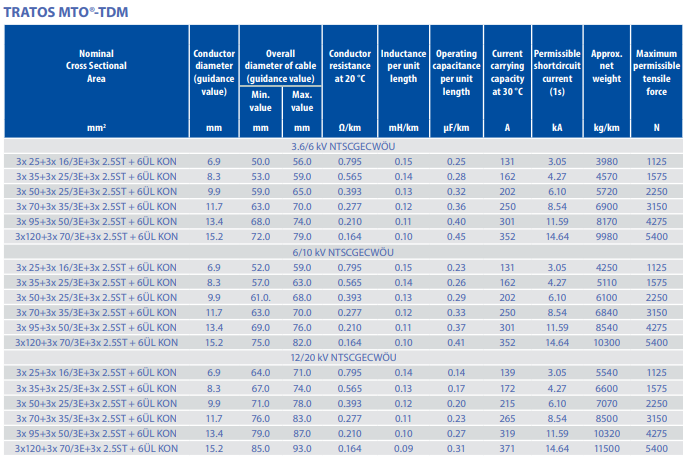
Choosing the correct specification begins with matching voltage class to the system: 3.6/6 kV, 6/10 kV or 12/20 kV, with appropriate margin for voltage rise and system disturbances. Next, conductor cross‑section must be selected based on current‑carrying capacity per DIN VDE 0298‑4, voltage drop over the longest reel length, and short‑circuit withstand – rated from 3.05 kA to 14.64 kA for one second across the range.
Mechanical sizing is equally critical. The minimum bending radius must be respected at all times, and reel diameter should be sized to avoid sharp curvature that would over‑stress conductors and insulation. Travel speed should not exceed 60 m/min, and cable tension must be kept below 15 N/mm². For sites with sub‑zero ambient temperatures, the Type K low‑temperature variant should be specified to maintain flexibility and prevent sheath cracking.
Reference data including conductor resistance, inductance, capacitance, approximate net weight and maximum permissible tensile force for each standard configuration are provided in the manufacturer’s datasheet, consistent with DIN VDE test methods. These values should be used for voltage‑drop calculations, relay setting and mechanical load checks.
Feichun Cables – Fully Equivalent Replacement Solution
Feichun Cables manufactures an NTSCGECWÖU cable that is fully equivalent to TRATOS MTO‑TDM in compliance, construction and performance. It is produced to DIN VDE 0250 Part 813, using Class 5 tinned copper conductors, EPR insulation matching the properties of 3GI3, and PCP outer sheath equivalent to 5GM5. Mechanical performance – including ±25 °/m torsion resistance and 15 N/mm² tensile strength – is identical, as are temperature ratings, electrical parameters and chemical resistance.
This equivalence means that Feichun’s cable can be directly substituted without changes to design, installation or safety procedures, and it satisfies the same regulatory requirements including those applicable in South African mining. Beyond technical parity, Feichun offers shorter lead times for urgent projects, competitive pricing without compromising quality or compliance, and full technical support from specification through to installation and commissioning. For operators seeking supply‑chain resilience or cost optimisation without sacrificing reliability, this provides a proven alternative that preserves all the engineering advantages of the original design.
Frequently Asked Questions
Can this cable be used for fixed installation as well as reeling?
Yes, it is suitable for fixed runs, but its greatest value is realised in dynamic reeling and trailing service where standard cables quickly fail.
Does it meet South African mining safety requirements?
It is manufactured to internationally recognised DIN VDE standards that align with Mine Health and Safety Act and DMRE expectations for flame resistance, earthing and mechanical suitability.
How can service life be maximised?
Respect minimum bending radii, tension limits and travel speed; avoid routing over sharp edges; inspect regularly and use the monitoring conductor to track insulation condition.
Are larger sizes or special constructions available?
Variants including larger cross‑sections or integrated fibre optics can be supplied on request – consult engineering for customisation.
Conclusion
TRATOS MTO‑TDM NTSCGECWÖU stands apart from ordinary medium‑voltage cables because it was conceived as a complete engineering system for reeling power supply. Its design is rooted in proven principles of electric‑field control, polymer science and structural mechanics, with every material and layer chosen to address a specific failure mode found in underground mining and tunnelling.
In South Africa’s deep‑level mines, where conditions are among the most demanding anywhere, this cable has demonstrated its ability to extend service life, cut downtime, reduce whole‑life costs and improve electrical safety. It does not simply “last longer”; it fundamentally changes the reliability profile of power delivery to TBMs and mobile equipment.
Feichun Cables offers a fully compliant equivalent that maintains all these performance benefits while enhancing supply‑chain flexibility and cost‑effectiveness for mining and construction operators worldwide.
If you would like to specify, source or replace TRATOS MTO®‑TDM NTSCGECWÖU cables for your TBM or mining project – contact the Feichun team: Li.wang@feichuncables.com
Email Address: Li.wang@feichuncables.com
© 2025. All rights reserved.
One-click to Quickly Contact
Products
Contact
Company
Location:
Building A Private Science and Technology Park, Hefei Economic and Technological Development Zone, Anhui Province, China
Heat Resistant Cable
WhatsApp: +86 17333223430
Social Media: