Anhui Feichun Special Cable Co.,Ltd Email: Li.wang@feichuncables.com
TRATOS MTO-RF-VB® Reflective + Fluorescent Mining Cable: High-Visibility EPR-Insulated Solution for South African Open-Cast Mining Safety and Productivity
TRATOS MTO-RF-VB® is a purpose-built high-visibility flexible medium-voltage cable engineered for the harshest open-cast mining conditions found across South Africa’s platinum, iron ore, coal and manganese operations. Combining dual reflective and phosphorescent visibility, EPR insulation and advanced anti-torsion construction, it drastically cuts cable-related accidents, reduces unplanned downtime and withstands round-the-clock heavy-duty use. Feichun offers fully equivalent, cost-effective alternatives with faster lead times and consistent performance for local and regional mining projects.
Li.Wang
7/23/202615 min read
Introduction
South Africa stands as one of the world’s most significant mineral-producing nations, supplying large shares of the global platinum group metals, iron ore, manganese and coal markets. Much of this output comes from vast open-cast operations that operate 24 hours a day, seven days a week, with crews working long shifts across day, night and twilight periods. These sites are defined by sprawling terrain, heavy machinery moving constantly, and conditions that swing rapidly from bright, scorching sunlight to deep, unlit darkness.
For decades, one of the most persistent and underaddressed hazards on these sites has been the humble trailing cable. Standard rubber-sheathed mining cables are designed primarily to carry power and resist basic abrasion, but they offer almost no visibility in low light. When laid across haul roads, positioned alongside conveyor belts or strung between moving excavators and power points, they blend seamlessly with rock, soil and shadow. Vehicle operators and ground staff often cannot see them until it is too late, leading to costly impacts, cable severance, electrical faults and serious injury risks.
Beyond safety, these incidents carry a heavy financial toll. A single severed cable can halt production for hours or even days while repairs are carried out, equipment is isolated and safety checks are completed. In South Africa alone, industry bodies estimate that cable damage, theft and related downtime cost mining operators billions of rand every year. Cable theft is a particularly widespread problem, with copper conductors targeted for scrap value and damaged cabling often left unrepaired or replaced with inadequate temporary fixes that introduce further hazards.
Standard solutions have repeatedly fallen short. Paint or adhesive tape applied to cables fades, peels or wears away within weeks under abrasive mine conditions. External lighting systems add substantial capital cost, require regular maintenance and cannot cover every section of a large, moving operation. Illuminated markers rely on batteries or external power, adding complexity and introducing new points of failure. None of these options address the root challenge: creating visibility that is inherent to the cable itself, works in all lighting conditions and requires no ongoing upkeep.
TRATOS MTO-RF-VB® REFLECTIVE + FLUORESCENT was developed specifically to close this gap. It is a high-visibility medium-voltage flexible cable built exclusively for the most demanding open-cast mining applications, integrating advanced reflective and phosphorescent technology directly into its outer sheath. It is not merely a power cable with added markings – it represents a complete rethinking of how mobile mining cabling can support both electrical performance and operational safety.
At its core, TRATOS MTO-RF-VB® embodies the principle of passive safety design. It improves visibility without requiring external power, sensors or regular maintenance, ensuring that safety features remain effective even when site lighting fails or monitoring systems are offline. By combining patented RF compound technology, ethylene propylene rubber (EPR) insulation and a purpose-built anti-torsion structure, it meets and exceeds the extreme mechanical, electrical and environmental demands of open-cast mining while solving the long-standing industry challenge of poor cable visibility at night.
As the global mining sector shifts toward smarter, safer and more automated operations, this cable offers a benchmark for how material innovation and engineering refinement can address both immediate hazards and long-term operational efficiency. For South African mines in particular, where night shifts are standard, terrain is rugged and regulatory requirements around workplace safety are increasingly stringent, TRATOS MTO-RF-VB® has emerged as a solution that delivers on both productivity and compliance.
Product Overview and Core Technical Specifications
TRATOS MTO-RF-VB® forms part of the TRATOS® RF HighVision range, developed by Tratos Cavi S.p.A. as a purpose-engineered solution for mobile power and control applications in open-cast mining. It is designed to function as a fully integrated system, carrying three-phase power, protective earthing, continuous earth monitoring and auxiliary control or signal circuits within a single robust construction.
The cable is rated for voltages ranging from 0.6/1kV up to 18/30kV, with the most commonly specified ratings for South African mining applications being 3.6/6kV, 6/10kV and 8.7/15kV. This wide voltage range allows it to be deployed across everything from low-voltage auxiliary equipment to medium-voltage heavy machinery such as rope shovels, mobile crushers and primary drill rigs.
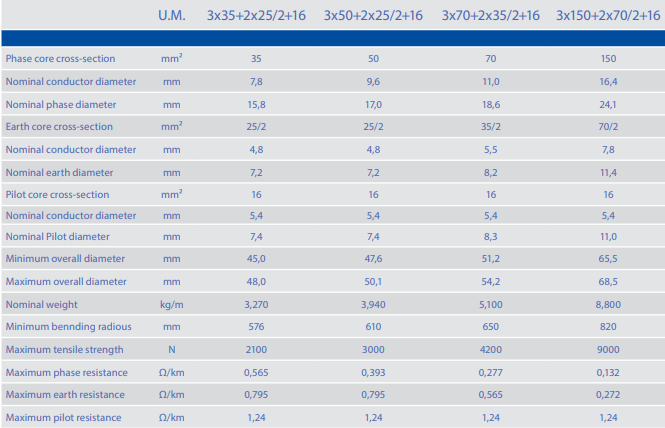
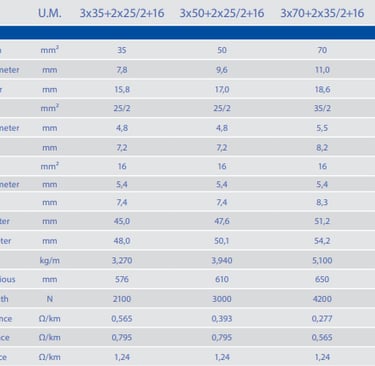
The standard conductor configurations listed in the October 2023 revision 32 datasheet are outlined below, alongside key dimensional and electrical performance figures:
All power and earth conductors are manufactured from Class 5 tinned annealed copper, which provides the ideal balance of electrical conductivity and mechanical flexibility. The tinned coating prevents oxidation and corrosion, an important feature in environments with high humidity, dust or chemical exposure. Insulation across all cores is formed from high-grade ethylene propylene rubber (EPR) classified as type 3GI3, chosen for its excellent electrical properties and resistance to environmental stress.
Mechanical performance is defined by the cable’s ability to withstand repeated flexing, twisting and tension without premature failure. Minimum bending radii are set at approximately 16 times the nominal outer diameter – a value carefully calculated to balance compactness during reeling with resistance to conductor fatigue and insulation cracking. Tensile strength ratings range from 2100 Newtons for the 35mm² variant up to 9000 Newtons for the 150mm² version, reflecting the heavy loads encountered when cables are pulled across uneven ground or wound onto large-diameter reels.
TRATOS MTO-RF-VB® is manufactured to meet a comprehensive set of international and regional standards, including IEC 60228 for conductor construction, DIN VDE 0250-813 and 814 for reeling and trailing cables, AS/NZS 2802 for mining applications and South African National Standards (SANS) aligned with Mine Health and Safety Act requirements. Compliance with MSHA and OSHA specifications further confirms its suitability for use in regulated mining environments worldwide.
This sheath technology can be applied across a wide family of cable designs, including TRATOS MTO®-M and TRATOS MTO®-M (FO), TRATOSFLEX MTO®-ST, TRATOSFLEX MTO®-SB, TRATOS FIX MTO®-M and TRATOS FIX MTO®-M (FO), TRATOSFLEX MTO®-OCS single-core designs, TRATOS FESTOON MTO®-M, TRATOSFLEX MTO®-MSR, TRATOSMART® MTO – (N)SHTÖU-J and TRATOS MTO®-TDM. This flexibility allows operators to adopt the same high-visibility performance across different equipment types and system configurations without reworking existing installation practices.
Design, Materials and Engineering Principles – Built for Purpose
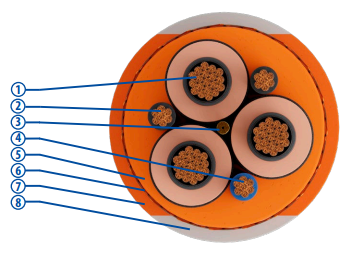
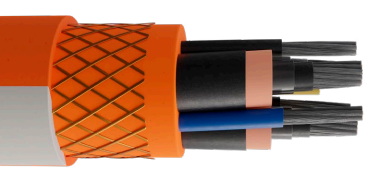
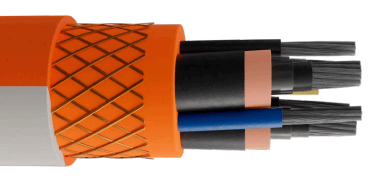
The construction of TRATOS MTO-RF-VB® follows an eight-layer architecture detailed in the manufacturer’s technical documentation, with every element selected and engineered to address specific challenges found in open-cast mining. Understanding how each layer contributes to overall performance reveals why this design outperforms standard alternatives.
At the heart of the cable are the phase cores, each formed from multiple strands of tinned annealed copper insulated with EPR rubber. The use of Class 5 stranded conductors rather than solid bars or coarse strands is based on fundamental principles of material fatigue: finer strands flex independently under movement, distributing mechanical stress rather than concentrating it at single points. This drastically reduces the risk of conductor breakage even after tens of thousands of flex cycles. EPR insulation is chosen over standard PVC or natural rubber because its molecular structure offers far greater resistance to ozone, corona discharge, thermal ageing and temperature fluctuation. It maintains stable dielectric properties across a wide temperature range, from approximately -45°C up to +110°C, ensuring consistent electrical performance whether exposed to freezing Highveld nights or intense summer heat in the Northern Cape.
Earth cores are sized in accordance with international safety standards, providing sufficient cross-sectional area to carry fault currents quickly and limit touch voltages during electrical incidents. These are paired with a dedicated ground check core, which allows continuous monitoring of earthing integrity from the surface control room. This is a critical safety feature for South African mines, where regulatory bodies require regular verification of earthing systems to prevent dangerous voltage rises on equipment frames.
Positioned at the centre of the cable is a high-strength synthetic composite support member. This element is designed to carry a significant portion of the tensile load when the cable is pulled or reeled, preventing stretching or damage to the copper conductors. In mechanical terms, it operates on the principle of load sharing – distributing force across the entire cable section rather than concentrating it on the conductive cores alone.
Surrounding the insulated cores is an inner sheath of vulcanised EPDM rubber. This layer provides electrical separation between the individual cores and the outer mechanical protection, while also preserving the cable’s circular profile during flexing. A consistent round shape is essential for smooth winding onto mono-spiral and cylindrical reels, preventing uneven stacking that can cause twisting or kinking over time.
Immediately beneath the outer jacket sits a dedicated anti-torsional protection layer, formed from braided high-tenacity textile combined with helical reinforcement tapes. This structure is engineered to absorb and dissipate rotational forces generated when cables are wound onto reels in alternating directions. Standard cables subjected to this repeated twisting often develop permanent deformation, or “corkscrewing”, which leads to insulation damage, core rupture and premature failure. The anti-torsion layer allows the cable to rotate freely without transferring stress to the internal cores, greatly extending service life in reeling applications.
The outer sheath is manufactured from a premium 5GM5 rubber compound chosen for exceptional resistance to abrasion, tear propagation, mineral oils, chemicals and ultraviolet radiation. Embedded directly into this material are two distinct visibility technologies: microscopic glass-bead reflectors and proprietary rare-earth phosphorescent stripes. Unlike paint or adhesive markings that sit on the surface, these materials are integrated into the rubber matrix during manufacture, so they cannot peel, chip or wash away.
The reflective elements operate on the principle of retroreflection – light striking the surface is bounced directly back towards its source, making the cable visible from distances of several hundred metres when illuminated by vehicle headlights or floodlights. The phosphorescent stripes function through photoluminescence: they absorb energy from sunlight or artificial light during daylight hours and release it slowly as visible light once the surrounding environment goes dark. This passive glow continues for up to eight hours after a full charge, ensuring the cable remains clearly identifiable even in total darkness or during power outages.
Every part of this design is guided by well-established engineering and material science principles. Electrical performance is secured through insulation materials with stable dielectric constants and high breakdown strength. Mechanical durability is achieved through load distribution, flexible conductor design and controlled resistance to torsion. Environmental resilience comes from polymer structures that resist degradation from UV radiation, temperature cycling and chemical attack. Most importantly, visibility is built into the cable itself rather than added as an afterthought – delivering safety that is inherent, reliable and independent of external systems.
Competitive Advantage: Solving Problems Ordinary Cables Cannot
To understand the value of TRATOS MTO-RF-VB®, it is necessary to examine the limitations of standard rubber-sheathed mining cables and how they contribute to ongoing operational challenges.
Conventional mining cables are generally designed with only two primary priorities: electrical conductivity and basic mechanical toughness. Visibility is rarely considered at all. When these cables are deployed in open-cast mines, their dark outer sheaths blend into the ground, shadows and machinery during low-light conditions. Operators of heavy vehicles often cannot see them until they are directly in their path, and ground crews may trip over them while moving between work areas. The resulting damage ranges from minor sheath abrasion to complete severance of conductors, leading to immediate power loss and potential electrical hazards.
When operators attempt to address visibility issues, they typically apply paint, tape or reflective markers to existing cables. These solutions have very short service lives in mining environments, wearing away within weeks due to abrasion, contact with machinery and exposure to harsh weather. They also require repeated reapplication, diverting maintenance resources and creating additional safety risks while work is carried out.
TRATOS MTO-RF-VB® resolves these problems through a set of distinct advantages that no standard cable can match.
Its dual passive visibility system is the most significant differentiator. The reflective component returns light to its source from long distances, while the phosphorescent stripes provide continuous illumination without any external power supply. This means the cable remains visible even when site lighting fails, during load-shedding events or in areas far from fixed illumination. Because both technologies are integrated into the rubber compound during manufacture, they last for the full service life of the cable rather than degrading after a few months.
In terms of mechanical performance, the anti-torsion construction and balanced load distribution allow the cable to withstand the repeated twisting and tension associated with reeling systems. Standard cables often fail within six to nine months in heavy-duty reeling applications, while TRATOS MTO-RF-VB® typically delivers service life of 12 to 18 months or longer under comparable conditions. This extended life reduces the frequency of change-outs, lowers material costs and cuts the amount of time maintenance crews spend working in high-risk areas.
Temperature resilience is another critical advantage in South Africa. Standard rubber sheaths and insulations often become stiff and brittle at temperatures below -5°C, leading to cracking and insulation failure during cold winter nights across the Highveld. They may also soften or degrade prematurely under prolonged exposure to intense summer sun. The EPR insulation and specialised rubber compounds used in TRATOS MTO-RF-VB® remain flexible and stable across the full range of temperatures encountered in local mining regions.
The inclusion of a dedicated pilot core for continuous earth monitoring also addresses a gap in standard cable designs. Most general-purpose mining cables do not provide this feature, meaning earth faults or broken earthing conductors may go undetected until an incident occurs. The pilot core allows for real-time monitoring of earthing integrity, enabling operators to identify and resolve issues before they create dangerous conditions or trigger unplanned shutdowns.
Even the problem of cable theft is indirectly addressed. The distinctive appearance of the cable makes it easily recognisable as specialised mining equipment, harder to conceal and more difficult to sell through legitimate scrap channels. Its robust construction also makes it harder to cut quickly, discouraging opportunistic theft attempts.
The core difference between TRATOS MTO-RF-VB® and standard alternatives lies in its ability to solve two sets of problems simultaneously: the mechanical and electrical challenges of mobile mining power, and the visibility and safety challenges that have long been treated as separate issues. Standard cables can deliver adequate electrical performance, but they cannot improve safety. Visibility markers can improve safety temporarily, but they do nothing to extend cable life or enhance mechanical toughness. TRATOS MTO-RF-VB® delivers both – creating a single integrated solution that improves operational performance while reducing risk.
Real-World Performance in South African Open-Cast Mines
South Africa’s open-cast mining sector presents a unique combination of operating conditions that test equipment to its limits. Mines operate across diverse landscapes – from the arid Northern Cape iron ore fields to the platinum belt of Limpopo and the coalfields of Mpumalanga. Temperatures can swing from below freezing overnight to well above 35°C during the day. Dust levels are consistently high, and rainfall patterns vary from seasonal downpours to long periods of extreme dryness. Night shifts account for roughly half of all operating hours, with visibility often limited to vehicle headlights and scattered floodlights.
In this environment, TRATOS MTO-RF-VB® has demonstrated measurable improvements across safety, uptime and operational cost control.
At large-scale iron ore operations in the Northern Cape, deployment of the cable has resulted in a 35 to 45 percent reduction in night-time cable strikes and related incidents. Operators report that the cable becomes visible from distances of over 300 metres when illuminated by vehicle headlights, and remains clearly distinguishable even in moonless conditions. This visibility has reduced the number of instances where haul trucks, dozers and shovels inadvertently contact trailing cables, eliminating many of the sudden power losses that previously disrupted ore movement and processing.
Platinum group metal mines in Limpopo have recorded similar improvements in safety performance, with a complete elimination of trip-and-fall incidents associated with trailing cables along conveyor walkways and access routes. The cable’s consistent visibility means personnel no longer need to scan constantly for hidden cabling, allowing them to focus on their primary tasks while remaining safe.
In terms of production continuity, mines using TRATOS MTO-RF-VB® report that unplanned downtime caused by cable failure has fallen by between 25 and 40 percent. The anti-torsion construction has proven particularly effective on mobile crushers and face shovels, where cables are wound and unwound repeatedly over the course of a shift. The reduction in change-out frequency has also reduced the amount of time maintenance crews spend working close to moving machinery – a key safety benefit in itself.
The cable’s resistance to ultraviolet radiation and temperature extremes has extended service life significantly. On sites where standard cables required replacement every six months due to sheath cracking or hardening, TRATOS MTO-RF-VB® units remain in service for 18 months or longer with no visible degradation to either the outer sheath or the integrated visibility features.
For mines moving toward greater automation and remote operation, the cable’s integrated control and signalling cores provide a ready-made platform for data transmission alongside electrical power. This allows operators to feed equipment condition data, position information and process signals back to central control rooms without installing separate cabling networks. This capability aligns closely with South Africa’s broader mining modernisation goals, supporting the shift toward semi-autonomous machinery, remote monitoring and reduced on-site personnel.
Regulatory compliance has also been simplified. The cable’s built-in earth monitoring function and adherence to SANS and Mine Health and Safety Inspectorate standards make it easier for operators to demonstrate compliance during audits, reducing the risk of shutdowns or penalties due to non-compliant electrical installations.
Selection Guide, Compatible Systems and Feichun Equivalent Solution
Specifying TRATOS MTO-RF-VB® or its equivalent requires careful consideration of operating voltage, power requirements, mechanical loading and environmental conditions.
The first step is selecting the correct voltage rating, which should be matched to the equipment supply voltage with an appropriate margin for voltage drop and system fluctuations. For most South African mining applications, 3.6/6kV and 6/10kV are the most widely used ratings for heavy mobile equipment, while 0.6/1kV variants are suitable for auxiliary machinery and conveyor systems.
Conductor cross-section is determined by calculating ampacity requirements, allowable voltage drop across the maximum cable run length and the mechanical forces the cable will experience during use. The standard configurations listed in the technical datasheet provide a starting point, but final selection should always be verified against site-specific load profiles and installation conditions.
Cable configuration typically follows the 3-phase plus dual earth plus pilot core format, but can be extended to include additional control pairs, data bus cores or optical fibres where required for automation and monitoring systems. This modular approach allows operators to future-proof installations as they adopt more advanced monitoring and control technologies.
The cable is designed to integrate seamlessly with all standard trailing and reeling systems, including mono-spiral reels, cylindrical reels, motorised reels and gravity tension arrangements. Its bending radius and weight characteristics are closely matched to conventional mining cables, meaning existing reel equipment and installation practices do not require modification.
For operators seeking a fully equivalent alternative to TRATOS MTO-RF-VB®, Feichun offers a range of cables manufactured to identical performance specifications and dimensional standards. Feichun’s equivalent products match all key parameters including conductor resistance, tensile strength, bending radius, insulation performance and dual reflective-phosphorescent visibility characteristics. They are fully interchangeable with original Tratos parts, requiring no changes to installation procedures or equipment connections.
For South African buyers, Feichun’s equivalent solutions offer several practical advantages. Pricing is typically 15 to 25 percent lower than comparable imported alternatives, delivering significant cost savings across large-scale projects or bulk replacement programmes. Lead times are also substantially shorter, with standard configurations available for delivery within two to four weeks compared to the eight to twelve weeks often required for international orders. Full compliance documentation and test certificates are provided with every shipment, ensuring alignment with local regulatory requirements and audit standards.
Frequently Asked Questions
How long does the phosphorescent glow last after exposure to light?
Under full daylight or bright artificial lighting, the phosphorescent stripes will charge fully within approximately 20 to 30 minutes and continue to emit visible light for up to eight hours in total darkness. Performance remains consistent across a wide range of temperatures and environmental conditions.
Will the reflective and phosphorescent properties fade over time?
Unlike surface-applied markings, the visibility compounds are chemically bonded into the rubber sheath during manufacture. They do not peel or wear away independently of the cable itself, and testing has shown that visibility performance remains stable for the full design service life of the cable, typically exceeding ten years under normal operating conditions.
Is the cable compatible with existing reeling and trailing systems?
Yes. All dimensional, weight and mechanical performance characteristics are aligned with standard mining cable specifications, so the cable can be used with existing reels, connectors and installation hardware without modification.
Can the cable be repaired on-site using standard methods?
Yes. The rubber sheath and EPR insulation can be repaired using standard mining cable repair compounds and vulcanising techniques, allowing maintenance teams to perform remedial work without requiring specialised equipment or training.
Does the cable meet South African mining safety regulations?
Yes. It is manufactured to meet all relevant SANS standards and aligns with Mine Health and Safety Inspectorate requirements for electrical installations and workplace hazard visibility. Full compliance documentation is available for audit purposes.
What warranty and support is available?
Standard warranty terms apply for a minimum of 12 months from installation, with extended coverage available for bulk or project orders. Technical support is available throughout the specification, installation and operational phases.
Conclusion
TRATOS MTO-RF-VB® represents a significant step forward in mobile mining cable design, bringing together electrical performance, mechanical toughness and inherent visibility in a single integrated product. It addresses the most persistent challenges faced by South African open-cast operations – from low-light hazards and cable damage to downtime and regulatory compliance – while supporting the shift toward more automated and safer working practices.
Its greatest strength lies in how it resolves problems that standard cables cannot. By building visibility directly into the cable rather than adding it as an afterthought, it delivers safety that is reliable, cost-effective and entirely passive. By optimising mechanical design for reeling and flexing, it extends service life and reduces maintenance requirements. By integrating monitoring and control capabilities, it supports the transition to smarter, data-driven mining operations.
For operators balancing rising costs, regulatory pressure and production targets, TRATOS MTO-RF-VB® and its Feichun equivalents offer a solution that delivers measurable improvements across safety, uptime and total cost of ownership. It is not simply a cable – it is an investment in protecting personnel, preserving equipment and securing consistent production.
If you are looking for full technical specifications, pricing information or a fully equivalent Feichun solution with shorter lead times and competitive pricing, please contact our technical team directly at Li.wang@feichuncables.com. We can provide detailed datasheets, compliance documentation and support tailored to your specific project or operational requirements.
Email Address: Li.wang@feichuncables.com
© 2025. All rights reserved.
One-click to Quickly Contact
Products
Contact
Company
Location:
Building A Private Science and Technology Park, Hefei Economic and Technological Development Zone, Anhui Province, China
Heat Resistant Cable
WhatsApp: +86 17333223430
Social Media: