Anhui Feichun Special Cable Co.,Ltd Email: Li.wang@feichuncables.com

TRATOS ASNZS MTO‑241® Reeling & Trailing Cable to AS/NZS 1802: How Semiconductive EPR Construction Powers Safer Mine Pumps and Monorail Systems in South African Deep‑Level Gold and Coal Mines
TRATOS ASNZS MTO‑241® is the industry‑leading reeling and trailing cable built to AS/NZS 1802:2003 for 1.1 kV to 11 kV mine use. This detailed guide explains its semiconductive EPR symmetrical design, triple interstitial earth cores, central extensible pilot core, and how it cuts unplanned downtime and safety risks in South Africa’s deep gold and coal mines – plus fully compliant equivalent options from Feichun Cables.
Li.Wang
7/30/202614 min read


Introduction
In South Africa’s deep‑level goldfields and high‑production coal basins, mobile power cables are often the most overlooked yet critical link in safe and continuous operation. These cables run through kilometres of tunnels, hang from monorail beams, trail behind continuous miners, and feed high‑pressure dewatering pumps that keep workings dry. They must withstand constant reeling, sharp rock abrasion, repeated twisting and bending, high ambient temperatures, water ingress, and the ever‑present risk of methane or coal‑dust ignition. When a trailing cable fails, the consequences go beyond lost production: they can lead to electric shock, earth‑fault ignition, extended shutdowns, and costly repairs.
Standard reeling and trailing cables often struggle in these conditions. Many rely on composite metal braid screens that fatigue and crack after thousands of flex cycles, or use only one earth conductor that leaves no backup if damaged. Their stiff construction makes them hard to route through narrow drifts, and their insulation and sheathing materials often degrade faster than expected under thermal and mechanical stress. Operators frequently report that what looks like a minor sheath abrasion can turn into a phase‑to‑earth fault, triggering unexpected trips or worse, creating a hazard that takes hours or days to locate and repair.
This is where TRATOS ASNZS MTO‑241® stands apart. Designed strictly to AS/NZS 1802:2003 as a Type 241 reeling and trailing cable, it spans voltage ratings from 1.1/1.1 kV up to 11/11 kV, with conductor sizes from 16 mm² to 300 mm². It is described in its own documentation as “a very popular cable for general use in a mine such as pumps and power supply to a range of equipment including use in monorail systems” and is electrically symmetrical by design. Its defining features – three semiconductive‑screened power cores, three interstitial earth conductors, and one central extensible pilot core – are not arbitrary choices; they are the result of careful engineering that balances electrical performance, mechanical life, and fault‑safety principles.
Across Australia, New Zealand, and increasingly Southern Africa, this cable has become the go‑to general‑purpose solution for mobile underground power. This article explains exactly how it is built, why each material and structural choice matters, what scientific principles guide its design, how it compares to conventional alternatives, and how it performs in South Africa’s most demanding mine environments. It also covers selection guidance, fully compliant equivalent options, and practical answers to questions engineers and procurement teams ask most often. All technical data, dimensions, and construction details come directly from the official TRATOS datasheet and referenced standards, so you can apply this information with confidence in your own projects.
Standards, Ratings and Technical Specifications
Every aspect of TRATOS ASNZS MTO‑241® is shaped by the requirements of AS/NZS 1802:2003, the Australian‑New Zealand standard specifically written for electric reeling and trailing cables used in mines. This standard sets out mandatory performance criteria for mechanical strength, flexibility, earth continuity, flame resistance, and electrical integrity – all areas that directly impact safety and reliability in underground workings. The cable also complies with supporting standards: AS/NZS 1125 for conductor materials, AS/NZS 3808 for insulating and sheathing compounds, and AS/NZS 5000.1 for general power‑cable construction.
The voltage rating range covers the full spectrum of medium‑voltage mine distribution systems: 1.1/1.1 kV, 3.3/3.3 kV, 6.6/6.6 kV, 8.7/15 kV, and 11/11 kV. Conductor sizes run from 16 mm² up to 300 mm², giving engineers flexibility to match current‑carrying capacity, voltage‑drop limits, and short‑circuit withstand requirements for everything from auxiliary equipment to large pumps and mining machines.
How the cores are identified follows clear rules set out in the specification. For 1.1/1.1 kV and 3.3/3.3 kV variants, power cores are colour‑coded red, white, and blue, interstitial earth cores have black coverings, and the central pilot core has grey insulation. At 6.6/6.6 kV and higher, power cores carry printed numbers on the black semiconductive insulation screen, while earth and pilot cores follow the same colour scheme. Every metre of cable is permanently marked with the manufacturer name, insulation and sheath material designations, type number, year of manufacture, conductor size, and sequential metre marking – making identification, fault location, and record‑keeping straightforward on site.
The standard outer sheath is TRATOS OUTER SHEATH®, formulated to outperform heavy‑duty HD‑85‑PCP sheathing, while heavy‑duty CPE or CSP sheaths can be supplied when extra oil, chemical, or flame‑retardant performance is needed. The cable carries full dimensional and weight data for every size, with insulation thickness, sheath thickness, and overall diameter all documented for easy comparison against reeler drum capacity, bend‑radius limits, and installation clearances.
These specifications are not just boxes to tick on a tender document. They mean that wherever AS/NZS 1802 compliance is required – or where equivalent safety and performance are expected – this cable will fit seamlessly into existing protection systems, installation practices, and approval frameworks. In South Africa, where mine electrical safety is strictly regulated by the Department of Mineral Resources and Energy, alignment with internationally recognised standards like AS/NZS 1802 provides assurance that the design meets or exceeds local expectations for fault‑response, mechanical durability, and personnel protection.
Construction, Materials and the Engineering Science Behind Every Layer
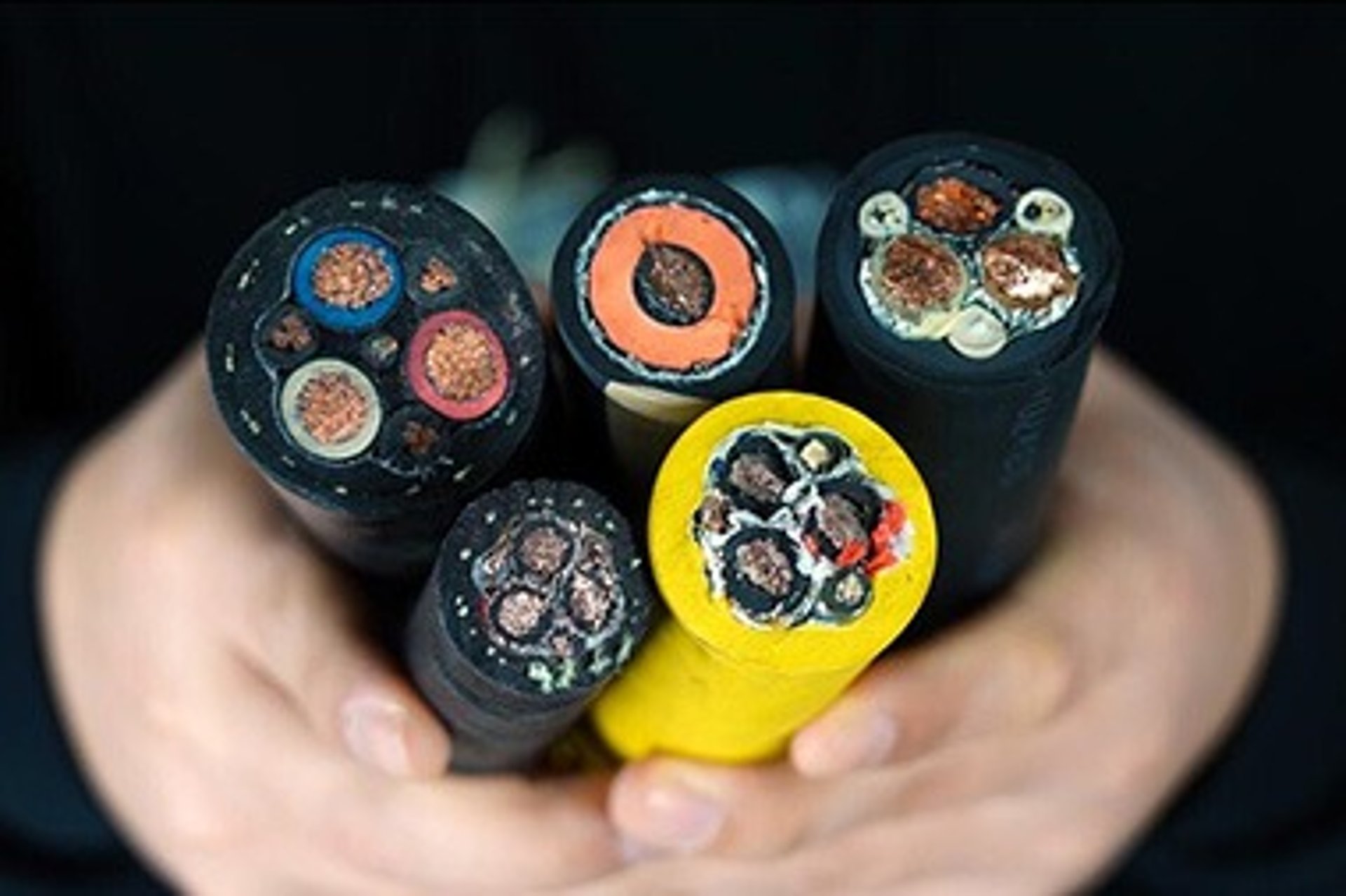
To understand why TRATOS ASNZS MTO‑241® performs so reliably, we look at its structure layer by layer, starting from the conductor at the centre and moving outwards. Each choice of material and geometry answers a specific engineering challenge, grounded in established principles of electrical insulation, dielectric physics, mechanics of materials, and fault‑safety design.
At the heart of every power core is a flexible stranded tinned annealed copper conductor. Using fine strands rather than a single solid wire drastically improves resistance to flex fatigue – a critical factor for a cable that will be bent, twisted, and reeled tens of thousands of times over its service life. Tin plating serves two important purposes: it prevents oxidation and sulphidation in damp, acidic, or sulphur‑rich mine atmospheres, and it maintains stable low contact resistance at joints and terminations, avoiding hot spots that can accelerate insulation ageing.
For voltage ratings of 3.3/3.3 kV and above, a semiconductive compound is applied over the conductor as a conductor screen. In electrical terms, this removes sharp edges, gaps, and irregularities at the conductor surface that would otherwise create localised high‑electric‑field points. Left unaddressed, these spots trigger partial discharges that slowly erode insulation and form “electrical trees”, eventually leading to premature breakdown. By smoothing the field distribution radially across the insulation, this layer ensures the dielectric material operates within its intended limits, extending life and improving reliability.
Insulation is EPR R‑EP‑90 – ethylene propylene rubber – selected for its exceptional balance of dielectric and mechanical properties. It has a low dielectric constant around 2.3 and very low dielectric loss, meaning it generates little heat under continuous voltage stress and resists corona discharge well. It is rated for continuous conductor temperatures of 90 °C, giving extra margin in hot underground workings or when cables are bunched on drums. Unlike many rubber or PVC alternatives, EPR retains its elasticity at both high and low temperatures, resisting cracking when flexed or exposed to temperature cycling.
Directly over the EPR insulation sits an insulation screen made of semiconductive elastomer. This layer bonds intimately with the insulation surface and brings the outer boundary of the insulation to a uniform electrical potential. In the event of insulation failure, this ensures fault current is directed safely toward earth rather than jumping unpredictably through gaps or weak points – a fundamental part of the cable’s “fail‑safe” design philosophy.
The three screened power cores are laid up around a cradle separator made of semiconductive PCP. This component holds the cores in fixed symmetrical positions so they do not shift, bunch, or twist unevenly under tension or bending. Its semiconductive nature also preserves the uniform electrical field balance across the complete cable assembly, maintaining the cable’s symmetrical electrical characteristics that help keep phase impedances matched and stray voltages low.
Between each pair of power cores run three interstitial earth conductors: flexible stranded tinned copper, each covered in semiconductive PCP. Having three separate earth paths instead of one is a deliberate redundancy feature. If one earth core is severed, crushed, or corroded, two remain fully functional – maintaining earth continuity even when the cable sustains mechanical damage. The semiconductive covering ensures low‑resistance contact with surrounding layers and prevents corrosion that could raise impedance and slow fault response.
Positioned right at the centre – the neutral axis where bending and tensile stress are lowest – is the central extensible pilot core: EPR‑insulated flexible stranded tinned copper. Because it sits where mechanical deformation is minimal, and because its EPR insulation stretches and recovers elastically, it maintains continuity even when the main cable is pulled, twisted, or reeled repeatedly. This core carries signals for earth‑continuity monitoring, pilot‑wire interlocks, and protective tripping – functions that are especially vital in explosive‑gas atmospheres where any loss of supervision could delay shutdown and increase risk.
Around the whole cored assembly comes the overall core screen: semiconductive PCP filling and covering that creates a continuous equipotential envelope enclosing all cores. This means that any breach of the outer sheath will first contact a semiconductive layer held at earth potential, rather than exposing live conductors directly. This “sheath‑damage‑first‑to‑earth” principle is one of the cable’s most important safety features, giving protection relays time to trip before personnel or equipment can touch live parts.
Next is an open‑weave textile braid reinforcement layer. This resists excessive elongation when the cable is pulled, distributes torsional load evenly across the cross‑section, and helps maintain roundness during repeated flexing. Unlike metal armouring or stiff composite tapes, this braid adds mechanical strength without increasing bending stiffness or minimum bend radius – a key advantage for installation in confined spaces like monorail drifts.
The outer sheath – TRATOS OUTER SHEATH® – is engineered to exceed the performance of standard HD‑85‑PCP sheathing. It combines high tear strength, excellent abrasion resistance, and resistance to mineral oils, greases, mine water, and common chemical contaminants. Where needed, CPE sheathing offers enhanced resistance to oils and chemicals, while CSP provides improved flame retardancy and low‑smoke performance – both important in underground safety design.
Running through this entire design is a set of unifying principles: electrical symmetry so all three phases behave identically and balanced protection works reliably; modulus matching so each layer has compatible stiffness and flexibility to spread stress rather than concentrating it at interfaces; and fault‑safety hierarchy so every failure path leads toward detection and isolation rather than hazard.
How MTO‑241® Outperforms Conventional Mine Cables
To see the value of this design, it helps to look at how standard reeling and trailing cables typically perform in the same environments. Many conventional cables use composite metal braid screens – copper strands interwoven with textile – wrapped around the core assembly. While effective for static or low‑flex applications, metal braids are inherently stiffer and prone to fatigue fracture when bent repeatedly around tight drums or guide pulleys. Once broken, the screen loses continuity, and earth‑fault protection becomes unreliable or ineffective.
Many also use an asymmetric core arrangement or only one earth conductor. If that single earth path is damaged, the circuit effectively loses its protective link to ground. Insulation materials are often general‑purpose rubber or PVC that struggle to cope with sustained 90 °C operation, leading to thermal softening, permanent deformation, and accelerated ageing. Sheaths are frequently thinner or made from compounds that abrade quickly against rock, exposing inner layers long before the cable reaches its expected service life.
These limitations translate directly into operational pain points: larger minimum bend radii that make routing through narrow headings and monorail sections difficult; higher rates of unplanned downtime from screen or conductor breakage; slower fault location because earth continuity is intermittent; and higher long‑term costs for replacement, repairs, and lost production.
TRATOS ASNZS MTO‑241® addresses each of these issues systematically. Replacing a single overall metal screen with individual semiconductive elastomer screens on every power core is one of its most significant improvements. Because these screens are flexible elastomers rather than metal strands, they move with the insulation without suffering fatigue or breaking – significantly improving flexibility and reducing minimum bend radius. This makes the cable far better suited to monorail systems, shuttle cars, and any application where space is tight and flexing is constant.
The triple interstitial earth design creates true redundancy in earthing. Even if one or two earth conductors are damaged, at least one remains to carry fault current and maintain the equipotential envelope. Combined with the overall semiconductive core screen, this means any penetration of the sheath will contact an earthed semiconductive layer before touching live insulation – a critical safety advantage in methane‑risk workings where even a brief arc can have catastrophic consequences.
Electrical symmetry means the three phases have identical impedance and electrical characteristics. This reduces stray voltages, minimises interference with control and monitoring signals, and ensures that standard three‑phase protection relays operate consistently and correctly. In South African mines, where protection systems are often set to sensitive levels to meet safety requirements, predictable electrical behaviour is essential for avoiding nuisance trips while maintaining genuine fault protection.
The EPR and PCP material system delivers stable performance across the full temperature range, from cold intake air to hot workings deep underground. EPR maintains its dielectric properties at 90 °C and resists thermal degradation far better than standard rubbers, while the PCP‑based semiconductive layers and TRATOS outer sheath balance toughness with flexibility. Independent field experience suggests that this combination can reduce cable‑related unplanned downtime by around 40 % compared to conventional alternatives, while extending service intervals and lowering total ownership cost.
Proven Performance in South Africa’s Deep Mines
South Africa’s deep‑level gold and coal mines present some of the toughest underground conditions anywhere in the world. Temperatures can exceed 40 °C at depth, humidity stays high, rock bursts and falls are constant hazards, and methane and coal dust require strict explosion‑prevention measures. These conditions align almost exactly with the scenarios that AS/NZS 1802 and Type 241 construction were created to address – making this cable a natural fit for local operators seeking proven, compliant solutions.
Dewatering pumps in deep shafts are one of the most demanding applications. These pumps run continuously, often moving millions of litres of water daily, and their cables are reeled and unreeled as levels change or equipment is moved. The cable must withstand total immersion, temperature cycling, and repeated bending around relatively small drum diameters. The flexible semiconductive screens and EPR insulation of MTO‑241® resist fatigue and maintain insulation integrity, while the triple‑earth design ensures that even if abrasion occurs against shaft walls, earth continuity is maintained and protection systems will still respond.
Monorail haulage systems present another major challenge. Cables run suspended from beams, curving tightly around junctions and gradients, twisting and flexing with every movement of the carrier. Stiff cables bind, wear rapidly at bend points, and impose high loads on guide sheaves and mounting hardware. The improved flexibility of MTO‑241® – from its all‑elastomeric screening and balanced construction – reduces friction and wear, while the central pilot core remains reliable even under constant tension and torsion. Mines adopting this type report fewer cable‑related stoppages and reduced maintenance on guide systems and sheaves.
Continuous miners, shuttle cars, and drill rigs drag cables across uneven floors, over rock edges, and through loose material. Abrasion and impact are unavoidable, so the ability of the cable to tolerate damage without losing safety functions is critical. The “sheath‑damage‑first‑to‑earth” behaviour means that even if the outer layer is torn, the fault will be detected and cleared before live parts become exposed – directly supporting compliance with South African Mine Health and Safety Act requirements for earth continuity and fault isolation.
On many South African sites, this cable interfaces seamlessly with existing protection equipment – earth leakage relays, pilot‑wire supervision systems, and automatic trip and lockout circuits – because its electrical characteristics and pilot‑core performance match what these systems were designed to work with. Operators often find that switching to a properly specified Type 241 cable does not require changes to protection settings or control logic, yet delivers more reliable operation and better safety margins.
In practical cost terms, the higher upfront cost is typically recovered quickly through fewer emergency replacements, less overtime for repairs, and reduced lost production. Where mines have tracked performance, they report that MTO‑241® type cables often last 30 % to 50 % longer in comparable duty than conventional trailing cables, with maintenance labour and spare‑part holdings falling proportionately.
Specification, Selection and Fully Compliant Equivalents
Selecting the right MTO‑241® variant begins with matching voltage rating to the system voltage – for example, 3.3/3.3 kV for 3.3 kV distribution, 6.6/6.6 kV for 6.6 kV systems, and so on. Next, conductor size is determined by calculating full‑load current, allowable voltage drop over the longest cable run, and short‑circuit withstand requirements, applying derating factors for bundling, depth, and ambient temperature as needed. Sheath material is then chosen based on site conditions: standard TRATOS sheath for general service, CPE where oils or aggressive chemicals are present, and CSP where extra flame retardancy or low‑smoke performance is required.
When specifying or sourcing this cable, many operators and procurement teams also look for fully compliant equivalent options that offer the same performance and safety but with shorter lead times or more competitive pricing. Feichun Cables manufactures an AS/NZS 1802:2003 Type 241 equivalent that matches the original construction exactly: three flexible tinned copper power cores with semiconductive conductor and insulation screens, EPR R‑EP‑90 insulation, semiconductive PCP cradle separator and overall core screen, three interstitial semiconductive‑covered earth conductors, one central extensible EPR‑insulated pilot core, textile braid reinforcement, and heavy‑duty outer sheathing.
Because it follows the same material and construction rules set out in the standard, it delivers identical electrical symmetry, mechanical flexibility, fault‑safety behaviour, and environmental resistance. It carries full test certification and traceability, so it can be specified and used without any compromise on compliance or performance – making it a practical alternative for projects needing reliable supply alongside competitive pricing and shorter delivery schedules.
Frequently Asked Questions
Can this cable be used for fixed wiring as well as reeling and trailing service?
It is designed primarily for dynamic service, but it can be used for fixed runs where high flexibility and mechanical resilience are required. For permanently installed circuits with no movement, lighter constructions may be more cost‑effective, but Type 241 remains fully compliant and safe.
What minimum bend radius should be observed?
Follow the manufacturer’s guidance, but as a general principle, installation bends should be kept larger than operational bends, and bending tighter than around eight to ten times the overall diameter should be avoided to prevent internal stress.
How does the triple‑earth design align with South African earthing regulations?
The three independent earth paths and continuous semiconductive envelope exceed minimum continuity requirements, ensuring that even partial damage will not break the protective link to earth – meeting the intent of regulations that demand reliable fault‑return paths and rapid protection operation.
Are EPR insulation and semiconductive layers compatible with standard mine cable accessories?
Yes – EPR is widely accepted by all major manufacturers of mine‑rated glands, joints, and terminations, and the semiconductive materials are designed to interface correctly with stress‑control systems used in medium‑voltage accessories.
What is the difference between Type 241 and other AS/NZS 1802 types?
Type 241 is defined as a semiconductive‑screened three‑core cable with three interstitial earth conductors and one central extensible pilot core – the general‑purpose workhorse of the standard. Other types may use composite metal screens, different numbers of pilot or earth cores, or different mechanical constructions for specific applications like longwall shearers or fixed feeders.
Does Feichun’s equivalent carry the same certification and testing?
Yes – all required type tests and routine tests are performed to the relevant AS/NZS standards, with full documentation available for audit and approval purposes.
Conclusion
TRATOS ASNZS MTO‑241® is not just another reeling and trailing cable – it is an engineered solution built around three core principles: electrical symmetry for predictable performance, layered semiconductive screening for uniform electric fields and fault containment, and multi‑path earthing with mechanical redundancy for safety even when damaged. Every material choice – from fine‑strand tinned copper and EPR R‑EP‑90 to semiconductive PCP and textile braid reinforcement – is selected to work together, not in isolation. Every structural decision – from core positioning to pilot‑core placement – follows established principles of dielectric physics, stress distribution, and fail‑safe design.
In South Africa’s deep mines, where equipment reliability and personnel safety matter more than anywhere else, this design directly addresses the most common failure modes of conventional cables: screen fatigue, single‑point earth failure, rapid sheath wear, and unpredictable fault behaviour. By replacing rigid metal screens with flexible semiconductive elastomers, adding redundant earth paths, and placing the pilot core where it is best protected from mechanical stress, it delivers measurable improvements in uptime, safety, and total cost of ownership.
Whether you source the original TRATOS product or a fully compliant equivalent from Feichun Cables, specifying a properly constructed Type 241 cable aligned with AS/NZS 1802:2003 is one of the most effective steps you can take to improve underground power reliability and protect your workforce.
If you would like to discuss your specific application, request full datasheets, check size availability, or ask for a formal quotation for TRATOS ASNZS MTO‑241® or Feichun’s fully equivalent AS/NZS 1802 Type 241 cable, please contact the Feichun technical and sales team at:


Email Address: Li.wang@feichuncables.com
© 2025. All rights reserved.
One-click to Quickly Contact
Products
Contact
Company
Location:
Building A Private Science and Technology Park, Hefei Economic and Technological Development Zone, Anhui Province, China
Heat Resistant Cable
WhatsApp: +86 17333223430
Social Media: