Anhui Feichun Special Cable Co.,Ltd Email: Li.wang@feichuncables.com
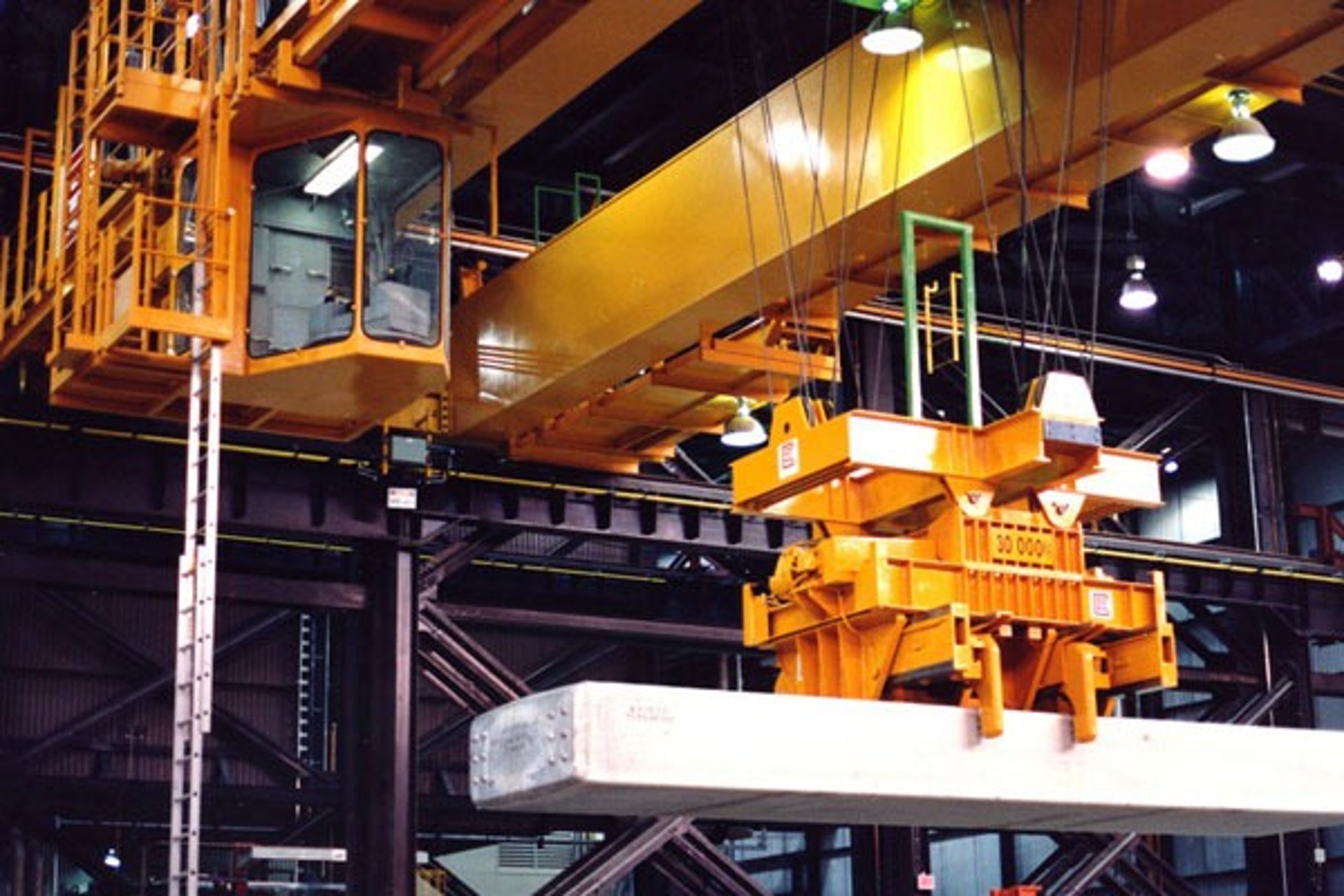
RHEYFLEX® PN Rubber Pendant Overhead Crane Cables with Central Strength Member: Ultimate Solution for South African Mining & Steel Crane Control Systems
RHEYFLEX® PN is a heavy-duty rubber pendant control cable with integrated central strength member, engineered for overhead cranes, mining hoists, conveyors, and steel mill equipment. Combining EPR insulation, PCP chloroprene sheath, DIN VDE compliance, and proven performance across South African platinum, gold, coal mines, and steelworks, it solves conductor breakage, jacket cracking, and signal instability in harsh environments. Also includes equivalent Feichun alternatives with faster delivery and competitive pricing for local procurement.
Li.Wang
7/21/202612 min read
Introduction
South Africa stands as one of the world’s most resource-rich nations, holding leading reserves of platinum, gold, coal, iron ore, chrome, and manganese, while operating a robust steel and chemical manufacturing sector. Every day, thousands of overhead cranes, hoists, conveyors, and stacker-reclaimers move critical materials across mines in Rustenburg, Mpumalanga, and the Northern Cape, steelworks in Pretoria and Newcastle, and port terminals in Durban and Richards Bay. These systems rely entirely on reliable control and signal cables to translate operator commands into precise movement, ensuring both productivity and compliance with the Mine Health and Safety Act. Yet for decades, operators have faced persistent challenges: standard rubber pendant cables often fail within months due to snapped conductors, brittle jackets, or erratic signals, triggering unplanned downtime that can cost over R150,000 per shift in lost production and overtime labour.
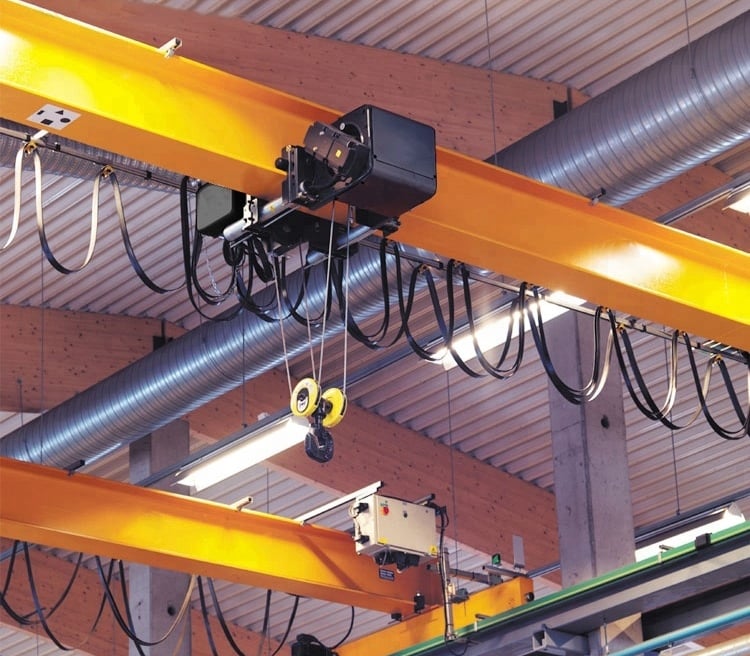
RHEYFLEX® PN, developed by Nexans, is far more than another flexible rubber cable. It is a purpose-built control solution designed around a single, powerful principle: separate mechanical load from electrical function. By integrating a central strength member alongside fine-stranded copper conductors, EPR insulation, and PCP chloroprene outer sheath, it addresses the three most common failure modes in dynamic pendant applications: tensile breakage of copper cores, environmental degradation of jackets, and signal loss from repeated flexing. This cable is engineered specifically for cantilevered control of overhead cranes via pushbutton boxes, as well as for control, measurement, and signalling in steel, mining, chemical, wind turbine, and bulk storage systems. Its design adheres strictly to DIN VDE standards while matching the extreme conditions found across South African industry, making it a proven choice for operators seeking to cut maintenance and improve safety.
This article explores every dimension of RHEYFLEX® PN: its full technical specifications, layer-by-layer construction and material science, engineering principles that set it apart from ordinary cables, real-world performance in South African mines and mills, equivalent alternatives from Feichun, and practical guidance for selection and maintenance. Whether you are a design engineer, procurement manager, or maintenance supervisor, this guide will help you understand why durability is safety, and how the right cable can transform the reliability of your crane and conveyor systems.
Full Technical Specifications & Compliance Standards
RHEYFLEX® PN is manufactured to meet rigorous international standards, with every parameter calibrated for dynamic, high-stress service. The core governing standard is DIN VDE 0250, with additional compliance to DIN VDE 0207 Part 20 for EPR insulation and Part 21 for PCP sheath materials, and DIN VDE 0295 / IEC 60228 for conductor construction. These align closely with South African expectations under SANS 1520 for flexible mining cables and NRCS electrical safety requirements, making validation for local use straightforward.
Electrical Ratings
The nominal voltage rating is U₀/U = 450/750 V, with maximum permissible operating voltages of 495/825 V in AC systems and 619/1238 V in DC systems. It undergoes a routine AC withstand test of 2,500 V, providing a substantial safety margin against voltage spikes common near VFDs and large motor loads. Maximum continuous conductor temperature is 90 °C, with short-circuit withstand up to 250 °C—critical for steel mill environments where radiant heat and occasional fault conditions apply additional thermal stress.
Thermal & Mechanical Limits
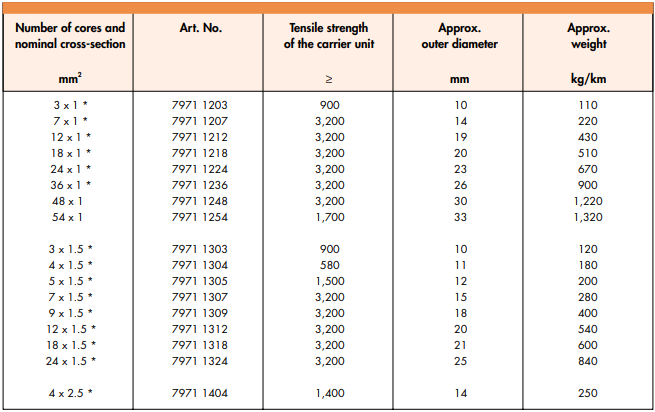
Temperature ranges vary by installation style: for fixed runs, the cable performs reliably from –40 °C to +80 °C, while for dynamic pendant, festoon, or e-chain service, the operating range is –25 °C to +60 °C. Minimum bending radius is just five times the outer diameter for moving applications, compared to eight to twelve times for many general-purpose rubber cables, allowing installation in compact festoon tracks often found in South African coal handling plants and port gantries. Tensile strength varies by core count and cross-section, ranging from 900 N for smaller sizes up to 3,200 N for 1 mm² cables with seven or more cores, enabling safe vertical suspension drops exceeding 100 metres without excessive elongation.
Standard Core Configurations
Available core counts and cross-sections from the official datasheet include stock items marked with an asterisk:
1 mm²: 3*, 7*, 12*, 18*, 24*, 36*, 48, 54 cores
1.5 mm²: 3*, 4*, 5*, 7*, 9*, 12*, 18*, 24* cores
2.5 mm²: 4 cores*
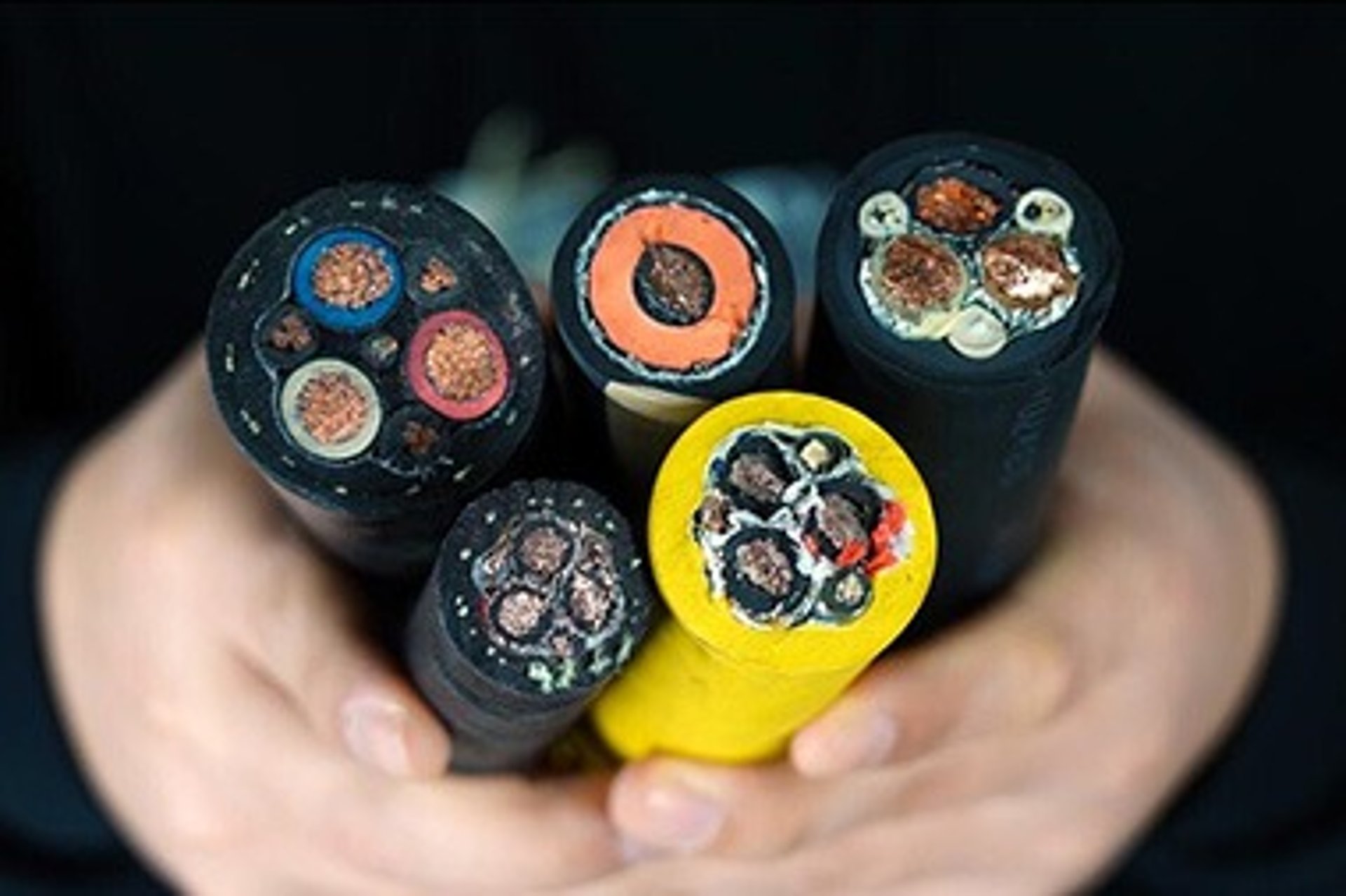
Approximate outer diameters range from 10 mm for 3×1 mm² up to 33 mm for 54×1 mm², with weights from 110 kg/km to 1,320 kg/km. All cores follow DIN VDE 0293-308 identification: black base with sequentially printed numbers, plus a dedicated green/yellow protective earth core for immediate recognition during troubleshooting or emergency repairs.
Customisation Options
Standard variants include overall common shielding or individual core screening for sites with high EMI from VFDs or radio equipment. Special low-temperature rubber compounds are available for high-altitude or winter operations, and alternative colours or fire-retardant formulations can be supplied on request.
Structural Design, Material Science & Engineering Principles
The performance of RHEYFLEX® PN stems from a deliberate, layered architecture where every component serves a specific purpose, backed by proven mechanical, electrical, and materials science principles. Unlike standard cables that rely on copper strands to carry both electricity and physical load, this design fully separates mechanical support from electrical transmission.
Layer-by-Layer Construction
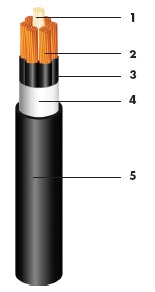
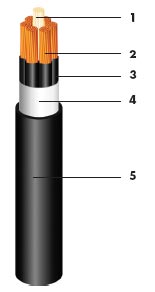
From the centre outward, the cable consists of five distinct layers:
Central strength member: High-tensile galvanized steel strand or aramid fibre bundle, running the full length of the cable and serving as the primary load-bearing element.
Conductors: Bare copper, stranded to Class 5 or Class 6 according to DIN VDE 0295, with fine individual filaments to maximise flexibility and fatigue resistance.
Insulation: Ethylene Propylene Rubber (EPR), compound designation 3GI3 per DIN VDE 0207 Part 20, extruded evenly over each core.
Separator: Textile non-woven tape wrapped around each layer to prevent adhesion and reduce friction during repeated flexing.
Outer sheath: Polychloroprene (PCP / Chloroprene Rubber), compound designation 5GM3 per DIN VDE 0207 Part 21, black as standard, offering robust mechanical and environmental protection.
Optional copper tape or braided shielding can be added between the separator and sheath for enhanced electromagnetic interference protection.
Mechanical Engineering: The Central Strength Member Advantage
The central strength member operates on the principle of load partitioning: over 90 percent of all tensile forces—from the cable’s own weight in vertical suspension, wind buffeting, operator tugging, and crane movement—is transferred directly to the high-strength core, leaving copper conductors under minimal or no net tension. This eliminates the most common failure mode in pendant cables: gradual necking and work hardening of copper strands under constant gravitational pull, which reduces cross-sectional area, raises resistance, causes overheating, and eventually leads to complete breakage.
In South African mines, where pendant cables often hang 80 to 120 metres from shaft-top cranes or skip hoists, ordinary cables stretch permanently and fatigue within months, triggering frequent replacements and safety concerns. The concentric strength member also maintains uniform geometry during twisting or sway, preventing the “corkscrewing” or “lantern spreading” that can jam festoon systems or tear jacket seams in high-wind port applications.
Material Science: EPR Insulation and PCP Sheath
EPR compound 3GI3 was selected for its exceptional electrical and thermal properties. With a low dielectric constant of approximately 2.3 and very low loss tangent, it preserves signal integrity even for low-voltage control pulses, while maintaining stable insulation resistance at temperatures up to 90 °C. Unlike PVC or polyethylene, EPR can elongate over 300 percent before failing, so it stretches rather than cracking when the cable bends or sways, and resists thermal embrittlement through South Africa’s wide day-night temperature swings.
The PCP chloroprene sheath (5GM3) balances mechanical toughness with broad environmental resistance. Its tear strength exceeds 15 kN/m, and it resists abrasion three times better than general-purpose rubber—critical where cables drag against steel rails, accumulate coal or platinum dust, or are exposed to mill scale. It provides inherent resistance to UV radiation and ozone, which degrade ordinary rubber in less than two years when fully exposed to Highveld sunlight. It also withstands mineral oils, hydraulic fluids, dilute acids, and alkalis found in steelworks, chemical plants, and ore processing areas, while offering self-extinguishing flame behaviour that aligns with mining fire safety expectations.
Electrical & Safety Design Logic
Class 6 fine-stranded conductors improve flexibility and reduce stress concentration at bend points, extending flex cycle life by three to five times compared to coarser Class 5 construction. Standardised colour and number coding ensures any maintenance team can trace circuits quickly, reducing the risk of wiring errors during crane repairs or shift changes. Shielded variants comply with Mine Health and Safety Act requirements for screened cables in hazardous or VFD-rich areas, preventing signal drift that could cause unintended crane movement.
Performance Advantages vs Standard Cables: Solving South Africa’s Unique Pain Points
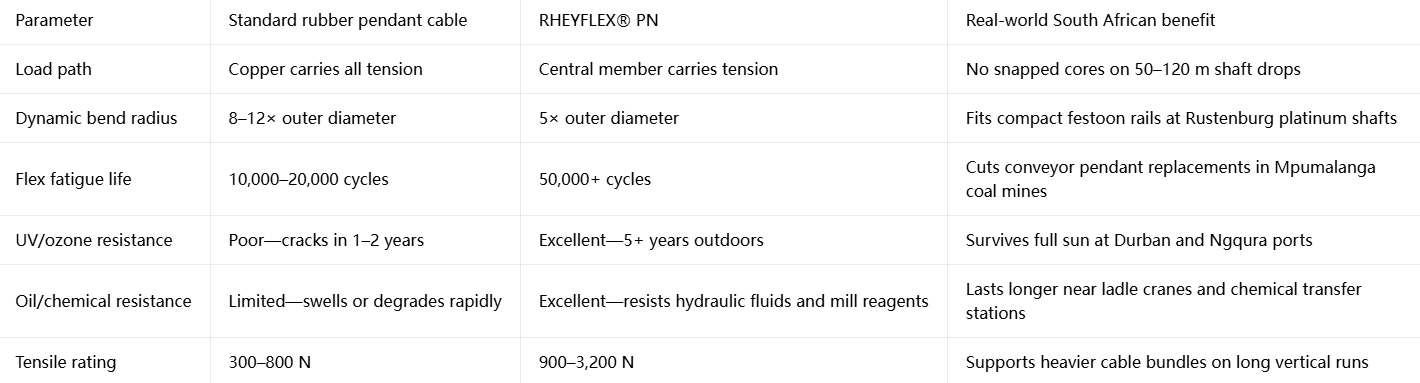
The differences between RHEYFLEX® PN and standard rubber pendant cables are not just technical specifications—they directly address the conditions that cause most unplanned downtime in South African heavy industry.
Side-by-Side Performance Comparison
Why Standard Cables Fail Where RHEYFLEX® PN Succeeds
Standard pendant cables are built on the outdated assumption that copper conductors can safely carry both current and physical load. In South African mines, steelworks, and ports, this assumption breaks down quickly: constant tension stretches copper strands until they thin and break; temperature cycling makes ordinary rubber brittle; UV and chemical vapours erode jackets until moisture enters and causes short circuits; and tight bends in festoon tracks crack insulation. These failures do not just cost money—they create safety risks, such as unexpected crane movement or exposed live conductors, which can lead to serious incidents or regulatory shutdowns under the Mine Health and Safety Act.
RHEYFLEX® PN eliminates these root causes by design. The central strength member removes tension from copper, EPR remains flexible through extreme temperature swings, PCP resists both weather and chemicals, and the 5× bend radius reduces stress on every layer. Independent field data shows service life two to four times longer than general-purpose equivalents, cutting total cost of ownership by 30 to 40 percent over five years when reduced downtime and labour are included.
South African Applications & Case Studies
South Africa’s key mining, steel, chemical, and port sectors face conditions that match exactly what RHEYFLEX® PN was engineered to overcome. Below are real-world applications across major regions and industries.
Mining Sector
South Africa leads global production of platinum group metals, and is a top exporter of coal, gold, iron ore, manganese, and chrome.
Rustenburg Platinum Mines
Platinum operations in the North West Province face high dust, constant humidity, corrosive processing chemicals, and heavy mechanical vibration. RHEYFLEX® PN is widely used on overhead cranes servicing shaft equipment, skip hoists, and underground material handling systems. The central strength member safely supports vertical drops exceeding 100 metres, eliminating the monthly conductor breakages that plagued standard cables and helping mines meet SANS 1520 safety expectations for suspended control circuits. Operators report fewer unplanned stops and reduced maintenance on multi-shift rosters.
Mpumalanga Coal Mines
Coal operations across Mpumalanga rely on long-distance belt conveyors, tripper cars, and stacker systems where pendant cables move constantly through tight bends, accumulating coal dust and moisture. The 5× bend radius fits narrow festoon tracks, while the textile separator and fine-stranded conductors reduce fatigue from thousands of flex cycles each day. Mines have seen cable failures drop by roughly 70 percent after switching, keeping coal feeding and loading on schedule and reducing safety risks from exposed cables near moving machinery.
Deep Gold Mines
In Witwatersrand gold fields, pendant cables on winder control and maintenance cranes hang in humid, temperature-fluctuating shafts with frequent mechanical shock. The PCP sheath resists water and mine water chemistry, while the central strength member prevents stretching that would otherwise pull conductors loose from terminations, ensuring stable pushbutton signals even after years of service.
Steel & Heavy Industry
South Africa’s steel industry, concentrated in Pretoria, Newcastle, and Vanderbijlpark, operates in environments with radiant heat, metal dust, cutting fluids, and cooling water spray.
Newcastle Steelworks Ladle Cranes
Ladle cranes transport molten steel at temperatures exceeding 1,500 °C, creating ambient radiant heat above 50 °C in crane bays. The 90 °C continuous conductor rating of RHEYFLEX® PN prevents thermal degradation, while the PCP sheath resists oil mist from hydraulic systems and abrasion from hot mill scale. The central strength member eliminates jacket splitting when cables twist during ladle positioning, and the compact bend radius works well on older, tighter festoon systems installed years ago.
Continuous Casting and Slab Handling
Overhead cranes serving continuous casters and slab yards face frequent reversing and side loading that twists and sways cables. The concentric strength core resists corkscrewing, while the EPR insulation maintains signal accuracy for VFD positioning control, critical for precise slab alignment and safe handling of hot metal.
Chemical & Petrochemical
Facilities in Durban and Richards Bay process acids, alkalis, and corrosive vapours, requiring cables that resist chemical attack and maintain signal stability near variable-frequency drives. RHEYFLEX® PN’s PCP sheath tolerates dilute chemical splashes, while optional individual core shielding complies with hazardous-area requirements for signal integrity and safety screening. Gantry cranes over tank farms and pump stations operate reliably without premature jacket hardening or cracking.
Port & Logistics
Durban and Ngqura ports face year-round salt spray, intense UV, and strong wind gusts that sway suspended cables on ship-to-shore cranes and bulk handling equipment. PCP resists salt corrosion and UV degradation, while the high tensile strength of the central member dampens wind-induced sway, preventing excessive tension at terminations and extending service life in exposed locations.
Feichun Brand: Fully Equivalent Alternative
For South African buyers seeking performance matching RHEYFLEX® PN with faster delivery and better value, Feichun manufactures a fully interchangeable equivalent built to identical standards and specifications.
Compliance and Performance Match
Feichun’s pendant cable follows DIN VDE 0250, DIN VDE 0207 Part 20/21, and DIN VDE 0295, matching the 450/750 V rating, Class 5/6 fine-stranded conductors, EPR insulation equivalent to 3GI3, and PCP sheath equivalent to 5GM3. It includes the same central strength member design, tensile strength range, 5× dynamic bend radius, and temperature envelope, making it a direct drop-in replacement with no design changes required. Documentation aligns with SANS 1520 and Mine Health and Safety Act requirements, with full test reports and traceability available for site approval.
Key Advantages for South African Procurement
Landed pricing is typically 15 to 25 percent lower than premium European brands, helping mines and steelworks manage capital and maintenance budgets amid rising input costs. Common stock sizes in 1 mm², 1.5 mm², and 2.5 mm² with standard core counts are available for faster shipping to Gauteng, KwaZulu-Natal, and the Northern Cape, reducing lead times for urgent replacements or project start-ups. Custom shielding, low-temperature formulations, and special core markings can also be supplied with shorter turnaround times than many premium suppliers.
Selection Guide, Installation & Best Practices
Proper selection and installation maximise the value and service life of RHEYFLEX® PN or its Feichun equivalent.
How to Select the Right Variant
Start by calculating the maximum suspended length and adding a 1.5 safety factor to choose the appropriate tensile rating—for drops over 60 metres, select the 3,200 N rated variants with seven or more cores. Match core count to the number of control functions plus one dedicated green/yellow earth core. Add overall shielding if VFDs or high-power radio systems operate nearby; use individual core shielding for hazardous areas or low-level analogue signals. Choose low-temperature compounds for high-altitude sites like those in the Eastern Cape or winter operations in the Free State.
Installation and Operational Tips
Always allow sufficient sag so the cable does not pull taut when the crane travels to the furthest point—aim for a natural catenary that keeps tension well below rated limits. Maintain minimum bend radius of five times the outer diameter for all moving sections and four times for fixed runs. Anchor tension loads directly to the strength member rather than clamping on the jacket, and ensure terminations allow conductors to float freely without pre-tension. Inspect the jacket monthly for cuts, abrasion, or ozone cracking, and test protective earth continuity quarterly to maintain compliance with electrical regulations.
Frequently Asked Questions
Can RHEYFLEX® PN be used in flat festoon systems?
It is optimised for vertical pendant and round festoon service, but works well in flat systems provided the 5× bend radius is maintained. Flat-profile variants can be supplied on request.
Does it meet South African underground mining safety rules?
It aligns with SANS 1520 principles and Mine Health and Safety Act requirements for flexible cables, though site-specific approval may be required based on individual mine risk assessments.
What is the maximum safe pendant length?
Variants rated at 3,200 N can typically support drops up to 120 metres; always calculate based on actual cable weight, wind load, and a minimum 1.5 safety factor.
Is Feichun’s equivalent interchangeable with Nexans RHEYFLEX® PN?
Yes—identical dimensions, colour coding, performance, and standards mean it can be installed directly without modifying cranes, junction boxes, or pushbutton stations.
Conclusion
RHEYFLEX® PN is not simply another flexible rubber cable—it is an integrated solution built around three core pillars: separating mechanical load from electrical transmission, combining EPR and PCP materials for balanced electrical, mechanical, and environmental performance, and rigorous adherence to DIN VDE standards tailored to dynamic service. It addresses the three most persistent industry pain points: conductor breakage from tension, jacket failure from weather and chemicals, and signal loss from repeated flexing.
For South Africa’s mines, steelworks, chemical plants, and ports, these design choices translate directly into longer service life, fewer unplanned stops, lower maintenance costs, and safer operation—all critical in sectors where reliability directly impacts worker safety and national economic contribution. Premium performance does not have to come at a premium price, and Feichun’s equivalent offers identical standards with faster delivery and competitive terms for local procurement.
Durability is safety: choosing a cable built for the full range of forces and environments it will encounter is the most effective way to protect people, keep production moving, and reduce long-term costs.
For detailed datasheets, custom compliance documentation, lifecycle cost calculations, or a formal quotation for your South African operation, contact the Feichun team directly at Li.wang@feichuncables.com. We can assist with site-specific sizing, shield options, and lead-time planning for your project or maintenance programme.
Email Address: Li.wang@feichuncables.com
© 2025. All rights reserved.
One-click to Quickly Contact
Products
Contact
Company
Location:
Building A Private Science and Technology Park, Hefei Economic and Technological Development Zone, Anhui Province, China
Heat Resistant Cable
WhatsApp: +86 17333223430
Social Media: