Anhui Feichun Special Cable Co.,Ltd Email: Li.wang@feichuncables.com
M(StD)HOEU Rubber Screened Flat Cable for Festoon Systems: Engineering Excellence in Dynamic Power & Control for Cranes, Hoists & Conveyors
M(StD)HOEU is far more than a standard flat cable — it is an engineered solution built specifically for the unique demands of festoon systems. Designed to withstand repeated bending, harsh outdoor and industrial environments, and electromagnetic interference, this screened rubber flat cable delivers proven long-term reliability. This article explains its construction, material science, technical specifications, and real-world performance in South Africa’s mining, port, and steel industries.
Li.Wang
7/2/202613 min read
Introduction
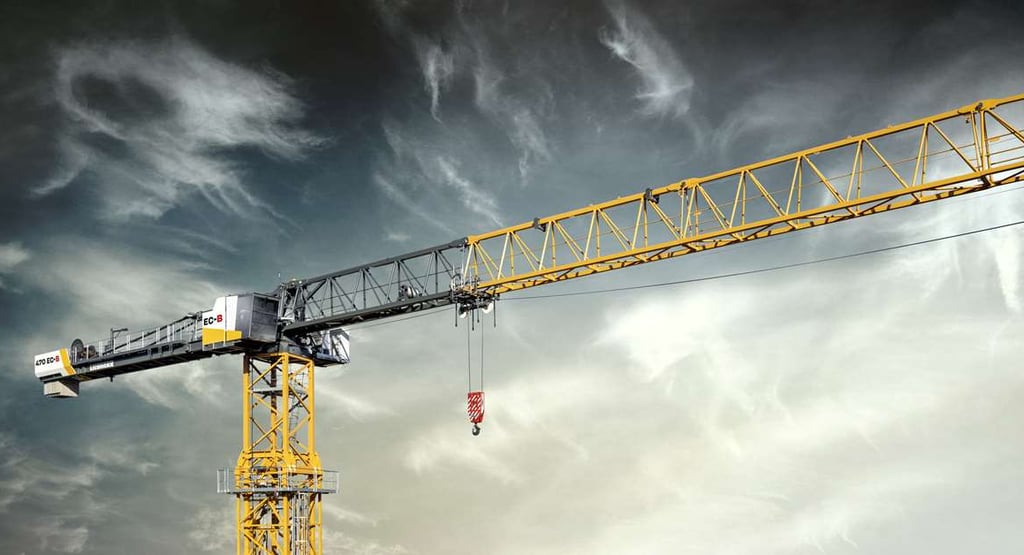
In material handling and industrial automation, festoon systems serve as the lifeline for moving machinery. They supply power and control signals to overhead cranes, gantries, hoists, stackers, reclaimers, and automated transfer equipment. For decades, engineers and maintenance teams have faced a persistent problem: conventional cables installed in these systems tend to fail prematurely. The reasons are well understood but difficult to overcome. As the equipment travels back and forth, the cable is subjected to continuous flexing, mechanical stress, exposure to weather and chemicals, and electrical interference. Round cables twist and spiral, causing fatigue and breakage. Ordinary flat cables lack sufficient protection against oils, UV radiation, and electrical noise.
This is where the M(StD)HOEU low-voltage screened flat cable enters the picture. Produced under the Prysmian and Draka brands, this cable is not simply a flattened version of a standard power cable. It is a purpose-built solution developed to address three core operating conditions of festoon systems: severe bending in a single plane, exposure to aggressive environments, and the need for stable signal transmission free from electromagnetic interference. By aligning its structure, materials, and electrical design directly with the demands of the application, M(StD)HOEU changes the equation from frequent replacement to long-term, low-maintenance operation.
In South Africa, where industries such as mining, bulk handling, shipping, and steel production operate in some of the most challenging conditions in the world, the limitations of ordinary cables are especially visible. Wide temperature swings, intense sunlight, coastal salt air, high levels of dust, and the presence of oils, greases, and chemical fluids create an environment where standard cables often fail within months. M(StD)HOEU was designed to perform reliably in exactly these scenarios, offering a service life that is several times longer while reducing the total cost of ownership significantly.
Standards, Ratings and Technical Specifications
To understand the capabilities of M(StD)HOEU, it is important to start with the technical framework that defines its construction and performance. The cable is manufactured according to internationally recognized standards, ensuring consistency and compliance across different regions and industries.
The primary design standard is DIN VDE 0250-809, which covers low-voltage flat flexible cables for festoon applications. It also meets UL Style 4540, making it suitable for use in markets requiring North American safety certification. Additional standards apply to individual components: conductor dimensions follow IEC 60228 / DIN EN 60228, insulation is specified under DIN VDE 0207-20, and the outer sheath complies with DIN VDE 0207-21. Flame performance is rated FT-1, confirming self-extinguishing properties.
Electrical Parameters
The cable is rated for 0.6/1 kV, which corresponds to 600/1000 V in North American terminology. This rating covers nearly all low-voltage power and control applications in industrial plants. The maximum permissible continuous operating voltage is 0.7/1.2 kV for alternating current and 0.9/1.8 kV for direct current. During type testing, cables withstand an AC voltage of 2.5 kV for 5 minutes without breakdown, providing a substantial safety margin.
Thermal performance is defined by the maximum conductor temperature of 90°C under normal operating conditions. In the event of a short circuit, the conductor can safely reach 250°C for up to 5 seconds, which is standard for rubber-insulated power cables.
Environmental and Mechanical Ratings
Temperature range is a key differentiator. For fixed installations, the cable can operate between -40°C and +80°C. When in continuous motion and flexing, the range is -30°C to +80°C, which covers the vast majority of climates found in South Africa, from freezing nights in high-altitude mining regions to extreme heat in open yards and coastal terminals.
Mechanically, the cable is designed to resist tension without damage. The maximum permissible tensile load is 15 N per square millimeter of conductor cross-section, which ensures that the copper does not stretch beyond its elastic limit. A critical note from the specification is that torsional stress is not permitted. This requirement is built into the design itself — the flat profile prevents rotation, eliminating the twisting forces that destroy round cables.
The minimum bending radius follows DIN VDE 0298 Part 3, with values varying by cross-section. For free-moving festoon applications, the radius is typically between 6 and 10 times the cable thickness. The maximum recommended travel speed in a festoon system is 180 meters per minute, which covers most standard crane and conveyor speeds. For faster operations, the manufacturer should be consulted to confirm suitability.
Size Range and Configurations
M(StD)HOEU is available in two main categories: power cables designated M(StD)HOEU‑J and control cables designated M(StD)HOEU‑O.
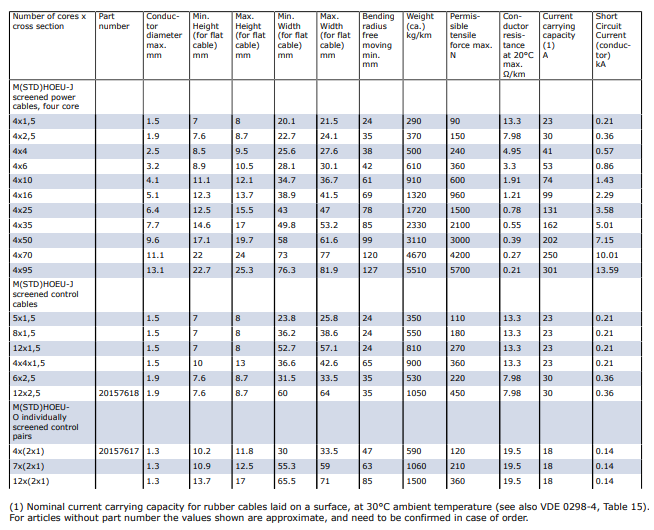
Power versions are offered as 4-core cables from 1.5 mm² up to 95 mm², suitable for three-phase power plus earth connections. Control cables include multi-core configurations from 5 to 12 cores in 1.5 mm² and 2.5 mm², as well as individually screened pairs ranging from 4×(2×1 mm²) up to 12×(2×1 mm²). The full specification table includes details such as conductor diameter, overall dimensions, weight, maximum tensile force, conductor resistance, current carrying capacity, and short-circuit current ratings. For example, a 4×16 mm² cable has a current rating of 99 A, a maximum tensile force of 960 N, and a short-circuit rating of 2.29 kA. These values are calculated in accordance with VDE 0298‑4, which provides the standard method for determining current capacity for rubber-insulated cables.
Construction Design and Engineering Principles
The most important feature of M(StD)HOEU is how it is built. Every layer serves a specific purpose, and the arrangement of components follows well-established principles of mechanics, electrical engineering, and material science.
Layer-by-Layer Construction
Conductor
At the core of each circuit is a conductor made from bare annealed copper. The stranding class is selected to balance conductivity, flexibility, and strength. For cross-sections up to 25 mm², the cable uses Class 6 finest wire strands, which represents the highest level of flexibility. Above 25 mm², Class 5 fine strands are used, which still offer excellent flexibility while maintaining better structural integrity for larger sizes.
Beneath the insulation, each conductor is wrapped with either paper tape or PETP film. This wrapping serves two purposes: it creates a smooth surface so that the insulation does not adhere directly to the copper, and it acts as a buffer that distributes bending forces evenly across the entire cross-section. In engineering terms, using fine strands reduces the bending stress on individual wires. When a cable bends, the outer surface stretches and the inner surface compresses. With many small wires, the strain is shared across thousands of individual strands, rather than concentrated on a few thick wires. This reduces fatigue and extends flex life significantly.
Insulation
The insulation layer is made from Compound 3G13, a high-performance rubber compound defined in DIN VDE 0207‑20. This is an ethylene‑propylene rubber (EPR) formulation, known for its excellent electrical properties and thermal stability.
From an electrical perspective, 3G13 offers high dielectric strength and low dielectric loss, meaning it can withstand high voltages without breaking down and does not generate excessive heat under load. Mechanically, its elasticity is closely matched to that of copper. As the cable bends and flexes, both the conductor and the insulation deform together, avoiding the formation of gaps or separation between layers. This compatibility is a major factor in preventing early insulation failure.
Core Identification
For ease of installation and maintenance, cores are clearly marked. In cables with up to 5 cores, each core is a distinct color following DIN VDE 0293‑308. For cables with 6 or more cores, the insulation is black with white numerical printing. This standardization reduces wiring errors and speeds up commissioning and repairs.
Individual Screen
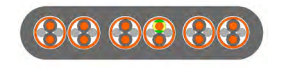
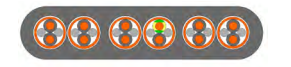
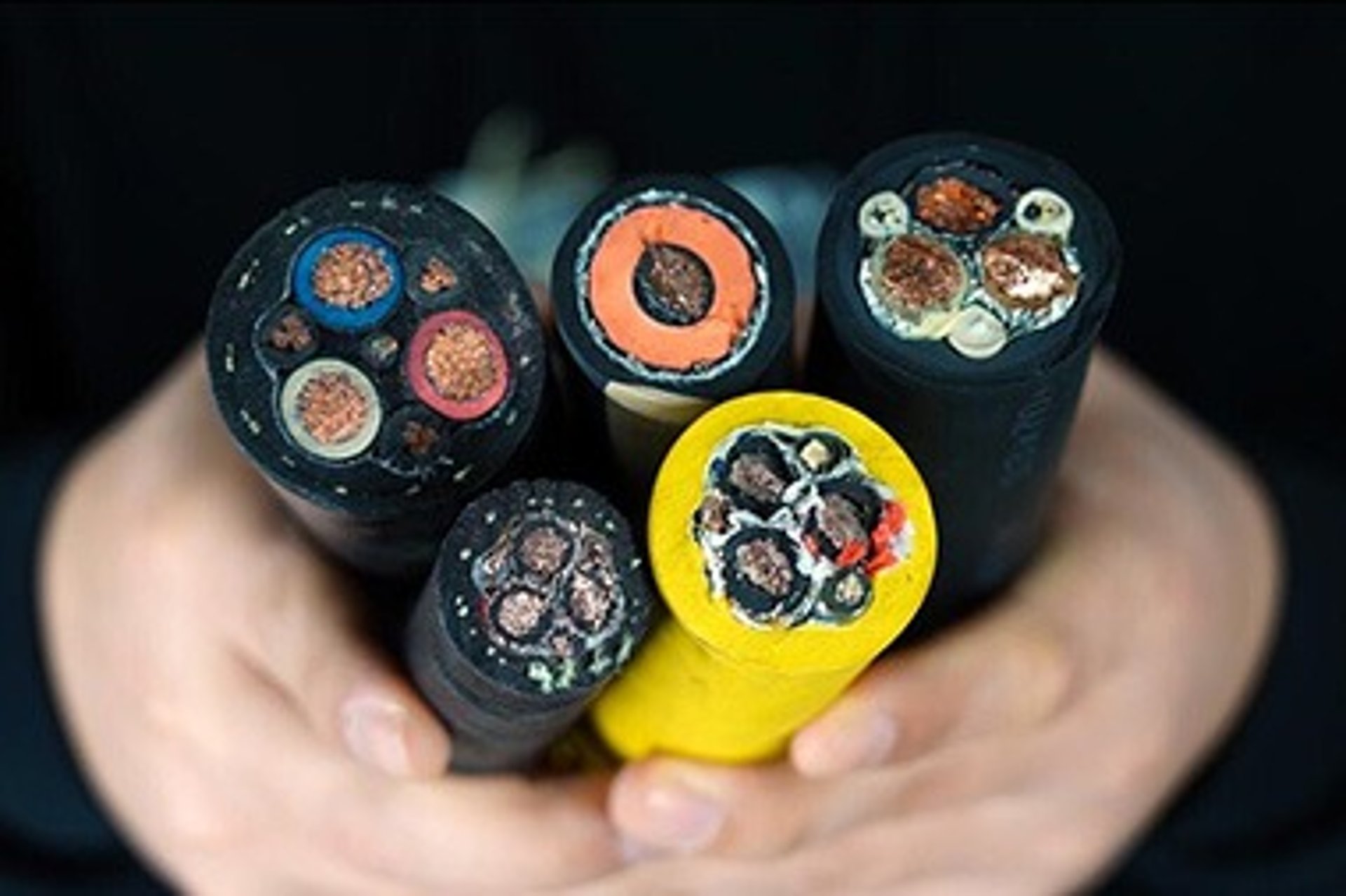
This is one of the most significant design features that sets M(StD)HOEU apart from generic flat cables. Every single core or control pair is individually screened, rather than using a single overall screen around the entire cable.
The screen structure consists of three parts: first, an overlapped wrap of aluminum‑PETP foil, which blocks high‑frequency electric fields. Second, a spiral layer of tinned copper wire, achieving a coverage of more than 85%. This layer acts as a shield against magnetic fields and provides a low‑resistance path for grounding. Third, a final wrap of PETP film holds the screen layers firmly in place.
This design follows the principle of the Faraday cage, where conductive barriers prevent electromagnetic energy from entering or leaving the circuit. By shielding each core separately, the design eliminates cross‑talk between circuits and ensures that sensitive control signals are not distorted by the electromagnetic fields generated by power circuits or variable‑frequency drives.
Core Arrangement
The way cores are arranged is fundamental to the cable’s performance. In power cables, cores are laid out parallel in a single plane, giving the cable its flat profile. In control cables, pairs are twisted with a short lay length and alternating direction before being placed parallel. Twisting reduces inductance imbalance and helps cancel out external interference.
The flat configuration is not chosen for convenience alone — it is a mechanical solution. When a round cable bends, it can twist in multiple directions, creating unpredictable stress patterns. When a flat cable is installed in a festoon rail, it can only bend in one plane, with the neutral axis of bending running through the center of the cable. This means the maximum strain on the outer layers is reduced by nearly half compared to a round cable of similar cross‑section. The result is a more even distribution of forces and a much lower risk of fatigue failure.
Outer Sheath
The outermost layer is the Compound 5GM3 polychloroprene (CR) sheath, also known as neoprene, specified under DIN VDE 0207‑21. This material is selected for its outstanding resistance to environmental factors.
Polychloroprene has a chemical structure that makes it highly resistant to mineral oils, greases, and many common industrial chemicals. It also resists degradation from ozone and ultraviolet radiation, which are the primary causes of cracking in outdoor cables. Mechanically, it offers high tensile strength, excellent tear resistance, and the ability to recover its shape repeatedly after bending. The elastic recovery rate exceeds 90%, so the sheath does not become stiff or brittle over time.
Material Science and Performance Logic
The design philosophy behind M(StD)HOEU can be summarized in a simple but powerful principle: the operating conditions define the required structure, the structure determines the materials used, and the materials ultimately determine the service life.
Every choice in construction is a response to a specific failure mode observed in real‑world applications. Class 6 conductors solve the problem of bending fatigue. 3G13 insulation ensures electrical stability and thermal endurance. Individual screens address signal interference. The 5GM3 sheath protects against chemical and environmental attack.
When compared to ordinary cables, the differences in performance are clear. Standard round cables are often constructed with Class 2 or Class 5 conductors, PVC insulation, and general‑purpose rubber sheaths. They twist and spiral in festoon systems, leading to core breaks in as little as 6 to 12 months. Generic flat cables may have a flat profile but lack individual screening and use lower‑grade sheaths, resulting in shorter life and poor signal quality.
While M(StD)HOEU carries a higher initial purchase price, the lifecycle analysis tells a different story. In typical industrial applications, it lasts 2 to 4 times longer than conventional cables. Maintenance costs are reduced by 60 to 80%, and the most significant saving comes from avoiding unplanned downtime. In industries where production stops cost thousands of rands per hour, the reliability of the cable becomes a major factor in overall profitability.
Proven Performance in South Africa
South Africa’s industrial landscape provides a perfect testing ground for M(StD)HOEU. Conditions here are far more demanding than in many other regions. Temperatures range from well below freezing in winter to above 50°C in summer. Solar radiation is intense, and coastal areas experience high humidity and salt‑laden air. Mines and processing plants are filled with dust, coal and ore fines, diesel fumes, and hydraulic oils. Steel mills add radiant heat, water sprays, and chemical emulsions to the mix.
Over many years, Prysmian and Draka cables have become established in these sectors, with documented results that demonstrate the value of the design.
Open‑Cast Mining Applications
In the Northern Cape and Mpumalanga, large stackers, reclaimers, and overland conveyors move millions of tons of ore and coal every year. These machines travel long distances at moderate speeds, and their power and control cables are exposed to direct sunlight, dust, and oil mist from engines and hydraulics.
Before switching to M(StD)HOEU, most operations used standard round rubber cables. Maintenance teams reported that sheaths would crack and harden within 6 to 9 months, and internal conductors would break due to repeated flexing. Replacing these cables was time‑consuming and required shutting down production. After installing M(StD)HOEU, the results were immediate. The cable did not twist or flip inside the festoon tracks. The CR sheath resisted UV damage and oil, remaining flexible even after years of exposure. Service life increased to 36 to 48 months, and the number of maintenance stops for cable replacement dropped by more than 70%.
Container and Bulk Ports
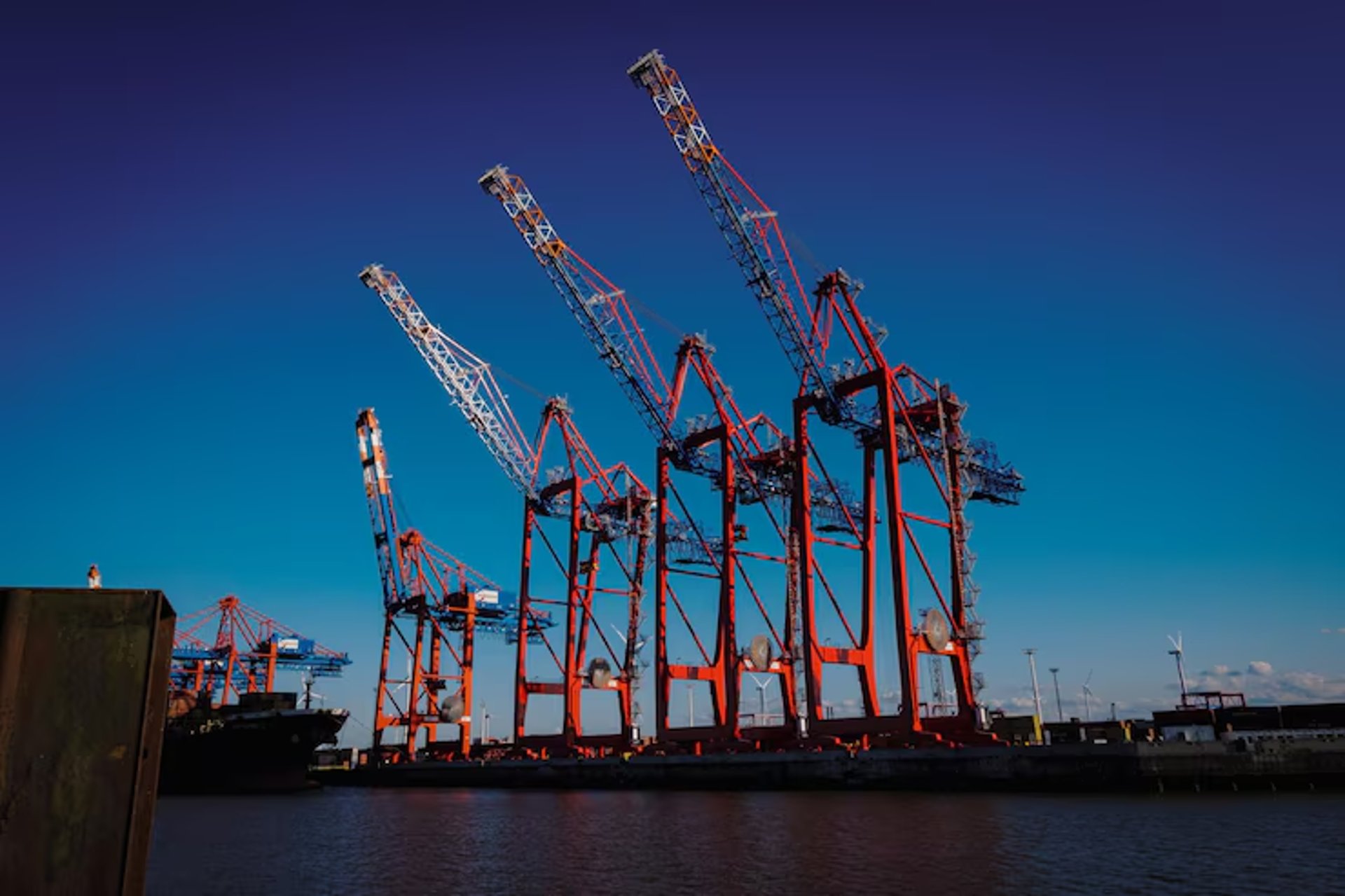
At ports such as Durban, Cape Town, and Ngqura, gantry cranes and rubber‑tyred gantries operate continuously. These systems run at speeds of up to 150 meters per minute, moving containers and bulk cargo around the clock. The environment is humid, salty, and exposed to wind and rain.
The electrical challenge here is interference. Modern cranes use variable‑frequency drives for motors and high‑precision encoders for positioning. Without proper shielding, the electrical noise generated by the drives can travel along the cable and disrupt control signals, causing erratic movement or emergency stops.
M(StD)HOEU solves this through its individual screening. The separation between power and control circuits, combined with the Faraday cage effect, ensures that signals remain stable. Operators report fewer positioning errors and no unexplained trips. The flat profile also fits neatly into C‑type festoon rails, eliminating the risk of derailment and reducing mechanical wear.
Steel and Metal Processing
In Gauteng’s steel mills, continuous casting cranes and ladle handling equipment operate in one of the harshest environments possible. Radiant heat from molten steel raises ambient temperatures, while cooling water sprays, emulsions, and scale dust create a corrosive atmosphere.
The CR sheath of M(StD)HOEU is resistant to both high‑temperature splashes and the chemical properties of emulsions. The insulation is able to withstand thermal cycling, expanding and contracting without degradation. The screening protects sensitive PLC and instrumentation circuits from the magnetic fields generated by large furnaces and motors. In these plants, where maintenance access is difficult and downtime is costly, the cable has proven to be a reliable choice.
Selection Guide and Sizing
Choosing the correct cable involves more than matching voltage and current ratings. It requires understanding the mechanics of the system and the environment in which it will operate.
Designation and Configuration
The naming system follows European standards. M(StD)HOEU‑J refers to power cables, typically with 4 cores for three‑phase plus earth. M(StD)HOEU‑O refers to individually screened control cables, either multi‑core or twisted pairs.
When selecting, start with the required voltage rating. The 0.6/1 kV rating covers almost all low‑voltage applications. Next, determine the cross‑section based on current demand, using the values provided in the specification table. These values are calculated for cables laid on a surface at an ambient temperature of 30°C. For higher temperatures or enclosed conditions, a derating factor should be applied.
Mechanical factors must also be considered. The total weight of the cable plus the maximum acceleration of the system should not exceed the permissible tensile force. Bending radius should be checked against the minimum values given in the data sheet, and a safety margin is recommended for long‑travel systems.
Feichun Cables: Equivalent Alternative
For projects where cost and lead time are important considerations, Feichun Cables offers a fully equivalent version of M(StD)HOEU. This alternative is designed and tested to meet the same international standards, making it a direct replacement.
Feichun’s equivalent cable complies with DIN VDE 0250‑809, UL Style 4540, and all relevant IEC and VDE specifications. It uses the same construction: Class 5 and Class 6 copper conductors, insulation formulated to match the properties of 3G13, individual screening with aluminum foil and tinned copper braid, and an outer sheath meeting the performance requirements of 5GM3 polychloroprene.
The benefits of choosing Feichun include competitive pricing compared to European‑sourced cables, shorter production and delivery times to Southern Africa, and full technical documentation including test reports and certification. The dimensions, electrical ratings, and mechanical performance are identical, so existing installation practices and festoon hardware remain compatible. This makes it a practical choice for new installations, replacements, and large‑scale projects.
Installation, Maintenance and Troubleshooting
Even the best cable will not perform well if installed incorrectly. There are several key practices that extend service life.
Installation should always be in a single‑plane festoon system, such as C‑rail or I‑rail, to prevent torsion. The cable should be laid with sufficient slack to allow free movement without excessive tension. End terminations must be clamped properly to distribute pulling forces evenly across the conductors and sheath. The screen should be grounded at one or both ends according to the system’s EMC requirements.
Regular maintenance is straightforward. Inspections should look for cuts, abrasion, swelling, or signs of sheath hardening. Insulation resistance tests can be performed annually to check for internal degradation. Keeping the festoon track clean and ensuring that rollers and trolleys move freely reduces mechanical load on the cable.
Common issues and their solutions are well documented. If the sheath cracks prematurely, it may indicate exposure to temperatures beyond the rated range or contact with incompatible chemicals. If signal noise occurs, the first step is to check screen continuity and grounding. If cores break, it is usually a sign that the bending radius is too small, tension is too high, or travel speed exceeds the cable’s capability.
Frequently Asked Questions
Q: Can this cable be used outdoors permanently?
A: Yes. The CR sheath is resistant to UV, ozone, and weathering, and the temperature range from -40°C to +80°C covers all outdoor conditions in Southern Africa.
Q: Is individual screening really necessary?
A: In systems with variable‑frequency drives, PLCs, encoders, or long cable runs, yes. Individual screening prevents interference between circuits and ensures stable operation.
Q: Can Feichun cable be used as a direct replacement for Prysmian/Draka?
A: Yes. It meets the same standards, has identical dimensions and ratings, and fits the same hardware.
Q: Does it require special festoon hardware?
A: No. It is designed to fit standard C‑type and I‑type festoon rails used across the industry.
Conclusion
M(StD)HOEU represents a shift in how engineers approach cable selection for moving equipment. It is not simply a flat version of a power cable — it is a system‑level solution developed from the understanding that the environment, the mechanics of movement, and the electrical requirements must all be addressed together.
By adopting a flat parallel structure, it eliminates the twisting and torsion that cause fatigue. By using Class 6 conductors and high‑grade rubber insulation, it withstands millions of bending cycles. By adding individual screening, it ensures clean power and reliable signals. By selecting polychloroprene for the sheath, it resists oil, chemicals, UV, and extreme temperatures.
The experience in South Africa confirms that this design works. In mines, ports, and steel plants, M(StD)HOEU and its equivalents deliver longer life, fewer breakdowns, and lower total operating costs. While the initial investment is higher, the return comes in reduced maintenance and fewer production stops.
This cable stands as a clear example of how material science, mechanical engineering, and electrical design can combine to solve a difficult industrial problem. It reminds us that in dynamic applications, the right cable is not just a component — it is an investment in the reliability of the entire system.
If you require technical data sheets, pricing, or further information regarding M(StD)HOEU‑type cables and equivalent products, please contact the Feichun technical and sales team.
Email Address: Li.wang@feichuncables.com
© 2025. All rights reserved.
One-click to Quickly Contact
Products
Contact
Company
Location:
Building A Private Science and Technology Park, Hefei Economic and Technological Development Zone, Anhui Province, China
Heat Resistant Cable
WhatsApp: +86 17333223430
Social Media: