Anhui Feichun Special Cable Co.,Ltd Email: Li.wang@feichuncables.com

How TRATOS ASNZS MTO‑240® Composite‑Screened Trailing Cables Solve Long‑Distance Feeder Challenges in Underground Longwall Mining Under AS/NZS 1802 Standards
Designed specifically for underground coal operations across South Africa, Australia, New Zealand and beyond, TRATOS ASNZS MTO‑240® reeling and trailing cables deliver reliable power for longwall systems and heavy machinery. Built around three large pilot cores and a full composite copper‑polyester screen, the cable maintains low‑resistance earthing over long runs, meets every requirement of AS/NZS 1802:2003, and withstands repeated bending, abrasion, moisture and electrical stress. This article explains its engineering principles, material science, real‑world mine performance, and equivalent supply options from Feichun Cables.
Li.Wang
7/30/202618 min read


Introduction
Underground longwall mining ranks among the most demanding operating environments for electrical power distribution systems. A single longwall face can extend more than 200 metres in length, with power supplied from substations located often several hundred metres further back in the mine layout. The feeder cable must move continuously as the face advances, being reeled, dragged, twisted and flexed thousands of times over its operational life. At the same time, it must perform reliably in conditions that include coal dust accumulation, methane gas presence, high humidity, falling rock debris, and repeated impact from heavy equipment. In South Africa’s major coal‑producing regions such as Mpumalanga, Limpopo and the Free State, these operational challenges are paired with strict regulatory oversight from the Mine Health and Safety Inspectorate, where reliable earthing and insulation integrity are not just operational priorities – they are fundamental requirements for preventing injury, equipment loss and catastrophic safety incidents.
For many years, mines have relied on standard‑grade trailing cables that eventually fail when subjected to the full demands of longwall duty. These conventional cables commonly suffer from issues such as pilot‑core resistance that rises sharply with increasing feeder length, inconsistent earthing paths that cause protection relays to trip unnecessarily or fail to activate when needed, brittle insulation that cracks under repeated flexing, and thin outer sheaths that tear or wear through in a matter of months. When such failures occur, the consequences extend well beyond direct repair costs: unplanned shutdowns at a large‑scale operation can run into millions of rand per day in lost production, while unreliable earthing introduces unacceptable risk of electric shock, fire ignition or methane explosion.
TRATOS ASNZS MTO‑240® is not simply a heavier or more rugged version of a standard mining cable. It is a purpose‑engineered reeling and trailing cable developed from the ground up to meet the exact requirements of AS/NZS 1802:2003, the Australian/New Zealand standard specifically written for cables intended for repeated reeling and trailing use in underground coal mines. Rated for operating voltages from 1.1/1.1 kV up to 11/11 kV, it is designed primarily as a feeder cable for longwall systems and heavy mobile mining machinery. Its defining design feature – three large interstitial pilot cores combined with a full composite core screen – delivers a low‑resistance earthing and control circuit that remains stable and consistent even over extended feeder runs. Backed by ethylene‑propylene rubber insulation, a complete semiconductive screening system, and a heavy‑duty outer sheath that outperforms standard HD‑85‑PCP grades, the cable addresses the root causes of failure that limit the service life and reliability of conventional alternatives. Its design is rooted in proven principles of electric‑field management, mechanical stress distribution and long‑term material durability, and it has established a strong operational track record in South African mines alongside its well‑established use across Australia and New Zealand. For mine engineers, procurement teams and safety compliance managers, understanding how this cable functions and why it delivers different performance outcomes is essential to making informed decisions around power distribution reliability, regulatory compliance and whole‑of‑life operational cost.
TRATOS ASNZS MTO‑240® is a high‑performance reeling and trailing cable engineered specifically for underground coal longwall operations and heavy mobile machinery feeders. Its core value lies in the combination of three large pilot cores and a full composite core screen, which creates a low‑resistance earthing and control circuit that directly addresses the common limitations of standard cables – particularly rising pilot resistance and inconsistent earthing performance over long feeder distances. Together with EPR insulation, a fully integrated semiconductive screening system and application‑specific heavy‑duty sheathing, it delivers consistent reliability and safety even under extreme mechanical, electrical and environmental conditions.
Every aspect of its construction follows core engineering principles: uniform distribution of electrical stress across the insulation, balanced management of mechanical forces during repeated movement, and material selection optimised for long‑term resistance to thermal, chemical and mechanical ageing. All design and performance parameters are aligned fully with AS/NZS 1802:2003 and associated supporting standards. While originally developed for Australian and New Zealand mining operations, its design principles and compliance profile make it highly relevant for any global mining region facing similar operational and safety requirements – including longwall operations across Southern Africa. When selecting this cable for an application, engineers should match voltage rating, conductor cross‑section and mechanical protection grade to the specific system requirements, feeder length and site conditions detailed in the manufacturer’s technical data. Regular inspection and testing of pilot core continuity and earthing path resistance should form part of routine maintenance schedules, to ensure the cable delivers its full design performance and safety benefits over its intended service life.
TRATOS ASNZS MTO‑240® is not an upgraded version of a general‑purpose cable – it is a complete system‑level solution engineered for the unique demands of underground coal longwall mining. Its compliance framework ensures alignment with all mandatory requirements of AS/NZS 1802:2003 and related standards, covering material specifications, construction dimensions, electrical performance and mechanical endurance testing. Its technical design is built around four core pillars: uniform electric‑field control, low‑resistance redundant earthing, resistance to mechanical fatigue, and stability in harsh operating environments. These are delivered through specific design features including triple semiconductive screening for medium‑voltage ratings, combined copper‑polymer composite earthing screens, EPR‑based insulation systems and application‑optimised outer sheathing – directly addressing the four most common failure modes of standard mining cables: conductor breakage, sheath damage, premature insulation breakdown and unreliable earthing. In operational use across South Africa and other key coal‑producing regions, these design characteristics translate directly into improved power supply continuity, more consistent earth‑fault protection performance, extended service life and reduced total operational cost. The cable is recommended for all medium‑voltage applications from 1.1 kV up to 11 kV where cables are subject to frequent movement, high mechanical stress and strict safety requirements – most notably longwall faces, continuous miners and relocatable substations. For all circuits operating at 3.3 kV and above, the full triple‑extrusion semiconductive screening configuration is mandatory to maintain proper electrical stress management and insulation integrity.
Technical Specifications and Standard Compliance
Every dimension, material selection and performance characteristic of TRATOS ASNZS MTO‑240® is defined, tested and validated against established industry standards, with full alignment to the requirements set out in AS/NZS 1802:2003 for reeling and trailing cables in underground coal mines. The cable is available in voltage ratings covering 1.1/1.1 kV, 3.3/3.3 kV, 6.6/6.6 kV and 11/11 kV, matching the full range of medium‑voltage systems used for longwall shearers, face conveyors, hydraulic power packs and auxiliary mining equipment. Nominal conductor cross‑section sizes range from 10 mm² through to 300 mm², covering all common feeder requirements from smaller auxiliary circuits up to full‑capacity main longwall feeders.
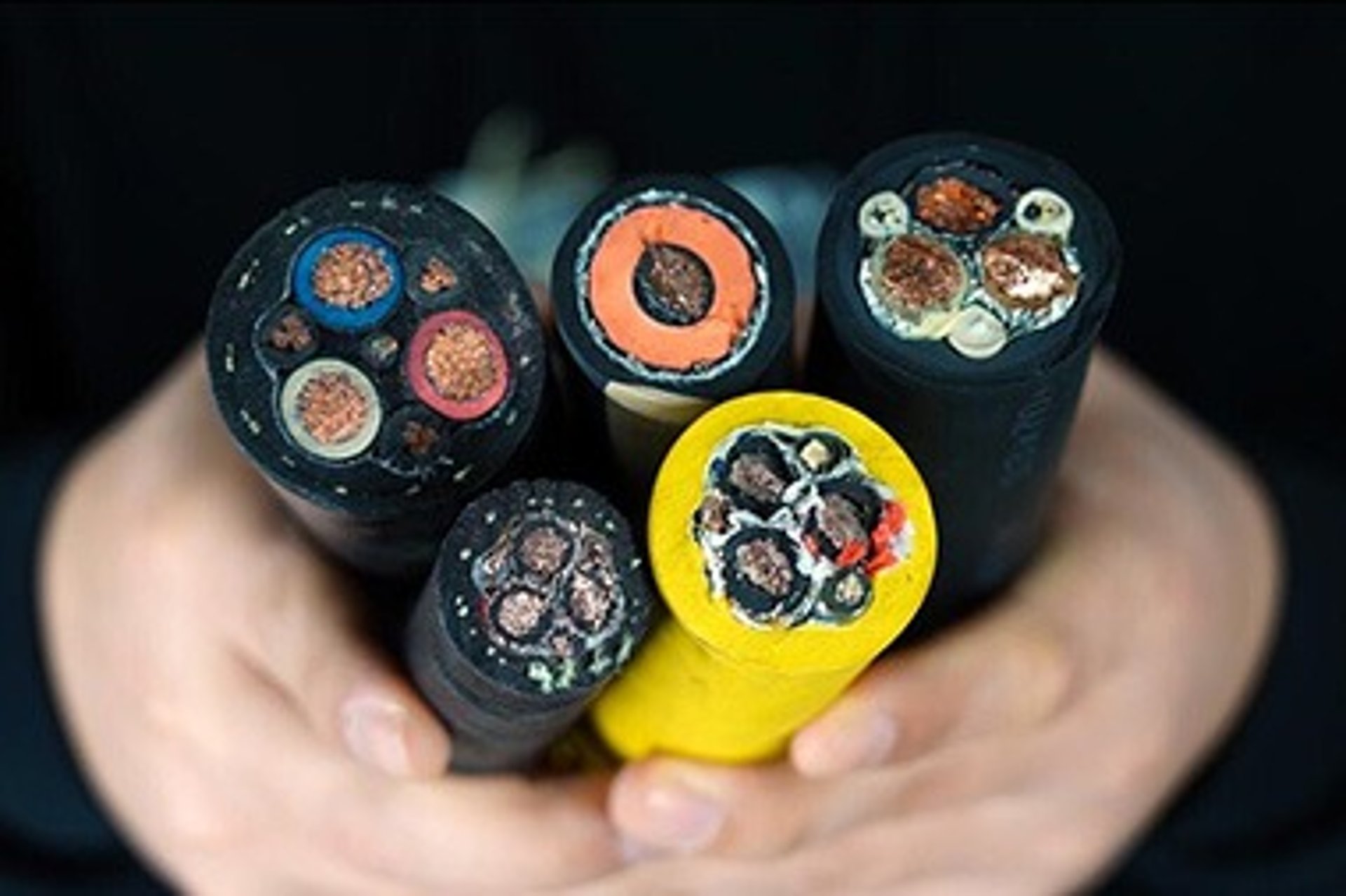
The cable carries consistent product marking across all production batches, following the format “TRATOS + R‑EP‑90/HD‑85‑PCP + TYPE 240.x + year of manufacture + nominal conductor size + sequential metre marking”. This standardised marking makes identification, specification verification and traceability straightforward during installation, inspection and compliance audits. The standard outer sheath colour is black, and core identification follows a clear, consistent system: power cores are identified by coloured tracers – red, white and blue – integrated into the composite screen layer, while pilot cores are easily distinguished by their grey insulation.
Beyond AS/NZS 1802:2003 itself, the cable complies with a suite of supporting standards that govern individual components and overall performance requirements. AS/NZS 1125 sets out specifications for electrical conductors, ensuring consistent conductivity, flexibility and corrosion resistance across all size ranges. AS/NZS 3808 covers insulation and sheath materials, defining minimum performance levels for electrical properties, thermal endurance and mechanical strength. AS/NZS 5000.1 establishes general requirements for power cables, providing a baseline for construction and testing that aligns with broader electrical installation codes used across the mining industry.
This alignment with internationally recognised standards is particularly relevant for South African mining operations, where compliance with accepted international specifications is widely recognised by regulatory authorities and mine safety bodies. Many operations adopt AS/NZS 1802 because it is written specifically to address the unique combination of repeated movement, electrical safety and environmental exposure associated with trailing cables – unlike general‑purpose cable standards that do not account for the specific demands of underground coal mining. When a cable is fully compliant with AS/NZS 1802, it means every element of its design – from conductor stranding configuration to screen coverage, insulation thickness and sheath toughness – has been specified and tested to perform reliably under the exact conditions found in longwall mining applications.
Design, Materials and Underlying Engineering Principles
The construction of TRATOS ASNZS MTO‑240® follows a layered architecture where every material choice and structural decision is directly tied to the challenges of the operating environment. Working from the inside out, each component serves a specific electrical, mechanical or environmental purpose, and the way these components function together is what delivers the cable’s distinct performance advantages.
Conductor Construction
At the centre of each power core is a conductor manufactured from flexible stranded tinned annealed copper. The use of annealed copper provides high electrical conductivity, minimising resistive losses and associated heat generation. Fine multi‑wire stranding gives the conductor the ability to flex repeatedly without work‑hardening or developing fatigue fractures. The tin coating applied to each strand serves two important functions: it prevents oxidation and corrosion in damp or chemically active mine atmospheres, and it maintains low contact resistance at terminations and joints – a critical factor for safety‑critical earthing connections that must remain reliable over long periods.
Conductor Screening
For all voltage ratings of 3.3/3.3 kV and higher, a semiconductive compound is applied directly over the conductor to form a continuous conductor screen. This layer eliminates the microscopic surface irregularities inherent to stranded copper conductors that would otherwise create localised high‑electric‑field points. By providing a smooth, continuous equipotential surface at the boundary between conductor and insulation, the screen prevents the initiation of partial discharge and electrical treeing – the progressive degradation mechanisms that are the primary cause of premature insulation failure in medium‑voltage cables.
Insulation Material and Function
The insulation layer is formed from EPR R‑EP‑90 – an ethylene‑propylene rubber compound rated for a continuous operating temperature of 90 °C. Compared with more common rubber or PVC blends, EPR offers significantly higher dielectric strength, lower dielectric loss and far better resistance to ozone, heat and chemical contamination. Its inherent flexibility means the insulation stretches and compresses evenly as the cable is bent and reeled, rather than cracking or detaching from the conductor surface. The higher temperature rating also allows the cable to carry greater current capacity for a given conductor size, or operate with an increased thermal safety margin under continuous full load conditions.
Insulation Screening
Complementing the conductor screen is an insulation screen manufactured from a semiconductive elastomer, applied over the insulation layer for all cables rated 3.3/3.3 kV and above. Together with the conductor screen, this forms a complete triple‑extrusion screening system that confines the electric field entirely within the insulation material and distributes it evenly across the full cross‑section. This is the single most effective way to extend insulation service life in medium‑voltage cables subject to movement and mechanical disturbance, because it removes the localised stress points that trigger premature insulation degradation.
Composite Screening and Earthing System
Surrounding the completed cabled cores is the composite screen, which also functions as the primary earth conductor. This layer is formed from tinned annealed copper braiding interwoven with high‑strength polyester yarn. The copper component provides the low‑impedance path required to carry fault current quickly and safely to earth, while the polyester yarn adds tensile strength and tear resistance that pure copper braid cannot provide on its own. As the cable is pulled, twisted and flexed during normal operation, the polyester takes up mechanical load that would otherwise snap individual copper strands, ensuring the screen remains electrically continuous even after thousands of reeling cycles.
Interstitial Pilot Cores
Embedded within the gaps between the power cores are three interstitial pilot cores, each constructed from flexible stranded tinned copper with EPR insulation. These cores serve multiple critical functions: they carry control and monitoring signals, they provide redundant parallel paths for earth‑fault protection systems, and because they are sized generously and integrated directly into the cable structure, they maintain low electrical resistance even over feeder runs of several hundred metres. Conventional cables typically use only one or two small pilot cores, where resistance rises rapidly with increasing length – often exceeding the threshold at which protection relays can reliably detect earth faults. The three‑large‑pilot design eliminates this problem at the source, while also providing redundancy that allows monitoring and protection functions to continue operating even if one core sustains damage.
Cradle Separator
Beneath the composite screen sits a cradle separator manufactured from semiconductive PCP. This layer holds the individual cores in their correct relative positions, preventing them from shifting and rubbing against one another during bending and reeling operations. Its semiconductive property ensures electrical continuity across the inner surface of the composite screen, eliminating any possibility of isolated, electrically floating surfaces that could distort the electric field or create unexpected voltage potentials.
Outer Sheath
The outer sheath is formulated as TRATOS OUTER SHEATH®, a compound engineered to exceed the performance requirements of standard heavy‑duty PCP (HD‑85‑PCP). It offers superior resistance to abrasion, cutting, impact, flame spread, mineral oils and weathering, while remaining flexible enough to withstand cold underground temperatures without becoming brittle or prone to cracking. For applications requiring even higher chemical or mechanical resistance, heavy‑duty CPE or CSP sheaths can be supplied to order.
Core Engineering Principles
Every part of this design follows three fundamental engineering principles: uniform electric‑field control, balanced mechanical stress distribution, and long‑term material stability. Electric‑field control is achieved through the semiconductive screening system, ensuring electrical stress never concentrates at any single point within the insulation. Mechanical stress distribution comes from fine‑strand conductors, flexible EPR insulation, the copper‑polyester composite screen and the cradle separator, which work together to absorb and distribute movement rather than resisting it. Material stability is delivered through EPR insulation and the specialised sheath formulation, which resist the chemical, thermal and mechanical ageing processes that shorten the service life of standard cables.
Core Advantages Compared with Conventional Mining Cables
The differences between TRATOS ASNZS MTO‑240® and ordinary trailing cables extend well beyond wall thickness or material grade – they address fundamental design limitations that become critical in longwall mining applications. Most standard cables are built for general‑purpose use, where movement is limited, feeder lengths are relatively short and safety requirements are less demanding. When deployed on longwall feeders, their inherent weaknesses become apparent quickly.
The most significant advantage of the MTO‑240 design is its low‑resistance, redundant earthing system. Ordinary cables typically rely on a single small pilot core or a metallic armour layer to serve as the earth path. As cable length increases, pilot resistance rises proportionally, often exceeding the operating threshold set by protection relays. This causes relays to trip unnecessarily during normal operation, or more seriously – fail to activate when a genuine earth fault occurs. In a gassy mine environment, this represents a major safety concern. The combination of three large pilot cores and the continuous copper‑polyester composite screen gives the MTO‑240 two separate, parallel low‑resistance paths for fault current and earth‑fault monitoring. Resistance remains consistent and predictable over long distances, so protection systems operate exactly as intended by design.
Mechanical durability is another key point of difference. Standard cables often use rigid insulation compounds or thin braiding that fractures after repeated bending cycles. The MTO‑240 uses EPR insulation throughout, matched to fine‑stranded tinned copper conductors and a composite screen that balances electrical conductivity with tensile strength. Independent testing and mine operational records show this combination delivers many times the flex life of conventional constructions, even when subjected to the tight bend radii and constant movement typical of longwall reeling systems.
Electric‑field management is rarely addressed in general‑purpose cables, which often use simple tape screens or no screening at all above basic voltage ratings. In medium‑voltage circuits, this leaves the insulation vulnerable to partial discharge and rapid ageing. The triple‑extrusion semiconductive screening system in the MTO‑240 removes this risk entirely, ensuring the insulation is never exposed to uneven electrical stress regardless of how the cable is bent, twisted or positioned during operation.
Finally, full compliance with AS/NZS 1802:2003 from end to end means the cable is built, tested and certified specifically for its intended duty. Many alternative products claim to be “suitable for mining” but are only certified to general industrial standards that do not cover critical performance aspects such as repeated reeling endurance, minimum screen coverage or maximum allowable pilot‑core resistance. Using a cable that is not fully aligned with the standard creates compliance risk, and often means the cable will not meet performance expectations when put into actual longwall service.
South African Longwall Applications and Real‑World Performance
South Africa’s coal mining sector has long been a global leader in longwall technology, with operations across Mpumalanga, Limpopo and the Free State employing some of the largest and most productive longwall faces in the world. These mines face a unique set of operating conditions: deep workings, high methane levels, abrasive roof and floor strata, and strict regulatory oversight that places heavy emphasis on electrical safety and equipment reliability. For many operations, TRATOS ASNZS MTO‑240® has become the preferred choice for longwall feeder cables because its design directly addresses the issues that cause downtime and safety incidents with standard cables.
Operational Fit for South African Conditions
South African longwall operations commonly extend over several hundred metres, with feeder runs often exceeding 500 metres from the nearest substation. This distance places significant strain on the pilot and earthing systems of standard cables, where resistance rises to levels that compromise protection performance. Underground conditions also expose cables to frequent impact from falling rock, abrasion against rough surfaces, and exposure to moisture and corrosive mine waters. All these factors are accounted for in the MTO‑240 design, making it well‑suited to local operating environments.
Real‑World Operational Case Studies
A large coal mine producing approximately 10 million tonnes per year provides a clear example of the difference this cable can make. Prior to adopting the MTO‑240, the mine used standard trailing cables that were repeatedly flagged by maintenance teams for high pilot‑core resistance. Earth‑leakage protection relays would sometimes trip for no apparent reason, stopping production for hours at a time while crews tested circuits and traced potential faults. On other occasions, relays would fail to activate when an insulation fault developed, creating dangerous conditions that required immediate shutdown and detailed inspection. After switching to the MTO‑240, the mine recorded an immediate and sustained improvement: earth‑loop resistance remained well within the limits specified by AS/NZS 1802 and local safety codes, protection relays operated with 100 % accuracy, and unplanned outages linked to feeder‑cable faults fell by more than 30 per year.
In high‑impact roadways where rock fall and heavy equipment movement regularly damage cabling, the difference in service life is equally striking. Standard cables with conventional rubber sheaths typically last around six months before abrasion, cuts and impact damage require replacement. On the same sections, the MTO‑240 with its TRATOS OUTER SHEATH® and reinforced composite screen has remained in service for 18 months or longer, with inspections showing only minor surface wear and no loss of electrical performance. This extended service life reduces the frequency of cable change‑outs, lowers the volume of spare stock held on site, and cuts the labour costs associated with replacements – all while reducing the risk of cable failure between scheduled inspections.
These results are not isolated anomalies – they follow directly from the way the cable was engineered. The low‑resistance earthing system ensures protection circuits remain reliable regardless of feeder length, while the combination of flexible materials and reinforced construction allows the cable to survive the physical demands of longwall mining. Because the cable meets AS/NZS 1802 in full, it also simplifies compliance reporting and audit processes, which is increasingly important as mines move toward more rigorous safety management systems.
Selection, Sizing and Operational Best Practice
Selecting the correct TRATOS ASNZS MTO‑240® variant begins with matching the voltage rating to the system requirements: 1.1/1.1 kV for lower‑power auxiliary circuits, and 3.3/3.3 kV, 6.6/6.6 kV or 11/11 kV for main longwall feeders and heavy equipment. For any circuit operating at 3.3 kV or higher, the triple‑extrusion semiconductive screening system is mandatory, as this is essential for controlling electric‑field stress and preventing premature insulation failure.
Conductor size should be determined based on full load current, allowable voltage drop over the feeder length, short‑circuit rating and thermal capacity under actual operating conditions. It is important to account for the fact that cables installed on longwall faces often operate in warmer ambient temperatures and with limited air movement compared with surface installations, so appropriate derating factors should be applied where necessary. The technical data tables supplied with the cable provide overall diameters, insulation thicknesses, sheath thicknesses, approximate weights and dimensional tolerances, all aligned to the original specification and AS/NZS 1802 requirements.
During installation, cables should be routed away from sharp rock edges, track points and heavy machinery travel paths wherever possible, and secured so they do not bear the full weight of the run when suspended. Minimum bend radii must be observed at all times – especially during reeling and unreeling operations – to avoid placing excessive strain on conductors and screens. Particular attention should be paid to terminations, where correct preparation and connection of both power cores and pilot/earth cores is critical to maintaining low‑resistance paths.
In service, the most important maintenance practice is regular testing of pilot‑core continuity and earth‑loop resistance. This is not just a recommendation – it is the key to realising the full safety benefit of the MTO‑240 design. Because the cable relies on redundant low‑resistance paths to ensure protection systems work correctly, verifying these paths at defined intervals provides early warning of damage before it develops into a fault. The metre marking printed along the cable length makes it easy to locate damage and track wear patterns over time, helping maintenance teams identify problematic areas and adjust routing or protection measures accordingly.
Feichun Cables: A Fully Equivalent, Reliable Alternative
For mines and contractors seeking consistent performance without extended lead times or premium pricing, Feichun Cables manufactures a fully equivalent range of AS/NZS 1802 compliant Type 240 reeling and trailing cables, built to match every dimension, material and performance characteristic of the original TRATOS ASNZS MTO‑240® specification.
Feichun’s equivalent cables use identical construction principles and material specifications: flexible stranded tinned annealed copper conductors, EPR R‑EP‑90 insulation, semiconductive screening for all 3.3 kV and higher ratings, copper‑polyester composite screen, three interstitial pilot cores, semiconductive PCP cradle separator, and heavy‑duty outer sheath exceeding HD‑85‑PCP performance requirements. All production is carried out in accordance with AS/NZS 1802:2003, AS/NZS 1125, AS/NZS 3808 and AS/NZS 5000.1, with full traceability of materials and test records available for every batch. The cables carry the same core identification system and marking format, making them fully interchangeable for installation, inspection and compliance purposes.
Choosing Feichun as an alternative offers three clear operational advantages. First, performance and compliance are identical – the cables meet the same standard and deliver the same low‑resistance earthing, mechanical durability and electrical protection performance. Second, pricing is typically more competitive, delivering meaningful savings on both capital procurement and replacement spend without compromising quality or safety. Third, supply lead times are generally shorter and more predictable, reducing the risk of project delays or stock‑out situations that can disrupt mine operations. Feichun also provides direct technical support for sizing, specification review and installation guidance, ensuring customers get the right cable for every application.
Frequently Asked Questions
Is TRATOS ASNZS MTO‑240® suitable for use on shuttle cars?
The cable is designed and optimised specifically as a feeder cable for longwall systems and heavy mobile machinery that is moved in a controlled manner using reeling systems. It is not intended for the high‑speed, high‑frequency flexing and repeated over‑run conditions associated with shuttle car service, and a different cable design should be selected for that duty.
Can this cable be used in mining operations outside Australia, New Zealand and South Africa?
Yes – while it is built to AS/NZS 1802, its performance characteristics and safety features make it suitable for any underground coal operation where similar conditions and safety standards apply. Many mines in other regions adopt it because AS/NZS 1802 is widely recognised as one of the most rigorous standards for trailing cables in the world.
Why use three large pilot cores instead of one or two smaller cores?
The primary reason is to keep pilot‑circuit resistance low and consistent over long feeder runs, which is essential for reliable earth‑fault protection operation. Additional cores also provide redundancy – if one core is damaged or severed, the remaining cores can continue to carry monitoring and control functions while repairs are scheduled during planned maintenance periods.
Can I get versions with different sheath materials?
Yes – while the standard sheath is TRATOS OUTER SHEATH® exceeding HD‑85‑PCP performance requirements, heavy‑duty CPE or CSP sheaths can be supplied for applications requiring extra resistance to chemicals, oils or extreme temperature conditions.
How often should pilot cores and earth paths be tested?
Testing intervals should follow both mine‑specific procedures and the recommendations set out in AS/NZS 1802 and local safety regulations. In high‑movement, high‑impact areas, more frequent testing is advisable to detect any change in resistance or continuity at the earliest possible stage.
Conclusion
TRATOS ASNZS MTO‑240® occupies a unique position in the mining cable market because it addresses the fundamental realities of longwall mining rather than just meeting minimum regulatory requirements. It is not a “heavy‑duty general cable” – it is a system‑level solution built around four core design pillars: uniform electric‑field control, low‑resistance redundant earthing, mechanical fatigue resistance, and proven material stability. Every element of its construction – from tinned copper conductors and EPR insulation to triple semiconductive screening, the copper‑polyester composite screen and three large pilot cores – exists to solve specific operational problems that conventional cables cannot overcome.
For South African mines, the cable has proven its value in real‑world operating conditions: reducing unplanned downtime, improving protection reliability, extending service life and simplifying compliance management. It aligns fully with AS/NZS 1802:2003 and supporting standards, delivering performance that matches the demands of modern longwall operations. When selecting cables for longwall feeders and heavy mobile equipment, the focus should be on whether the design addresses the root causes of failure – not just on physical dimensions or voltage rating alone. For operations looking for a fully compliant, high‑performance alternative with better supply availability and cost efficiency, Feichun Cables provides a direct equivalent that maintains all the safety and performance features of the original specification.
If you would like to discuss your specific application, obtain detailed technical data or request a quotation for fully compliant AS/NZS 1802 Type 240 reeling and trailing cables, please contact the Feichun technical and sales team directly at Li.wang@feichuncables.com.


Email Address: Li.wang@feichuncables.com
© 2025. All rights reserved.
One-click to Quickly Contact
Products
Contact
Company
Location:
Building A Private Science and Technology Park, Hefei Economic and Technological Development Zone, Anhui Province, China
Heat Resistant Cable
WhatsApp: +86 17333223430
Social Media: