Anhui Feichun Special Cable Co.,Ltd Email: Li.wang@feichuncables.com
High-Flexibility Rubber-Sheathed Cables TRATOS FESTOON MTO®-M: Built for Conveyors, Festoon Systems & Submersible Pumps in South African Mines
TRATOS FESTOON MTO®-M (N)SHÖU-J heavy-duty rubber-sheathed flexible cables are purpose-built for open-cast mining. Engineered with Class 5 copper conductors, EPR insulation, CM outer sheath and split-earth design to DIN VDE 0250 Part 812. Proven to outlast standard cables on shiftable conveyors, festoon tracks, shuttle cars and submersible pumps across South Africa’s coal, gold and iron ore operations. Full specs, engineering breakdown and equivalent supply options included.
Li.Wang
7/27/202614 min read
Introduction – Why Standard Cables Struggle in South African Open‑Cast Mines
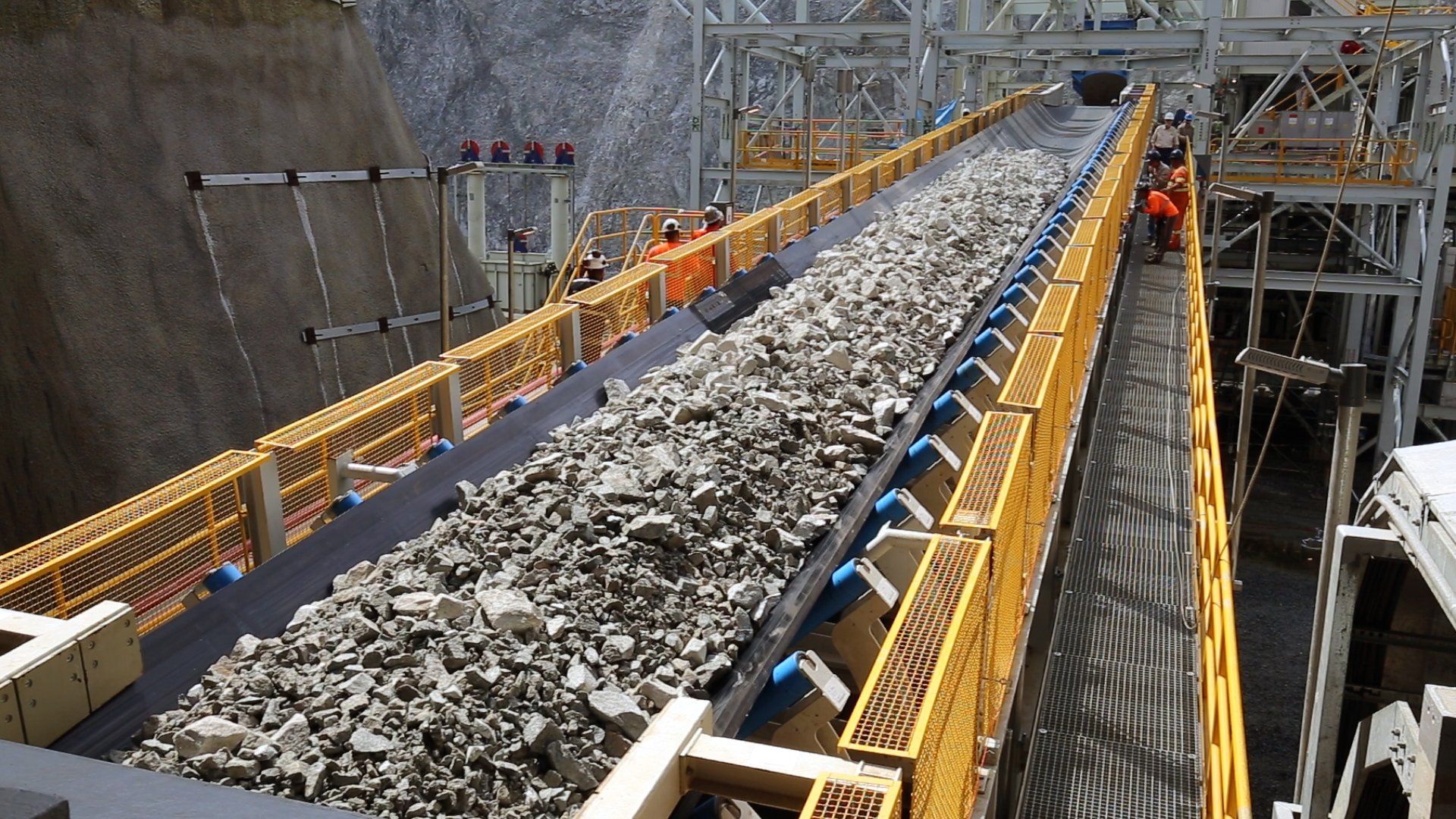
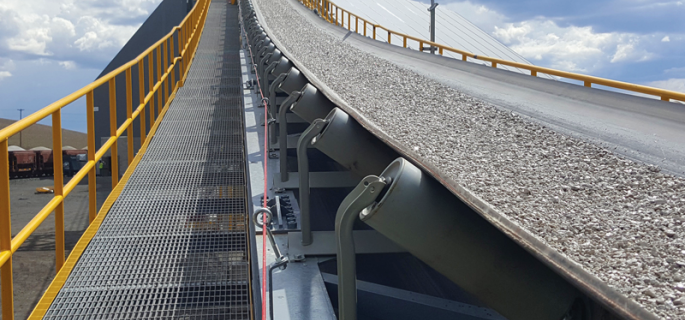
South Africa stands as one of the world’s most significant mining nations, with vast open-cast operations spanning Mpumalanga’s coalfields, the gold and platinum belts of North West and Limpopo, and the iron and manganese mines of the Northern Cape. These sites run some of the largest material handling systems on the continent: conveyor belts stretching dozens of kilometres, shiftable face conveyors repositioned multiple times daily, massive draglines and stackers, and dewatering systems that operate around the clock. For all this equipment to function reliably, the power cables feeding it must withstand far more than just voltage and current loads. They must endure constant flexing, repeated torsion, heavy abrasion from rock and dust, extreme temperature swings, high ultraviolet exposure, and prolonged contact with oily or mineral‑rich water.
Most standard rubber‑sheathed cables are designed for fixed installation or only occasional movement. When deployed in these high‑demand mining environments, they typically fail within three to six months. Conductors snap from metal fatigue, sheaths crack from cold brittleness or abrasion, insulation degrades under heat and chemical attack, and unexpected downtime becomes a regular and costly occurrence. For mine operators, this means not just the expense of frequent replacements, but lost production, overtime labour costs, and safety risks associated with working on live equipment.
TRATOS FESTOON MTO®‑M / (N)SHÖU‑J was developed specifically to address these exact challenges. It is not a general‑purpose cable adapted for mining use; it is a purpose‑built solution engineered from the ground up for continuous dynamic service in open‑cast environments. Every material choice, structural detail and performance rating is aligned with the realities of moving mining equipment – from the finest copper strand to the outermost rubber layer. This article explains how its design works, what makes it different from conventional alternatives, and how it has proven its value in South Africa’s toughest operating conditions.
Product Overview & Verified Technical Specifications
TRATOS FESTOON MTO®‑M / (N)SHÖU‑J is a rubber‑sheathed flexible cable designed exclusively for open‑cast mining and heavy material handling applications. Its full designation reflects its core identity: festoon‑rated, mineral‑oil‑resistant, tested to the strictest German standards, and built for continuous movement. The entire product range is governed by DIN VDE 0250 Part 812 – the specific standard for rubber‑sheathed flexible cables used in mining operations – with supporting material and testing standards drawn from the wider VDE framework.
All technical data presented here is taken directly from the official May 2014 datasheet, ensuring full accuracy and alignment with the manufacturer’s certified values.
Applicable Standards
The cable is built and tested against a comprehensive set of standards that cover every aspect of its performance:
Primary product standard: DIN VDE 0250 Part 812
Conductor construction: DIN VDE 0295 Class 5
Insulation and inner sheath compounds: DIN VDE 0207 Part 20 and Part 21
Outer sheath compound: DIN VDE 0207 Part 21 (CM type)
Current‑carrying capacity: DIN VDE 0298 Part 4
Oil resistance: DIN VDE 0473 Part 811‑2‑1 Paragraph 10
Fire performance: DIN VDE 0482 Part 265‑2‑1
Water compatibility: HD22.16
Electrical Ratings
The range covers both power and control applications:
Control cables: rated voltage U₀/U = 450/750 V
Power cables: rated voltage U₀/U = 0.6/1 kV
Maximum permitted operating voltage under steady conditions: up to 0.7/1.2 kV for AC systems and 0.9/1.8 kV for DC systems
AC withstand test voltage: 2.5 kV to 3 kV depending on cross‑section
Maximum continuous conductor operating temperature: 90 °C
Short‑circuit conductor temperature: 250 °C for one‑second duration
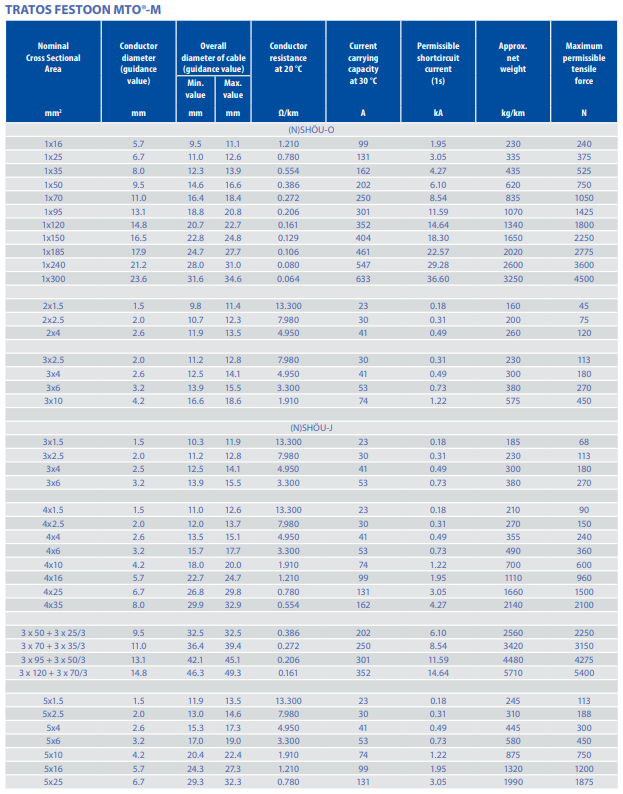
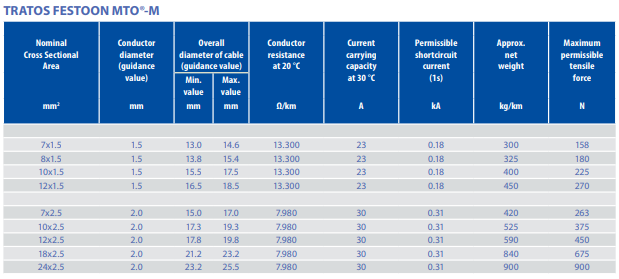
Full tables of conductor resistance, current‑carrying capacity and permissible short‑circuit current are provided in the datasheet for every size in the range.
Thermal & Mechanical Performance
One of the cable’s defining strengths is its ability to maintain performance across a wide range of environmental and mechanical conditions:
Ambient temperature range: standard grade operates reliably from -30 °C to +80 °C when flexing, and from -40 °C to +80 °C when fixed. The Type K variant retains flexibility down to -60 °C while operating up to +60 °C.
Tensile load capacity: up to 15 N/mm² of conductor cross‑section – sufficient to support its own weight over long suspended runs without mechanical assistance.
Torsion resistance: tested to ±100 ° per metre without structural damage or electrical failure.
Maximum reeling speed: up to 100 metres per minute when wound onto drum cars or reeling units.
Minimum bending radii: specified in accordance with DIN VDE 0298 Part 3 to prevent undue stress during installation and operation.
Additional qualification testing includes roller bending, reversed bending, cyclic torsion and water compatibility testing – all designed to replicate the repeated stresses found in mining service.
Size Range & Key Parameters
The range covers a wide spectrum of conductor sizes and configurations to suit every application:
Single‑core: from 1×16 mm² up to 1×300 mm²
Multi‑core: 2‑core, 3‑core, 4‑core and 5‑core from 1.5 mm² up to 25 mm²
Control and auxiliary circuits: 7‑core through 24‑core in 1.5 mm² and 2.5 mm²
Special mining construction: 3×N + 3×(N/3) split‑earth design for all sizes 50 mm² and above, providing improved mechanical balance and electrical fault protection.
Every size includes verified values for conductor diameter, DC resistance at 20 °C, current‑carrying capacity at 30 °C, overall cable diameter, approximate net weight, permissible short‑circuit current and maximum allowable tensile force – all aligned with the original datasheet data.
Layer‑by‑Layer Construction – Design Logic & Material Science
The performance of TRATOS FESTOON MTO®‑M comes not from any single advanced material, but from the careful matching of materials and structure across every layer of the cable. Each component is selected and shaped to work in harmony with the rest, creating a system that resists failure through balanced stress distribution and matched material properties.
Exact Build‑Up from Core to Outer Sheath
Starting from the centre and working outwards, the construction follows this sequence:
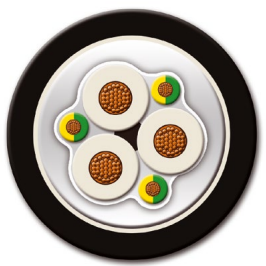
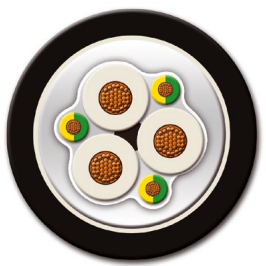
Conductor: Electrolytic copper, un‑tinned, finely stranded to Class 5 according to DIN VDE 0295. This consists of many fine copper wires twisted together in multiple layers, rather than a few thicker strands.
Core Insulation: Special ethylene‑propylene rubber (EPR) compound formulated to DIN VDE 0207 Part 20. Each insulated core carries a natural colour base with consecutive black number printing for easy identification even in poor lighting or oily conditions.
Core Assembly: The main power cores are laid up together with the protective earth conductor. For sizes 50 mm² and larger, the earth conductor is split into three equal strands and placed in the outer gaps between the power cores, rather than running as a single central element.
Inner Sheath: A second layer of specially compounded EPR rubber applied over the cored assembly, complying with DIN VDE 0207 Part 21.
Outer Sheath: Black CM‑grade rubber compound, also meeting DIN VDE 0207 Part 21, formulated for maximum abrasion resistance, oil resistance and weathering performance.
Engineering Principles Behind the Design
Every element of this construction follows established electrical, mechanical and materials science principles, chosen specifically to counter the failure modes seen in mining service.
From an electrical perspective, EPR insulation offers much higher dielectric strength and lower dielectric loss than natural rubber or many synthetic alternatives. Its consistent electrical properties remain stable across the full temperature range, preventing partial discharge and insulation breakdown that often occurs when materials soften or become brittle. The split‑earth layout for larger conductors equalises the electric field around each power core, eliminating stress concentrations that can lead to premature insulation failure. It also improves fault‑current distribution, ensuring that earth faults are cleared quickly and safely by protection systems.
From a mechanical standpoint, Class 5 fine stranding distorts bending and twisting forces across thousands of individual copper strands rather than concentrating them on a few thick wires. This drastically reduces the risk of fatigue fracture, which is the most common cause of conductor failure in moving cables. The double‑layer rubber construction acts like a suspension system: the inner EPR layer absorbs and distributes internal stresses, while the harder CM outer layer resists external abrasion, crushing and cutting. The balanced lay‑up of cores and split‑earth strands ensures that twisting forces are evenly distributed around the cable axis, preventing the cable from coiling up or twisting internally – a major cause of damage in festoon systems and reeling applications.
From a materials science perspective, both EPR and CM compounds are based on saturated polymer backbones that resist attack by ozone, ultraviolet radiation, mineral oils and most common chemicals found in mines. Their closely matched thermal expansion coefficients prevent separation or delamination between layers as temperatures rise and fall – a common failure point in cables using dissimilar rubbers. The choice of un‑tinned copper avoids the formation of brittle intermetallic layers that can develop when tinned strands flex repeatedly, and also maintains stable conductivity even at very low temperatures.
From a thermal design viewpoint, the 90 °C continuous rating allows the cable to carry higher loads without overheating, while the 250 °C short‑circuit margin ensures it survives the high temperatures associated with fault conditions long enough for protection relays to operate safely.
How It Outperforms Standard Mining Cables – Solving “Move‑Fail‑Replace” Cycles
To understand the value of TRATOS FESTOON MTO®‑M, it helps to look at how ordinary rubber‑sheathed cables typically perform in mining environments, and where their limitations lie.
Standard mining cables are usually built around Class 2 or Class 5 conductors with fewer strands, using natural rubber or basic synthetic insulation and a single‑layer general‑purpose outer sheath. They are tested to basic voltage and current requirements, but rarely undergo the full range of dynamic mechanical tests that DIN VDE 0250 Part 812 demands. When subjected to continuous flexing, repeated torsion, abrasion and temperature cycling, they fail in predictable ways: conductors snap from fatigue, insulation cracks in cold weather or softens at high temperatures, sheaths tear or become porous to oil and water, and the cable loses its electrical integrity. Service life in high‑motion zones is typically between three and six months.
TRATOS FESTOON MTO®‑M addresses each of these failure modes directly:
Conductor fatigue: fine Class 5 stranding extends flex life by a factor of three to five under identical movement conditions.
Tensile failure: the 15 N/mm² rating allows suspended runs without additional support, where standard cables would stretch or break.
Torsion damage: the ±100 °/m rating means the cable can follow the twisting path of moving equipment without internal core damage.
Cold brittleness: Type K formulations remain flexible down to -60 °C, eliminating sheath cracking in winter or high‑altitude operations.
Chemical and weathering attack: EPR and CM compounds meet the strictest VDE resistance requirements, standing up to mineral oils, hydraulic fluids, mine water, ozone and UV exposure.
Electrical safety: split‑earth construction improves both mechanical balance and fault‑clearing performance.
The core difference lies in its design philosophy. Most cables are built to meet minimum standards for fixed installation, with mining use treated as an afterthought. TRATOS FESTOON MTO®‑M is built from the start around dynamic service. Every material and dimension is validated through roller‑bend, reverse‑bend and cyclic torsion testing – replicating thousands of cycles of movement before leaving the factory. The result is a cable that delivers three to five times the service life of standard alternatives in the same application.
Proven Performance in South African Mines – Real‑World Cases
South Africa’s mining sector is widely recognised as one of the most demanding test environments for power cables. The country’s open‑cast mines combine long operating hours, heavy equipment, frequent repositioning and some of the harshest climatic conditions found anywhere in the industry. Local industry data consistently shows that festoon systems and shiftable conveyors are among the highest‑maintenance power distribution points on any mine site – and where cable failures cause the most costly downtime.
Typical Operating Conditions Across South African Operations
In Mpumalanga’s coal fields, shiftable conveyors move hundreds of thousands of tonnes of coal each day, being repositioned along the pit face multiple times every shift. In the Northern Cape’s iron ore mines, cables run alongside long overland conveyors exposed to intense summer heat, winter frost and constant wind‑blown grit. In gold and platinum operations, dewatering pumps operate continuously in sumps filled with acidic, oily, mineral‑rich water. Across all regions, cables must withstand the mechanical shock of moving equipment, the friction of dragging against rock and steel, and the physical stress of being wound and unwound at speed.
Verified Application Results
Shiftable conveyor belts: In many South African coal mines, standard rubber cables laid along the conveyor frame typically split or fray after three to six months of repeated dragging and flexing. When replaced with TRATOS FESTOON MTO®‑M cables of equivalent rating, service life extends to between 18 and 24 months or more. This reduces not just material costs, but the labour and production loss associated with replacing cable on running conveyors.
Festoon systems and shuttle cars: Many mines operate shuttle cars, stackers and reclaimers that travel between 10 and 30 metres vertically as well as horizontally, with frequent starts, stops and twisting movements. The 15 N/mm² tensile rating allows the cable to support its own weight along festoon tracks without needing intermediate support rollers, while the ±100 °/m torsion resistance prevents the cable from twisting tight or tearing its own cores – a common failure mode that can bring operations to a complete halt.
Submersible dewatering pumps: Mine dewatering is critical to safety and production, yet cables for submersible pumps are often among the first components to fail. The combined EPR and CM sheath construction maintains consistent insulation resistance even after years of immersion in mineralised, oily mine water, meeting the strict requirements of HD22.16 water compatibility testing. This helps prevent unplanned pump shutdowns and the risk of pit flooding.
Regulatory acceptance: The cable’s full alignment with DIN VDE 0250‑812 and supporting standards means it is readily accepted by South African mine safety authorities and procurement frameworks, with all required test documentation available for audit and approval purposes.
Practical Selection Guidance for South African Mine Sites
When specifying this cable for local conditions, three key principles should guide selection:
Voltage rating: Use 0.6/1 kV for main power feeders and 450/750 V for control and auxiliary circuits.
Cross‑section: Always calculate size first on the basis of current‑carrying capacity, then verify that the maximum tensile force falls within the allowable limit for suspended runs.
Construction: For all sizes 50 mm² and above, select the 3×N + 3×(N/3) split‑earth design for improved mechanical balance and electrical fault performance.
Temperature: For high‑altitude or winter‑exposed sites, specify the Type K variant to maintain flexibility down to -60 °C.
Reeling: Where the cable is wound onto drum cars, keep reeling speed below 100 metres per minute and ensure drum diameter meets or exceeds the specified minimum bending radius to minimise dynamic fatigue.
Feichun Cables – Fully Equivalent Alternative with Practical Advantages
While TRATOS FESTOON MTO®‑M sets the benchmark for performance in this class, many mine operators are increasingly looking for reliable alternatives that offer the same technical compliance and performance, but with improved supply chain flexibility and cost efficiency. Feichun Cables manufactures a fully equivalent range built to the exact same standards and specifications.
Feichun’s equivalent cables are produced in full compliance with DIN VDE 0250 Part 812, DIN VDE 0295 and DIN VDE 0207, matching every material requirement and performance parameter: Class 5 finely stranded un‑tinned copper conductors, EPR insulation and inner sheath, CM‑grade outer sheath, split‑earth construction for larger sizes, and identical mechanical and thermal ratings. All testing follows the same VDE procedures, with full certification provided for every batch.
Beyond technical parity, Feichun offers clear practical benefits for South African projects:
Competitive pricing: typically more cost‑effective than premium imported brands without compromising specification or quality.
Shorter lead times: faster delivery is often critical when replacing failed cables to minimise downtime.
Full documentation: all test certificates, compliance statements and dimensional data are provided in the format required for mine approval and audit.
Flexible configuration: custom core counts, lengths and markings can be arranged to suit specific project needs.
For procurement and engineering teams, this means being able to source a cable that matches the performance of the original specification, while gaining greater control over cost, delivery and supply chain reliability – without sacrificing compliance or long‑term performance.
Selection, Installation & Maintenance Best Practice
Even the best‑engineered cable will not deliver its full service life if selected or installed incorrectly. The most effective approach to specification follows three simple checks: electrical suitability first, then mechanical capacity, and finally environmental compatibility.
When calculating electrical requirements, use the current‑carrying capacity values from the datasheet adjusted for actual site temperature, grouping and voltage drop. For suspended or reeling applications, always verify that the total weight of the cable does not exceed the maximum allowable tensile force listed – a factor often overlooked when sizing purely on current. For sites with extreme cold, high oil exposure or high UV levels, select the appropriate compound and variant rather than relying on general‑purpose grades.
During installation, avoid pulling the cable by its conductors or connectors, and never force it around bends tighter than the rated minimum radius. In cold conditions, allow the cable to warm up before uncoiling or bending to reduce temporary stiffness. On reeling systems, ensure drums are sized correctly and rotation speed is kept within limits to prevent unnecessary fatigue. Where cables run alongside conveyors or over rock surfaces, use suitable guides or protection to limit abrasion, even though the CM outer sheath is highly resistant.
In service, carry out routine inspections of sheath condition and tension, and check that cable guides and festoon trolleys remain free to move. Avoid over‑tensioning festoon systems, as this adds unnecessary tensile load that will shorten service life. Most importantly, never use a cable rated for fixed installation in place of a purpose‑built dynamic cable – this is the single most common cause of premature failure in mining power systems.
Frequently Asked Questions
What is the difference between (N)SHÖU‑O and (N)SHÖU‑J?
The suffix “O” denotes cables without a protective earth conductor, while “J” indicates the presence of an earth core. (N)SHÖU‑J is the standard choice for most power circuits requiring fault protection.
Can this cable be used for permanent fixed runs?
Yes – its performance in fixed installation is excellent, but its full value is realised in moving applications. For fixed use only, standard fixed‑installation cables may offer a more cost‑effective option.
How does it compare to NSSHÖU or NSHTÖU cables?
These are related rubber‑sheathed mining cables, but differ in construction, temperature rating and mechanical performance. TRATOS FESTOON MTO®‑M is optimised specifically for festoon and continuous reeling service, with higher tensile and torsion ratings.
Is it suitable for hazardous areas?
The cable itself does not create ignition risks, but installation must follow local hazardous‑area regulations and be paired with appropriate flame‑proof equipment and protection systems.
What documentation is available for mine approval?
Full test certificates, compliance declarations, dimensional drawings and performance data sheets are available for every size and variant.
What are typical lead times and minimum order quantities?
Lead times vary by region and stock level, but Feichun can typically offer faster delivery for standard sizes. Minimum order quantities can be adjusted for urgent or smaller requirements on request.
Conclusion
TRATOS FESTOON MTO®‑M / (N)SHÖU‑J represents a significant advance in mining cable design, built around the reality that moving equipment requires cables engineered for movement, not just power transmission. Through the careful combination of Class 5 fine‑stranded copper, EPR insulation, double rubber sheathing and balanced split‑earth construction, it solves the four most common failure modes of standard rubber cables: breaking under motion, becoming brittle in cold, degrading in heat, and failing under chemical or environmental attack.
For South African mines, this translates directly into longer service life, fewer unplanned shutdowns, lower maintenance costs and safer operation. While the initial purchase price may be higher than general‑purpose alternatives, the total cost of ownership falls substantially over time – a fact well proven by real‑world performance across coal, gold, platinum and iron ore operations. When procurement and engineering teams select cables based on the full lifecycle rather than just the unit price, purpose‑built dynamic cables like this one consistently deliver better value.
If you are looking to specify, source or compare this cable for your next project or replacement programme, the Feichun engineering team can provide full datasheets, compliance certificates, cross‑reference tables and custom quotations tailored to your site requirements. Please contact us directly at Li.wang@feichuncables.com and we will respond within 24 hours.
Email Address: Li.wang@feichuncables.com
© 2025. All rights reserved.
One-click to Quickly Contact
Products
Contact
Company
Location:
Building A Private Science and Technology Park, Hefei Economic and Technological Development Zone, Anhui Province, China
Heat Resistant Cable
WhatsApp: +86 17333223430
Social Media: