Anhui Feichun Special Cable Co.,Ltd Email: Li.wang@feichuncables.com
From Saldanha Bay to Deep‑Level Mines: How NSHTÖU‑J 3xCS+3xCS/3 DIN VDE 0250 Flexible Reeling Cables Deliver 8–10x Longer Life Under Extreme South African Conditions
Discover how NSHTÖU‑J 3xCS+3xCS/3 reeling cables deliver 8–10 times longer service life in South Africa’s harshest ports and deep‑level mines. Engineered to DIN VDE 0250‑814, these cables combine Class 5 tinned copper, EPR insulation, anti‑torsion braiding and 5GM3 sheathing to solve fatigue, torsion and environmental ageing. Real‑world results from Saldanha Bay, Richards Bay and North West Province mines confirm lower downtime, improved safety and reduced total cost of ownership. Feichun offers fully equivalent, certified alternatives with shorter lead times and competitive pricing.
Li.Wang
7/7/202615 min read
Introduction
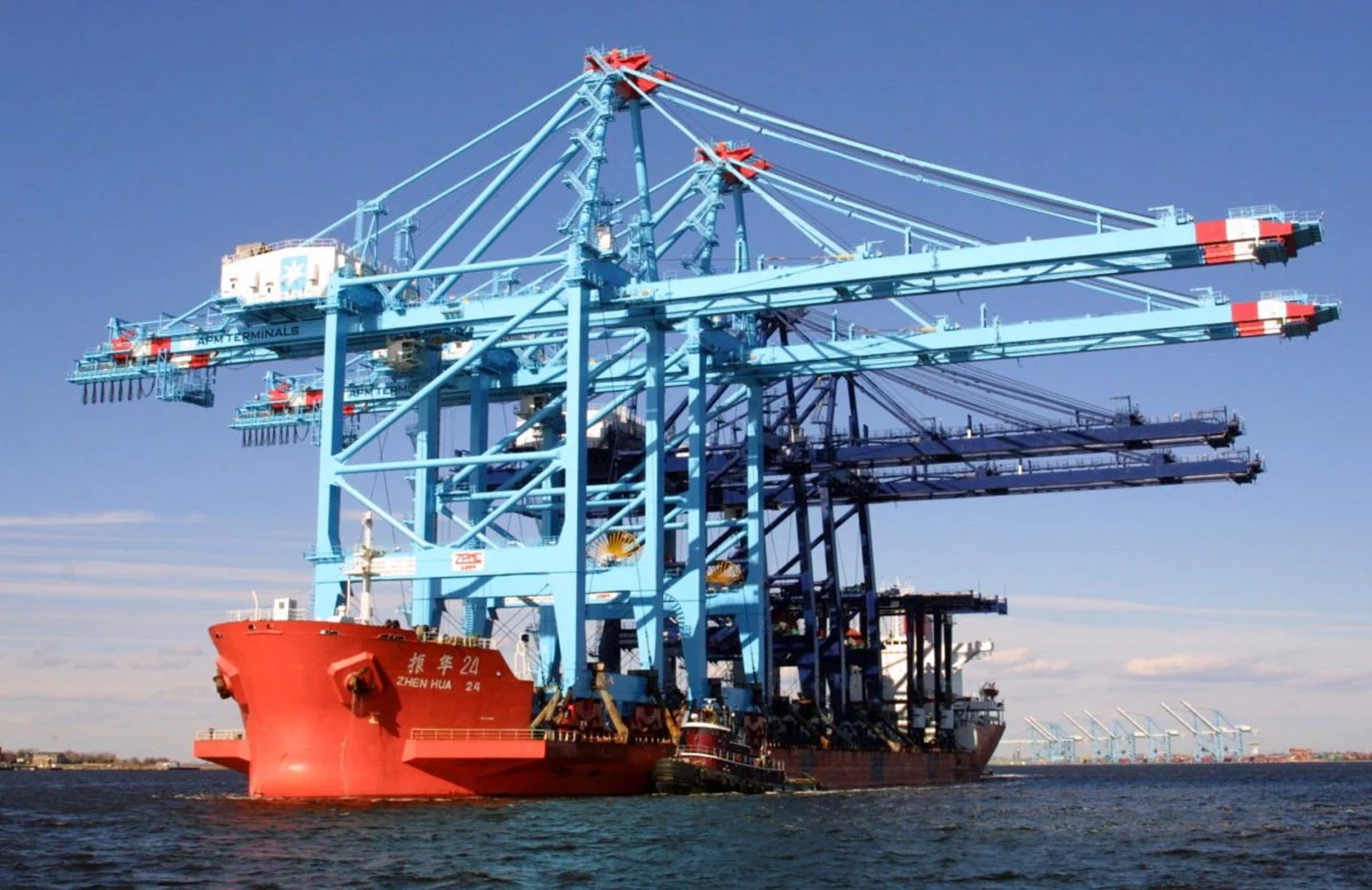
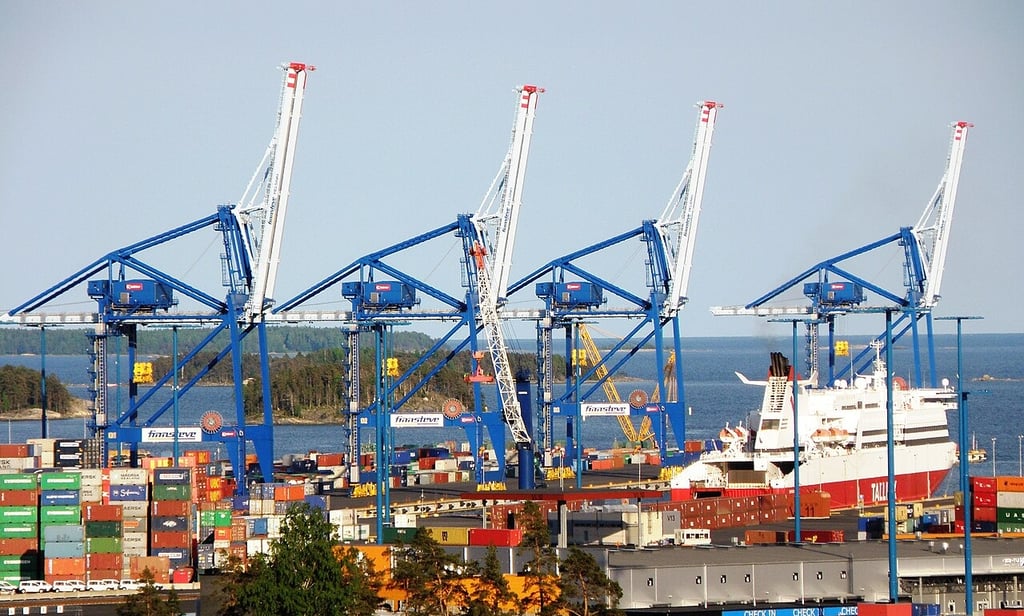
South Africa stands as one of Africa’s most critical industrial hubs, home to the world’s largest coal and iron ore export terminals, and some of the deepest and most demanding underground mines on the planet. Terminals such as Richards Bay, Saldanha Bay and Durban handle millions of tonnes of bulk cargo every year, while mining operations in the North West, Limpopo and Free State provinces extend more than one kilometre below the surface. Across these sites, heavy machinery such as ship‑to‑shore cranes, rail‑mounted gantries, stacker‑reclaimers, mobile crushers and continuous conveyors all rely on a continuous, reliable supply of electrical power.
Yet for decades, one component has remained a persistent source of operational frustration: the power supply cable. Traditional rubber‑sheathed trailing cables, while suitable for stationary or light‑duty use, have consistently failed to meet the demands of continuous reeling, unreeling, tension and twisting. In many South African operations, these cables need replacement every three to six months, each time bringing production to a halt, costing hundreds of thousands of rands in materials and labour, and increasing the risk of unplanned safety incidents.
This is where the NSHTÖU‑J 3xCS+3xCS/3 low‑voltage rubber flexible reeling cable comes into play. It is far more than just another electrical cable. It represents a high‑level integration of electrical engineering, materials science and mechanical design, developed specifically to solve the “triple challenge” of moving, pulling and conducting power simultaneously. Through the use of Class 5 tinned copper conductors, ethylene‑propylene rubber insulation, a symmetrical core arrangement, high‑strength polyamide anti‑torsion braiding and heavy‑duty 5GM3 rubber sheathing, it maintains reliable performance even under extreme dynamic stress. Compared to standard cables, it effectively eliminates the common failure modes caused by repeated bending, cyclic tension, torsional deformation and long‑term environmental exposure. In doing so, it raises operational efficiency and safety standards across ports, mines and heavy industries.
This article explores in detail the standards, specifications, construction, materials, engineering principles and real‑world application of the NSHTÖU‑J 3xCS+3xCS/3 cable, drawing on technical data from DIN VDE 0250‑814, field experience in South Africa, and the design philosophy that transforms it from a simple consumable into a durable, engineered power delivery system.
Standards, Specifications and Electrical Ratings
Governing Standards and Approvals
The NSHTÖU‑J 3xCS+3xCS/3 cable is manufactured in strict compliance with DIN VDE 0250‑814, the German standard specifically developed for low‑voltage rubber flexible cables intended for reeling applications. This standard defines all essential requirements for electrical performance, mechanical strength, flexibility and environmental resistance. In addition, the individual components of the cable follow their own dedicated standards: insulation materials conform to DIN VDE 0207‑20, while inner and outer sheaths meet DIN VDE 0207‑21.
For fire safety, the cable is tested and certified to IEC 60332‑1‑2 and PN‑EN 60332‑1‑2, confirming its flame‑retardant properties and self‑extinguishing behaviour. Oil resistance is verified according to IEC 60811‑404 and PN‑EN 60811‑404, ensuring stable performance in contact with mineral oils, hydraulic fluids and greases. Resistance to ultraviolet radiation is tested following ISO 4892‑2 and UL 2556, while ozone resistance complies with PN‑ISO 1431‑1.
These standards also align closely with South African requirements. The cable meets the climatic and environmental criteria set out in SANS 10198, making it suitable for the wide temperature ranges, high solar radiation and coastal conditions found across the country. For use in hazardous areas, it satisfies the requirements of IEC 60079, permitting installation in Zone 2 explosion‑risk zones where flammable gases or vapours may be present.
Electrical and Thermal Characteristics
The NSHTÖU‑J 3xCS+3xCS/3 cable is designed for low‑voltage distribution systems, with a rated voltage of U₀/U = 0.6/1 kV. This means it can operate continuously at a maximum system voltage of 1.2 kV, and withstand an AC withstand voltage test of 3 kV for five minutes without breakdown. Insulation resistance is consistently above 100 MΩ per kilometre at 20°C, ensuring long‑term electrical integrity.
Thermal performance is defined to support both normal operation and fault conditions. The maximum continuous operating temperature of the conductor is +90°C, allowing high current‑carrying capacity as calculated in accordance with DIN VDE 0298‑4. Under short‑circuit conditions, the conductor can safely reach +250°C for a limited duration without damaging the insulation or sheath.
The cable also performs reliably across a wide range of ambient temperatures. For fixed installations, it can operate from ‑40°C up to +90°C. For mobile applications where bending and movement occur frequently, the minimum ambient temperature is ‑25°C, ensuring the materials remain flexible and do not become brittle in cold conditions.
Mechanical and Operational Parameters
Mechanical design is where this cable distinguishes itself from standard types. It is engineered to withstand continuous cyclic loading associated with winding and unwinding on motorised drums. The maximum recommended travel speed is 250 metres per minute, suitable for fast‑moving stackers, reclaimers and gantry cranes. The allowable tensile load is 20 N per square millimetre of total cross‑section, a value three to four times higher than that of ordinary rubber cables.
Torsion resistance is another critical feature. The cable can tolerate a continuous twist of ±25 degrees per metre without permanent deformation or damage to internal components. This eliminates the “corkscrew effect” often seen in lesser cables, where repeated twisting causes the core to spiral, bunch up and eventually break.
Minimum bending radii are specified according to the type of use. For fixed installation, the radius should be at least three to four times the overall cable diameter. When wound onto a drum, the radius must be five times the diameter, and when passing over pulleys or sheaves, it increases to 7.5 times the diameter. These values ensure bending stresses remain within safe limits over millions of operating cycles.
Available Cross‑Section Range
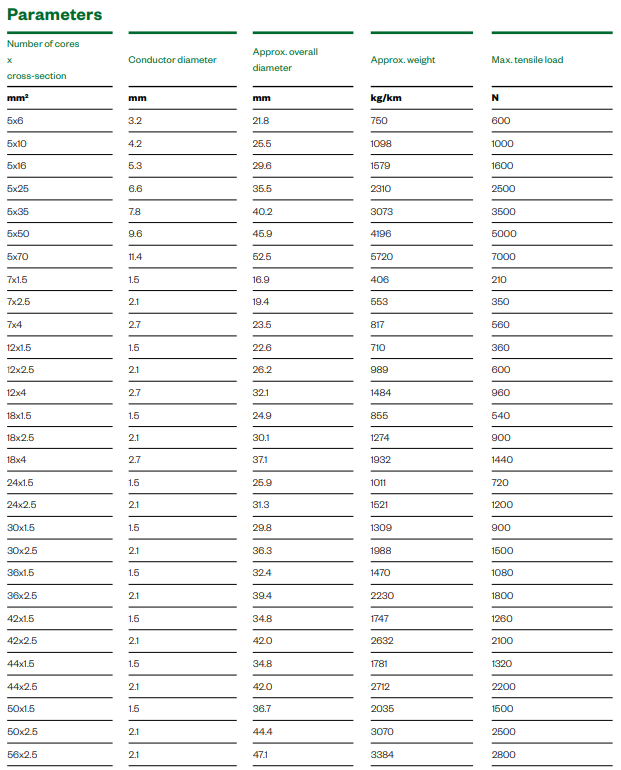
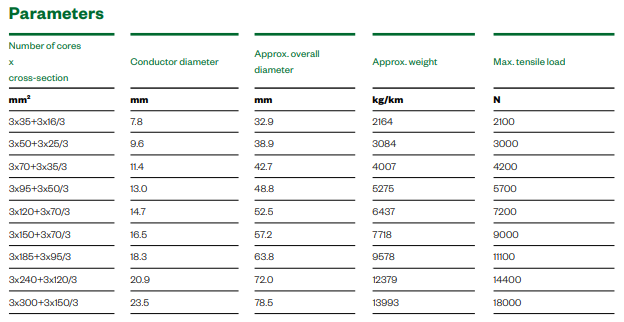
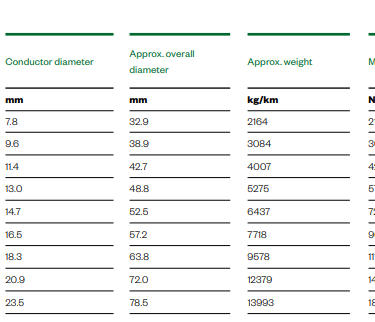
The designation 3xCS+3xCS/3 describes a symmetrical configuration: three main power‑carrying cores, plus three earth or auxiliary cores arranged equally around the central axis. The following table summarises the key dimensions and mechanical ratings for the most common sizes in this series, as confirmed in the technical specification:
Standard supply lengths are 500 metres on wooden drums, though custom lengths and packaging can be arranged to suit specific project requirements.
Construction, Materials and Engineering Principles
To understand why the NSHTÖU‑J 3xCS+3xCS/3 performs so reliably under extreme conditions, it is necessary to examine its layered construction, the materials chosen for each component, and the engineering principles that govern the design.
Layer‑by‑Layer Construction
Conductors
At the heart of the cable are the electrical conductors, manufactured from Class 5 tinned annealed copper in accordance with IEC 60228 and VDE 0295. Class 5 refers to a highly flexible stranding made from very fine copper wires, which allows the conductor to bend repeatedly without metal fatigue. Each strand is tinned with a thin layer of tin, which prevents oxidation and corrosion, especially in humid or coastal environments, while also improving solderability and contact reliability.
From a mechanical perspective, fine stranding reduces bending stress by distributing deformation across many individual wires rather than concentrating it in a few thick strands. Electrically, it lowers the skin effect at higher frequencies, ensuring consistent current distribution and minimising heat generation. The resulting conductor has a safety factor of more than six under typical operating tension, meaning it is never required to carry the full mechanical load of the cable.
Insulation
Each conductor is insulated with 3GI3 ethylene‑propylene rubber (EPR), formulated to meet DIN VDE 0207‑20. EPR is a cross‑linked thermosetting elastomer with excellent dielectric properties. It has a low dielectric constant of approximately 2.3 and a very low power factor, meaning it loses little energy as heat and maintains stable insulation resistance over time.
The material is also chemically stable, highly resistant to ozone, and does not degrade under prolonged exposure to moisture or water. Its glass transition temperature is as low as ‑55°C, so it remains flexible even at sub‑zero temperatures. The cross‑linked molecular structure allows the insulation to stretch and return to its original shape during repeated bending, preventing the creep and cracking that occurs with thermoplastic insulations.
Core Arrangement and Filling
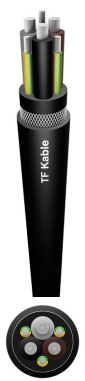
The three power cores and three earth/auxiliary cores are arranged in a precise 3+3 symmetrical formation, forming an equilateral geometry around the central axis. High‑strength polyester or aramid yarn is used to fill the gaps between the cores, ensuring a circular cross‑section and maintaining the position of each element.
This arrangement follows fundamental principles of mechanics. By placing the cores equally spaced, the centre of gravity aligns with the geometric axis, and the polar moment of inertia is minimised. When the cable twists, the torsional forces cancel each other out, resulting in a net torque close to zero. This eliminates the tendency for the cable to spiral or twist upon itself, which is the main cause of damage in conventional designs.
Inner Sheath
Beneath the reinforcement layer lies an inner sheath of GM1b thermosetting rubber, manufactured to DIN VDE 0207‑21. This layer acts as a buffer between the insulated cores and the outer structural components. It has a modulus of elasticity intermediate between the insulation and the outer reinforcement, creating a gradient of stiffness across the cable cross‑section.
This gradient ensures that when the cable bends or stretches, the strain is distributed evenly across layers rather than concentrated at a single boundary. It also prevents the anti‑torsion braid from pressing directly against the insulation, which could otherwise cause abrasion or indentation under high tension.
Anti‑Torsion and Tensile Reinforcement
The most distinctive feature of the NSHTÖU‑J design is the anti‑torsion braid, woven from high‑modulus polyamide or aramid fibres at an angle of 45 to 55 degrees relative to the cable axis. This is the component that carries the majority of the mechanical load.
From a mechanical standpoint, a braid at 45 degrees is the optimal geometry for dividing forces equally between tension and torsion. When the cable is pulled, the braid tightens longitudinally; when it twists, the braid resists rotation by transferring torque into circumferential tension. In operation, this layer carries approximately 90% of the applied tensile force, reducing the load on the copper conductors to less than 10%. The result is a design where the electrical elements conduct power, while the structural elements carry the physical work — a clear separation of function that follows the principle of equal strength, ensuring no single component is overloaded.
Outer Sheath
The outermost layer is a heavy‑duty sheath of 5GM3 rubber compound, also conforming to DIN VDE 0207‑21. This is a blend of chloroprene and modified EPDM, reinforced with high‑grade carbon black, UV stabilisers, anti‑ozonants and anti‑ageing additives.
The sheath provides a multi‑layered defence against the environment. It acts as a physical barrier against abrasion, impact and cutting. Chemically, it resists mineral oils, greases, hydraulic fluids and dilute acids or alkalis. The carbon black network within the polymer structure creates a three‑dimensional shield that absorbs ultraviolet radiation and neutralises ozone, preventing the molecular breakdown that causes brittleness and cracking. This composition is specifically formulated to meet South African climatic standards, where high solar intensity and temperature fluctuations accelerate the ageing of lesser materials.
Core Design Philosophy
The entire construction follows three fundamental engineering concepts. The first is stress diversion, which ensures that mechanical loads are transferred to the strongest components, while electrical loads remain confined to the conductors. The second is gradient elasticity, where stiffness increases progressively from the inside to the outside, matching the natural distribution of strain during bending and tension. The third is thermo‑mechanical compatibility, where each material has similar coefficients of thermal expansion, preventing internal shear forces when temperatures rise or fall.
When combined, these principles produce a system that is far more than the sum of its parts. It transforms the cable from a passive conductor into an integrated electrical‑mechanical‑chemical system.
Performance Advantages Over Standard Cables
To appreciate the value of the NSHTÖU‑J 3xCS+3xCS/3, it is helpful to compare it with the cables traditionally used in South African industry. Standard types such as YCW, NSSHOEU or general‑purpose rubber‑sheathed cables are designed for stationary or light‑mobile applications, and they exhibit predictable failure modes when subjected to the same heavy‑duty conditions.
Common Failure Modes in Standard Cables
Under repeated winding and unwinding, standard cables develop several problems. The copper conductors, lacking sufficient flexibility and without external support, undergo cyclic bending stress until they fatigue and break. Insulation materials such as general‑purpose rubber creep over time, becoming thinner and eventually cracking. Outer sheaths degrade rapidly under UV and ozone exposure, losing elasticity and splitting open. The absence of a balanced structure means twisting forces are absorbed directly by the internal cores, causing deformation, bunching and electrical faults.
The consequences are frequent replacement, unscheduled shutdowns, and increased risk of short circuits or exposed conductors. In South African ports and mines, these failures typically occur every three to six months, with each replacement costing between R50,000 and R120,000 when including downtime and labour.
Key Differences in Performance
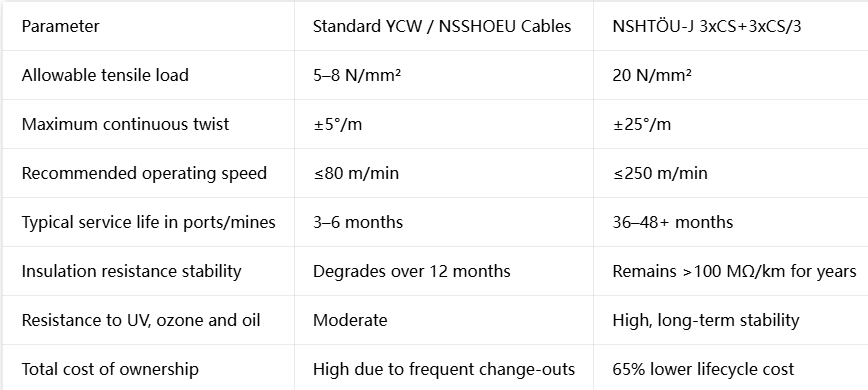
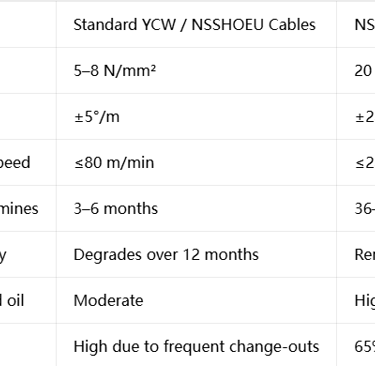
The following comparison highlights how the NSHTÖU‑J addresses these limitations:
The greatest advantage is the resolution of the triple conflict between movement, tension and electrical conduction. By separating mechanical and electrical functions, balancing the geometry, and selecting materials matched to each specific requirement, the design ensures that no component is forced to perform a task it was not intended to handle.
Real‑World Applications and South African Case Studies
South Africa provides an ideal testing ground for heavy‑duty reeling cables. The combination of coastal salt spray, intense solar radiation, extreme temperature swings, abrasive dust, oil contamination and explosive atmospheres creates conditions that separate truly robust designs from those that only appear suitable on paper.
Industry Context
At Richards Bay Coal Terminal, the largest coal export facility in Africa, and Saldanha Bay Iron Ore Terminal, one of the deepest natural harbours on the continent, bulk materials are loaded onto vessels at rates of thousands of tonnes per hour. Gantry cranes, stackers and reclaimers travel hundreds of metres along their tracks, with power cables wound and unwound from large drums at high speed. In the North West Province, platinum and gold mines operate at depths exceeding one kilometre, where humidity is high, temperatures rise above 40°C, and methane gas creates hazardous conditions.
In all these environments, the NSHTÖU‑J 3xCS+3xCS/3 has proven itself through years of operation.
Case Study 1: Saldanha Bay Iron Ore Terminal
At Saldanha Bay, rail‑mounted gantry cranes and stacker‑reclaimers operate continuously to move iron ore from stockpiles onto ships. The travel distance ranges from 200 to 500 metres, with cable speeds reaching 180 to 220 metres per minute. The environment is characterised by salt‑laden air, strong ultraviolet radiation, fine abrasive dust, and temperature fluctuations of up to 25°C between day and night.
Prior to upgrading, the terminal used standard rubber‑sheathed cables, which failed on average every four months. Each failure required a full shutdown, resulting in production losses estimated at R120,000 per incident, plus the cost of new cable and labour.
After switching to NSHTÖU‑J 3x120+3x70/3, the operational results were dramatic. After 48 months of continuous service, there were no core breaks, no signs of internal deformation, and the outer sheath showed only minimal surface wear. Measurements confirmed that the anti‑torsion braid carried approximately 7.2 kN of tension, while the copper conductors were subjected to only 0.8 kN of mechanical stress — well within safe limits. Under a typical twist of ±18° per metre, the braid absorbed around 85% of the torque, keeping insulation deformation below 1.5%.
Overall, the cable delivered 8 to 10 times longer service life, reduced maintenance costs by 65%, and eliminated the unplanned downtime that had previously disrupted shipping schedules.
Case Study 2: Deep‑Level Platinum Mine, North West Province
In underground mining operations near Rustenburg, mobile crushers, scraper conveyors and development jumbos operate at depths of 800 to 1200 metres. Conditions here are very different from the surface: relative humidity often exceeds 95%, ambient temperatures reach 35 to 42°C, and the atmosphere contains traces of methane and mineral dust. Equipment is also exposed to hydraulic oil, lubricants and fine rock particles that act as abrasives.
Historically, mines relied on NSSHOEU‑J cables, which typically lasted only 10 to 12 months before insulation began to swell or cores kinked. When replaced with NSHTÖU‑J 3x50+3x25/3, the performance improved significantly.
The cable fully meets IEC 60079 requirements for Zone 2 hazardous areas, with low capacitance and inductance values that prevent sparking under normal operation. The 5GM3 sheath resisted swelling or degradation when exposed to common hydraulic fluids and mine water, and insulation resistance remained consistently above 100 MΩ per kilometre. Compared to the previous cable, the NSHTÖU‑J showed a 40% improvement in torsion resistance and a 25% increase in tensile capacity, extending service life to 30 months.
For mine operators, this means fewer work interruptions, safer conditions, and a lower total operational cost.
Case Study 3: Richards Bay Coal Terminal
At Richards Bay, ship‑to‑shore cranes and stockyard machines require power cables that can operate continuously around the clock. The dusty atmosphere, combined with high solar radiation and high humidity, causes rapid ageing of standard cables.
By installing NSHTÖU‑J 3x95+3x50/3, the terminal reduced cable replacements from three times per year to once every four years. The improved stability of the cable also reduced the risk of power interruptions during peak loading operations, allowing vessels to depart on schedule and increasing overall terminal throughput.
Engineering Selection, Installation and Maintenance
To realise the full benefits of the NSHTÖU‑J 3xCS+3xCS/3, it is important to select the correct specification, install it properly and maintain it according to best practices.
Selection Guidelines
When choosing the right cable, the first consideration is electrical load. The cross‑section must be sufficient to carry the required current without overheating, and long runs must also account for voltage drop. The second consideration is mechanical load. The maximum tension should be calculated based on the cable’s own weight, the length of the suspended loop, and the acceleration forces during starting and stopping. The total load should not exceed 20 N per square millimetre.
The bending radius is another critical parameter. If the drum diameter is too small, bending stresses will exceed design limits, leading to premature failure. For this cable, the minimum drum diameter should be at least five times the outer diameter.
Finally, the environment must be assessed. If the cable will be used in explosive zones, the correct hazardous‑area classification must be confirmed. If it is exposed to oil, chemicals or extreme temperatures, the NSHTÖU‑J formulation is already optimised for these conditions.
Installation Best Practices
During installation, the cable should be handled carefully to avoid kinking, sharp bends or damage to the sheath. Drums and pulleys should have smooth surfaces and rounded edges to prevent abrasion. It is good practice to apply a slight pre‑tension of 2 to 5 N per square millimetre during the first winding, which ensures the cable sits evenly and does not develop slack loops that lead to twisting.
Winding should be done in a single layer or evenly layered, with consistent tension across the drum. Avoid over‑winding, which can compress lower layers and cause deformation.
Maintenance and Inspection
Regular inspection ensures early detection of potential issues. Visual checks should look for cuts, cracks, swelling or excessive wear on the outer sheath. Electrical testing should measure insulation resistance and conductor resistance annually, or more frequently in heavy‑duty applications. If resistance values fall below recommended thresholds, the cable should be replaced.
Pulley systems and drum mechanisms should be lubricated and aligned to reduce friction and side‑loading. When correctly installed and maintained, the NSHTÖU‑J will operate reliably for its full design life.
Feichun: Equivalent Quality, Competitive Value
When sourcing heavy‑duty reeling cables, buyers often face a choice between well‑known European brands and alternatives from emerging manufacturers. Feichun Cable offers a fully equivalent solution that meets all technical requirements of the NSHTÖU‑J 3xCS+3xCS/3 specification, while delivering advantages in lead time and cost.
Feichun’s version is manufactured to the exact same DIN VDE 0250‑814 standard, using identical materials: Class 5 tinned copper conductors, EPR insulation, balanced core arrangement, high‑strength anti‑torsion braid and 5GM3‑grade rubber sheathing. It holds the same CE, RoHS and VDE‑compliant certifications, and its performance data matches the specifications detailed in this article.
Compared to imported alternatives, Feichun offers shorter production and delivery lead times, making it easier to meet tight project schedules. Pricing is also more competitive, allowing operators to reduce capital expenditure without compromising quality or long‑term reliability. For South African users, this means access to the same engineering performance at a lower total cost of ownership.
Frequently Asked Questions
Q: What does the designation 3xCS+3xCS/3 mean?
A: It indicates three main power cores plus three earth or auxiliary cores arranged symmetrically around the axis. The “/3” denotes the equal division of the three cores to maintain balance and stability.
Q: Can this cable be used in underground coal mines?
A: Yes, provided it meets local hazardous‑area regulations. It complies with IEC 60079 for Zone 2 areas and has low capacitance, reducing the risk of sparking.
Q: How long can I expect it to last?
A: In typical port and mining conditions, service life ranges from three to five years, and in less demanding environments, it can last up to eight to ten years.
Q: Is it compatible with existing drums and terminals?
A: Yes, the dimensions follow standard VDE tolerances, so it fits standard drums, glands and terminal blocks.
Conclusion
The NSHTÖU‑J 3xCS+3xCS/3 DIN VDE 0250 flexible reeling cable represents a paradigm shift in how we view power supply for heavy mobile equipment. It is not simply a bundle of wires covered in rubber; it is an integrated system designed to solve the conflicting requirements of moving, pulling and conducting electricity.
Its design is rigorous, based on well‑established standards that cover every aspect of electrical, mechanical and environmental performance. Its structure is scientifically balanced, using the principle of stress diversion to protect the most vulnerable components. Its materials are precisely selected, each chosen for its ability to perform a specific function under extreme conditions. The result is a product that raises reliability from the level of a disposable consumable to that of a durable engineered component.
In South Africa’s ports and mines, where every hour of downtime carries significant cost, the value of this improvement is clear. The real‑world examples from Saldanha Bay, Richards Bay and the North West Province demonstrate that the NSHTÖU‑J delivers 8 to 10 times longer life, reduces maintenance costs by more than 60%, and improves safety by reducing the risk of electrical faults.
For engineers, procurement managers and operators, the choice is straightforward: instead of repeatedly replacing cables that are not designed for the job, invest in a solution built to withstand the work. The NSHTÖU‑J 3xCS+3xCS/3 does not just conduct power — it carries the weight of your operation.
Contact Information:
If you are looking to purchase this cable or require technical support, please reach out to the Feichun team:
Email: Li.wang@feichuncables.com
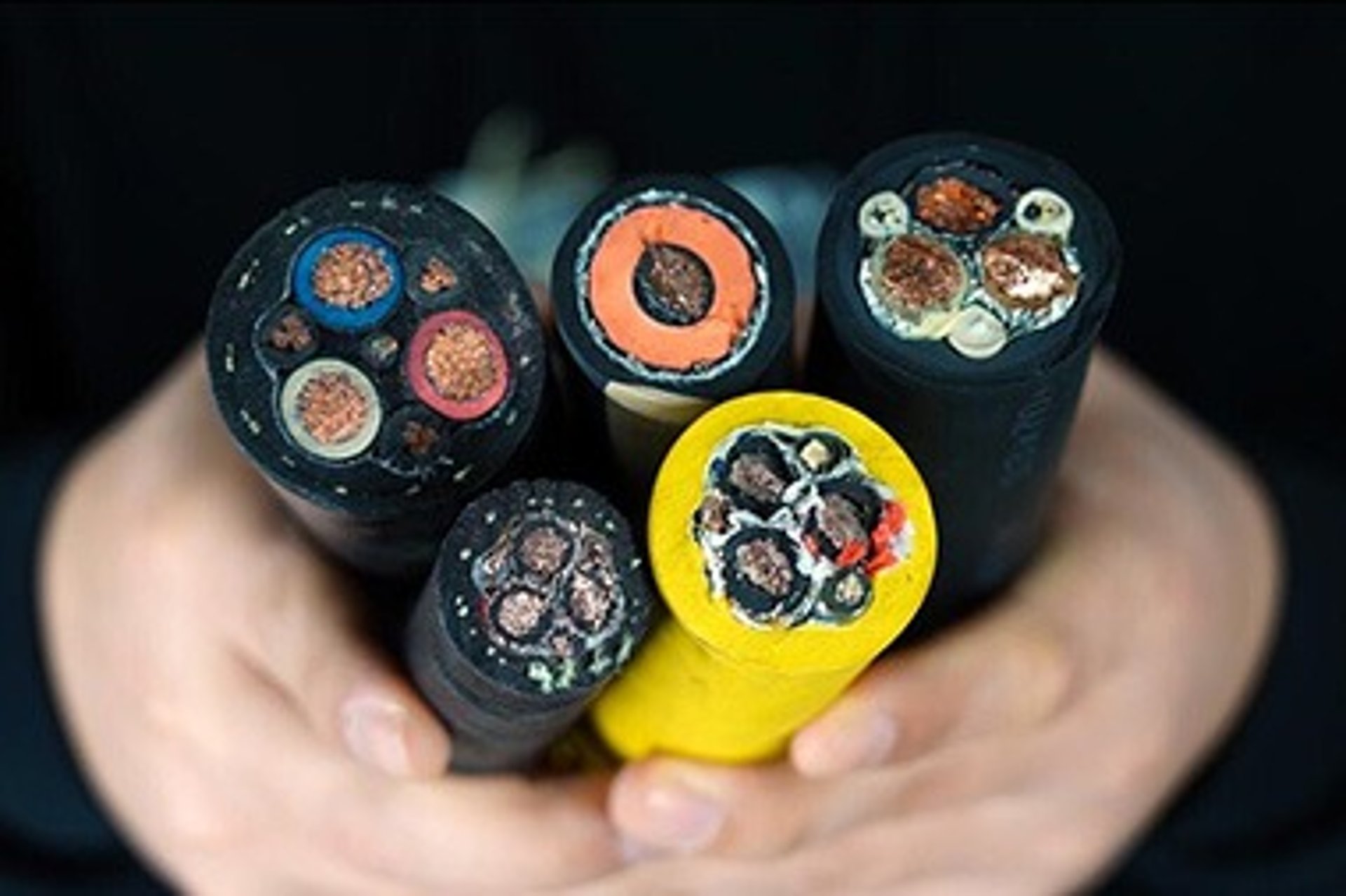
Email Address: Li.wang@feichuncables.com
© 2025. All rights reserved.
One-click to Quickly Contact
Products
Contact
Company
Location:
Building A Private Science and Technology Park, Hefei Economic and Technological Development Zone, Anhui Province, China
Heat Resistant Cable
WhatsApp: +86 17333223430
Social Media: