Anhui Feichun Special Cable Co.,Ltd Email: Li.wang@feichuncables.com
FLEXIFESTOON® C PUR Cable: High-Performance PUR Festoon Solutions for South African Mining, Ports, and Heavy Industry – Extreme Flex, Durability & EMC Shielding
FLEXIFESTOON® C PUR is a premium 0.6/1kV shielded festoon and reeling cable manufactured by Italy’s Elettrotek Kabel. Built with Class 5 copper, TPE insulation, textile reinforcement, tinned copper screen, and PUR outer sheath, it delivers exceptional flexibility, tensile strength, and resistance to UV, oil, salt spray, and extreme temperatures. Proven in South Africa’s mines, ports, and steel plants, it outlasts standard rubber cables by 4–6 times, cutting downtime and total operating costs. Explore construction, specifications, engineering principles, and equivalent alternatives.
Li.Wang
7/9/20268 min read
Introduction
In heavy industry across Southern Africa, the reliability of power and control supply systems directly determines operational efficiency, safety, and profitability. Equipment such as overhead cranes, gantries, ship loaders, and automated conveyors operates continuously, often in environments that place extreme mechanical, thermal, and chemical demands on electrical cables. Under these conditions, standard fixed wiring or general-purpose flexible cables frequently fail prematurely, resulting in conductor breakage, insulation hardening, sheath cracking, and signal interference.
FLEXIFESTOON® C PUR is a high-performance round flexible festoon cable produced by Elettrotek Kabel, Italy, specifically designed to address these challenges. It is not merely an upgraded version of ordinary cables but a complete engineering solution built from the ground up for dynamic mechanical stress. Rated at 0.6/1kV, it combines carefully selected materials, precision construction, and advanced shielding to function reliably as both power and control transmission line in festoon tracks, motorized cable reels, and moving machinery.
This article explains in detail the material science, structural design, technical specifications, and real-world performance of FLEXIFESTOON® C PUR. It also presents how this cable solves long-standing problems in South Africa’s mining, port, and metallurgical sectors, and offers guidance on selection, installation, and cost-effective alternatives.
Technical Specifications & Compliance Standards
Understanding the full capabilities of FLEXIFESTOON® C PUR begins with its standardized electrical, mechanical, and thermal ratings, all derived from the manufacturer’s official documentation.
Electrical Parameters
Nominal voltage: U₀/U = 0.6/1kV
AC test voltage: 4kV, confirming high dielectric strength and safety margin
Maximum continuous conductor temperature: +90°C
Short-circuit temperature rating: Up to +250°C, ensuring stability during fault conditions
Thermal & Mechanical Ratings
Temperature range:
Fixed installation: -50°C to +90°C
Dynamic/flexible use: -40°C to +90°C
Minimum bending radius: 6 × outer diameter (6D), far tighter than conventional cables
Tensile strength: Up to 15 N/mm², suitable for sustained pull during reeling and trolley movement
Maximum operating speed: 240 m/min, making it ideal for high-cycle systems
International Standards & Certifications
Conductor: IEC 60228 / DIN VDE 0295 Class 5 flexible copper
Insulation and core identification: DIN VDE 0293-308, HD 308 S2
Flame retardancy: IEC 60332-1-2, EN 50265-2-1, self-extinguishing
Halogen-free property: IEC 60754-1, EN 50267-2-1, DIN VDE 0482-267, low smoke emission
Environmental approvals: CE, RoHS, aligned with SANS/IEC standards for South African market acceptance
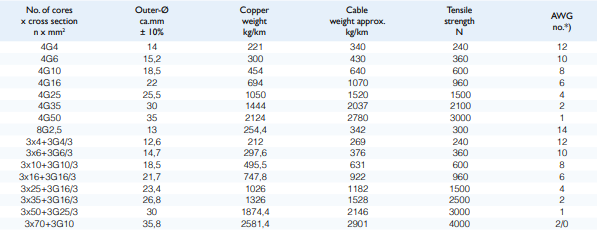
Available Configurations
FLEXIFESTOON® C PUR is available in multiple standard constructions to match different power and control needs:
4-core: 4G4 mm² up to 4G50 mm²
Multi-core: 8G2.5 mm²
Special 3+3 design: 3×4+3G4/3 up to 3×70+3G10 mm²
Each size includes precise data on outer diameter, copper weight, total cable weight, breaking load, and AWG equivalents, allowing engineers to select the exact size for current capacity and mechanical constraints
Construction & Material Science: Layer-by-Layer Analysis
Every layer of FLEXIFESTOON® C PUR is engineered according to clear scientific principles, ensuring that electrical performance, mechanical durability, and environmental resistance work together as one integrated system.
Conductor: Class 5 Flexible Red Copper
The innermost component is a finely stranded bare red copper conductor, conforming to IEC 60228 Class 5. Instead of a few thick wires, it consists of many ultra-fine strands twisted at a short lay length. This design follows fatigue mechanics: when bent repeatedly, the strain is distributed across thousands of contact points rather than concentrated at a single fracture line. This reduces cyclic stress and extends flex life dramatically. Electrically, the fine stranding also minimizes the skin effect at higher frequencies, keeping resistance low and current distribution uniform.
Insulation: Special TPE Thermoplastic Elastomer
Surrounding each conductor is insulation made from a specially formulated TPE compound. Unlike PVC, which becomes brittle below -15°C and softens above +70°C, TPE maintains elasticity across a much wider temperature range. Its glass transition temperature is below -50°C, meaning it remains flexible even in freezing conditions. Dielectric strength reaches approximately 20 kV/mm, ensuring reliable insulation without requiring excessive thickness. This allows the finished cable to have a smaller outer diameter and lighter weight compared to traditional rubber-insulated alternatives.
Central Reinforcement: High-Tenacity Textile Core
At the very center of the cable lies a textile support element, usually polyester or aramid filaments. This is a key design feature that separates festoon cables from ordinary flexible cables. When the cable is pulled during reeling or trolley movement, the textile core carries more than 80% of the axial tension. This prevents the copper conductors from being stretched, which would cause necking, increased resistance, and eventual breakage. The core also acts as a stable axis for cabling, maintaining the round shape and preventing internal shifting or corkscrewing during millions of bending cycles.
Stranding: Concentric Short-Lay Cabling
Insulated cores are arranged in layers around the central support using a short lay length. This balanced geometry follows torsion compensation principles: each bend and twist is distributed evenly around the axis, reducing internal friction and shear forces. Without this arrangement, cores would slide past each other, wear against insulation, and create localized weaknesses. The short lay also ensures that the cable retains its flexibility and does not become stiff or rigid under repeated movement.
Shield: Tinned Copper Braid
Over the cored assembly sits a tinned copper braid with a coverage rate of at least 85%. Functioning as a Faraday cage, it blocks electromagnetic interference (EMI) from reaching control signals and prevents noise from variable frequency drives or PLC systems from propagating outward. Tinning the copper strands provides additional protection against oxidation, especially in humid or salt-laden environments. This shielding is critical for maintaining stable operation in automated systems where signal integrity directly impacts machine performance.
Outer Sheath: Polyether-Based PUR Compound
The outermost layer is a black halogen-free PUR sheath, colored RAL 9005. The material used is polyether-type polyurethane, which offers superior hydrolysis resistance compared to polyester-based PUR. This means it resists degradation even in warm, humid, or coastal conditions. It is also highly resistant to mineral oils, diesel, greases, mild acids, alkalis, UV radiation, and ozone. Abrasion resistance is three to five times higher than standard rubber or PVC, making it the primary defense against mechanical wear and environmental attack.
Core Advantages vs. Conventional Cables
To understand why FLEXIFESTOON® C PUR is considered a premium solution, it helps to compare its performance against the two most common alternatives: CR rubber and PVC festoon cables.
Mechanical Endurance
Bending radius: 6D compared to 10–12D for rubber and 15D+ for PVC, allowing installation in tighter spaces and compact reels
Cycle life: Exceeds one million bending cycles, whereas standard rubber often fails after 100,000–200,000 cycles
Travel speed: Up to 240 m/min, more than three times faster than many conventional designs
Environmental Resistance
Temperature range: -40°C to +90°C, suitable for South Africa’s wide climate variations from highland winters to summer heat
Chemical resistance: Unaffected by diesel, hydraulic oil, and salt spray, which cause rapid cracking in unprotected rubber or PVC
Flame safety: Halogen-free and self-extinguishing, reducing toxic emissions in case of fire
Electrical & Operational Benefits
Stable signals: Shielded construction eliminates EMI issues common in unshielded cables
Compact dimensions: Smaller diameter reduces required track width and drum size, saving space and weight
Lower long-term cost: Although initial purchase price is higher, extended service life drastically reduces replacement frequency and downtime
Application & Case Study in South African Heavy Industry
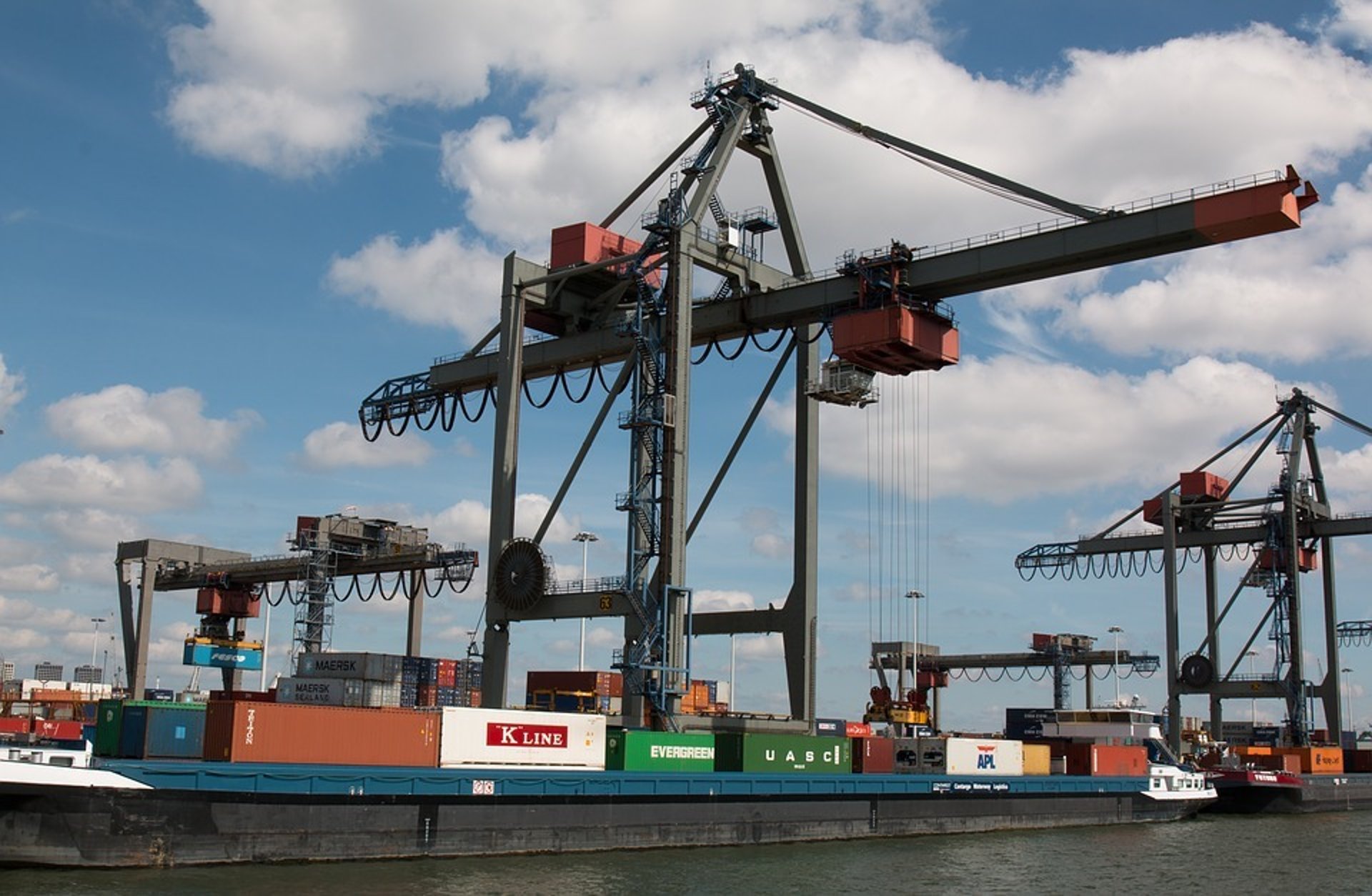
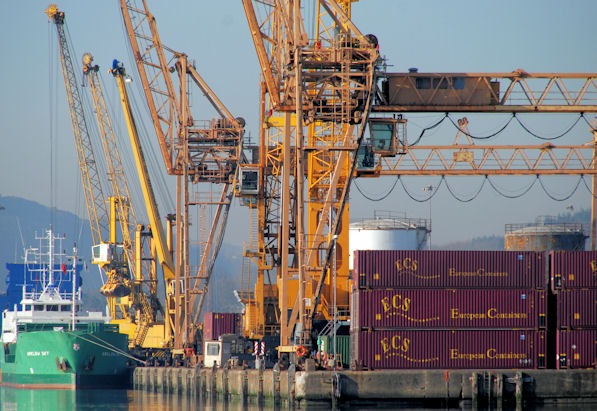
South Africa’s economy relies heavily on mining, port logistics, and metallurgical processing, all sectors that demand robust, continuous operation. Operating conditions here are uniquely harsh: open-pit mines have high dust and abrasion; coastal terminals at Durban, Cape Town, and Richards Bay face salt spray, strong UV, and diesel contamination; steel mills and power plants experience high ambient temperatures and 24-hour duty cycles.
Typical Operating Conditions
Temperature fluctuations: From -5°C during winter nights to +45°C in summer days
Motion cycles: Cranes and ship loaders travel 120–200 meters per minute, repeating thousands of cycles daily
Exposure: Salt air, lubricants, and fine mineral dust that acts as an abrasive agent
Real-World Performance
In one major bulk terminal application in Durban, operators previously used standard CR rubber festoon cables. These cables typically showed sheath cracking, core offset, and conductor breaks after only 8–12 months of service. Every replacement required crane downtime, labor, and material costs, resulting in a significant drain on operational budgets.
After switching to FLEXIFESTOON® C PUR, maintenance teams observed a dramatic improvement. The PUR sheath resisted hydrolysis and salt corrosion, while the textile core absorbed the tension from the motorized reel. The 6D bending radius allowed installation on existing compact drums without modification. Service life extended to 4–6 years, reducing unplanned downtime by approximately 70% and cutting total annual cable-related costs by more than half.
Today, leading crane suppliers such as Demag and Terex, as well as major South African system integrators, include this type of cable in their standard specifications. It is now recognized as a “low-maintenance, high-reliability” choice for critical material handling equipment.
Suitable Equipment
Festoon rail systems (C-track and I-beam trolleys)
Motorized cable reels and drum reeling mechanisms
Overhead cranes, gantry cranes, and ship-to-shore loaders
Automated stackers, bucket elevators, and heavy conveyors
Machine tools and production lines with continuous movement
Equivalent Alternative: Feichun FESTOONFLEX C‑PUR‑HF
For many projects, particularly those balancing performance and budget, Feichun FESTOONFLEX C‑PUR‑HF offers a direct and technically equivalent alternative to the original Elettrotek design.
Technical Equivalence
Same construction: Class 5 copper conductor, TPE insulation, central textile support, tinned copper braid, and halogen-free PUR outer sheath
Identical ratings: 0.6/1kV, 4kV test voltage, -40°C to +90°C dynamic range, 6D minimum bend radius, 15 N/mm² tensile strength, 240 m/min speed
Compliance: Meets IEC, DIN VDE, CE, RoHS, and aligns with SANS standards for use in South Africa
Practical Benefits
Cost efficiency: Typically 20–30% lower in price than European‑sourced equivalents
Delivery speed: Regional stock availability reduces lead times significantly
Technical support: Full datasheets, compliance certificates, and local application assistance
Same reliability: Proven in similar heavy‑duty installations across Africa and Europe
Selection, Installation & Maintenance Guidelines
Choosing and installing FLEXIFESTOON® C PUR correctly ensures that the cable delivers its full design life and performance.
How to Select the Right Configuration
Voltage rating: Always specify 0.6/1kV for low‑voltage industrial circuits
Conductor size: Follow IEC 60364 for current‑carrying capacity and voltage drop calculations
Core arrangement:
4G series: General power supply
3+3 design: Balanced power plus distributed earth
Multi‑core: Combined power and control signals
Consult the manufacturer for applications exceeding 200 m/min or extreme temperature extremes
Installation Best Practices
Maintain minimum 6D bending radius at all fixed points and moving sections
Use proper strain relief clamps at both ends to prevent pulling forces from acting directly on connections
Avoid sharp edges, rough surfaces, or narrow openings that could damage the sheath
Route in trolleys or guides designed for festoon cables, ensuring smooth travel without jamming
Ground the shielding at one or both ends according to system requirements
Routine Maintenance
Inspect visually every three to six months for signs of abrasion, cracking, or swelling
Clean festoon tracks and reel surfaces to remove dust and abrasive particles
Check shield continuity and earth resistance periodically
Record operating hours and cycle counts to plan replacements before failure occurs
Frequently Asked Questions
Can this cable be used both indoors and outdoors?
Yes. The PUR sheath is UV‑stabilized, ozone‑resistant, and weatherproof, making it suitable for all environments from enclosed workshops to open‑air terminals.
Is it compatible with variable frequency drives?
Yes. The tinned copper braid provides excellent EMI protection, preventing interference with control signals generated by VFDs and PLCs.
How does it compare to flat festoon cables?
Round cables offer better flexibility, longer flex life, and easier storage. Flat cables are narrower and useful only when track width is severely limited.
Does it meet South African safety standards?
Yes. It is aligned with SANS 60228, SANS 60332, and complies with NRCS requirements for industrial electrical installations.
Can Feichun FESTOONFLEX C‑PUR‑HF replace the original directly?
Yes. It matches every structural and performance specification, allowing drop‑in replacement without redesign.
Conclusion
FLEXIFESTOON® C PUR represents a fundamental shift in how electrical cables are designed for moving machinery. It is built not just to conduct electricity, but to survive millions of cycles of bending, tension, and exposure while maintaining consistent electrical performance. By combining Class 5 copper, TPE insulation, textile reinforcement, copper shielding, and PUR sheathing, it solves the most common failure modes seen in heavy industry: fatigue breakage, environmental degradation, and signal interference.
In South Africa, where mines, ports, and steelworks operate around the clock, the value of this design becomes clear. While the initial investment is higher than for standard cables, the reduction in downtime, maintenance labor, and replacement costs results in a far lower total cost of ownership over the long term. It transforms the cable from a simple consumable part into a reliability investment that protects the entire system.
If you require FLEXIFESTOON® C PUR or its equivalent FESTOONFLEX C‑PUR‑HF for mines, ports, steel plants, or crane systems across Southern Africa, contact the Feichun technical team:
We provide full datasheets, compliance documentation, and application‑specific engineering support tailored to South African operating conditions.


Email Address: Li.wang@feichuncables.com
© 2025. All rights reserved.
One-click to Quickly Contact
Products
Contact
Company
Location:
Building A Private Science and Technology Park, Hefei Economic and Technological Development Zone, Anhui Province, China
Heat Resistant Cable
WhatsApp: +86 17333223430
Social Media: