Anhui Feichun Special Cable Co.,Ltd Email: Li.wang@feichuncables.com

FLEXIDRUM® T 210 C: The Premium High-Flex PUR Halogen-Free EMC Shielded Control Cable for Continuous Motion in South African Cranes, Conveyors & Automation — DIN VDE, UL & CSA Certified
In South Africa’s harsh operating environments — from deep-level mines and busy coastal harbours to heavy steel mills and water treatment facilities — standard control cables often fail prematurely due to metal fatigue, abrasion, chemical attack, ultraviolet degradation, and electrical interference. FLEXIDRUM® T 210 C is not just another industrial cable; it is engineered from the ground up for continuous high-speed dynamic motion, combining Class 6 ultra-flexible conductors, specialised TPE insulation, high-density tinned copper braid shielding, and highly resistant TMPU PUR outer sheath. Fully compliant with DIN VDE, IEC, UL, CSA, and locally recognised SANS standards, it delivers 5–10 times longer service life, reduces unplanned downtime, and lowers total cost of ownership over the equipment lifecycle. This guide explains its engineering design, material science, performance characteristics, international certifications, and real-world operational benefits across South Africa’s most demanding industrial sectors.
Li.Wang
7/9/202611 min read
Introduction: The Cable Failure Challenge in Modern Dynamic Systems
Industrial automation and material handling systems have evolved rapidly over the past two decades. Where equipment once operated in fixed positions or with limited movement, today’s machinery — from mine hoists and container cranes to drag chains and robotic assembly lines — relies on continuous, repetitive motion. This shift places unprecedented mechanical, electrical, and environmental demands on the cables that carry power, control signals, and data between fixed control rooms and moving equipment.
Standard PVC-insulated control cables, designed primarily for static installation, are ill-suited for these applications. They suffer from well-documented failure modes: conductor breakage after only a few thousand flex cycles, insulation cracking at low temperatures, sheath swelling and degradation when exposed to oils or chemicals, and signal distortion caused by electromagnetic interference from variable frequency drives and high-power equipment. In regions like South Africa, where operating conditions are particularly severe, these failures become frequent and costly.
South Africa’s economy is built on heavy industry. It is home to some of the world’s deepest mines, busiest container ports, and largest metallurgical plants. Operating conditions vary dramatically: in inland mining regions, temperatures swing from -5°C at night to over +40°C during the day, with high levels of abrasive dust and hydraulic oil contamination. Along the coast, equipment faces salt-laden air and intense ultraviolet radiation. Across all sectors, the drive for efficiency requires machinery to run faster, longer, and with less maintenance.
FLEXIDRUM® T 210 C represents a paradigm shift in cable design. It is not merely a material upgrade, but a complete rethinking of how cables are built to perform under dynamic stress. Its design philosophy moves away from the traditional focus on static electrical compliance toward a balanced engineering solution that prioritises mechanical fatigue resistance, environmental stability, and consistent signal integrity. It fills the gap between standard fixed-installation cables and heavy-duty mining power cables, offering a premium solution specifically for control and signal circuits in continuous motion applications.
Technical Overview & Core Specifications
Product Identification and Certification
FLEXIDRUM® T 210 C is manufactured by AWP (Associated Wire Products), part of the EK GROUP, and is defined as a high-speed continuously flexible PUR halogen-free control cable with overall copper screen, rated for DIN VDE 0.6/1 kV and UL/CSA 600/1000 V. It is designed to meet a comprehensive set of international standards, ensuring compatibility across global markets and alignment with South Africa’s SABS/SANS regulatory framework:
Electrical & Construction Standards: IEC 60228, DIN VDE 0295, HD 22.1, DIN VDE 0282 Part 10
Flame & Fire Performance: DIN VDE 0482 Part 265-2-1, EN 50265-2-1, IEC 60332-1-2, UL VW-1, CSA FT1 / FT2
Halogen-Free & Low-Smoke: DIN VDE 0482 Part 267, EN 50267-2-1, IEC 60754-1
Oil & Chemical Resistance: DIN VDE 0473 Part 811-2-1, IEC 60811-2-1
North American Approvals: UL AWM Style 21223, CSA AWM I/II A/B 80°C 600/1000 V
Local Equivalency: Recognised as meeting requirements equivalent to SANS 60228, SANS 60332, and SANS 60754
General Compliance: CE marking, RoHS, and REACH certified
Electrical Ratings
The cable is engineered to operate reliably across different voltage systems:
Nominal Voltage: U₀/U = 0.6/1 kV (per DIN VDE); 600/1000 V (per UL/CSA)
AC Test Voltage: 2 kV between conductor and screen; 3 kV across the entire cable assembly (per DIN VDE 0281 Part 2)
Insulation Resistance: Maintains high values even at maximum operating temperature, ensuring long-term electrical stability
Mechanical and Environmental Performance
One of the most distinguishing features of FLEXIDRUM® T 210 C is its wide operating envelope:
Temperature Range: Fixed installation from -5°C up to +90°C; dynamic/flexible installation from -40°C up to +90°C
Minimum Bending Radius: 7.5 × outer diameter (D) for continuous motion applications
Maximum Operating Speed: Up to 250 m/min, making it suitable for high-speed reeling and drag chains
Radiation Resistance: Up to 5 × 10⁷ J/kg, allowing use in environments with moderate radiation exposure
Chemical Compatibility: Excellent resistance to mineral oils, hydraulic fluids, acids, alkalis, solvents, and greases
Construction Range
The cable is available in a wide variety of configurations to suit different control and signal requirements:
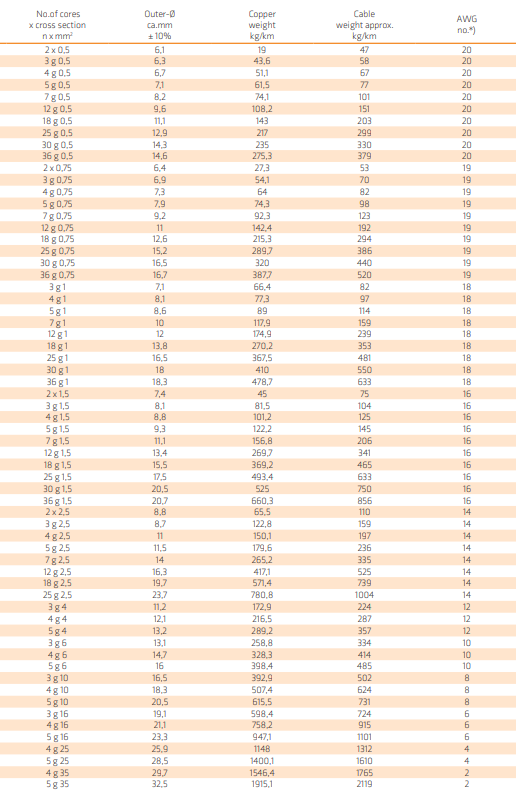
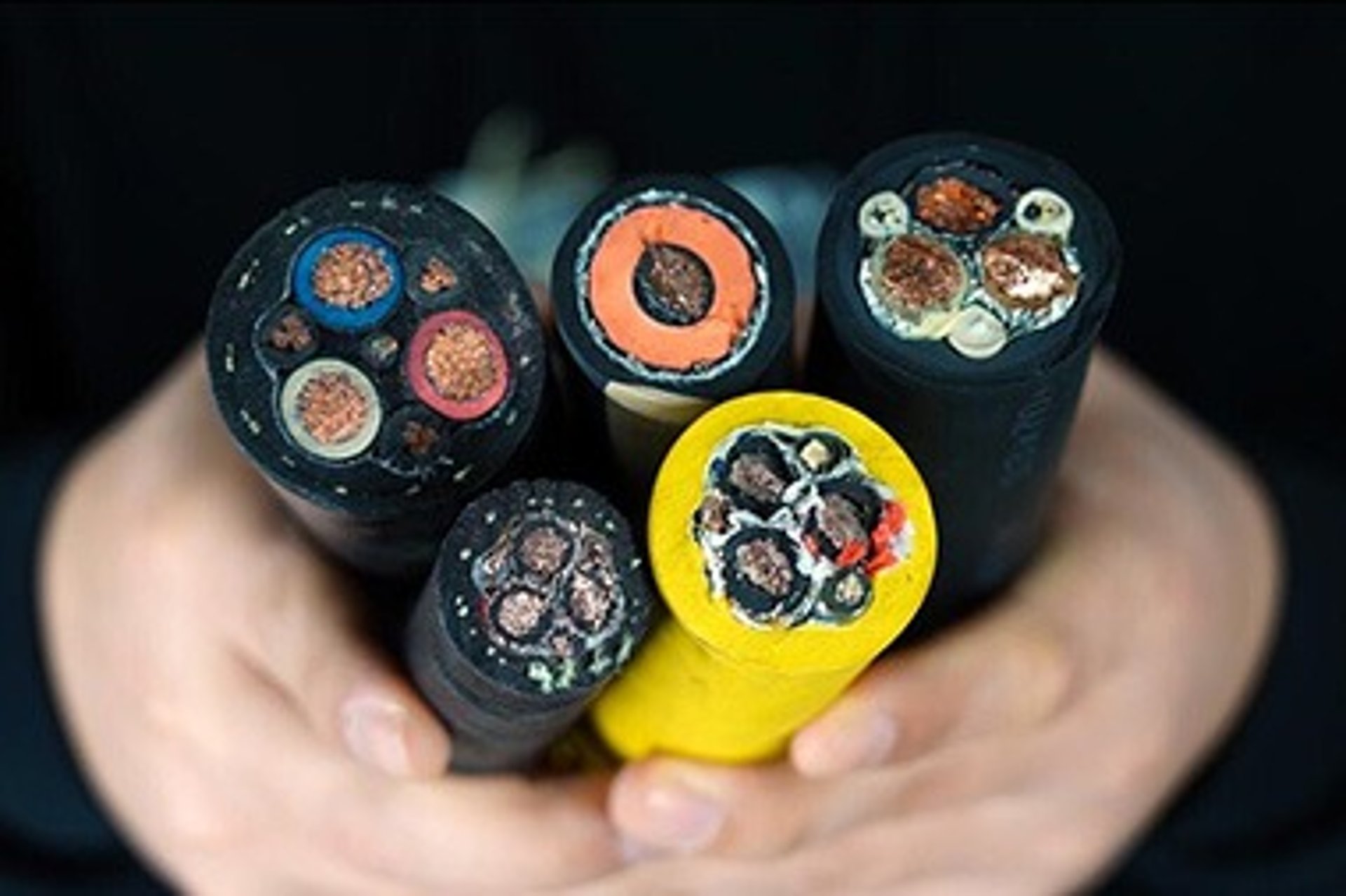
Conductor Cross-Section: From 0.5 mm² up to 35 mm², equivalent to AWG 20 through AWG 2
Number of Cores: 2 to 36 cores
Core Identification: Black cores printed with consecutive numbers according to EN 50334; green-yellow protective earth core included from 3 cores upwards
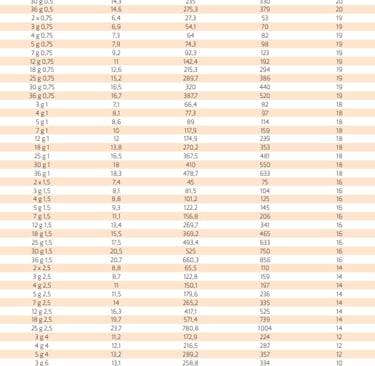
Physical Data: Outer diameter ranges from 6.1 mm to 32.5 mm; copper weight from 19 kg/km to 1915 kg/km; total cable weight from 47 kg/km to 2119 kg/km, varying with configuration
Layer-by-Layer Construction & Material Science
The performance of FLEXIDRUM® T 210 C is the direct result of a carefully engineered structure, where every layer is selected and designed based on specific scientific principles. From the innermost conductor to the outer sheath, each component works in harmony to solve the challenges of dynamic operation.
Conductor: Class 6 Bare Copper
Specification: Flexible bare copper conductor, Class 6 according to IEC 60228 and DIN VDE 0295.
Material Science: Class 6 conductors are constructed using an extremely high number of ultra-fine copper strands. Compared to Class 2 or Class 5 conductors used in standard cables, the individual wires are much thinner and more tightly bundled.
Engineering Principle: Why Class 6 lasts longer. When a cable bends, the outer surface stretches while the inner surface compresses. In a solid or coarsely stranded conductor, stress concentrates at a few points, leading to work hardening and eventual fracture after a relatively small number of cycles. With Class 6 construction, the fine strands slide past one another and distribute the bending stress evenly across the entire cross-section. This follows the Coffin-Manson fatigue law, which states that fatigue life increases exponentially as the strain amplitude decreases. By lowering the strain per individual wire, Class 6 conductors can withstand more than 5 million flex cycles without breaking, compared to fewer than 10,000 cycles for standard conductors.
Insulation: Special TPE Compound
Specification: Proprietary thermoplastic elastomer (TPE) compound selected for electrical and mechanical balance.
Material Science: TPE is a block copolymer that combines the properties of thermoplastics and rubber. It has a micro-phase separation structure, where rigid segments provide mechanical strength and soft segments deliver elasticity. Its glass transition temperature (Tg) is well below -40°C, meaning it remains flexible and does not become brittle at low temperatures.
Engineering Principle: TPE offers a dielectric strength greater than 20 kV/mm and a low dissipation factor, ensuring minimal energy loss and long-term insulation stability. Unlike PVC, which stiffens and cracks in cold conditions, TPE maintains its flexibility and electrical properties across the full operating temperature range. It also bonds well with the outer sheath materials, preventing internal slippage during repeated bending.
Core Assembly & Wrapping
Specification: Cores are stranded in optimised layers, with a non-woven polyester tape wrapped over each layer and the completed assembly.
Design Logic: Layered stranding ensures a balanced structure, reducing torsional forces when the cable moves. The non-woven tape serves two critical functions: it reduces friction between the insulated cores during flexing, preventing abrasion of the insulation surface, and it holds the assembly in place, avoiding the "snaking" or displacement of cores that causes internal stress concentrations. This mechanical stabilisation is essential for long life in drag chains and reeling systems.
Electromagnetic Shield: Tinned Copper Braid
Specification: High-density braid of tinned copper wires, applied over the wrapped core assembly.
Material Science: Copper offers the highest electrical conductivity of any engineering metal, while tin plating prevents oxidation and corrosion, particularly important in humid or coastal environments.
Engineering Principle: Why braid outperforms foil. The shield operates on the Faraday cage principle, containing electrical fields and blocking external electromagnetic interference. An aluminium foil shield, while thin and light, is fragile and prone to cracking or tearing when bent repeatedly. A tinned copper braid, by contrast, maintains high flexibility and typically achieves coverage of over 80%. It has lower electrical resistance, provides better protection against both high-frequency electric fields and low-frequency magnetic fields, and retains its shielding effectiveness even after millions of bending cycles. This ensures control signals from PLCs, encoders, and sensors remain stable and free from distortion.
Outer Sheath: TMPU Polyurethane
Specification: Thermoplastic polyurethane (TMPU) conforming to DIN VDE 0282 Part 10, grey colour similar to RAL 7000.
Material Science: PUR has a high cross-link density in its molecular structure. It is a polar polymer, making it resistant to non-polar oils and greases, while its elastic structure allows it to deform and recover without permanent damage.
Engineering Principle: Why PUR resists wear and chemicals. Abrasion resistance comes from its high tear strength and elastic recovery: when rubbed against rough surfaces, the material deforms temporarily rather than being cut away. Resistance to oils and solvents arises because the molecular structure does not allow oil molecules to penetrate or swell the polymer matrix. It also has low water absorption and excellent hydrolysis resistance, preventing degradation in damp or wet environments. The matte surface finish reduces friction when running inside drag chains or over pulleys, lowering heat generation and mechanical stress.
Performance Advantages vs. Standard Cables
FLEXIDRUM® T 210 C is designed to solve problems that standard cables cannot. The difference lies not just in individual properties, but in how the integrated design delivers performance where it matters most.
Comparison Profile
Standard PVC Control Cables: Low cost, but rigid at temperatures below 0°C, swells and cracks in oil, wears quickly, and fails rapidly in motion. Typical service life: 8–12 months in dynamic applications.
Rubber Sheathed Reeling Cables: More flexible, but larger in diameter, heavier, and often contain halogens; they age faster under UV and have lower tensile strength.
FLEXIDRUM® T 210 C: Balances ultra-flexibility, compact dimensions, low weight, chemical resistance, and flame safety. Service life: 3–5 years or more in equivalent conditions.
Key Differentiators
✅ Ultra-Low Temperature Flexibility: Remains operational at -40°C, suitable for high-altitude mines and cold nights without cracking.
✅ Extended Flex Life: Rated for over 5 million cycles, compared to 10,000 cycles for standard cables.
✅ Superior Abrasion & Cut Resistance: 5–10 times more durable than PVC or rubber when sliding against metal guides or rough surfaces.
✅ Oil & Chemical Immunity: Does not swell or degrade when exposed to hydraulic fluids, coolants, or cleaning agents.
✅ Complete EMC Protection: Prevents signal loss and false triggering in environments with VFDs and large motors.
✅ Halogen-Free & Low-Smoke: In case of fire, it emits no corrosive halogen gases, protecting equipment and personnel, and meets strict safety codes.
✅ Compact & Lightweight: Smaller outer diameter and lower weight than rubber alternatives allow more cable to fit on a reel or in a drag chain, reducing installation space and mechanical load.
The Paradigm Shift
The design philosophy of FLEXIDRUM® T 210 C marks a clear transition from "usable" to "durable." It fills the gap between general-purpose cables and heavy mining power cables, offering a solution that is optimised specifically for control circuits. While the initial investment is 30–50% higher than standard cables, the total cost of ownership is significantly lower. With a lifespan extended by a factor of 5 to 10, and maintenance-related downtime reduced by approximately 80%, the higher upfront cost is recovered within the first year of operation. This is the true value of engineering for reliability.
Applications & Case Studies in South Africa
South Africa’s industrial landscape presents some of the most demanding conditions in the world. FLEXIDRUM® T 210 C has been specified and proven in these environments, addressing the specific challenges of the local climate and industry.
South African Operating Environment
Climate: Temperatures ranging from -5°C to +45°C, high UV radiation, coastal salt spray, and inland dust and aridity.
Industry Focus: Deep-level mining, bulk cargo ports, steel manufacturing, water purification, and chemical processing.
Regulatory: SABS/SANS standards align closely with IEC and VDE, requiring high safety, durability, and low hazard characteristics.
Application 1: Mine Hoists & Conveyors
Deep-level gold and platinum mines in South Africa often reach depths of 800 m or more. The control cables for hoist systems must wind and unwind at speeds up to 200 m/min, exposed to mineral dust, hydraulic oil, and near-freezing temperatures at depth.
Challenge: Standard cables failed every 8–12 months due to conductor breakage and sheath swelling.
Solution: FLEXIDRUM® T 210 C meets the 7.5×D bending radius requirement, resists oil contamination, and remains flexible at low temperatures.
Result: Service life increased to 3–5 years, reducing unplanned stops and lowering maintenance costs. The stable EMC performance ensures accurate speed and position feedback for safe hoist operation.
Application 2: Port Container Cranes
At ports such as Durban and Cape Town, gantry cranes operate continuously in salt-laden air and intense sunlight. Control cables run on moving reels or drag chains, exposed to oil spills and mechanical friction.
Challenge: Corrosion, UV degradation, and signal interference caused by nearby power circuits.
Solution: Tinned copper braid and PUR sheath resist salt and UV; high flexibility handles constant reeling.
Result: Consistent signal integrity, reduced corrosion, and longer intervals between replacements, ensuring 24/7 port operations remain on schedule.
Application 3: Water Treatment & Chemical Plants
In facilities across Gauteng and the Western Cape, moving screens, scrapers, and dosing equipment operate in direct contact with wastewater, acids, and alkalis.
Challenge: Insulation degradation and safety risks in confined spaces.
Solution: TPE insulation and PUR sheath resist chemical attack; halogen-free construction improves safety in enclosed plant rooms.
Result: Stable long-term performance without the need for frequent replacement, and compliance with environmental and safety regulations.
Application 4: Steel Mills & Automation
In hot rolling and casting facilities, equipment runs continuously, exposed to oil mist, vibration, and electromagnetic noise from large drives.
Challenge: Signal drift and insulation failure due to heat and abrasion.
Solution: High temperature rating, abrasion resistance, and excellent EMC performance maintain control accuracy.
Result: Fewer process interruptions and consistent production quality.
Selection Guide & Equivalent Solutions
How to Select the Right Configuration
Choosing the correct cable requires matching the specifications to the operating conditions:
Voltage Rating: Confirm 0.6/1 kV is suitable for the system.
Cross-Section: Select based on current-carrying capacity and voltage drop.
Number of Cores: Match the number of control and signal circuits required.
Bending Radius: Ensure 7.5×OD is feasible in the machine design.
Speed: Confirm the application does not exceed 250 m/min.
Environment: Verify temperature range and chemical exposure align with specifications.
Technical Data Summary
The available range includes cross-sections from 0.5 mm² to 35 mm², with corresponding outer diameters, copper weights, and cable weights listed in the manufacturer’s datasheet. This allows engineers to calculate the required reel capacity and mechanical load on moving parts.
Feichun Cables as Equivalent Alternative
Feichun Cables offers a direct equivalent to FLEXIDRUM® T 210 C, designed to meet the same engineering standards and performance criteria.
Technical Equivalence: Same Class 6 conductors, TPE insulation, tinned copper braid, and TMPU sheath; fully compliant with DIN VDE, IEC, UL, CSA, and SANS standards.
Performance Match: Identical temperature range, bending radius, speed rating, and chemical resistance.
Practical Benefits: Competitive pricing, shorter lead times, and regional stock availability.
Documentation: Full test reports and certification provided, ensuring acceptance by consultants, contractors, and regulatory bodies.
Frequently Asked Questions
Q: Can this cable be used outdoors in direct sunlight?
A: Yes. The TMPU sheath has excellent UV stabilisation, making it suitable for long-term outdoor exposure.
Q: Is it suitable for use in salt spray environments?
A: Yes. The tinned copper components prevent corrosion, and the PUR sheath resists saltwater ingress.
Q: Can it be used in drag chains and cable tracks?
A: It is specifically designed for this purpose, with a proven flex life exceeding 5 million cycles.
Q: Is it truly halogen-free?
A: Yes. It meets IEC 60754-1, containing no fluorine, chlorine, bromine, or iodine, so it does not release toxic or corrosive gases during combustion.
Q: Does it meet South African standards?
A: Yes. It is equivalent to SANS 60228, SANS 60332, and SANS 60754, accepted by local engineers and authorities.
Q: Can it replace older rubber reeling cables?
A: Yes. It offers a smaller diameter, lighter weight, longer life, and better resistance to aging and environmental factors.
Conclusion
FLEXIDRUM® T 210 C represents more than just a cable; it is a complete engineering solution for the challenges of modern industrial motion. By combining Class 6 ultra-flexible conductors, specialised TPE insulation, high-performance tinned copper shielding, and robust TMPU PUR outer sheath, it achieves a balance of mechanical durability, electrical stability, and environmental resistance that standard cables simply cannot match.
In the South African context, where equipment must withstand extreme temperatures, heavy contamination, and continuous operation, this cable moves the industry away from the cycle of frequent replacement and unplanned downtime. It shifts the focus from short-term cost to long-term reliability and efficiency. By changing the design philosophy from "static compliance" to "dynamic performance," it ensures that control systems remain accurate, safe, and operational even in the harshest conditions.
The value of FLEXIDRUM® T 210 C lies in its ability to protect the significant investment made in machinery and automation. It turns a component that is often seen as a consumable into a reliable part of the system, reducing total operating costs and improving productivity. For mines, ports, and factories across Southern Africa, it offers a clear path to safer, more efficient, and more sustainable operations.
If you are specifying control cables for hoists, cranes, drag chains, conveyors, or automated machinery in South Africa or the wider region, contact the Feichun Cables team today. We can provide full datasheets, technical support, and competitive pricing tailored to your project requirements.
📧 Email: Li.wang@feichuncables.com


Email Address: Li.wang@feichuncables.com
© 2025. All rights reserved.
One-click to Quickly Contact
Products
Contact
Company
Location:
Building A Private Science and Technology Park, Hefei Economic and Technological Development Zone, Anhui Province, China
Heat Resistant Cable
WhatsApp: +86 17333223430
Social Media: