Anhui Feichun Special Cable Co.,Ltd Email: Li.wang@feichuncables.com
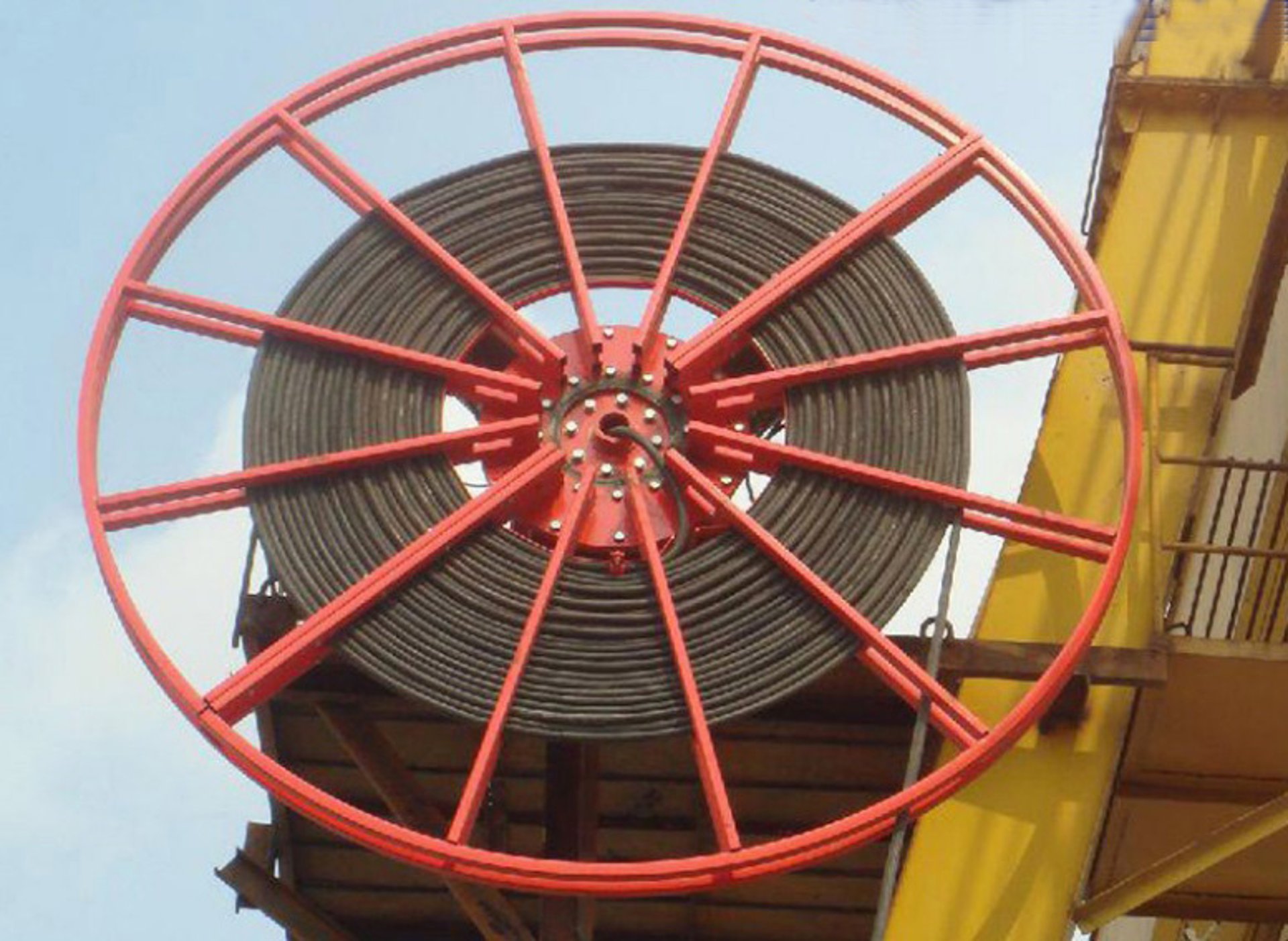
FLEXIDRUM® R 502 Reeling Cable: High-Torsion PUR Anti-Twist Design for South African Ports, Mines & Heavy Mobile Equipment – Specs, Applications & Case Studies
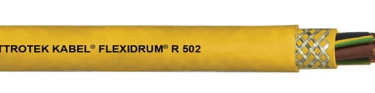
FLEXIDRUM® R 502 is a heavy‑duty reeling cable purpose‑built for high‑mechanical‑stress dynamic applications—including cable‑reel hoists, stackers, reclaimers, and mining mobile gear—with anti‑twist textile braid, dual PUR sheathing, Class 5 flexible copper, and GAALTHERM 530 insulation. It solves common failures like core breaks, jacket splitting, and early ageing in South African ports, mines, and material‑handling systems. Fully compliant with IEC, DIN VDE, EN, and aligned with SANS safety norms; Feichun offers equivalent performance with shorter lead times and competitive pricing.
Li.Wang
7/14/202612 min read
Executive Summary
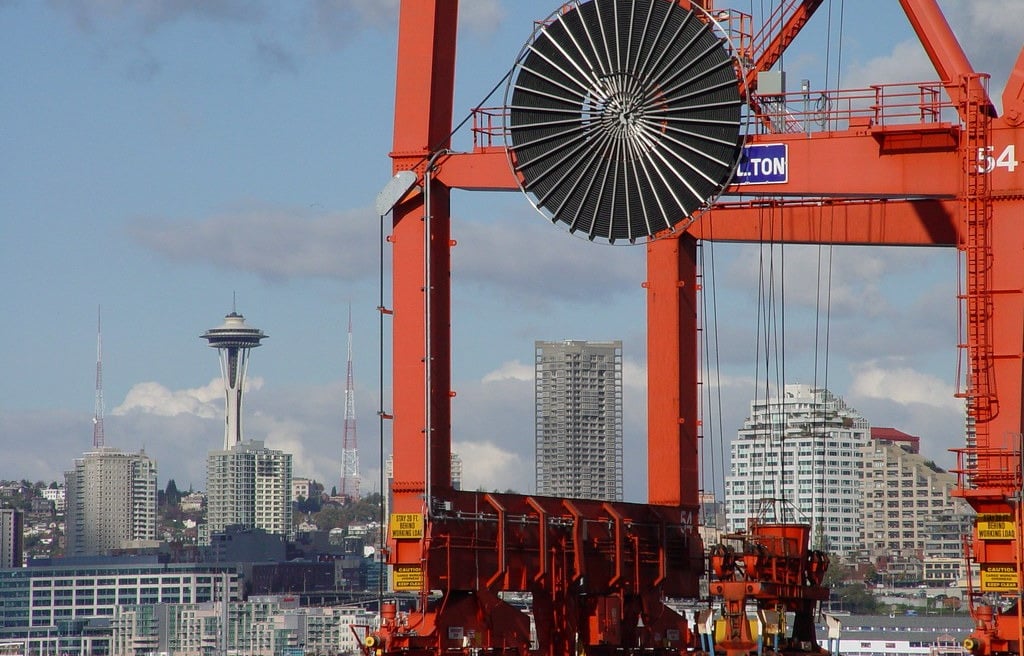
FLEXIDRUM® R 502 belongs to a specialised class of heavy‑duty reeling cables engineered exclusively for dynamic cable‑reel systems and applications subject to extreme mechanical loading. It is not a modified general‑purpose power cable, but a purpose‑built solution shaped from the ground up to handle the combined forces of tension, bending, torsion, compression, and cyclic fatigue that destroy standard cables in weeks or months.
At its core lies a unique multi‑layer architecture: anti‑twist textile braid, dual polyurethane (PUR) sheathing, Class 5 highly flexible copper conductors, and GAALTHERM 530 specialised insulation. This design does not simply resist stress—it actively manages it, neutralising torsion, distributing tension evenly, and absorbing repeated flexure without permanent damage. It directly addresses four persistent failure modes in South African industry: conductor breakage, jacket cracking, insulation embrittlement, and drastically shortened service life under harsh conditions.
The cable embodies a fundamental shift in modern cable engineering: moving from “passive endurance” to “active optimisation of dynamic stress”. This approach delivers far longer life, fewer unplanned stops, and lower total cost of ownership in ports, mining, bulk handling, and heavy mobile machinery—especially across South Africa’s varied and demanding operating environments. When selecting, engineers should match capacity to load, assess environmental risks, and work with suppliers to configure the right balance of size, speed rating, and protection for each site. Feichun offers fully equivalent alternatives that meet the same standards while shortening delivery times and optimising cost.
Introduction: Why Standard Cables Fail in Dynamic Reeling Service
Cable‑reel systems subject power cables to one of the most punishing loading regimes in industry. Every cycle of winding and unwinding combines tensile pull, tight bending, twisting from uneven reel flanges or misalignment, and crushing pressure between layers—all repeated thousands or millions of times over a machine’s life. Standard power cables built for fixed installation or light flexure are not designed for this multi‑axial stress, and typically fail in predictable ways: copper strands snap from fatigue, jackets tear or split, insulation separates from conductors, and the whole cable twists into a corkscrew shape that accelerates further damage.
In South Africa, these problems are amplified by the country’s unique mix of industrial priorities and climate conditions. Mining dominates the North West, Limpopo, and Mpumalanga provinces, where opencast and underground operations face fine abrasive dust, diesel and hydraulic fluid spills, night frost on the Highveld, and long‑distance reeling on draglines and stackers. Ports such as Durban, Cape Town, and Ngqura run 24 hours a day, exposed to salt spray, intense UV radiation, and rapid temperature swings between day and night. Bulk material yards and heavy haulage vehicles add further stress from uneven ground, sharp edges, and continuous outdoor exposure.
The cost of these failures is high. In mining, a cable break can halt an entire shift, putting production targets at risk and raising safety concerns under the Mine Health and Safety Act. At container terminals, downtime on STS or RTG cranes delays vessel berthing and raises demurrage charges. Repairs also require skilled labour, spare parts, and often full equipment shutdown—costs that can dwarf the original price of the cable itself.
Most standard cables rely on making materials thicker or harder to withstand force, which only shifts stress to other points and adds weight and stiffness that make reeling harder. FLEXIDRUM® R 502 takes a different path: designing every layer to work together, so stress is spread, absorbed, or redirected before it can cause harm. This makes it far better suited to the specific demands of South African industry, where reliability under variable, severe conditions is as important as electrical performance.
Full Technical Specifications & Compliance Standards
All data below comes directly from the manufacturer’s documentation, with compliance aligned to international standards and South African regulatory expectations.
Electrical and Voltage Ratings
Nominal voltage: U₀/U 0.6/1 kV, suitable for most heavy‑duty three‑phase power distribution on reeling systems
A.C. withstand test: 4 kV applied for five minutes, confirming robust insulation margin for voltage fluctuations and transient surges
Conductor standard: Class 5 flexible bare copper per IEC 60228 and DIN VDE 0295, optimised for both conductivity and flexural endurance
Core identification: Standard 3 + 3 layout—grey, brown, black for power; green/yellow for protective earth, distributed in interstices—per DIN VDE 0293‑308 and HD 308 S2. Other core counts carry numerical marking per EN 50334 for easy tracing
Temperature limits: Continuous maximum conductor temperature +90 °C; short‑circuit rating +250 °C for up to five seconds, meeting thermal stability requirements for South African mining and port installations
Mechanical and Dimensional Data
Temperature range: Fixed laying –50 °C to +90 °C; flexible installation –40 °C to +90 °C, covering coastal heat, inland winter frost, and underground stability
Minimum bending radius: Fixed laying ≥7 × overall diameter; flexible reeling ≥10 × overall diameter, per DIN VDE 0298‑3. Respecting these values prevents excessive strain at the insulation‑conductor interface
Maximum tensile load: 20 N/mm² of conductor cross‑section—well above typical dynamic loads on most reeling systems, and sized so tension is shared rather than carried entirely by copper strands
Allowable torsion: ±25° per metre length, controlled by the anti‑twist braid to avoid corkscrewing and shear failure
Maximum reeling speed: Up to 180 m/min with full anti‑twist construction; approximately 30 m/min without the braid, matching modern high‑capacity port cranes
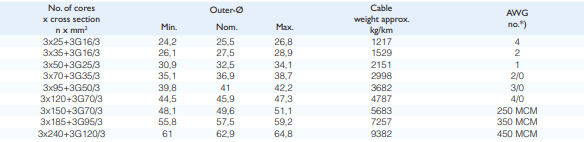
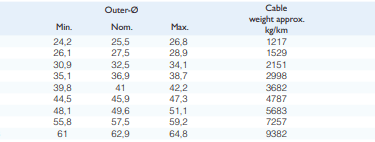
Standard dimensions (3 × power + 3 × earth):
Custom core arrangements, additional control or signal cores, and yellow or black outer sheath colours are available on request.
Environmental and Safety Compliance
Flame performance: Self‑extinguishing and flame‑retardant per DIN VDE 0482 part 265‑2‑1, EN 50265‑2‑1, and IEC 60332‑1‑2—critical for enclosed spaces and fire‑sensitive zones
Halogen‑free: Meets DIN VDE 0482 part 267, EN 50267‑2‑1, and IEC 60754‑1, so no corrosive hydrogen halide gases are released in fire—essential for underground mines and port tunnels, and aligned with SANS 1520 safety principles
Oil resistance: Complies with DIN VDE 0473 part 811‑2‑1 and IEC EN 60811‑2‑1, resisting diesel, hydraulic fluids, and mineral oils common in mining and heavy machinery
Additional traits: UV‑stabilised, broadly chemical‑resistant, RoHS‑compliant, and CE‑marked. These match the requirements of South Africa’s NRCS, Department of Mineral Resources and Energy, and SANS 1411 and SANS 10142 for electrical installations.
Layer‑by‑Layer Construction, Materials & Engineering Principles
Every layer in FLEXIDRUM® R 502 is selected and arranged to follow three core principles: mechanics first, material‑structure synergy, and alignment with safety and performance standards. This section explains what each layer is made of, why it is used, and how it works at a physical level.
Conductor: Class 5 Fine‑Stranded Copper
The innermost layer consists of high‑purity annealed copper, stranded in many fine wires to meet IEC 60228 Class 5 requirements.
From an electrical standpoint, fine stranding keeps resistance low and consistent across temperature cycles, supporting the 90 °C continuous rating and 250 °C short‑circuit rating without thermal runaway or excessive voltage drop on long reeling runs. Mechanically, individual strands slide gently past one another when the cable bends or twists, so stress is spread across thousands of interfaces rather than concentrated at a few points—greatly delaying fatigue compared to solid or Class 2 conductors. This flexibility is exactly what is needed for millions of cycles on mine stackers and port cranes, where rigid copper would snap quickly.
Insulation: GAALTHERM 530 Specialty Compound
Each conductor is individually insulated with GAALTHERM 530, a proprietary cross‑linked polymer developed for thermal stability and dynamic flexure.
Electrically, the material delivers high dielectric strength and stable resistivity, maintaining insulation integrity even after repeated flexure and at maximum operating temperature. Material science principles dictate that its low glass‑transition temperature keeps it pliable at –40 °C, while its cross‑linked molecular structure resists softening and permanent deformation at +90 °C—filling the gap between ordinary PVC, which becomes brittle in cold, and standard rubber, which may degrade under sustained heat and oil exposure.
Core Stranding and Wrapping
Insulated cores are laid up in layers, then bound with a non‑woven textile tape before further processing.
Layered stranding gives the cable a round, balanced profile that winds evenly on reels, while the tape prevents cores from shifting or rubbing against one another during bending and twisting. This reduces abrasive wear between insulation surfaces and maintains consistent geometry, so tension and torsion are distributed predictably rather than concentrating on one side.
Inner Sheath: PUR Compound
A compact inner sheath made from polyether‑based polyurethane (PUR) seals the core assembly and forms a smooth, resilient base for the braid above.
Polyether PUR was chosen over polyester formulations because its ether linkages resist hydrolysis and microbial attack far better—critical in South Africa’s humid coastal zones and water‑rich mining areas, where other PUR types can degrade rapidly. It provides chemical protection before the braid, cushions minor compression, and retains elasticity across the full temperature range so the cable does not stiffen or soften unevenly.
Anti‑Twist Textile Braid: The Core Innovation
Above the inner sheath sits a tightly woven braid of high‑tenacity synthetic fibres—this is the feature that distinguishes FLEXIDRUM® R 502 from most standard reeling cables.
The braid works on a simple but powerful mechanical principle: when the cable is twisted, the symmetrical weave converts rotational torque into even circumferential tension across the braid filaments, rather than letting torsion pass down to the inner cores. This limits net twist to ±25° per metre, preventing corkscrewing and the shear forces that tear apart standard cables. It also carries the majority of reeling tension—typically more than 70 %—so the copper conductors are spared high tensile loads and can focus on electrical performance rather than structural strength. The result is stable operation at speeds up to 180 m/min, with no tangling or uneven winding even on misaligned reels.
Outer Sheath: Abrasion‑Resistant PUR
The final protective layer is an outer PUR sheath, formulated with UV stabilisers, flame‑retardant additives, and anti‑abrasion modifiers, available in yellow or black.
Tribologically, PUR is 5–10 times more resistant to abrasion than PVC, so it withstands scouring by mine grit, port dust, and contact with reel flanges and guide rollers without wearing through quickly. Chemically, it repels oils, greases, and saltwater, while UV additives slow chain‑scission from sunlight—keeping performance consistent for years of outdoor use. It also meets halogen‑free requirements, so fire does not release toxic fumes that endanger crews in confined spaces.
Unified Design Philosophy
Taken together, these layers follow three clear threads. First, mechanics always come first: every choice serves to disperse stress, absorb fatigue, and limit damage—matching exactly the tension‑bending‑torsion mix found on cable reels. Second, materials are matched to their role: PUR balances wear, oil, weather, and safety; GAALTHERM 530 balances heat and flexibility; Class 5 copper balances conductivity and fatigue life. Third, all standards are aligned to both international benchmarks and South African mining and port safety expectations, so compliance is straightforward.
Performance Comparison: FLEXIDRUM® R 502 vs Conventional Cables
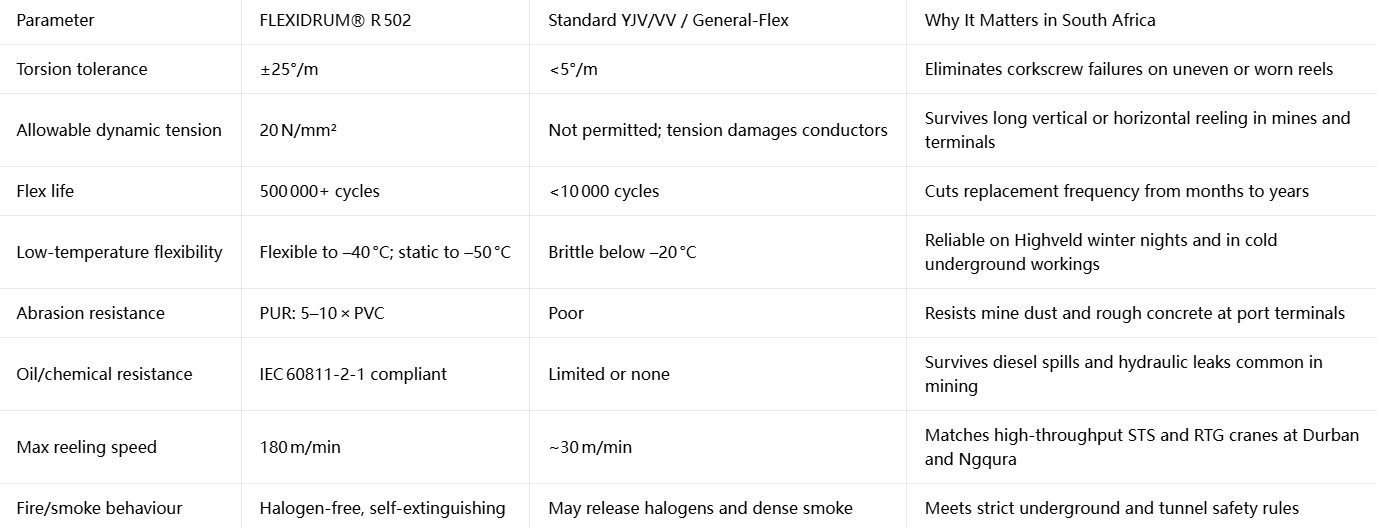
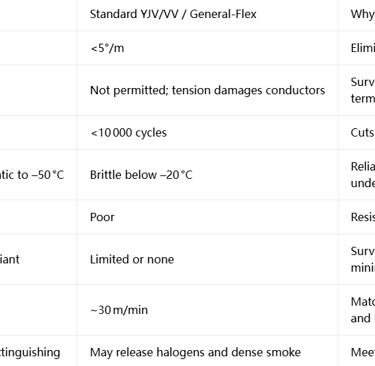
The differences between R 502 and standard cables become most visible when measured against real reeling conditions:
Standard cables fail not because they are poorly made, but because they are built for static or low‑flex duty. On a reel, even modest misalignment or speed pushes them past their design limits, while R 502 is engineered to operate within its safety margin under exactly those conditions.
South African Applications & Case Studies
South Africa’s heavy industry relies heavily on reeling equipment, and its climate and terrain match R 502’s strengths perfectly.
Port Terminals: Durban, Cape Town, Ngqura
Container terminals and bulk berths run 24 hours a day, with STS and RTG cranes moving at high speeds over salt‑laden air and temperature swings that can exceed 20 °C in a single day. Standard cables often twist unevenly, wear through at guide rollers, or stiffen in cold weather, leading to frequent shutdowns.
FLEXIDRUM® R 502’s –40 °C to +90 °C range works reliably year‑round, while its hydrolysis‑resistant PUR braid and sheath stand up to salt spray without swelling or cracking. The ±25°/m torsion limit and 180 m/min rating allow even fast gantry cranes to wind evenly, and real installations show service life typically 3–5 times longer than standard cables—translating to far fewer unplanned stops and lower demurrage costs.
Mining: Platinum and Coal Operations in North West, Limpopo, Mpumalanga
Opencast draglines, bucket‑wheel excavators, and stacker‑reclaimers reel cable over long distances through fine dust, mud, and frequent contact with diesel and hydraulic fluids. Underground, halogen‑free performance is mandatory under SANS 1520 and Mine Health and Safety Act requirements, while low‑temperature flexibility is vital for Highveld night shifts.
R 502’s PUR sheath resists abrasion from ore dust and chemical attack from spilled fluids, while its anti‑twist braid prevents corkscrewing that can jam long reels. The 20 N/mm² tension rating means long suspended runs do not overstress conductors, and halogen‑free construction keeps toxic fumes out of confined workings—directly addressing safety concerns that have been raised in industry incidents. Operators report fewer core breaks and more predictable maintenance schedules, making it easier to meet production targets without compromising safety.
Bulk Handling and Heavy Mobile Equipment
Reversible belt conveyors, stacker drives, and electric transfer carts often operate in tight spaces with limited reel diameter, frequent direction changes, and exposure to all weather conditions. Standard cables may be too stiff or too large for the available drum space, adding weight and requiring larger drive motors.
R 502’s balanced profile keeps outer diameter compact relative to capacity, while its low‑temperature flexibility prevents kinking when cold. The anti‑twist structure reduces tangling on smaller drums, and the braid’s tension‑sharing capability means lighter cable can often do the same job—lowering inertia and energy use while fitting into existing reel housings.
Feichun Equivalent Solution: Matching Specs, Better Availability
Feichun produces a fully equivalent reeling cable built to the same principles and specifications as FLEXIDRUM® R 502, making it a reliable alternative for South African buyers.
Full Performance and Standard Alignment
Identical core construction: Class 5 flexible copper, equivalent high‑temperature insulation, dual PUR layers, and anti‑twist textile braid
Same electrical and mechanical ratings: 0.6/1 kV nominal, 4 kV test, ±25°/m torsion, 20 N/mm² tension, –40 °C to +90 °C flexible range
Full compliance with IEC, DIN VDE, EN, and RoHS; test reports available to demonstrate alignment with SANS 1520, SANS 1411, and DMR expectations for mining and port use
Key Advantages for South African Projects
Shorter lead times: streamlined supply chain reduces waiting periods for urgent shutdowns or new terminal and mine expansions
Cost efficiency: competitive pricing without downgrading materials or performance
Local‑ready support: regional technical assistance for sizing, custom cores, and special colours; documentation pre‑prepared for NRCS and mine safety audits
Drop‑in compatibility: matching outer diameters and bending radii mean no re‑engineering of reels or guide systems when switching from original or legacy cables
Selection Guide and Best Practices
Choosing the right cable balances performance, environment, and cost. FLEXIDRUM® R 502 is not always needed—but it is the right choice in specific situations.
When to Select R 502‑Type Construction
Any motorised cable reel with frequent winding and unwinding
Applications involving torsion, long free‑hanging runs, or speeds exceeding 30 m/min
Sites exposed to oil, grease, salt spray, UV, or temperatures below –20 °C
Mining, port, bulk handling, or heavy mobile equipment requiring compliance with strict halogen‑free and mechanical standards
When Standard Cables Are Sufficient
Fixed runs with no movement or flexure
Light indoor use with no significant tension, twist, or chemical exposure
Short service applications where cost is the overriding factor and replacement is easy
Sizing and Configuration Tips
Match conductor cross‑section to both current‑carrying capacity and allowable voltage drop over the longest reeling length
Always specify full anti‑twist braid for speeds above 30 m/min or where misalignment is unavoidable
Add control or pilot cores if needed for brakes, sensors, or communication; confirm total diameter still fits the reel drum
For South African mines, verify compliance against SANS 1520‑1 and site‑specific safety rules before finalising
Installation and Maintenance Guidance
Never pull cable beyond 20 N/mm², and avoid bending tighter than 10 × diameter on reeling sections
Use proper fairleads and rollers to prevent sharp contact with metal edges
Inspect the outer sheath for cuts or abrasion during routine maintenance; damage to the braid or inner layers should be addressed promptly
Terminate conductors to avoid over‑crimping, which can introduce local stress points that accelerate fatigue
Frequently Asked Questions
Does this cable meet South African mining safety requirements?
Yes. It aligns with the mechanical, flame‑retardant, and halogen‑free requirements of SANS 1520 and SANS 1411, and matches the expectations of the Department of Mineral Resources and Energy for trailing and reeling cables. Full test certificates are available for audit.
Can I replace my current reeling cable directly?
In most cases yes. Outer diameters, bending radii, and mounting requirements match typical 0.6/1 kV reeling systems, so no major changes to reels or guides are needed.
How much longer does it last compared to what I use now?
In similar port and mine reeling service, service life is typically 3–5 times longer than standard flexible cables, reducing both replacement labour and downtime costs.
Can I get different core counts or colours?
Yes. Feichun can supply custom stranding, additional control cores, and alternative colours to match site standards or existing installations.
How do I get pricing and samples?
Contact the Feichun team directly for detailed quotes, test reports, and delivery estimates.
Final Conclusions
FLEXIDRUM® R 502 represents a clear step forward in reeling cable design: instead of simply making materials tougher to resist force, it shapes every layer to work together, neutralising torsion, sharing tension, and absorbing repeated flexure before it causes harm. This makes it uniquely suited to South Africa’s port, mining, and heavy mobile sectors, where combinations of mechanical stress, temperature extremes, chemical exposure, and safety rules push standard cables beyond their limits.
Feichun’s equivalent solution delivers the same engineering logic and compliance, with added flexibility in delivery and cost—making reliable performance more accessible for projects across the country. For any system that relies on cable reels to move power where it is needed, selecting the right cable is not just a technical choice—it is an investment in safety, uptime, and long‑term value.
For full technical data, compliance certificates, custom configurations, or a quotation for your site:
Contact the Feichun team: Li.wang@feichuncables.com

Email Address: Li.wang@feichuncables.com
© 2025. All rights reserved.
One-click to Quickly Contact
Products
Contact
Company
Location:
Building A Private Science and Technology Park, Hefei Economic and Technological Development Zone, Anhui Province, China
Heat Resistant Cable
WhatsApp: +86 17333223430
Social Media: