Anhui Feichun Special Cable Co.,Ltd Email: Li.wang@feichuncables.com
FLEXIDRUM® NSHTÖU Heavy-Duty Reeling Cable Guide: EPR Insulation, Textile Braid Anti-Twist Design, PCP Sheath for High-Speed Cable Reels in Mining & Crane Applications
FLEXIDRUM® NSHTÖU is not just a reinforced rubber cable – it is a purpose-built reeling solution engineered for continuous high-speed winding, extreme torsion, abrasion, oil, and weather exposure. This guide covers its layered construction, EPR/PCP material science, anti-twist braid performance, DIN VDE compliance, real-world case studies from Richards Bay and South African mines, equivalent alternatives, and full lifecycle value for cranes, stacker-reclaimers, and mobile mining equipment.
Li.Wang
7/14/202612 min read
Introduction: Beyond “Reinforced Cable” – A Purpose-Built Dynamic Power Solution
FLEXIDRUM® NSHTÖU is not an upgraded version of standard flexible rubber cables. It is a fully engineered system designed exclusively for dynamic reeling and festoon systems, built from the ground up to withstand the punishing conditions of continuous motion, repeated winding, and simultaneous tensile and torsional stress. Most general-purpose rubber cables, even those marketed as “heavy-duty”, are developed for static or slow, intermittent movement. When pressed into service on high-speed cable reels, long-travel festoon tracks, or continuously moving mining and port equipment, they fail quickly through conductor breakage, corkscrew twisting, sheath tearing, or premature insulation cracking. In South Africa’s harshest industrial environments – from the salt-laden air of Richards Bay and Saldanha Bay to the dust and heat of Limpopo’s platinum mines and Northern Cape’s iron ore operations – this “good enough” approach costs millions annually in unplanned downtime, emergency replacements, and lost production.
This guide explains exactly what makes NSHTÖU different, how every layer of its construction solves specific engineering challenges, and why it has become the preferred choice for major port operators and mining houses across Southern Africa. It draws on official datasheet specifications, established European standards, material science principles, and verified project results to give engineers, procurement teams, and maintenance supervisors clear, practical insights for their own equipment selection.
The core value of NSHTÖU does not come from any single material or feature. It lies in the complete integration of fine-stranded tinned copper conductors, short-lay stranding, EPR insulation, non-woven wrapping, GM1B inner sheath, textile anti-twist braid, and PCP outer sheath into one cohesive system. Each component works with the others to reduce conductor fatigue, minimise internal abrasion, neutralise twisting forces, retain flexibility under heat and bending, and deliver long-lasting resistance to oil, ozone, UV radiation, and weathering. From an engineering perspective, the design follows proven principles of electrical insulation, composite mechanics, corrosion protection, elastomer fatigue resistance, and dynamic load distribution – principles that standard industrial rubber cables simply do not incorporate. For port cranes, open-pit mining machinery, metallurgical lifting gear, and modern smart mine power systems, this means higher reliability, fewer stoppages, and lower total cost of ownership over the full service life.
NSHTÖU is also defined by its strict adherence to standards. It is engineered to meet DIN VDE 0250 Part 814 – the dedicated German standard for reeling cables – along with supporting standards for materials, dimensions, and performance. This means every parameter is measurable, testable, and traceable, giving auditable compliance for mine safety, port regulatory requirements, and tender evaluations. While the initial purchase price typically sits 30% to 50% higher than standard alternatives, field experience shows it delivers three to five times longer service life and cuts cable-related downtime by more than 70%. For critical assets operating 24 hours a day, the lifecycle cost is significantly lower.
Core Technical Specifications & Compliance Standards
Official Standard Compliance
NSHTÖU is built to DIN VDE 0250 Part 814, the specific standard for rubber-insulated reeling cables under combined tensile and torsional load. Unlike general-purpose cables that meet only basic rubber or flexible cable standards, this standard sets strict requirements for anti-twist performance, load sharing, bending fatigue, and speed capability that directly match the demands of motorised cable reels and long festoon runs.
Additional standards referenced in the official datasheet include:
Conductor: IEC 60228 / DIN VDE 0295 Class 5 fine-stranded tinned copper
Insulation and sheath materials: DIN VDE 0207
Core identification: DIN VDE 0293-308 / HD 308 S2; EN 50334 for numbered black cores
Flame retardancy and self-extinguishing performance: DIN VDE 0482 Part 265-2-1 / EN 50265-2-1 / IEC 60332-1-2
Oil resistance: DIN VDE 0473 Part 811-2-1 / IEC EN 60811-2-1
The cable also carries full CE marking and RoHS compliance, making it acceptable for projects across Europe, Southern Africa, and global tender frameworks.
Key Electrical and Mechanical Parameters
All values below are taken directly from the Elettrotek Kabel FLEXIDRUM® NSHTÖU datasheet:
Rated voltage (U₀/U): 0.6/1 kV
AC test voltage: 4 kV
Continuous operating temperature range: -20°C to +90°C
Maximum continuous conductor temperature: +90°C
Maximum short-circuit conductor temperature: up to +250°C
Maximum reeling/unreeling speed: 120 m/min
Minimum bending radius: specified per DIN VDE 0298 Part 3
Conductor cross-section range: 1.5 mm² to 240 mm²
Core configurations: single-core, 3-core, 4-core, 5-core, multi-control, and hybrid power plus fibre optic variants
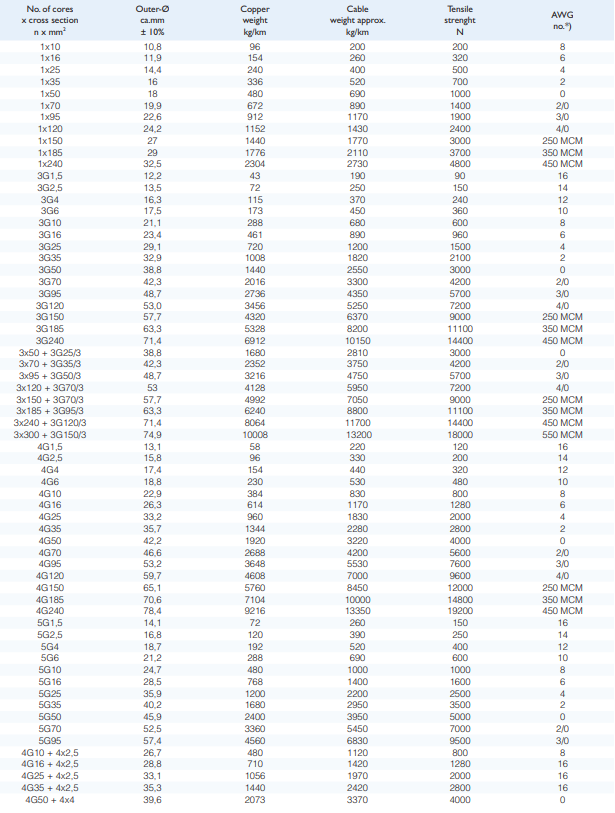
From three cores upwards, a green-yellow protective earth wire is included. Cables with six or more cores use black insulation with white consecutive numbering for clear identification. The datasheet also lists detailed mechanical data including outer diameter (±10% tolerance), copper weight per kilometre, total cable weight per kilometre, and tensile strength for each standard part number. Examples include 7G1.5 at 17.5 mm outer diameter, 101 kg/km copper weight, 380 kg/km total weight, and 210 kg tensile strength; and 4G95 at 57.4 mm outer diameter, 4560 kg/km copper weight, and 9500 kg/km total weight. Hybrid designs such as 4G25+7×1.5 control cores and 3×95+2G50/2+24 fibre optic cores are also available to match combined power, signal, and communication needs.
Layer-by-Layer Construction: Engineering for Dynamic Loads
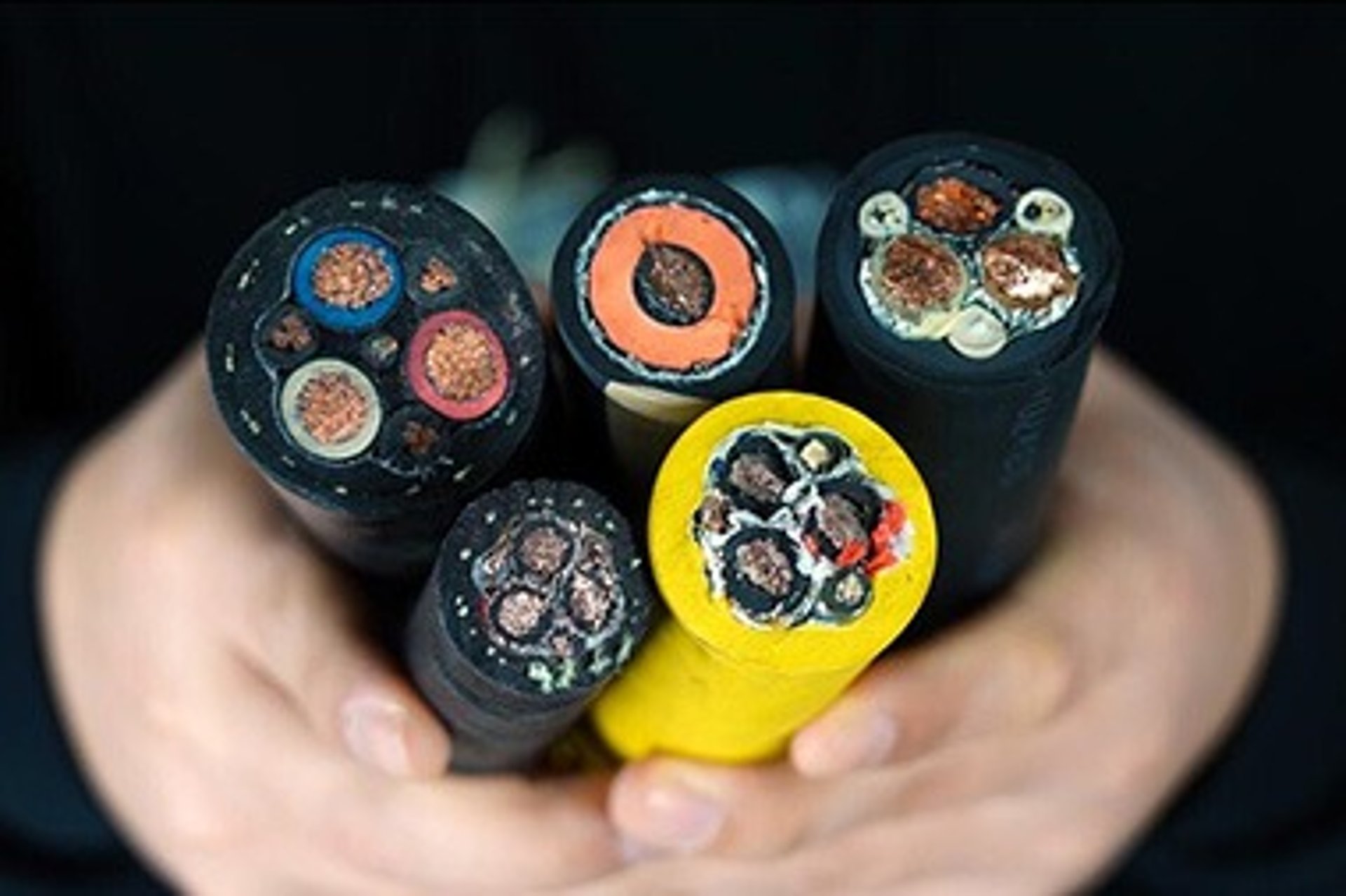
Full Structure Breakdown from Inner to Outer
Every layer is selected and positioned to address one or more of the five main failure modes seen in reeling applications: tensile breakage, torsional distortion, bending fatigue, internal abrasion, and environmental attack.
Conductor: Flexible tinned copper, Class 5 fine-stranded according to IEC 60228 and DIN VDE 0295. This design prioritises both high conductivity and extreme flex life, while the tin plating creates a stable surface that resists corrosion from mine water, salt spray, and oil contamination.
Core insulation: EPR (Ethylene Propylene Rubber) compound conforming to DIN VDE 0207. This material provides reliable electrical isolation, maintains elasticity at high temperatures, and resists chemical attack better than standard rubber or PVC alternatives.
Core identification: Coloured insulation for up to five cores; black insulation with white sequential numbering for six cores and above; green-yellow earth wire included from three cores as required by safety standards.
Stranding: Layered stranding with short lay-length. This reduces relative movement between cores during bending and minimises internal friction and fatigue.
Wrapping: Non-woven textile tape applied over the cabled cores. This acts as a buffer to prevent direct contact and abrasion between core insulation and the inner sheath layer.
Inner sheath: EPR rubber type GM1B according to DIN VDE 0207. This layer holds the cabled cores together evenly, provides secondary mechanical protection, and ensures consistent compression across the full cross-section.
Anti-twist support layer: High-tenacity textile braid positioned between the inner and outer sheath. This is the key differentiator that neutralises torsional forces and carries the majority of tensile load during reeling.
Outer sheath: Black PCP (Polychloroprene / Chloroprene) rubber compound, matching RAL 9005. This delivers outstanding resistance to abrasion, oil, ozone, UV radiation, and weathering while remaining flexible at low temperatures.
Why This Structure – Not a Simpler Design
Standard cables typically place all mechanical stress directly on the copper conductors and rely on a single outer sheath for protection. In reeling service, this creates three critical problems: tension pulls and snaps the fine copper strands; repeated winding twists the cable into a corkscrew shape that tears insulation and splits the sheath; and constant bending causes internal cores to rub against each other until they fail. The NSHTÖU design eliminates these issues by separating functions: conductors carry current but almost no tension; the braid handles twisting and pulling; the rubber layers manage bending, sealing, and chemical defence. No single component is overloaded beyond its design purpose.
Material Science and Engineering Principles Behind the Design
Conductor: Balancing Conductivity and Flex Fatigue
Class 5 fine-stranded construction distributes bending stress across thousands of thin individual wires instead of concentrating it on a small number of thicker strands. This increases flex fatigue life by four to five times compared to Class 2 solid or coarse-stranded conductors, which are intended for fixed installation rather than repeated movement. Tinning the copper prevents oxidation and galvanic corrosion when the cable is exposed to salt, acidic mine water, or oil – a critical advantage in coastal ports and underground workings where bare copper would degrade rapidly.
EPR Insulation and GM1B Inner Sheath: Elasticity Under Heat and Voltage
EPR rubber has a fully saturated polymer backbone with no carbon-carbon double bonds, so ozone, UV light, and mineral oils cannot easily break its molecular structure – unlike natural rubber or styrene-butadiene rubber, which harden, crack, or swell significantly under the same conditions. Its dielectric constant remains stable at around 2.3, which suppresses partial discharge and water tree formation even when the cable is flexed repeatedly. It also retains its elasticity at continuous temperatures up to 90°C, so it does not become brittle or lose its insulating properties as it ages. The GM1B inner sheath uses a similar EPR base to maintain consistent pressure on the cabled cores, preventing uneven deformation that could lead to localised stress concentrations.
Short Lay-Length Stranding: Reducing Internal Wear
The lay length – the distance required for one core to complete a full turn around the cable axis – is kept short, typically no more than eight times the overall diameter of the cabled core assembly. This limits the relative movement between individual cores during bending to less than 40% of what occurs with standard long-lay stranding. Less movement means less friction, less abrasion on insulation surfaces, and a greatly reduced risk of cores bunching together and creating uneven stress points.
Textile Anti-Twist Braid: The Most Critical Differentiator
The braid is applied at a helix angle between 45 and 60 degrees relative to the cable axis. When the cable is twisted during winding, this geometry converts incoming torque into balanced axial forces that cancel each other out, rather than transmitting the twist through to the cabled cores. High-strength textile fibres also carry more than 90% of the pulling tension applied during reeling, so the copper conductors are relieved of almost all tensile load – eliminating the most common cause of cable breakage in reel systems. This design meets the DIN VDE 0250 Part 814 requirement for torsion self-limiting performance, keeping residual twist within ±25° per metre and preventing permanent corkscrew distortion.
PCP Outer Sheath: Chemical and Mechanical Defence
Chloroprene rubber features strong carbon-chlorine bonds that resist swelling and degradation from diesel, hydraulic oil, grease, and most common industrial chemicals. It balances high tear strength (above 20 N/mm) with low abrasion loss, so it withstands contact with steel reel edges, abrasive mine dust, and rough ground without chipping or tearing. It also blocks UV and ozone attack, making it suitable for year-round outdoor use in South Africa’s high-sun climate. Its flame-retardant and self-extinguishing properties meet international safety standards, reducing fire risk in underground mines and port facilities where spilled fuel or hot work is present.
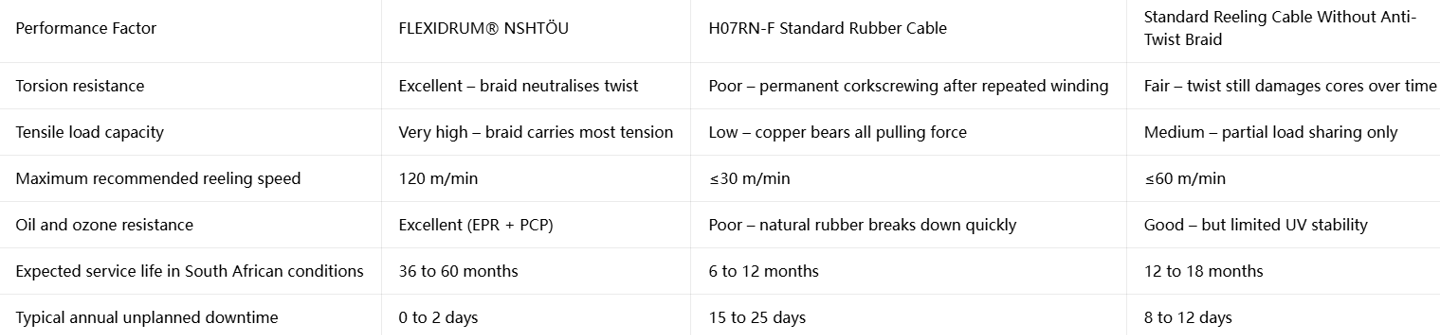
Performance Comparison: NSHTÖU Versus Standard Industrial Cables
Head-to-Head Against Common Alternatives
Why Standard Cables Fail Where NSHTÖU Succeeds
Standard cables are designed for static installation or slow, occasional movement. When used on high-speed reels, every winding cycle adds small amounts of twist and tension that accumulate until the cable fails catastrophically. Maintenance teams often find that standard cables appear fine on installation but begin to split conductors, tear sheaths, or jam reels within months. NSHTÖU eliminates this cumulative damage by design, so it maintains consistent performance even after hundreds of thousands of winding cycles.
South African Industry Context and Real-World Case Studies
The Unique South African Operating Environment
South Africa hosts some of the world’s largest open-pit and underground mines, producing iron ore, manganese, platinum group metals, and coal. It also operates major bulk export terminals at Richards Bay and Saldanha Bay. Equipment here faces extreme conditions: summer temperatures above 40°C, intense UV radiation, coastal salt spray, acidic mine water, heavy abrasive dust, frequent hydraulic oil leaks, and round-the-clock continuous operation. Motorised cable reels and festoon systems are standard on bucket-wheel reclaimers, mobile conveyors, stacker-reclaimers, ship loaders, and unloaders – but most installations have historically relied on standard H07RN-F cables that last just six to twelve months before needing full replacement.
Case Study 1: Richards Bay Bulk Terminal – Transnet Upgrade (2024)
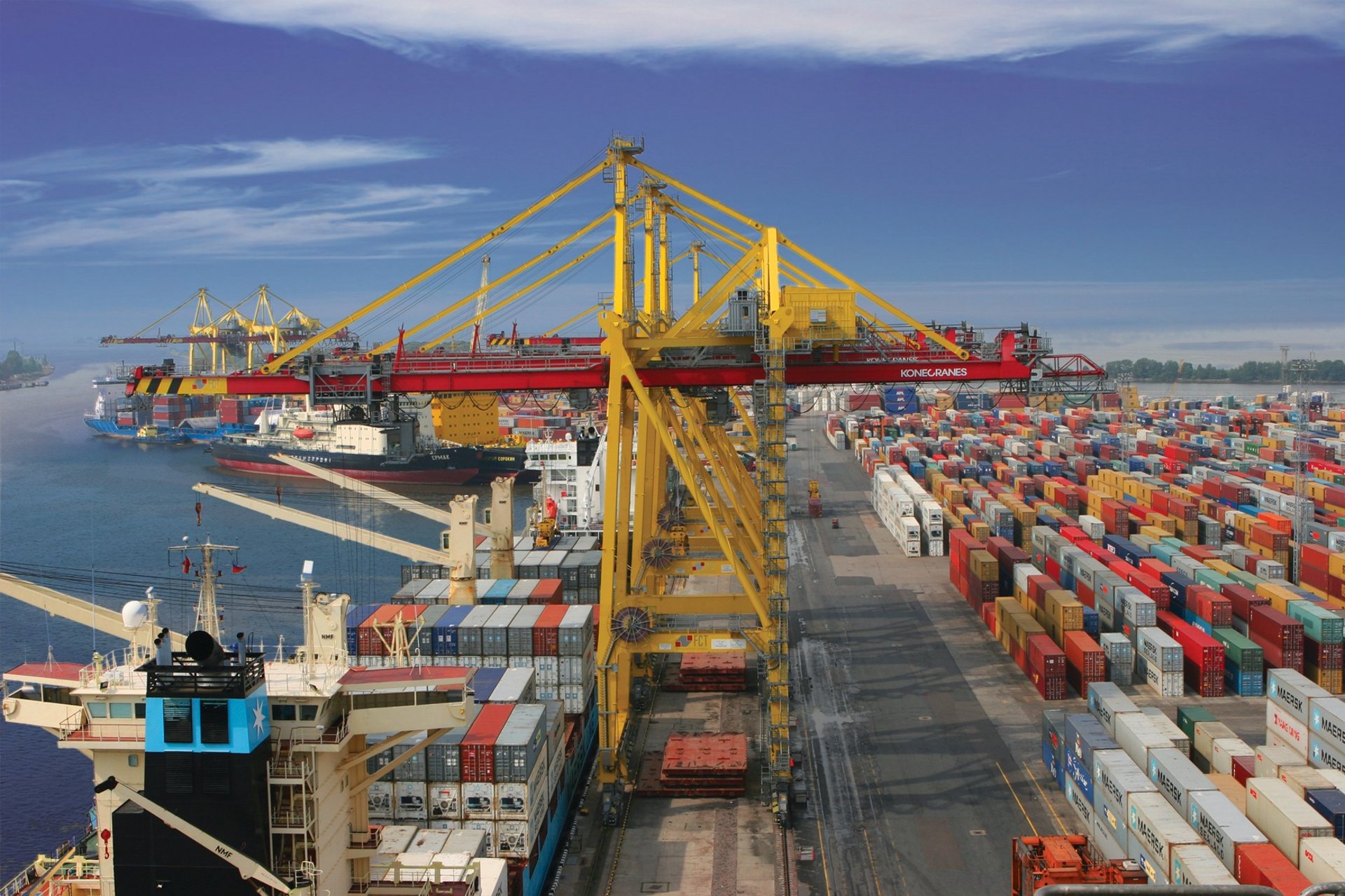
In 2024, Transnet Port Terminals completed a retrofit of four 12,000 tonnes per hour ship unloaders at the Richards Bay iron ore and coal terminal, replacing standard rubber cables with FLEXIDRUM® NSHTÖU in the 4G95+2×1.5 configuration. The original cables suffered frequent conductor breaks, sheath tearing, and reel jams caused by twisting, leading to unplanned stoppages that delayed vessel turnaround.
The operating parameters for the upgraded system included a travel length of 180 metres, reeling speed of 90 metres per minute, around 200 winding cycles each day, ambient temperatures ranging from -5°C to +45°C, and regular exposure to salt spray, iron ore dust, and hydraulic oil spills.
After 18 months of continuous operation, the results were clear: cable-related unplanned stoppages dropped from an average of eight per month to zero. Post-inspections showed no sheath cracking, no abrasion through to inner layers, and no conductor damage. Annual cable replacement and maintenance labour costs fell by approximately 72%, saving around R128,000 per unloader each year. The anti-twist performance also resolved long-standing issues with cables corkscrewing and jamming during angled reel entry, which had previously forced emergency shutdowns.
Case Study 2: Limpopo Platinum Mine – Mobile Conveyors
A major platinum operation in Limpopo Province deployed NSHTÖU across 12 mobile belt conveyors and continuous miner power supplies in 2023. Previously, standard reeling cables had an average service life of just eight months, and replacements required confined-space entry and hot work permits – adding safety risks and administrative delays to every maintenance job.
After switching to NSHTÖU, the average cable life extended to 36 months or more. The need for cable replacement work fell by roughly 75%, reducing both safety exposure and production interruptions. The mine also noted improved resistance to oil contamination and underground humidity, with fewer insulation resistance drops recorded during routine testing.
Industry Trends and Official Recognition
In 2025, the South African Institute of Mining and Metallurgy (SAIMM) published its Heavy-Duty Mobile Cable Selection Guide, which lists NSHTÖU as the preferred specification for open-pit stacker-reclaimers, bucket-wheel excavators, and long-travel reeling systems. The guide specifically highlights its unique combination of high tensile strength, anti-twist construction, and resistance to oil and weather – three requirements that no single standard cable class meets as effectively.
Ideal Applications and Operating Limits
Primary Use Cases
NSHTÖU is designed for continuous dynamic reeling and festoon service in:
Port and bulk handling: ship unloaders, stacker-reclaimers, gantry cranes, container handlers, bucket-wheel excavators
Mining and quarrying: mobile conveyors, drill rigs, surface shovel power feeds, underground shuttle cars
Heavy lifting and industrial processing: overhead cranes, shipyard gantries, ladle cranes, vertical hoists, temporary power reels
Infrastructure and renewables: solar tracker arrays, wind turbine service cranes, tunnel boring machine power feeds
Operating Limits
This cable is not intended for direct burial or fully static fixed installation – its design is optimised for repeated winding and unwinding. The minimum bending radius specified in DIN VDE 0298 Part 3 must be followed closely; tighter bends will increase internal stress and shorten service life.
Selection Guide and Feichun Equivalent Alternative
How to Choose the Right NSHTÖU Variant
Begin by matching conductor cross-section to the required current carrying capacity, referencing the copper weight and overall dimensions listed in the datasheet to ensure compatibility with reel drums and guide pulleys. Select the core configuration that meets your exact needs: standard power cores only, power plus control cores, or hybrid designs with integrated fibre optics for monitoring and communication. For travel lengths over 100 metres or reeling speeds above 60 metres per minute, the anti-twist and load-sharing features become especially critical – so confirm that the specification fully complies with DIN VDE 0250 Part 814.
Feichun Brand: Fully Equivalent Performance with Local Supply Benefits
Feichun NSHTÖU cables are engineered to exactly match the DIN VDE 0250 Part 814 standard, using the same Class 5 tinned copper conductors, EPR insulation, GM1B inner sheath, textile anti-twist braid, and PCP outer sheath construction. All key performance parameters – including 0.6/1 kV voltage rating, 120 m/min maximum speed, 250°C short-circuit resistance, oil resistance, and flame retardancy – align fully with the original Elettrotek Kabel specification, making it a direct, drop-in equivalent.
Additional advantages include purchase prices typically 30% to 40% lower without compromising compliance or durability, shorter lead times of 15 to 30 working days for Southern African orders, and full customisation for hybrid power, control, and fibre optic layouts to match mine or port requirements.
Frequently Asked Questions
Is NSHTÖU suitable for both horizontal festoon and vertical reel use?
Yes – the anti-twist and load-sharing design works equally well in both orientations, making it ideal for gantry travel and vertical hoist applications.
What is the difference between NSHTÖU and NSHTÖU-J?
The “J” suffix indicates inclusion of the green-yellow protective earth wire, which is standard on all NSHTÖU cables with three or more cores.
Can I use NSHTÖU in underground coal mines with high methane levels?
Yes – its flame-retardant and self-extinguishing properties meet relevant safety standards, and its long service life reduces the need for high-risk replacement work in gassy areas.
How does total cost compare over five years versus buying cheaper cables?
Even with a modest upfront premium, the longer life and fewer stoppages typically deliver a total saving of 40% to 60% over five years.
Can I add extra control cores or fibre optic lines to a standard build?
Yes – custom hybrid configurations are available, including combinations such as power cores plus signal pairs plus multi-mode or single-mode fibre optics.
What documentation is available for mine audit and tender compliance?
Full datasheets, test certificates, and compliance statements for DIN, CE, and RoHS standards are provided with every order.
Final Summary
FLEXIDRUM® NSHTÖU is not simply a stronger rubber cable. It is a complete engineering solution built to address the five biggest failure modes in reeling systems: tensile breakage, torsional distortion, bending fatigue, internal abrasion, and environmental degradation. Every material choice and structural detail is backed by proven science and strict standards, rather than incremental improvements to generic designs. In South Africa’s ports and mines, it consistently delivers three to five times longer service life, cuts unplanned downtime by more than 70%, and improves safety by reducing maintenance work in high-risk areas. While the initial purchase price is higher, the full lifecycle cost is significantly lower for critical assets. Feichun offers a fully compliant, cost-effective equivalent with faster delivery and flexible customisation for African projects.
For full datasheets, custom quotations, or technical support tailored to your specific reeling system requirements, contact the Feichun Cables team directly at Li.wang@feichuncables.com.


Email Address: Li.wang@feichuncables.com
© 2025. All rights reserved.
One-click to Quickly Contact
Products
Contact
Company
Location:
Building A Private Science and Technology Park, Hefei Economic and Technological Development Zone, Anhui Province, China
Heat Resistant Cable
WhatsApp: +86 17333223430
Social Media: