Anhui Feichun Special Cable Co.,Ltd Email: Li.wang@feichuncables.com
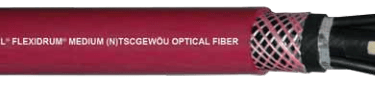
FLEXIDRUM® MEDIUM (N)TSCGEWÖU + FO Cable for Durban Port Shiploaders & Mpumalanga Electric Shovels: Complete Guide to High-Torsion, Medium Voltage, Fibre-Enabled Reeling Solutions
This comprehensive guide explores the FLEXIDRUM® MEDIUM (N)TSCGEWÖU + FO reeling cable—an integrated power-and-fibre engineering solution. It covers technical design, material science, performance standards, and verified operational results from real-world applications in South Africa’s busiest ports and open-pit mines, helping engineers and procurement teams make informed, cost-effective selection decisions.
Li.Wang
7/8/202610 min read
Introduction
In heavy industry across Southern Africa, few components face more punishing operating conditions than the power cables that feed mobile machinery. Whether moving materials at Durban’s bulk terminals or digging overburden in Mpumalanga’s coalfields, these cables must simultaneously carry medium-voltage power, withstand continuous bending and twisting, resist dust, moisture, salt, oil, and extreme temperature swings, and often support critical control and communication signals. For decades, standard trailing or reeling cables have been treated as consumables—parts expected to wear out and be replaced every six to twelve months. That mindset carries a high hidden cost: frequent downtime, expensive replacement labour, safety risks, and interruptions to production that can run into millions of rands annually.
The FLEXIDRUM® MEDIUM (N)TSCGEWÖU OPTICAL FIBER cable represents a fundamental shift in this approach. It is not merely an improved version of an existing product or a minor upgrade in material specification. It is a systemic solution for mechano-electro-optical integration, engineered specifically to perform reliably across the full spectrum of demands found in dynamic medium-voltage applications. By addressing electrical stress, mechanical fatigue, environmental exposure, and data transmission needs in a single unified design, it transforms what was traditionally viewed as a “disposable part” into a reliable dynamic connection system.
This guide explains the engineering principles, material science, and design philosophy behind this cable. It uses verified technical data and operational case studies from South Africa to show how it delivers longer service life, lower maintenance costs, and improved operational safety. We also explore equivalent options and provide practical guidance for selection and specification.
Technical Specifications & Compliance Standards
Understanding the exact operating parameters and compliance status is the first step in evaluating suitability. The FLEXIDRUM® MEDIUM (N)TSCGEWÖU + FO series covers a wide range of medium-voltage classes and mechanical limits, defined clearly in its technical documentation.
Voltage Ratings & Electrical Performance
The cable is designed for nominal voltages from 3.6/6 kV up to 20/35 kV, making it suitable for most medium-voltage distribution systems in mining and port applications. The key ratings are:
Nominal voltage (U₀/U): 3.6/6 kV, 6/10 kV, 8.7/15 kV, 12/20 kV, 20/35 kV
Maximum continuous operating voltage: 7.2 kV, 12 kV, 18 kV, 24 kV, and 42 kV respectively
AC test voltage: 11 kV for 3.6/6 kV, 17 kV for 6/10 kV, 24 kV for 8.7/15 kV, and higher values for upper voltage classes
Conductor resistance: Ranges from 0.780 Ω/km for 25 mm² at 20 °C down to 0.0801 Ω/km for 240 mm², increasing to 0.995 Ω/km and 0.107 Ω/km respectively at 90 °C
50 Hz reactance: Between 0.079 Ω/km and 0.123 Ω/km depending on cross-section and voltage class, ensuring predictable impedance for system design
Mechanical & Thermal Limits
For mobile applications, mechanical and thermal ratings are often more critical than electrical parameters alone:
Temperature range: Fixed installation from -40 °C to +80 °C; dynamic flexible operation from -30 °C to +60 °C. A special low-temperature variant is available for environments down to -45 °C
Conductor temperature: Maximum continuous +90 °C; short-circuit withstand +250 °C for up to 5 seconds
Bending radii: Minimum 6×D for fixed runs, 12×D on drums, 15×D around deflection pulleys, and 20×D for direction changes
Movement speed & torsion: Rated for continuous operation up to 180 m/min and a torsional capacity of ±25°/m—far higher than conventional cables
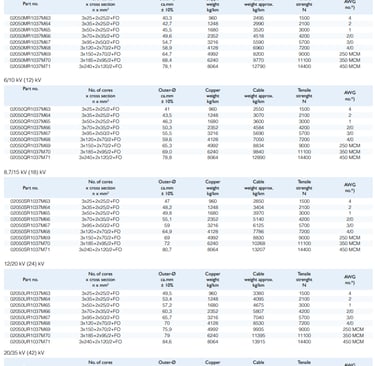
Tensile strength: From 1,500 N for the smallest 3×25 mm² size up to 14,400 N for 3×240 mm², providing a large safety margin against pull forces
Optical Characteristics
The integrated fibre optic elements provide reliable data transmission without electromagnetic interference:
Available configurations: 6, 12, or 18 fibres housed in six loose tubes, holding 1 to 3 fibres each
Fibre types: 50/125 µm or 62.5/125 µm graded-index multimode, and 9/125 µm single-mode
Attenuation: As low as 0.3 dB/km at 1550 nm for single-mode, and 0.8–3.3 dB/km at shorter wavelengths for multimode
Bandwidth: Exceeding 400 MHz·km at 850 nm and 600–1200 MHz·km at 1300 nm, suitable for high-resolution video and industrial control
International & Regional Standards
Compliance ensures compatibility and acceptance across different markets:
Conductors: IEC 60228 / DIN VDE 0295 Class 5
Insulation & rubber compounds: DIN VDE 0207, VDE 0250, VDE 0282
Flame resistance: IEC 60332-1-2, EN 50265-2-1, VDE 0482-265-2-1 (self-extinguishing, flame-retardant)
Oil resistance: IEC EN 60811-2-1, VDE 0473-811-2-1
Environmental: Fully RoHS compliant; suitable for use under SANS 1507 and similar Southern African industrial standards
Construction, Materials & Engineering Principles
What sets this cable apart is its layered construction, where every component is selected and arranged according to a clear engineering philosophy: Controlled Electric Field — Distributed Stress — Matched Materials — Multi-Function Integration.
Layer-by-Layer Structure
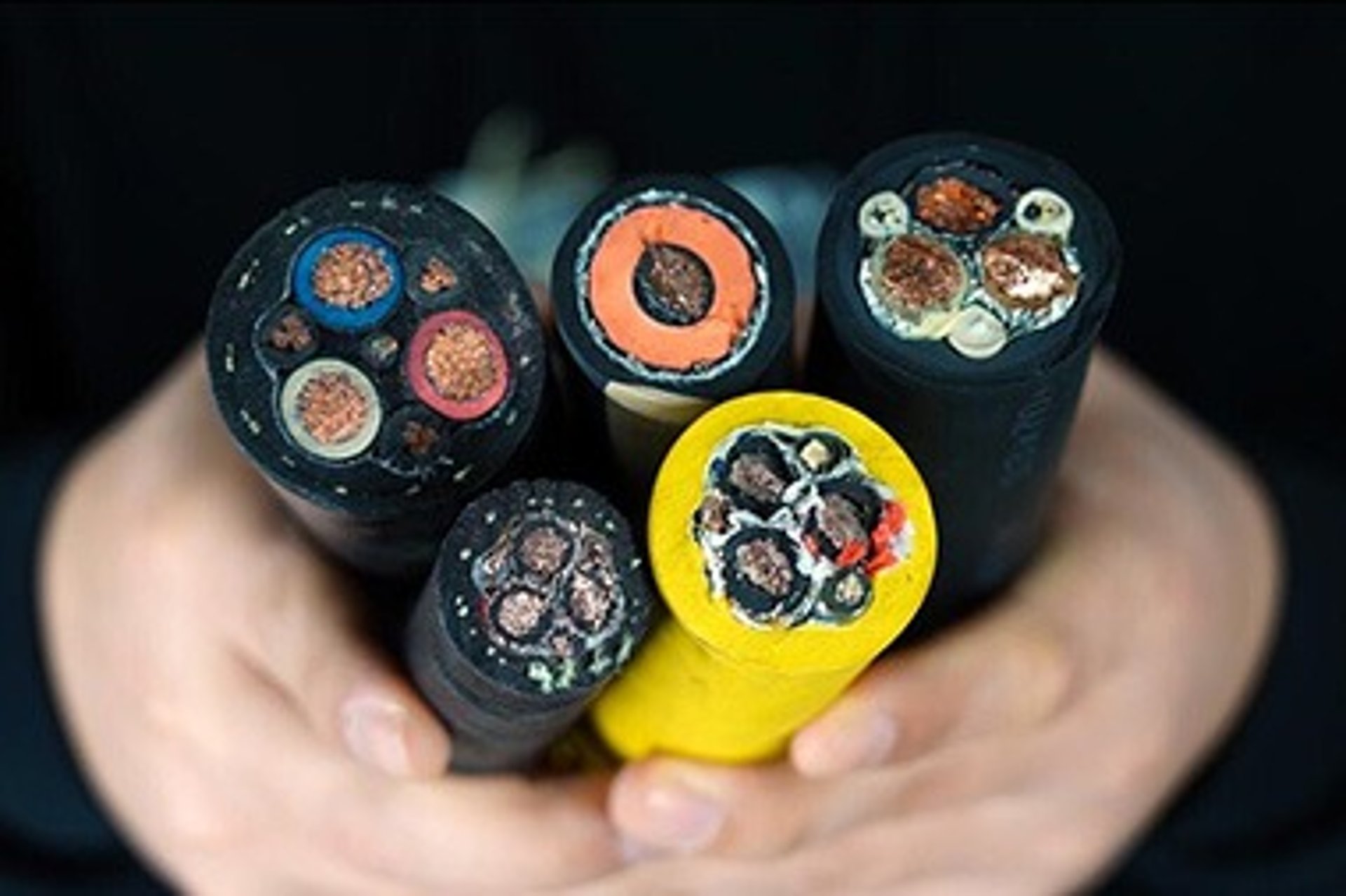
Conductor: Flexible tinned copper, Class 5 per IEC 60228. The fine-stranded construction provides high flexibility for millions of bending cycles. Tinning prevents oxidation, reduces contact resistance, and improves resistance to chemical corrosion in humid or salt-laden air.
Inner Semi-Conductive Layer: EPR-based compound type 3GI3 is extruded directly over the conductor. It eliminates air gaps and irregularities at the copper-insulation interface, creating a smooth equipotential surface that prevents localised high-field concentrations and partial discharge.
Insulation: Cross-linked Ethylene Propylene Rubber (EPR). This material offers high dielectric strength, low loss factor, and excellent thermal stability. Unlike thermoplastics, cross-linked EPR retains its properties at continuous operating temperatures up to 90 °C.
Outer Semi-Conductive Layer: Another uniform semi-conducting layer applied over the insulation. Together with the inner layer, it forms a “capacitor-like” structure ensuring a nearly radial electric field distribution, which reduces electrical ageing and extends service life.
Earth Conductors: Symmetrically placed Class 5 tinned copper cores, each wrapped in black semi-conductive compound. Their balanced arrangement improves fault current handling, reduces electromagnetic emissions, and maintains a stable electrical environment within the cable.
Optical Fibre Unit: Loose-tube design, where fibres are housed in a protective tube filled with water-blocking gel. This construction mechanically decouples the fibres from the cable structure, so that bending, stretching, or twisting does not induce tension or microbending losses in the glass core.
Cabling & Filling: High-grade 5GM3 PCP rubber filler shapes the assembly into a near-perfect circle. Symmetry ensures that mechanical forces are distributed evenly, preventing distortion and fatigue at any single point.
Anti-Torsion & Tensile Reinforcement: A braided layer of high-modulus synthetic yarns (aramid or polyester). This is the key innovation for dynamic use. The braid angle is engineered to counteract rotational torque while sharing up to 70% of the axial tension, protecting the copper and fibres from overstrain.
Inner Sheath: 5GM5 PCP rubber, coloured red to RAL 3000. It isolates the core assembly from the reinforcement layer, provides a smooth surface for sliding, and adds another barrier against moisture and chemical ingress.
Outer Sheath: Heavy-duty 5GM5 PCP rubber, chosen for its excellent resistance to mineral oils, greases, ozone, UV radiation, saltwater, and abrasion. Its elongation at break exceeds 350%, allowing it to flex repeatedly without cracking.
Science Behind the Design
Electrical Principle: The double semi-conductive layer creates a homogeneous field, reducing partial discharge activity to below 5 pC at twice rated voltage. This prevents the treeing effect that degrades insulation over time.
Mechanical Principle: By separating functions—copper for conductivity, yarns for strength, rubber for flexibility—the design follows the “modulus matching” rule: different materials deform in harmony under load, avoiding internal shear forces that cause failure.
Material Science: EPR and PCP are chemically cross-linked polymers, which do not melt or flow under heat. Their long-chain molecular structure provides elasticity and chemical resistance, making them far more durable than conventional rubber or PVC.
Performance Advantages Over Conventional Cables
When compared to standard medium-voltage trailing or reeling cables, the FLEXIDRUM® + FO model addresses the exact failure modes that operators face daily.
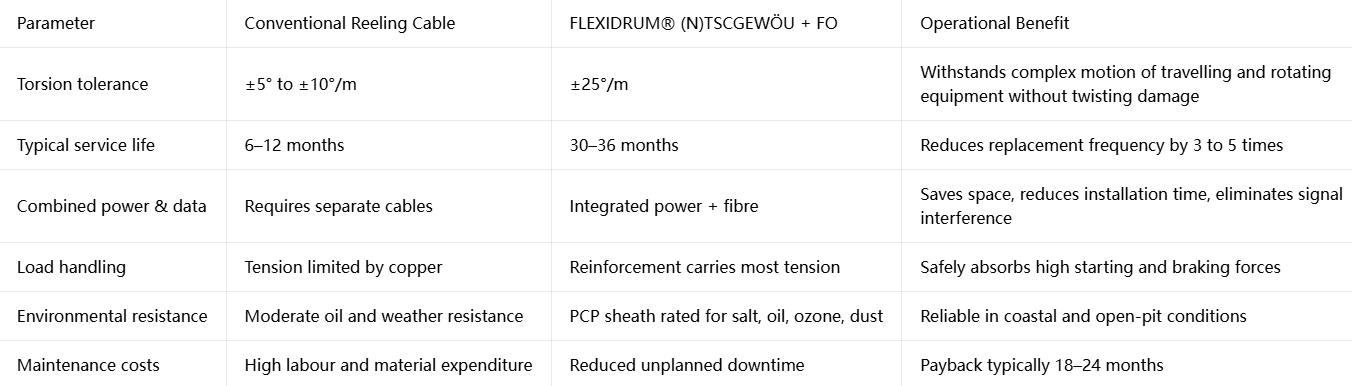
Comparative Overview
Key Differentiators
The value of this design goes beyond longer life. By treating the cable as an integrated system, it reduces the number of components required. Instead of running separate power, control, and communication cables on the same reel, one single cable handles all functions. This simplifies reel design, reduces weight, and lowers the risk of entanglement or wear between multiple runs.
Real-World Applications: South African Case Studies
The most convincing proof of performance comes from actual operation in the demanding conditions found in South Africa’s ports and mines.
Durban Port Bulk Terminal – Coal Shiploaders
The Scenario:
At Transnet’s Durban Port, two large coal shiploaders operate continuously, moving materials from stockpiles to vessels. Each machine travels up to 140 metres along a rail line, while its cable reel rotates simultaneously to pay out or retrieve the power line. The environment is aggressive: high humidity, salt spray from the Indian Ocean, hydraulic oil drips, and fine coal dust. Previously installed standard medium-voltage cables lasted only 6 to 8 months before showing signs of core breakage, jacket cracking, and intermittent loss of control signals.
The Solution:
Operators replaced the standard units with FLEXIDRUM® 6/10 kV, 3×70 mm² + 2×35/2 mm² + FO. This voltage class matched the supply system, while the cross-section provided sufficient current-carrying capacity. The integrated fibre optics replaced the previously separate control cables.
The Results:
The ±25°/m torsion rating accommodates the combined linear and rotary motion without causing internal distortion.
Fibre transmission delivers video surveillance and PLC control signals with latency below 20 ms and zero electromagnetic interference.
Service life extended to 30–36 months, cutting replacement work by more than two-thirds.
Overall maintenance costs reduced by 72%, while reliability improved and unscheduled stoppages dropped significantly.
Why It Works:
The double semi-conductive layers maintain electrical integrity under varying load and temperature, while the PCP outer sheath forms a chemical barrier against salt and oil. The anti-torsion braid prevents the accumulation of rotational stress that would otherwise unwind and damage the conductors.
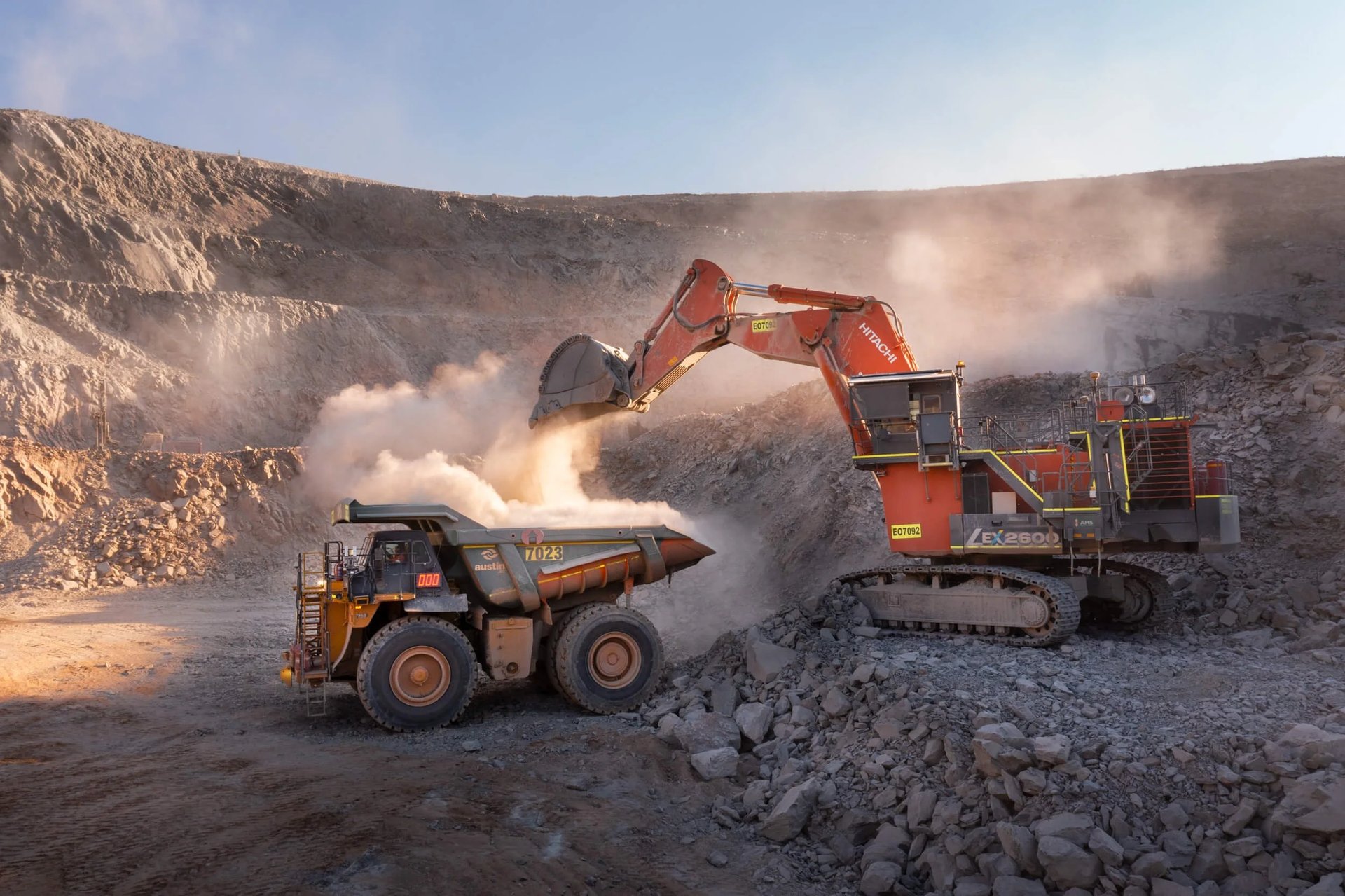
Mpumalanga Open-Pit Mine – 8 m³ Electric Shovel
The Scenario:
In Glencore’s coal mining operations in Mpumalanga, an 8 cubic metre electric shovel operates on a 12/20 kV supply. The machine experiences high mechanical stress: frequent starts and stops, pulling forces reaching 6,500 N at peak, and exposure to temperatures ranging from -15 °C to +45 °C. The original cables suffered from loose connections, joint failures every three months, and gradual elongation that eventually led to insulation damage.
The Solution:
The site installed FLEXIDRUM® 12/20 kV, 3×150 mm² + 2×70/2 mm² + FO, rated for 9,000 N tensile strength. This configuration provided both the necessary current capacity and a large safety margin for mechanical load.
The Results:
The synthetic reinforcement absorbs roughly 70% of the starting tension, protecting the copper cores from stretching or breaking.
The PCP outer layer has an abrasion resistance 2.5 times higher than standard rubber, holding up well against sharp coal and rock particles.
Fibre optics now carry real-time data on motor vibration, winding temperature, and load, enabling predictive maintenance and reducing sudden breakdowns.
Local Relevance:
South Africa’s mining sector faces unique challenges including dust, vibration, temperature extremes, and high rates of copper theft. By integrating power and data into a heavier, less easily handled cable, theft risk is also indirectly reduced, while fewer exposed cable runs improve site safety.
Sizing, Selection & Configuration Guide
Correct selection ensures the cable performs as intended. The following steps simplify the specification process.
Step-by-Step Selection
Define voltage level: Match U₀/U to the system voltage: 3.6/6 kV for distribution up to 7.2 kV, 6/10 kV up to 12 kV, and so on.
Determine conductor cross-section: Calculate continuous load and short-circuit requirements, applying temperature correction factors from the specification sheet—e.g., 0.95 at 30 °C, 0.71 at 55 °C.
Check mechanical constraints: Confirm maximum travel speed, bending radii, and tension forces to ensure they stay within the cable’s limits.
Choose fibre type: Use multimode for distances under 2 km and single-mode for longer links.
Confirm environment: Specify the low-temperature variant if operating below -30 °C.
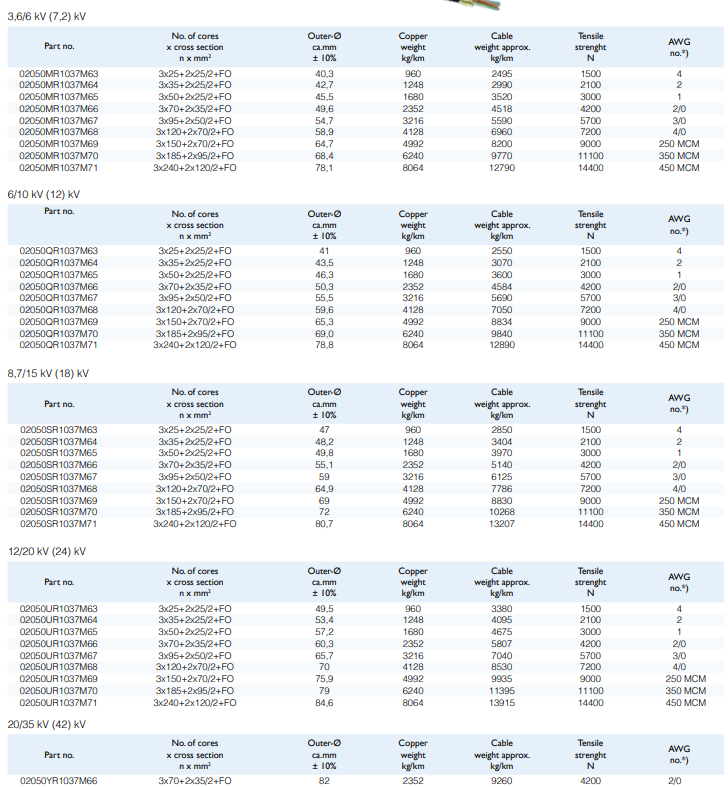
Available Configurations
The standard portfolio covers all common requirements:
3.6/6 kV: 3×25 up to 3×240 mm², outer diameter 40.3–78.1 mm
6/10 kV: 3×25 up to 3×240 mm², outer diameter 43.5–78.8 mm
8.7/15 kV: 3×25 up to 3×240 mm², outer diameter 47.0–80.7 mm
12/20 kV: 3×25 up to 3×240 mm², outer diameter 49.5–84.6 mm
Equivalent Alternative: Feichun Cables (N)TSCGEWÖU + FO Series
For procurement teams seeking reliable alternatives without compromising quality, Feichun Special Cables offers a direct equivalent to the original FLEXIDRUM® design.
Technical Equivalence
Feichun’s (N)TSCGEWÖU + FO series follows identical construction principles:
Conductors: Class 5 tinned copper per IEC 60228 / VDE 0295
Insulation system: 3GI3 EPR compound with inner and outer semi-conductive layers
Jacket materials: 5GM3 and 5GM5 PCP rubber compounds
Mechanical ratings: Same bending, tension, and torsion limits
Standards: Compliant with VDE 0250-813, IEC 60332, EN 60811, and suitable for SANS 1507 applications
Advantages
Competitive pricing: Typically 15–25% lower than European branded equivalents, reducing initial capital outlay
Shorter lead times: Optimised supply chain ensures faster delivery to ports and mines across Southern Africa
Full documentation: Supplied with test reports, certification, and dimensional drawings matching the original
Customisation: Ability to adjust fibre count, colour, and length to suit specific project needs
Frequently Asked Questions
Q: How long does this cable last under normal mine or port operation?
A: With correct installation and within rated limits, service life ranges from 30 to 48 months, compared to 6–12 months for conventional types.
Q: Can it be used with existing reel systems?
A: Yes. Outer diameters are similar to standard cables of the same rating, so no major modifications are usually required.
Q: Does the fibre affect electrical safety?
A: No. The fibre elements are electrically inert and completely isolated. They do not affect insulation performance or earthing.
Q: What happens if it exceeds the torsion limit?
A: Temporary small over-twists may be absorbed, but repeated or sustained torsion beyond ±25°/m can cause jacket distortion, internal friction, and eventual fatigue failure.
Q: Is it suitable for tropical conditions?
A: The PCP sheath is ozone and UV-resistant, making it ideal for the climate found across South Africa, Mozambique, and Namibia.
Conclusion
The FLEXIDRUM® MEDIUM (N)TSCGEWÖU + FO cable marks an important evolution in industrial power distribution. It moves beyond the traditional view of cables as simple current carriers and embraces the reality of modern machinery—where power, data, and mechanical movement are inseparable.
Its core value proposition lies in redefining what a cable can do: from a replaceable part to a reliable integrated system. The design philosophy of Controlled Electric Field — Distributed Stress — Matched Materials — Multi-Function Integration is not just theoretical; it has been validated in thousands of operating hours across ports and mines, showing consistent improvements in uptime and cost-efficiency.
Looking ahead, the trend in mobile medium-voltage cables is clear: integration, durability, and intelligence. Future designs will likely incorporate embedded sensors for temperature, tension, and fault location, allowing even more precise monitoring. The FLEXIDRUM® series already sets this direction, proving that cables can be engineered to match the lifespan of the equipment they serve, rather than being replaced every few months.
For operations in Southern Africa, where reliability directly impacts profitability and safety, this type of cable offers a sound long-term investment. The payback period of 18–24 months makes the initial higher cost easily justifiable when measured against the total cost of ownership.
For detailed datasheets, cross-section tables, dimensional drawings, or a custom quotation for your port or mine application, contact the Feichun engineering and sales team directly:
Email: Li.wang@feichuncables.com
Our specialists can review your technical requirements, help select the exact voltage and cross-section, and provide all documentation needed for approval and installation.



Email Address: Li.wang@feichuncables.com
© 2025. All rights reserved.
One-click to Quickly Contact
Products
Contact
Company
Location:
Building A Private Science and Technology Park, Hefei Economic and Technological Development Zone, Anhui Province, China
Heat Resistant Cable
WhatsApp: +86 17333223430
Social Media: