Anhui Feichun Special Cable Co.,Ltd Email: Li.wang@feichuncables.com
FG7ORPu TUNNELFLEX 0.6/1kV Mining and Tunneling Cable: How PUR Structure Prevents Mechanical Damage in South African Underground Mines
FG7ORPu TUNNELFLEX 0.6/1kV is not an ordinary flexible cable—it is a system-engineered solution combining electrical, mechanical, and materials science for mobile equipment power in South African coal, platinum, and gold mines. Learn how its PUR outer sheath and balanced design solve hydrolysis, fatigue, and overload failures, extending service life and reducing downtime.
Li Wang
6/29/20269 min read
Introduction
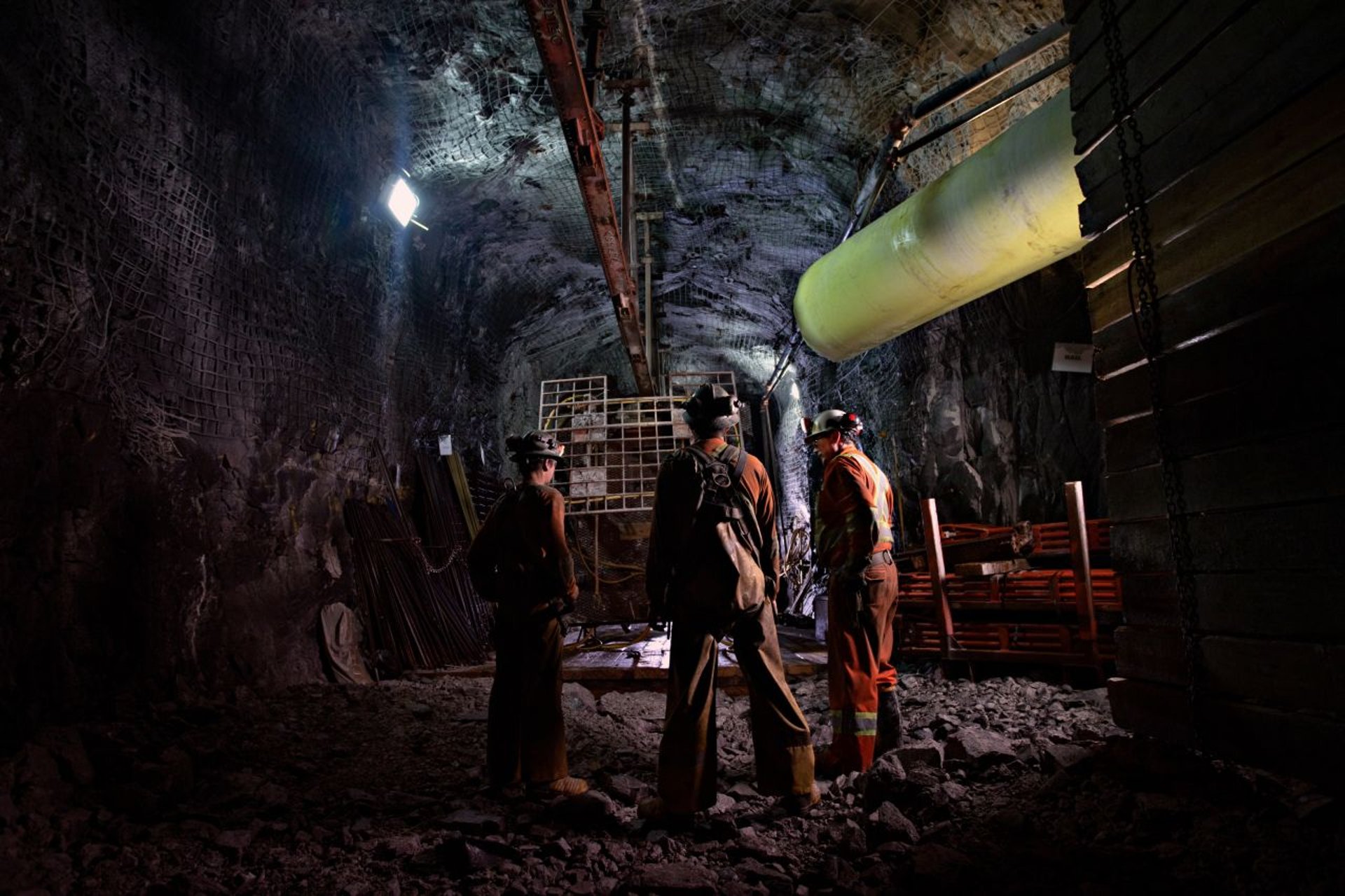
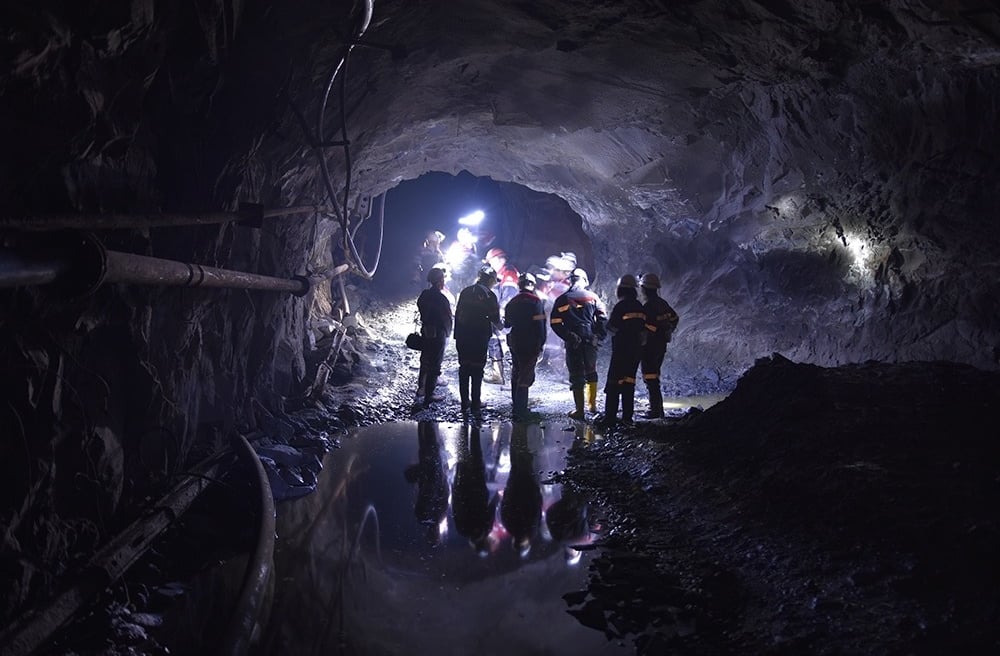
Underground mining and tunneling operations represent one of the most demanding environments for electrical power distribution. In South Africa, where deep-level mines often reach depths of 800 to 2,500 meters, conditions are extreme: constant high humidity ranging from 90% to 98%, exposure to groundwater, hydraulic oil, abrasive rock dust, and continuous mechanical stress from moving machinery. Mobile equipment such as longwall shearers, tunnel boring machines, load-haul-dump vehicles, and shuttle cars require reliable power supply, yet standard flexible cables frequently fail within 8 to 12 months due to a combination of mechanical wear, moisture ingress, chemical degradation, and electrical aging.
FG7ORPu TUNNELFLEX 0.6/1kV, manufactured by Prysmian Group, is designed specifically to address these challenges. Unlike conventional flexible cables, it is not simply a more robust version of standard FG7OR types—it is a fully optimized system that integrates principles from electrical engineering, mechanical design, and advanced materials science. This article explains how its unique construction, material selection, and operating limits enable it to withstand the triple threats of hydrolysis, fatigue, and overload, with proven performance in South African mining and tunneling projects.
Technical Overview and Standard Specifications
Electrical Ratings and Compliance
FG7ORPu TUNNELFLEX is rated at U₀/U = 0.6/1 kV, suitable for low-voltage distribution systems common in underground mining. Its maximum operating voltage is 1.2 kV, and it undergoes a factory acceptance test at 3.5 kV AC for five minutes to ensure dielectric integrity. It complies with international standards including IEC 60228 for conductor construction, IEC 60502‑1 for power cables, CEI 20‑22 II for flexible mining cables, and aligns with South African requirements under SANS 10197 for trailing and reeling applications.
Temperature performance is critical for reliability: the conductor is rated for a continuous maximum operating temperature of +90 °C, with a short-circuit limit of +250 °C for up to five seconds. Ambient temperature ranges are defined as -30 °C for fixed installations and -20 °C for dynamic flexing operations.
Size Range and Physical Parameters
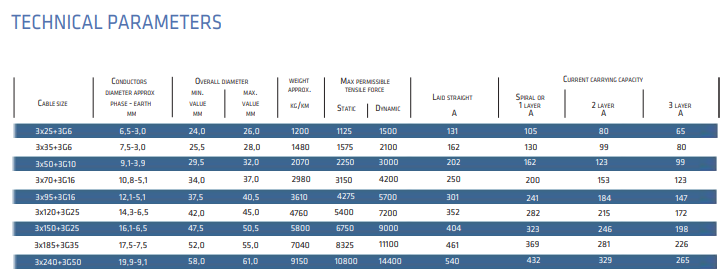
The standard configuration is 3 phase cores + 3 earth cores (3+3 design), which differentiates it from common 3+1 or 4-core cables. The cross-section range covers:
3×25 + 3G6 mm²
3×35 + 3G6 mm²
3×50 + 3G10 mm²
3×70 + 3G16 mm²
3×95 + 3G16 mm²
3×120 + 3G25 mm²
3×150 + 3G25 mm²
3×185 + 3G35 mm²
3×240 + 3G50 mm²
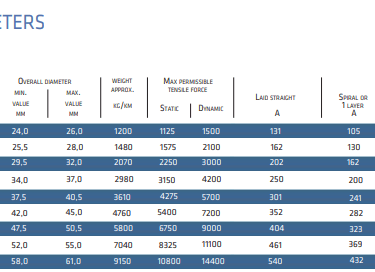
Key physical and electrical data for each size includes overall diameter, weight, maximum static and dynamic tensile strength, and current-carrying capacity in free air, two-layer, and three-layer installations. For example, the 3×240+3G50 variant has an outer diameter of 58–61 mm, weighs approximately 9,150 kg/km, supports a static tensile load of 10,800 N and a dynamic load of 14,400 N, and carries 540 A in free air, 432 A in two layers, and 329 A in three layers.
Operating Boundaries
FG7ORPu TUNNELFLEX is engineered for single-plane bending only, with a maximum travel speed of 60 meters per minute. This limitation is not a weakness but a design choice: it ensures that bending and tensile forces remain predictable and uniform, avoiding the complex shear stresses caused by multi-directional twisting. Minimum bending radii are specified as 6× overall diameter for fixed routing and 10× diameter when reeling or unwinding from drums.
Current ratings must be adjusted for ambient temperatures above or below 30 °C using correction factors: 1.10 at 20 °C, 1.05 at 25 °C, 0.95 at 35 °C, 0.89 at 40 °C, 0.84 at 45 °C, and 0.77 at 50 °C.
Detailed Structure and Materials Science
Layer-by-Layer Construction
From the center outward, the cable follows a balanced, purpose-built architecture:
Phase Conductors: Plain annealed copper, Class 5 flexible per IEC 60228, constructed from fine strands to maximize flexibility and resistance to fatigue. Insulation is a special cross-linked polyethylene (XLPE) compound, colored brown, black, and grey for phase identification.
Earth Conductors: Same Class 5 copper construction, three cores placed symmetrically within the gaps between phase conductors. Insulation is also XLPE, colored yellow-green to indicate protective earth.
Inner Sheath: Extruded from a flexible, high-grade PVC compound, which acts as a buffer, holds the core assembly in shape, and distributes internal stresses evenly.
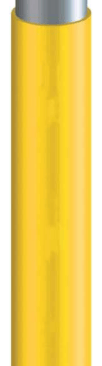
Outer Sheath: The most critical component—hydrolysis-resistant polyurethane (PUR), specially formulated for mining service, colored bright yellow for easy visibility and inspection.
Electrical Principles Behind Design
The choice of Class 5 copper conductors follows fundamental electrical and mechanical principles. Fine stranding reduces electrical resistance while allowing the cable to bend repeatedly without breaking individual wires. XLPE insulation offers significantly better thermal stability than PVC or ethylene-propylene rubber (EPR): its cross-linked molecular structure enables continuous operation at 90 °C, raising current-carrying capacity by 20–30% compared to 70 °C-rated materials. XLPE also has a higher dielectric strength (≥25 kV/mm), lower dielectric loss, and greater resistance to chemical ingress, ensuring long-term insulation integrity.
Mechanical Design and Stress Distribution
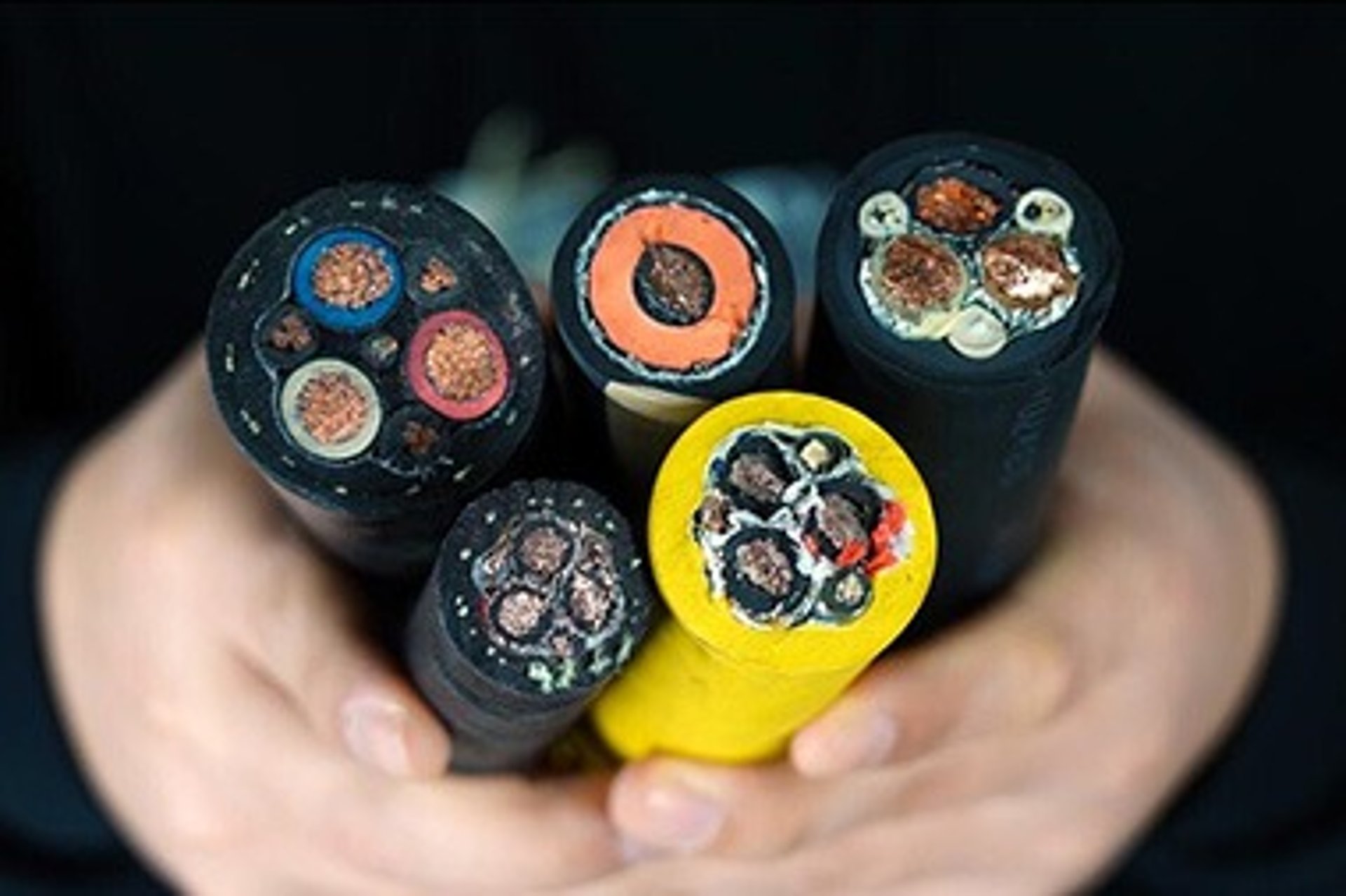
The 3+3 core arrangement is a key engineering feature. Instead of placing all earth cores in one location, they are positioned in the interstices between phase conductors. This creates a symmetrical cross-section that equalizes bending, tension, and compression forces during movement. In standard 3+1 cables, the single earth core often becomes a weak point where stress concentrates, leading to fatigue and breakage. With three earth cores, the load is shared, and the cable maintains its round shape even after thousands of bending cycles.
The double sheath system follows the principle of "soft inner, tough outer." The flexible PVC inner sheath absorbs minor shocks and prevents abrasion between insulated cores, while the PUR outer sheath provides the primary mechanical protection. This layered approach creates a gradient of stiffness that reduces stress concentration at the surface, extending the cable’s fatigue life.
Material Science: Why PUR Makes the Difference
Polyurethane is a thermoset polymer with a molecular structure featuring strong urethane linkages. This gives it unique properties compared to standard PVC or rubber:
Abrasion and tear resistance: PUR is 4–6 times more resistant to wear than PVC, critical when dragged over rock, steel, or wet concrete.
Hydrolysis resistance: The specially modified compound used in TUNNELFLEX resists breakdown in warm, humid conditions. Unlike ordinary PUR, which can degrade rapidly in continuous moisture, this grade maintains more than 90% of its mechanical properties after 1,000 hours at 85 °C and 95% RH.
Oil and chemical resistance: It repels hydraulic fluids, greases, and alkaline mine water, preventing swelling or cracking.
Flexibility at low temperatures: Remains supple down to -20 °C, avoiding the brittleness that causes PVC to shatter in cold galleries.
In South African deep mines, where moisture and oil are always present, the switch from standard rubber/PVC cables to PUR-jacketed cables eliminates the "hydrolysis‑fatigue‑overload" cycle that causes most failures.
Performance Advantages and Engineering Value
Electrical Performance
The combination of Class 5 copper and XLPE insulation delivers stable, predictable electrical performance. The higher thermal rating means that for the same cross-section, the cable can carry more current without overheating. This reduces the risk of insulation thermal runaway and extends the service life. The low capacitance and dielectric loss of XLPE also reduce reactive power consumption and heating, which becomes significant in long trailing circuits up to 300 meters or more.
Mechanical Endurance
Tensile strength values confirm its suitability for dynamic use: the 3×70+3G16 cable supports 3,150 N static and 4,200 N dynamic load, while the largest 3×240+3G50 handles 10,800 N and 14,400 N respectively. In single-plane bending tests, TUNNELFLEX completes over one million cycles without visible damage or increase in conductor resistance—far exceeding the 100,000–200,000 cycles typical of standard FG7OR cables.
Environmental Durability
In South African mines, the environment is a constant chemical and mechanical challenge. High humidity, water with dissolved minerals, and oil leakage from machinery create conditions where PVC absorbs moisture and becomes brittle, while ordinary rubber swells and loses strength. PUR, by contrast, acts as an impermeable barrier, preventing moisture from reaching the insulation and conductors. Field data shows that while conventional cables last 8–12 months, TUNNELFLEX remains in service for 4–5 years under identical conditions.
Balanced Engineering: More Than Just a Tough Jacket
The true value of FG7ORPu TUNNELFLEX lies in its balance. Increasing jacket thickness alone would reduce flexibility and raise bending stress. Using a harder material would make the cable too stiff to reel. Instead, the design optimizes every component: conductor flexibility, insulation heat resistance, core geometry, inner cushioning, and outer protection. The result is a system where no single part is overworked, and the cable operates within its material limits throughout its life. This balance translates directly into lower maintenance frequency, fewer unplanned stops, and higher reliability—key factors for profitability in mining operations.
Application and Field Experience in South Africa
Typical Mining and Tunneling Scenarios
In South Africa, the mining sector is dominated by deep-level gold, platinum, and coal mines, plus large infrastructure tunneling projects. FG7ORPu TUNNELFLEX is widely used for:
Longwall mining: Powering shearers and armored face conveyors, where cables move back and forth continuously.
Boring and drilling: Supplying TBMs and jumbos that advance up to 50–60 meters per day.
Haulage systems: Powering shuttle cars and LHDs moving along fixed tracks, requiring reeling and unreeling at up to 55 m/min.
The Local Failure Challenge
A 2022 review across several Gauteng and Free State mines found that conventional trailing cables accounted for up to 35% of all electrical equipment failures. Costs reached R400,000–R500,000 per month for replacements alone, with production losses adding millions more. Root causes were identified as: hydrolysis of PVC jackets, fatigue breakage of single earth cores, and abrasion from dragging. The environment was described as "triple stress": high humidity + oil contamination + dynamic bending.
Case Study: Anglo American Platinum Mines
At Anglo American’s narrow-vein platinum operations in the Bushveld Complex, depths exceed 1,200 meters, and galleries are often narrow, forcing tight bends and frequent reeling. Before switching to TUNNELFLEX, standard FG7OR cables needed replacement every 9–10 months. After installation of FG7ORPu TUNNELFLEX, performance changed dramatically:
Service life extended to 4.5 years
Electrical faults reduced by 85%
Monthly replacement costs fell by more than 70%
Production downtime due to cable issues dropped from 12–15 hours per month to less than 2 hours
The cable also met SANS 10197 and CSIR safety certification, ensuring compliance with South African mining regulations. The mine’s engineering team noted that the yellow jacket made damage easier to spot during inspections, improving safety practices as well.
Application Boundaries Clarified
It is important to understand where TUNNELFLEX is most effective. It is ideal for:
Reeling systems on fixed tracks or in single-plane guides
Trailing cables moving along defined paths
Speeds up to 60 m/min
Temperatures from -20 °C to +90 °C
It is not recommended for:
Multi-axis twisting or complex torsional movements
High-speed applications exceeding 60 m/min
Heavy impact without mechanical protection
Fixed installations where a simpler FG7OR type may be more economical
Feichun Brand: Equivalent Alternative
Why an Equivalent Matters
While Prysmian TUNNELFLEX is a proven premium product, global supply chains can sometimes lead to long lead times, and pricing may be restrictive for large-scale projects. Many South African contractors and mines now look for fully compliant alternatives that offer the same technical performance at better availability and cost.
Feichun FG7ORPu Equivalent
Feichun Cables produces an equivalent FG7ORPu TUNNELFLEX cable that matches the original specification exactly:
Standards: IEC 60228 Class 5 conductors, XLPE insulation, PUR outer sheath, 0.6/1 kV rating, test voltage 3.5 kV
Construction: 3+3 core arrangement, flexible PVC inner sheath, hydrolysis-resistant PUR jacket
Performance: Identical bending radii, temperature limits, tensile strength, and current-carrying capacity
Certifications: ISO 9001, CE, IEC, and compliance with SANS 10197 for South African use
Key Advantages
Full interchangeability: Direct replacement for the original without modification to equipment or cable management systems
Shorter lead times: Stock and production capacity allow delivery within 4–6 weeks compared to 12–16 weeks for imported premium brands
Competitive pricing: Typically 20–30% lower in cost, reducing capital expenditure without compromising quality
Custom support: Available in any length and drum configuration, with full test reports and documentation for project approval
Selection Guidelines
When choosing between brands, engineers should confirm:
Voltage rating: 0.6/1 kV
Conductor class: IEC 60228 Class 5
Insulation: XLPE (not EPR or PVC)
Outer sheath: PUR hydrolysis-resistant, not standard PVC
Maximum speed: ≤60 m/min, single-plane bending only
Frequently Asked Questions
Q: Can FG7ORPu TUNNELFLEX be used in multi-directional bending?
A: No. It is optimized for movement in one plane only. Multi-axis twisting creates uneven shear forces that exceed the PUR jacket’s lateral strength, leading to early failure.
Q: Is PUR better than rubber for mining service?
A: Yes. Rubber swells and degrades in warm, moist, oily environments. PUR retains its mechanical strength, flexibility, and resistance to hydrolysis far longer, extending service life by 3–5 times.
Q: What is the correct ampacity at 40 °C?
A: Apply the correction factor of 0.89. For example, a cable rated 250 A in 30 °C free air will carry 222.5 A at 40 °C.
Q: Can Feichun cables replace Prysmian directly?
A: Yes. They follow the same design, materials, and testing standards, so no changes to installation or operation are required.
Q: Is this cable suitable for fixed installations only?
A: It can be used in fixed positions, but its real advantage is in dynamic service. For static use, standard FG7OR may be more economical.
Conclusion
FG7ORPu TUNNELFLEX 0.6/1kV represents a fundamental shift in how engineers approach power supply for mobile underground equipment. It is not just a thicker or harder cable—it is a system engineered to solve the specific failure modes found in South African mines: hydrolysis, fatigue, and overload.
By combining Class 5 copper conductors, 90 °C XLPE insulation, a symmetrical 3+3 core layout, and a hydrolysis-resistant PUR outer sheath, it achieves a balance between flexibility, electrical performance, and mechanical endurance. Field results confirm that it reduces maintenance costs, extends operational life, and minimizes downtime—critical factors for both safety and profitability in deep-level mining and tunneling.
For project managers, electrical engineers, and procurement teams, choosing the right cable means investing in reliability. Whether selecting the original Prysmian specification or the fully compliant Feichun equivalent, the technical principles remain the same: design for the environment, match materials to the stress, and operate within defined limits.
If you are planning a mining or tunneling project and need a reliable power solution for mobile equipment, contact the Feichun team for technical support, quotations, and delivery information: Li.wang@feichuncables.com. Provide details on cable size, length, operating speed, and ambient conditions to receive a tailored recommendation.

Email Address: Li.wang@feichuncables.com
© 2025. All rights reserved.
One-click to Quickly Contact
Products
Contact
Company
Location:
Building A Private Science and Technology Park, Hefei Economic and Technological Development Zone, Anhui Province, China
Heat Resistant Cable
WhatsApp: +86 17333223430
Social Media: