Anhui Feichun Special Cable Co.,Ltd Email: Li.wang@feichuncables.com
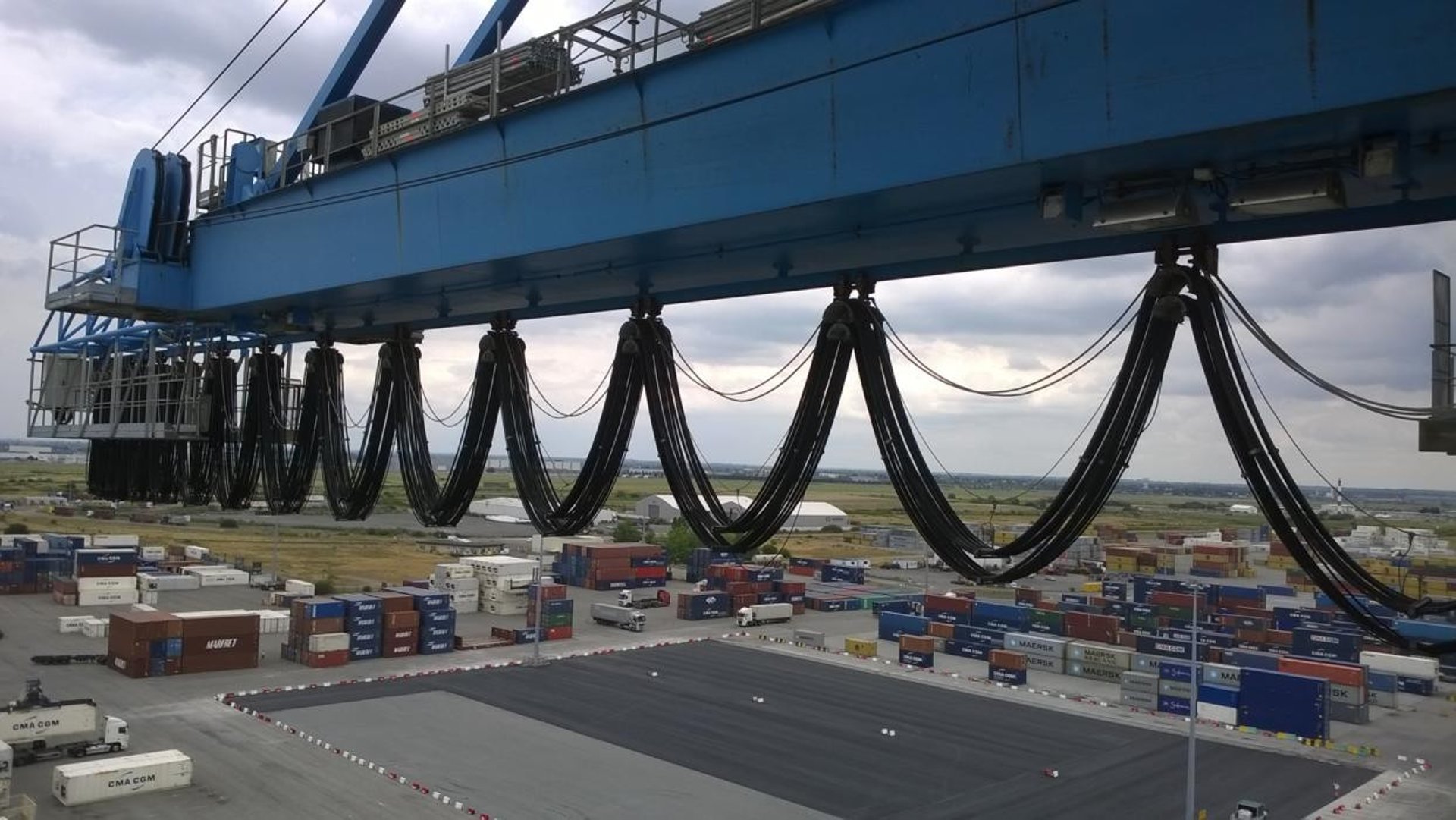
FESTOONFLEX C-PUR-HF D12YC11Y-J/O: Fully Screened PUR Cable for High-Dynamic Festoon Systems in South African Mines and Ports – Engineered for Extreme Bending, EMC Protection & Long-Term Reliability
For South African engineers, maintenance supervisors and procurement specialists: this article explores the design, material science, performance and real-world application of the FESTOONFLEX C-PUR-HF D12YC11Y-J/O, a screened festoon cable engineered to withstand the toughest operating conditions. Learn how it differs from standard cables, why it delivers longer service life, how it meets both European VDE and South African SANS standards, and how it performs in case studies from Richards Bay Port, Sishen Mine and Mogalakwena Mine. Also includes a comparison with the non-screened version and details on equivalent options from Feichun Cables.
Li.Wang
7/3/20269 min read
Introduction
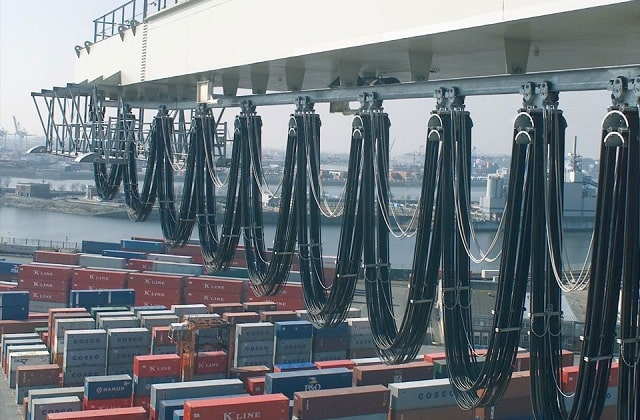
In heavy industry, the reliability of power and control cables directly determines operational efficiency and profitability. This is particularly true in South Africa, where large-scale mining, bulk material handling and port operations operate in some of the most demanding environments on the planet. Festoon systems, which deliver electrical power and control signals to moving machinery such as cranes, stacker-reclaimers and mobile conveyors, are subjected to continuous mechanical stress, wide temperature fluctuations, chemical exposure and increasing levels of electromagnetic interference.
A common misconception in the industry is that all flexible cables are interchangeable. Many operations initially select standard rubber or PVC cables, only to find that these products fail within six to twelve months due to conductor breakage, sheath cracking or signal instability. Such failures lead to unplanned downtime, increased maintenance costs and safety risks. To address these challenges, Prysmian developed the FESTOONFLEX C-PUR-HF D12YC11Y-J/O, a low-voltage screened round cable with a polyurethane sheath specifically engineered for festoon applications.
It is essential to understand that this cable is not simply the FESTOONFLEX PUR-HF D12Y11Y with an extra layer of shielding. Instead, it represents a fully integrated engineering solution, optimised across three core dimensions: mechanical reliability under dynamic motion, electrical stability in high-interference environments, and broad environmental adaptability. By combining advanced material science with precision structural design, it transforms the concept of a “static cable” into a component built for millions of bending cycles, delivering consistent performance over many years of service.
Basic Technical Profile and Standard Specifications
To fully appreciate the capabilities of this cable, it is useful to decode its designation and review its published ratings and compliance documentation. Every element of the model name indicates a specific design choice made to meet the demands of heavy-duty moving applications.
Model Decoding
C: Overall copper screen for electromagnetic protection
PUR: Polyurethane outer sheath material
HF: Halogen-free, low-smoke and flame-retardant formulation
D12: Special halogen-free polyester-based insulation compound
Y: Standard classification for thermoplastic elastomer sheath
C11: Tinned copper braid screen
-J/O: Configuration suffix; -J includes a protective earth conductor, while -O does not
Key Electrical and Mechanical Ratings
The cable is classified as a low-voltage type suitable for both fixed and dynamic installations:
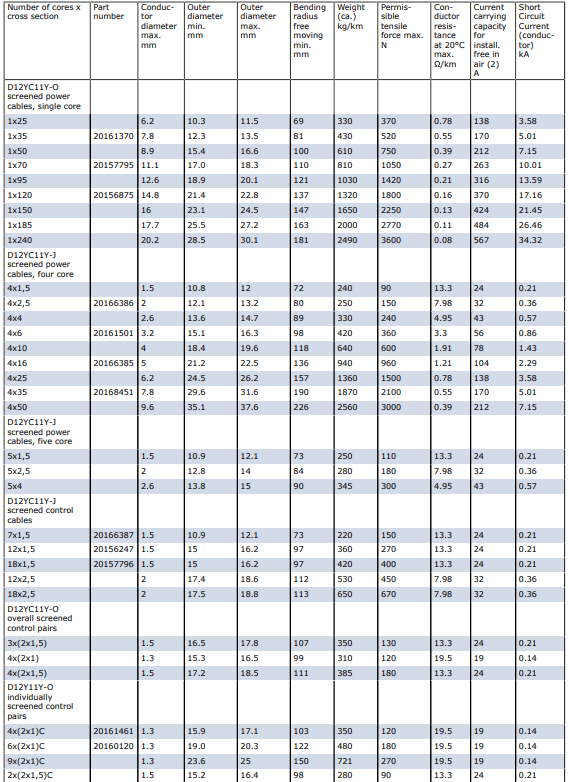
Nominal voltage: 0.6/1 kV AC; maximum operating voltage 0.7/1.2 kV AC, 0.9/1.8 kV DC
Test voltage: 4 kV AC applied for 5 minutes during production
Conductor cross-section range: 0.75 mm² to 70 mm²
Core count: Available from 2 to 37 cores, suitable for combined power and control circuits
Temperature range:
Fixed installation: -50°C to +80°C
Dynamic bending: -40°C to +80°C
Maximum continuous conductor temperature: +90°C
Short-circuit temperature: Up to +250°C for limited duration
Mechanical limits:
Minimum bending radius: 6 × cable outer diameter
Maximum allowable tensile load: 15 N/mm²
Maximum operating speed: 210 m/min
Current carrying capacity: Rated per IEC 60287, for free air installation at 30°C ambient temperature
Compliance and Certification
The cable conforms to a comprehensive set of international and local standards, making it suitable for use in South Africa and across Europe:
Construction and electrical performance: VDE 0295, HD 22.2, IEC 60228, IEC 60502-1
Fire and safety: IEC 60332-1, EN 50267, IEC 60754-1/2
South African alignment: SANS 60228 for conductor dimensions, SANS 10142-1 for electrical installations and mining safety requirements
Structure Design and Material Science: Built for Motion
The construction of the FESTOONFLEX C-PUR-HF D12YC11Y-J/O follows a logical progression from the innermost current-carrying element to the outermost protective layer. Each material and structural detail is selected based on the physical and electrical demands of festoon service, creating a system where every component contributes to overall performance.
Layer-by-Layer Construction
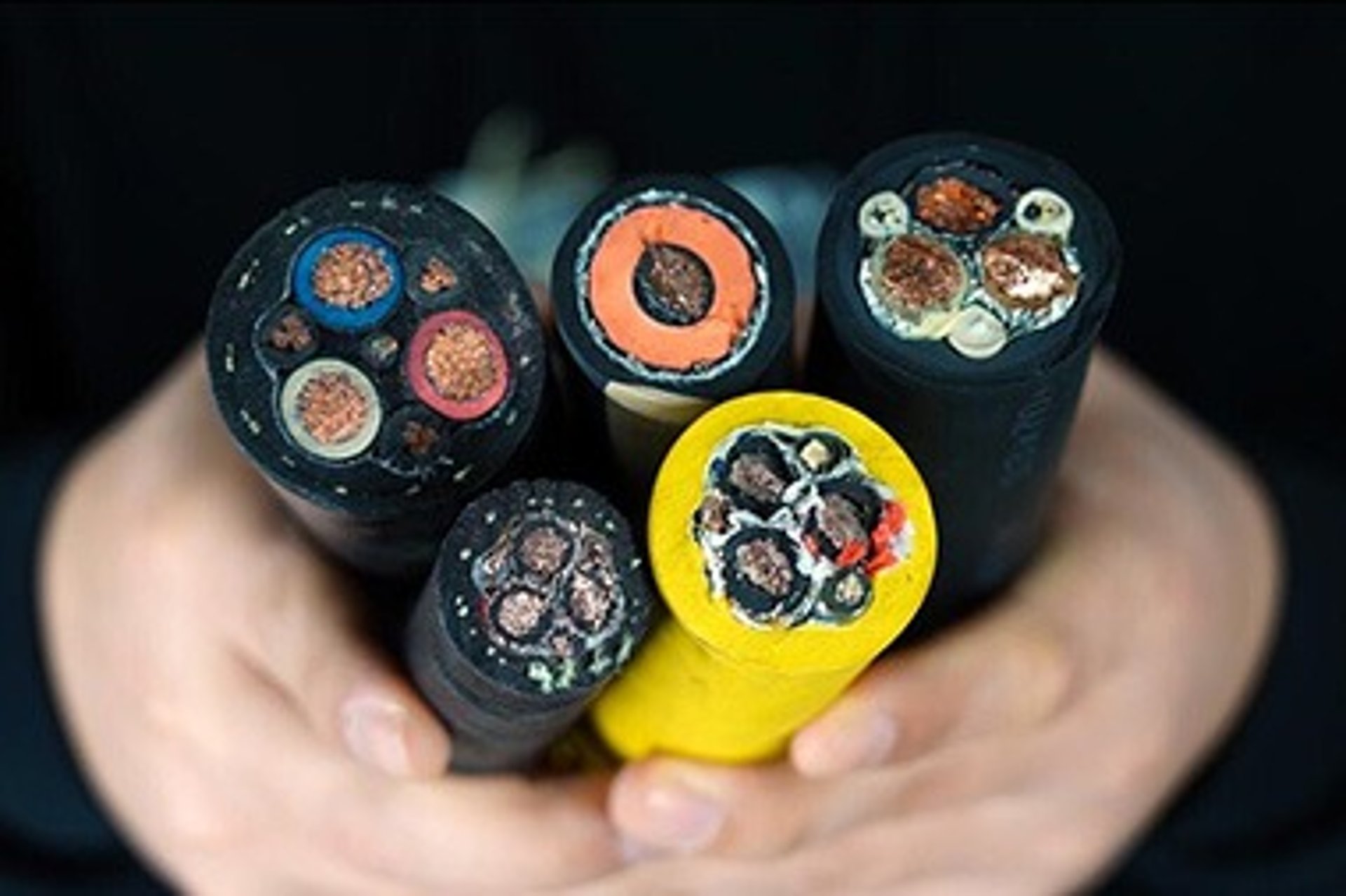
Conductor: Fine-stranded bare or tinned copper, manufactured to IEC 60228 Class 5 and VDE 0295 standards.
Mechanical principle: Smaller strands reduce bending stress by distributing deformation across the entire cross-section. This prevents the formation of fatigue cracks that would occur in solid or coarse-stranded conductors. Tinning improves oxidation resistance and compatibility with termination hardware.
Insulation: D12 halogen-free polyester elastomer.
Electrical principle: Offers stable dielectric properties across the full temperature range, maintaining consistent insulation resistance and low electrical loss.
Material benefit: Remains flexible at low temperatures, bonds well with adjacent layers, and does not degrade under thermal cycling.
Cabling and filling: Insulated cores are arranged in a reverse-lay configuration and filled with halogen-free elastic materials.
Structural principle: Balances torsional forces generated during movement, maintains a round cross-section, and prevents internal abrasion between cores.
Inner sheath: Thin layer of PUR-HF material.
Function: Separates the insulated core assembly from the screen, reducing friction and preventing individual braid strands from cutting into the insulation during repeated flexing.
Screen layer: Tinned copper braid with a coverage of 80% to 88%.
Electromagnetic principle: Operates as a Faraday cage, blocking external interference and containing internal electrical noise. Tinning improves conductivity, corrosion resistance and termination reliability.
Outer sheath: Abrasion-resistant PUR-HF thermoplastic polyurethane.
Material science: The molecular structure combines hard segments that provide strength, tear resistance and dimensional stability, and soft segments that deliver elasticity and flexibility. The halogen-free formulation ensures low smoke and non-corrosive emissions in the event of fire, while offering excellent resistance to oil, water, hydrolysis and ultraviolet radiation.
Design Philosophy
The cable is engineered around three fundamental pillars:
Mechanical reliability: The combination of Class 5 conductors, short lay lengths and elastic materials creates a structure that behaves like a spring. It absorbs and recovers from repeated bending, rather than resisting movement and accumulating fatigue.
Electrical reliability: The full copper braid ensures a low-impedance path for interference currents, protecting sensitive control systems from the noise generated by variable frequency drives and switching equipment.
Environmental adaptability: The selection of halogen-free insulation and PUR-HF sheath ensures consistent performance across extreme temperatures, chemical exposure and outdoor weathering.
Core Advantages: Not Just “Add a Screen”
The most important distinction to make is that the FESTOONFLEX C-PUR-HF D12YC11Y-J/O is not a simple modification of the FESTOONFLEX PUR-HF D12Y11Y. While both cables share the same base insulation and temperature ratings, the introduction of shielding required a complete re-evaluation of the internal structure to avoid compromising flexibility or durability.
Comparison Between the Two Versions
Shared characteristics: Same voltage rating, temperature range, bending radius and travel speed. Both are halogen-free, flame-retardant and suitable for festoon and drag chain applications.
Key differences:
Structure: The C-PUR-HF includes an inner sheath and overall copper screen; the standard version does not.
EMC performance: The screened model provides interference attenuation of at least 40 dB between 30 MHz and 1 GHz, while the standard version offers no meaningful shielding.
Dimensions and weight: The screened cable is approximately 10% to 15% larger in diameter and 15% to 20% heavier, a trade-off required to accommodate the extra layers.
Application scope: The non-screened model is ideal for simple power circuits and low-interference environments. The screened version is designed for mixed power and signal circuits, automated systems and sites where electromagnetic stability is critical.
System-Level Benefits
Converting static to dynamic performance: Standard cables are designed for fixed installations, where movement is minimal. The FESTOONFLEX C-PUR-HF is engineered to operate under continuous motion, extending its usable life from less than one year to five to eight years.
Complete design logic: Every layer serves a specific purpose: fine strands reduce fatigue, elastic insulation maintains flexibility, balanced cabling prevents twisting, inner sheath reduces friction, braid controls interference, and outer sheath provides environmental protection.
Total cost of ownership: Although the initial purchase price is higher, the reduction in replacement frequency, maintenance labour and downtime results in significantly lower long-term operating costs.
Real-World Performance: South African Industry Case Studies
South Africa’s mining and port sectors provide some of the most rigorous testing grounds for industrial equipment. The operating conditions here define the limits of material and mechanical performance: temperature swings from -10°C to +45°C, high levels of abrasive dust, exposure to mineral oils and hydraulic fluids, intense solar radiation, and continuous movement at high speeds.
Port of Richards Bay
As one of Africa’s largest bulk export terminals, the Port of Richards Bay handles millions of tonnes of coal and iron ore each year. Equipment such as stacker-reclaimers, ship loaders and quay cranes rely on long festoon systems to deliver power and control signals.
Challenge: Previously installed general-purpose rubber cables failed every six to nine months, showing sheath cracking, core breakage and signal instability.
Outcome: After switching to FESTOONFLEX C-PUR-HF, cables remained in service for over five years without signs of degradation. Bending points showed no fatigue, and electrical properties remained within specification. Maintenance costs were reduced by approximately 75%, and unplanned stoppages caused by cable failure were eliminated.
Sishen Open-Pit Mine
Located in the Northern Cape, Sishen Mine operates large-scale stacker-reclaimers and mobile conveyors with festoon runs up to 240 metres long. Operating speeds reach 180 m/min, and equipment is exposed to fine iron ore dust, extreme temperature changes and mechanical shock.
Challenge: Conventional cables could not withstand the combination of abrasion, tension and thermal cycling.
Outcome: The FESTOONFLEX C-PUR-HF has been in continuous operation for eight years. Inspections confirm that conductor resistance remains stable, the sheath has not suffered excessive wear, and the cable fully complies with SANS 60228 and local mining safety regulations.
Mogalakwena Platinum Mine
This modern mining operation relies heavily on automation, using programmable logic controllers, variable frequency drives and fieldbus communication systems to improve efficiency.
Challenge: Electromagnetic interference from drives was causing intermittent control errors and unreliable sensor readings.
Outcome: Installation of the screened cable provided consistent noise reduction, lowering interference levels to acceptable limits. Control system faults were reduced by more than 60%, and operational stability improved significantly.
Performance Validation and Technical Data
Laboratory testing confirms the field-proven performance of the cable. Results are aligned with international standards and provide measurable assurance of reliability.
Mechanical endurance: Passes more than 5,000 bending cycles according to IEC 60811, with no visible damage or electrical failure.
Abrasion resistance: Withstands more than 10,000 cycles of sliding contact under standard load, outperforming conventional rubber compounds by a factor of two to three.
Chemical resistance: After immersion in mineral oil at 70°C for 240 hours, elongation at break remains at 85% or higher, confirming no swelling or embrittlement.
Low-temperature performance: Remains flexible and impact-resistant at -40°C.
Fire safety: Self-extinguishes within the requirements of IEC 60332-1 and produces low-smoke, non-halogen emissions.
EMC performance: Screen transfer impedance is below 200 mΩ/m at 10 MHz, ensuring effective noise suppression across the frequency range common in industrial automation.
Equivalent Solution: Feichun Cables
For projects requiring competitive pricing or shorter delivery times, Feichun Cables offers an equivalent screened festoon cable that matches the technical specifications and performance of the FESTOONFLEX C-PUR-HF D12YC11Y-J/O.
Matching Specifications
Construction: Class 5 copper conductors, D12-style halogen-free insulation, PUR inner sheath, tinned copper braid and PUR-HF outer sheath.
Standards compliance: Meets IEC 60228, VDE 0295, IEC 60502-1, SANS 60228 and SANS 10142-1.
Performance: Identical temperature range, bending radius, tensile strength and chemical resistance.
Key Advantages
Competitive pricing: Offers significant cost savings compared to premium branded alternatives.
Shorter lead times: Regional stock and streamlined production schedules reduce waiting periods.
Full documentation: Provides test reports, material certificates and compliance declarations for easy approval.
Local support: Technical assistance and installation guidance are available for South African and regional clients.
Application Guidelines and Selection Tips
Selecting the right cable requires consideration of both electrical and mechanical operating conditions.
When to choose C-PUR-HF:
Festoon systems with long travel distances or high operating speeds
Circuits combining power and control signals
Installations using variable frequency drives, PLCs or communication networks
Outdoor, coastal, mining or chemical environments
When to choose the non-screened version:
Simple power-only circuits
Low-interference locations
Shorter travel lengths and lower duty cycles
Selection parameters:
Conductor cross-section based on current load and voltage drop
Core count to cover power, control and earth requirements
Ambient temperature and chemical exposure
Minimum bending radius and tensile load limits
Installation best practices:
Maintain sufficient slack to avoid excessive tension
Never exceed the minimum bending radius
Ground the screen at both ends for maximum shielding effectiveness
Conduct periodic inspections to check for wear and debris accumulation
Frequently Asked Questions
Is shielding always necessary?
No. Shielding is only required when control signals, data communication or sensitive equipment is involved. Pure power circuits in low-interference areas can operate reliably with the standard version.
How long will this cable last in South African conditions?
Under normal operating parameters, service life ranges from five to eight years, compared to six to twelve months for conventional rubber cables.
Can it replace older cables directly?
Yes. Dimensions are compatible with standard festoon trolleys and terminals. The only adjustment required is proper grounding of the screen.
Is it suitable for underground mining?
The halogen-free, low-smoke and flame-retardant properties make it compliant with most local mining safety codes.
How should the screen be terminated?
Connect the screen to the protective earth at both ends of the run to achieve the lowest impedance and best interference suppression.
Conclusion
The FESTOONFLEX C-PUR-HF D12YC11Y-J/O represents a major advancement in the design of flexible cables for moving equipment. It is not simply a cable with an added layer, but a system engineered to solve real-world problems through the combination of mechanical design, electromagnetic theory and advanced material science.
In South Africa, where mining and port operations form the backbone of the economy, the ability of equipment to perform reliably directly impacts productivity and safety. By extending the service life of festoon cables from months to years, this design reduces maintenance demands, lowers operational costs and improves system uptime.
Whether specified as the original solution or replaced by an equivalent product from Feichun Cables, this cable demonstrates how thoughtful engineering can transform a basic electrical component into a long-term asset. It reflects the industry’s shift toward high-reliability, environmentally responsible solutions that meet the evolving demands of modern heavy industry.
If you need detailed technical specifications, compliance certificates, pricing or delivery information for the FESTOONFLEX C-PUR-HF D12YC11Y-J/O or its equivalent from Feichun Cables, please contact our technical and sales team. We provide full documentation and support tailored to the requirements of South African mines, ports and industrial installations.


Email Address: Li.wang@feichuncables.com
© 2025. All rights reserved.
One-click to Quickly Contact
Products
Contact
Company
Location:
Building A Private Science and Technology Park, Hefei Economic and Technological Development Zone, Anhui Province, China
Heat Resistant Cable
WhatsApp: +86 17333223430
Social Media: