Anhui Feichun Special Cable Co.,Ltd Email: Li.wang@feichuncables.com
Energy Chain Cable Solutions: RONDOFLEX(CHAIN) (N)GRDGOEU/(N)GRDGCGOEU – High-Performance EPR‑EVA Design, VDE Standards & Proven Reliability in South African Ports like Durban & Richards Bay
For heavy‑duty material handling, port cranes, stacker‑reclaimers and automated warehouses across South Africa, ordinary flexible cables often fail prematurely under continuous motion, abrasion and harsh environmental conditions. This article explores Prysmian’s RONDOFLEX(CHAIN) (N)GRDGOEU/(N)GRDGCGOEU – a purpose‑built energy chain cable engineered using mechanical fatigue theory, advanced polymer science and electromagnetic compatibility principles. It delivers millions of bending cycles, superior resistance to salt spray, UV radiation, ozone and industrial oils, while meeting strict VDE and IEC standards. We also examine real‑world performance at Transnet Durban Container Terminal, Richards Bay Coal Terminal and Johannesburg logistics hubs, and introduce Feichun Cables as a fully compliant, cost‑effective equivalent solution with shorter lead times for regional projects.
Li.Wang
7/3/202613 min read
Introduction
In modern industrial operations, few components face as much constant stress as the cables that supply power and signals to moving machinery. For equipment such as ship‑to‑shore cranes, stacker‑reclaimers and automated storage and retrieval systems, cables do not simply rest in fixed positions; they travel back and forth along defined paths, often covering distances of 100 metres or more, at speeds exceeding 2 metres per second, and repeating this cycle thousands of times every day.
Standard flexible cables are designed primarily for static installation or occasional movement. When subjected to continuous dynamic loading, they quickly develop common failure modes: conductors break from metal fatigue, insulation cracks due to repeated flexing, outer jackets wear away from friction against steel guide channels, and electrical performance degrades from exposure to moisture, salt, dust and sunlight. In facilities operating 24 hours a day, such as major South African ports and bulk handling terminals, these failures translate directly into unplanned downtime, lost production, increased maintenance costs and safety risks.
This is where RONDOFLEX(CHAIN) (N)GRDGOEU and (N)GRDGCGOEU differ fundamentally from conventional cables. They are not simply “more flexible” versions of standard products. They are integrated engineering solutions developed specifically for use in energy chain systems. Every layer of construction, from the conductor strands to the outer protective sheath, is designed according to established scientific principles to withstand millions of bending cycles while maintaining stable electrical and mechanical properties over many years.
Throughout South Africa, where coastal terminals face aggressive marine environments and inland facilities contend with abrasive dust and extreme temperature variations, these cables have proven their value. They have become the preferred choice for operations aiming to extend service life, reduce replacement frequency and improve overall equipment availability.
Technical Overview & Standard Compliance
Product Identification and Classification
The RONDOFLEX(CHAIN) family includes two main variants:
(N)GRDGOEU: Unshielded construction, suitable for power distribution and general control circuits.
(N)GRDGCGOEU: Overall screened construction, designated by the suffix “C”, providing protection against electromagnetic interference for variable‑frequency drives, sensors and communication lines.
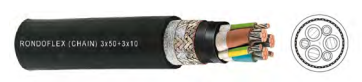
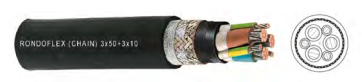
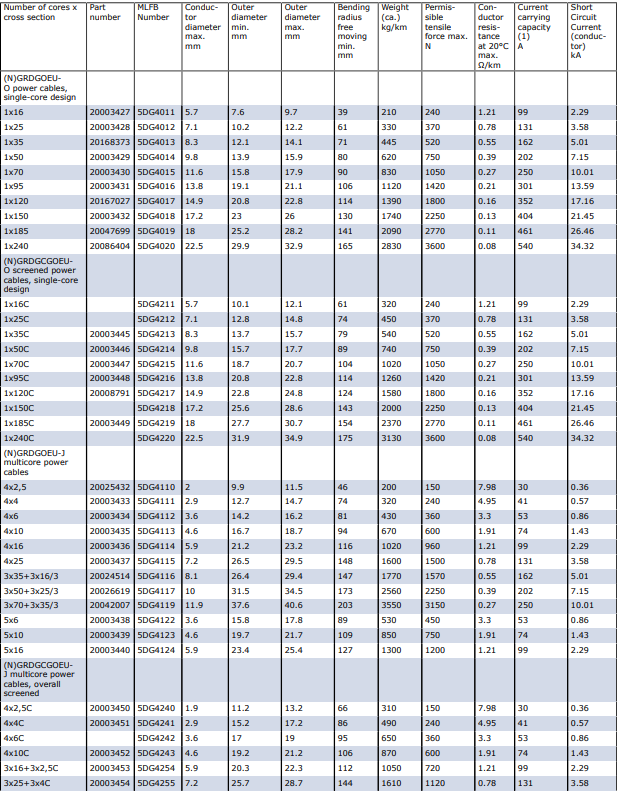
Available configurations cover a wide range of requirements: single‑core power cables from 1×16 mm² up to 1×240 mm², multi‑core power and control cables, combined power‑control designs such as 3×50 + 3×25 mm², bus cables and even integrated fibre‑optic versions. This versatility allows designers to select the exact cable type that matches both electrical load and mechanical constraints.
Electrical and Thermal Ratings
According to the technical data from Prysmian’s documentation, these cables operate at a nominal voltage of U₀/U = 450/750 V, making them suitable for most low‑voltage industrial applications. They are rated for continuous operation at conductor temperatures up to 90 °C, with a minimum installation temperature of –35 °C, allowing reliable performance across South Africa’s diverse climate zones.
Key electrical characteristics are precisely defined:
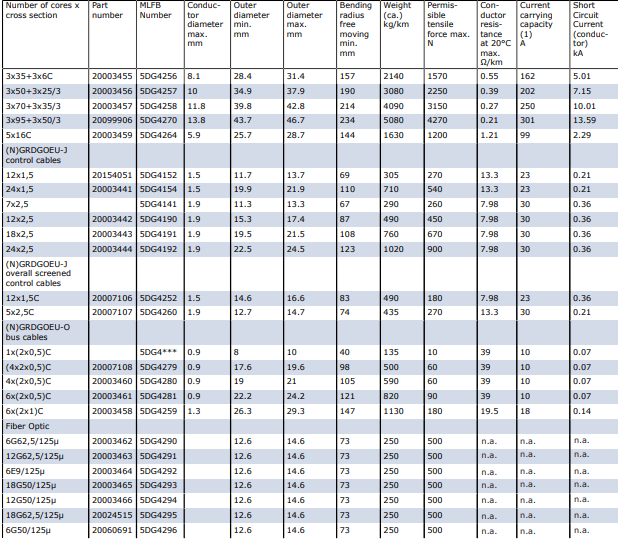
Conductor resistance at 20 °C ranges from 1.21 Ω/km for 16 mm² down to 0.08 Ω/km for 240 mm², ensuring efficient power transmission with low voltage drop.
Short‑circuit current capacity for 1 second duration varies from 2.29 kA for 16 mm² up to 34.32 kA for 240 mm², providing a high safety margin during fault conditions.
Current‑carrying capacity is specified for operation at 30 °C ambient temperature, ranging from 30 A for 4×2.5 mm² up to 540 A for 1×240 mm², as per VDE 0298‑4 standards.
Compliance with International Standards
The design and manufacture of RONDOFLEX(CHAIN) cables follow strict German and European specifications:
Conductors: VDE 0295 Class 5, corresponding to IEC 60228 Class 5, ensuring high flexibility.
Insulation: VDE 0207‑20, using ethylene‑propylene rubber (EPR) compounded for long‑term thermal and electrical stability.
Sheath: VDE 0207‑21, formulated for abrasion resistance, oil resistance and environmental protection.
Mechanical and environmental performance: Tested in accordance with EN 60811‑404 for resistance to mineral oils, ozone and ultraviolet radiation.
These standards ensure consistent quality and interchangeability, making the cables suitable for projects designed to international specifications.
Engineering Principles Behind the Design
To understand why these cables perform so reliably in dynamic applications, it is necessary to look beyond their physical appearance and examine the scientific principles that guide their construction.
Mechanical Design and Fatigue Resistance
The most critical challenge in energy chain applications is metal fatigue. When a cable bends, the outer fibres stretch while the inner fibres compress. In a rigid conductor, repeated bending creates stress concentrations that eventually lead to cracking and breakage. This is described by the metal fatigue theory, which states that the number of cycles to failure is inversely proportional to the applied stress.
RONDOFLEX(CHAIN) cables use the neutral axis bending principle to minimise this stress. By using fine‑stranded conductors and ensuring uniform lay‑up, the neutral axis – where there is no elongation or compression – remains at the centre of the cable cross‑section. This distributes bending forces evenly across all strands, reducing maximum stress levels significantly.
The lay length and direction of the cores are also carefully calculated. A short, concentric lay reduces internal torsion and prevents the cable from twisting or “snaking” as it moves through the chain. This controlled geometry ensures that each bending cycle places only low, evenly distributed strain on every component.
Electrical and Electromagnetic Compatibility
Electrical performance must remain stable even as the cable flexes and moves. The insulation material is selected for its high dielectric strength, low moisture absorption and consistent electrical properties over the full temperature range. Ethylene‑propylene rubber has a dielectric constant of approximately 2.3 and a breakdown strength exceeding 25 kV/mm, which remains nearly unchanged even after millions of flex cycles.
For the screened (N)GRDGCGOEU models, the design follows the Faraday cage principle. A tightly woven tinned copper braid with a coverage of at least 80 % creates a conductive barrier that reflects and absorbs electromagnetic fields. This prevents interference from variable‑frequency drives or other equipment from distorting control signals, and also stops the cable itself from emitting noise that could affect nearby electronics.
Material Science and Environmental Durability
Material selection is based on the principle of elastic compatibility. Each layer of the cable has a similar modulus of elasticity and thermal expansion coefficient. When the cable bends or heats up, all components expand and deform together, avoiding separation or delamination between layers. This prevents gaps that could allow moisture or contaminants to enter.
The outer sheath material is formulated to resist the specific degradation mechanisms found in industrial environments. Abrasion occurs when the cable slides against steel guides or other cables; ozone attacks unsaturated polymer bonds; UV radiation breaks molecular chains; and mineral oils cause swelling or softening. The sheath material is engineered to resist all of these simultaneously, ensuring that protection remains intact for the full service life.
Layer‑by‑Layer Construction and Material Analysis
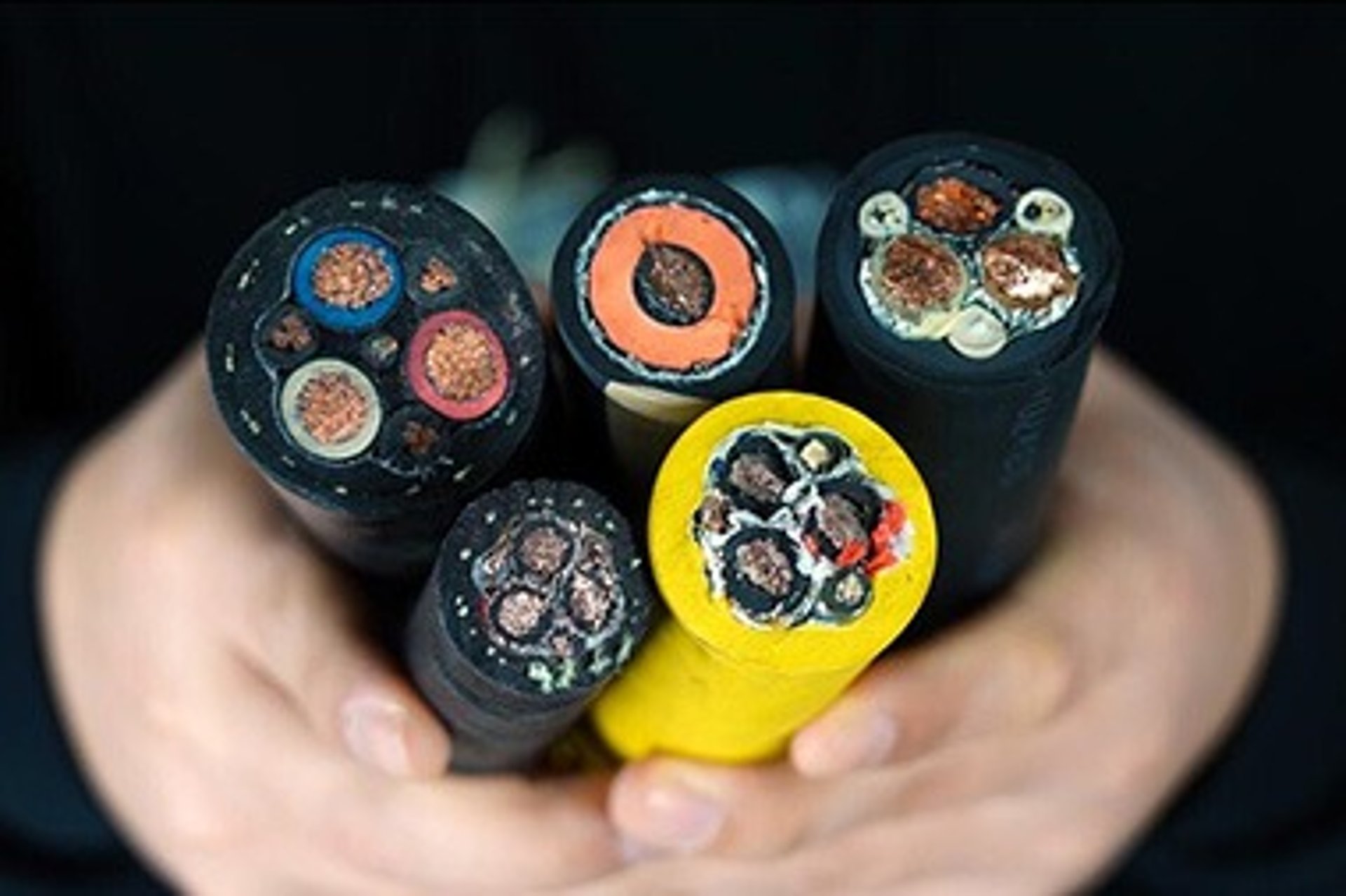
The structure of RONDOFLEX(CHAIN) cables is built from the inside out, with each layer serving a specific purpose that contributes to overall performance.
Conductor
The innermost component is the conductor, made from high‑purity annealed copper with a purity of 99.99 %. It is constructed as a Class 5 fine‑stranded assembly, with individual wire diameters typically below 0.31 mm. This structure provides far greater flexibility than solid or coarse‑stranded conductors. The large number of thin strands allows them to slide slightly against one another during bending, distributing stress and reducing the likelihood of fracture. This design directly addresses the root cause of conductor failure in moving applications.
Insulation
Each conductor is insulated with PROTOLON MS, a proprietary grade of ethylene‑propylene rubber (EPR) classified as GI3. EPR is chosen over materials such as PVC or polyethylene because it retains its elasticity and electrical properties at both high and low temperatures. It has excellent resistance to water absorption and chemical attack, and its cross‑linked molecular structure prevents it from melting or flowing under continuous heat. Unlike thermoplastics, EPR does not become brittle when exposed to cold or UV radiation, so it remains protective even after years of outdoor use.
Core Lay‑Up and Inner Sheath
Insulated cores are assembled into a round, compact configuration using a concentric lay‑up with an optimised lay length. Where necessary, an inner sheath of EPR GM1b rubber is applied over the assembled cores. This inner layer serves three main functions: it fills any gaps between cores to maintain a perfectly circular cross‑section, it acts as a cushion to absorb radial pressure, and it reduces friction between cores as they move relative to one another. A round profile is essential, as it ensures uniform contact with the chain guides and prevents uneven wear.
Screen Layer
In the (N)GRDGCGOEU variants, a screen layer is applied over the inner sheath. This consists of tinned copper wires woven into a braid. Tin plating prevents oxidation, which would increase electrical resistance and reduce screening efficiency over time. The braid coverage is controlled to ensure low transfer impedance, typically below 150 mΩ/m at 30 MHz. This provides reliable shielding for analogue signals, digital communications and circuits connected to variable‑frequency drives.
Outer Sheath
The final protective layer is the outer sheath, made from a high‑grade compound of chlorinated polyethylene (CPE) modified with ethylene‑vinyl acetate (EVA). This material combines the best characteristics of rubber and plastic: it has the elasticity and low‑temperature flexibility of rubber, while offering the mechanical strength, abrasion resistance and UV stability of thermoplastics. With a Shore A hardness of 75 to 80, it resists wear from sliding contact while remaining soft enough to flex easily. It also provides excellent resistance to mineral oils, greases, hydraulic fluids and ozone, making it suitable for use in the most demanding industrial and outdoor environments.
Core Competitive Advantages vs. Ordinary Flexible Cables
The difference between RONDOFLEX(CHAIN) and standard flexible cables becomes clear when comparing their performance in dynamic conditions.
Mechanical Longevity
Standard flexible cables typically have a bending life of fewer than 100,000 cycles before showing signs of wear or internal damage. Even improved general‑purpose flexible cables rarely exceed 500,000 to 800,000 cycles. In contrast, RONDOFLEX(CHAIN) is rated for more than 5 million bending cycles, and in well‑maintained installations, it can operate reliably for more than 10 million cycles. This extended life results from the combination of fine‑stranded conductors, low‑stress lay‑up and elastic materials that work in harmony.
The permissible tensile force is also precisely defined in the technical data, ranging from 150 N for 4×2.5 mm² up to 4,270 N for 3×95 + 3×50 mm². This allows the cable to support its own weight over long travel distances without exceeding safe tension limits, which is critical in overhead or vertical applications.
Environmental Resistance
In South Africa, cables must withstand conditions ranging from the salt‑laden air of Durban and Richards Bay to the hot, dusty interior of coal mines and warehouses. Ordinary PVC‑sheathed cables become brittle within one to two years of outdoor exposure, cracking and losing insulation resistance. EPR and EVA‑modified CPE materials retain their properties for 5 to 7 years or more under the same conditions. They resist ozone degradation, which is a common problem in coastal areas where high ultraviolet levels convert oxygen into reactive ozone gas.
Electrical Stability
In long‑travel applications, voltage drop and signal integrity become important. The low conductor resistance of these cables ensures that power remains stable even over distances of 100 metres or more. For screened variants, the consistent shielding performance prevents interference from affecting motor controls, positioning sensors and communication networks. This stability reduces the risk of intermittent faults that can be difficult to diagnose and resolve.
Total Cost of Ownership
While the initial purchase price of RONDOFLEX(CHAIN) is higher than that of standard cables, the long‑term economics are very different. With a service life 3 to 5 times longer, the number of replacements required is drastically reduced. Labour costs for installation, downtime during change‑outs and production losses from failures are all minimised. For a terminal operating 24 hours a day, extending cable life from 18 months to 5 years can save hundreds of thousands of Rands in direct and indirect costs.
Proven Performance in South African Industrial Applications
The true value of this design is demonstrated in real‑world installations across South Africa. Three key examples illustrate how these cables perform in the country’s most challenging environments.
Transnet Durban Container Terminal
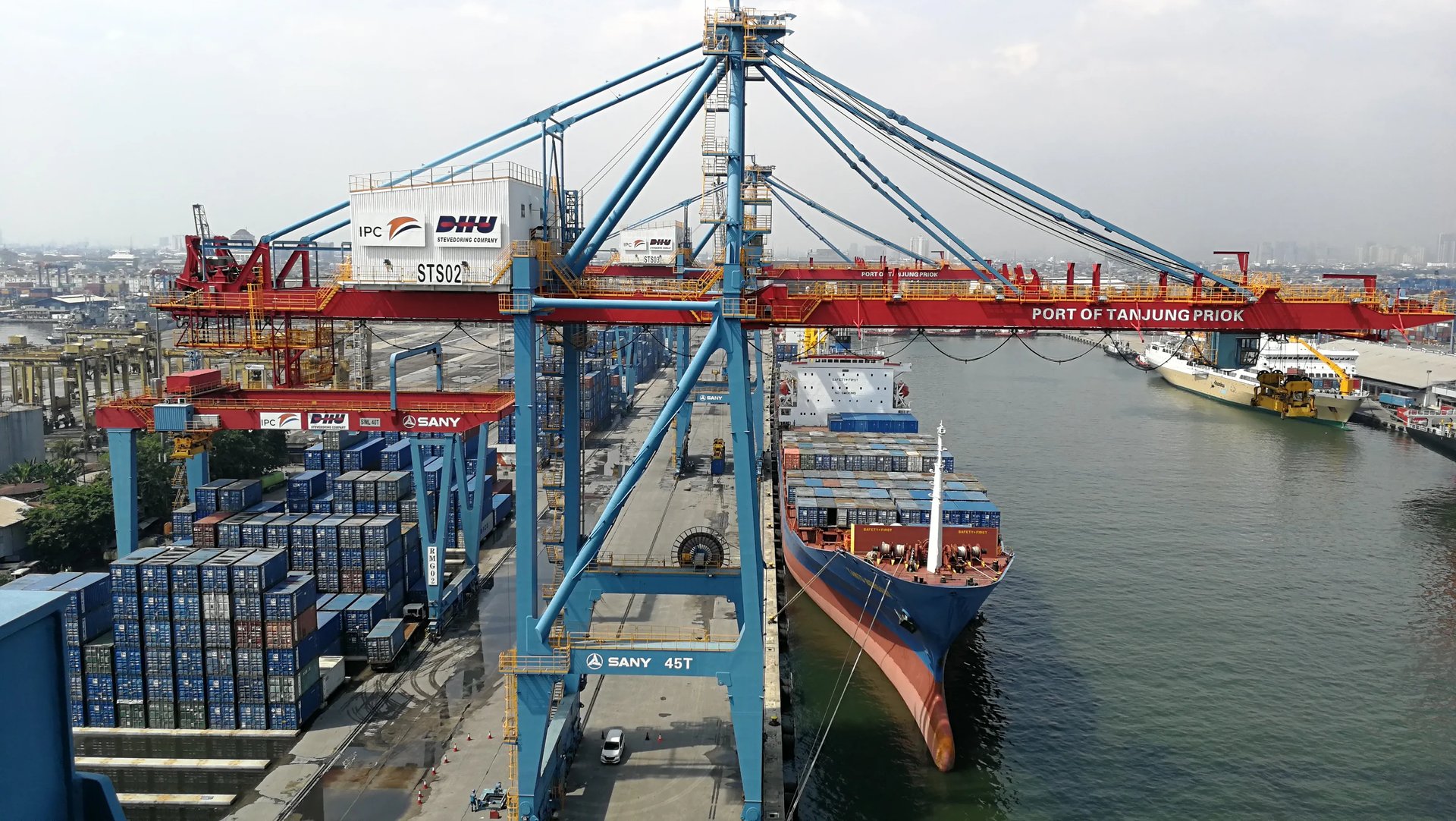
Durban is Africa’s busiest container port, handling millions of tonnes of cargo annually. The ship‑to‑shore cranes here operate continuously, with trolley travel distances of up to 120 metres and speeds reaching 2.5 m/s. The coastal environment brings high humidity, salt spray and intense solar radiation.
Before switching to RONDOFLEX(CHAIN), maintenance teams reported that standard flexible cables required replacement every 6 to 9 months. The outer jackets would wear thin from contact with steel energy chains, and internal conductors would break from repeated flexing. Moisture would penetrate damaged insulation, causing ground faults and signal loss.
After installing the (N)GRDGCGOEU screened variants, the results were immediate. The EVA‑CPE sheath resisted abrasion far longer, and the EPR insulation remained stable in the humid, salty air. The copper braid screening eliminated interference from the crane’s variable‑frequency drives, resulting in more precise positioning and fewer control errors. Maintenance intervals extended to 3 to 4 years, and the frequency of unplanned stops due to cable failure dropped by more than 75 %.
Richards Bay Coal Terminal
Richards Bay is one of the world’s largest coal export facilities, handling around 90 million tonnes of coal every year. Here, stacker‑reclaimers and long‑distance conveyors move back and forth over hundreds of metres, operating in an atmosphere thick with abrasive coal dust. This dust acts like fine sandpaper, wearing away at cable surfaces and entering any small opening.
The high‑grade outer sheath of RONDOFLEX(CHAIN) resists this abrasive action effectively. The fine‑stranded copper conductors withstand millions of bending cycles without fatigue, and the tightly sealed construction prevents dust ingress. Maintenance records show that these cables now last 4 to 5 years, compared to just 12 to 18 months for the cables previously used. This reduction in replacement frequency has directly improved terminal availability and reduced the cost of maintaining equipment in remote areas of the yard.
Johannesburg Automated Warehousing and Logistics
Inland, in and around Johannesburg, automated storage and retrieval systems serve the fast‑growing logistics and retail sectors. These systems operate at high speeds, with frequent starts and stops, and cables must fit into narrow energy chains with small bending radii.
RONDOFLEX(CHAIN) meets this requirement with a minimum free‑movement bending radius of just 6 times the outer diameter, compared to 8 to 10 times for many competing products. This allows the use of smaller, more compact cable management systems. The availability of combined power and control cables, as well as integrated fibre‑optic versions, simplifies installation and reduces the number of separate cables needed. Operators report that these cables run smoothly and quietly, with no kinking or jamming, and provide stable power and data communication even at maximum operating speeds.
Application Range and Selection Guide
Suitable Environments
These cables are designed to operate reliably in the following conditions:
Ambient temperatures from –35 °C to +90 °C.
Relative humidity up to 100 %.
Corrosion classes C4 and C5, including coastal and industrial atmospheres.
Exposure to mineral oils, greases, hydraulic fluids and dilute alkalis and acids.
Continuous motion with speeds up to 3 m/s and accelerations up to 5 m/s².
Typical Industries and Equipment
Ports and terminals: Ship‑to‑shore cranes, rubber‑tyred gantries, reach stackers and automated stacking cranes.
Mining and bulk handling: Stackers, reclaimers, tripper cars, belt conveyors and mobile crushers.
Warehousing and logistics: Automated storage and retrieval systems, shuttle cars, palletisers and packaging lines.
Heavy industry: Steel mills, cement plants and automotive assembly lines, where moving machinery requires reliable power and control.
Configuration and Selection Criteria
When selecting the correct cable type, the following factors should be considered:
Unshielded (N)GRDGOEU: Best suited for power distribution circuits and general control applications where electromagnetic interference is not a concern.
Screened (N)GRDGCGOEU: Recommended for circuits connected to variable‑frequency drives, PLCs, sensors and communication buses to ensure signal integrity.
Cross‑section size: Determined by current‑carrying requirements, voltage drop over the travel distance and mechanical tensile load.
Combined constructions: Models such as 3×power + 3×control cores allow multiple functions in a single cable, reducing space and installation work.
Step‑by‑Step Selection Process
Define the operating voltage and maximum continuous current.
Calculate the travel distance and allowable voltage drop.
Determine the minimum bending radius based on the energy chain dimensions.
Estimate the maximum tensile force using the cable weight and acceleration.
Assess environmental conditions – exposure to moisture, salt, dust, chemicals and sunlight.
Choose between unshielded and screened construction based on the electrical equipment used.
Equivalent Solutions: Feichun Brand as a Reliable Alternative
While RONDOFLEX(CHAIN) is a benchmark product, global supply chains can sometimes lead to long lead times, and project budgets may require a more competitive price point without compromising performance. This is where Feichun Cables offers a practical and fully compliant alternative.
Feichun has developed a matching range of energy chain cables that follow the same engineering principles and meet identical international standards. The construction mirrors that of the original design:
Class 5 fine‑stranded copper conductors for flexibility and fatigue resistance.
EPR insulation with the same electrical and thermal properties.
Tinned copper braid screening where required.
EVA‑modified CPE outer sheath with equal abrasion, oil and UV resistance.
Independent testing confirms that the electrical ratings, current‑carrying capacity, bending radius and tensile strength are all equivalent to the original specifications. Feichun cables comply with VDE, IEC and EN standards, making them fully interchangeable in existing installations and new projects.
The key advantages of the Feichun equivalent include:
Shorter delivery times to South Africa and neighbouring regions, reducing waiting periods for critical projects.
Competitive pricing that lowers initial investment without sacrificing long‑term reliability.
Full technical documentation and local support to assist with specification and installation.
For engineers and procurement teams, choosing Feichun provides a way to maintain the same high‑performance standards while improving supply chain flexibility and cost efficiency.
Frequently Asked Questions
Can these cables be used outdoors and exposed to direct sunlight?
Yes. The EVA‑CPE outer sheath contains UV stabilisers and is ozone‑resistant, making it suitable for permanent outdoor installation without additional protection.
What is the difference between the bending radius for installation and for continuous operation?
For installation, the minimum bending radius is 4 times the outer diameter. During continuous dynamic movement, the recommended minimum is 6 times the outer diameter to ensure stress levels remain low and fatigue life is maximised.
Are screened models necessary for all applications?
No. Screened cables are only required when circuits are sensitive to electromagnetic interference, such as communication lines or equipment controlled by variable‑frequency drives. For standard power distribution, unshielded types are sufficient and more cost‑effective.
How do they compare to cables with polyurethane sheaths?
Polyurethane offers excellent abrasion resistance but is more expensive and has lower resistance to high temperatures and certain chemicals. EVA‑modified CPE provides a better balance of mechanical, thermal and chemical properties for most industrial energy chain applications.
What is the expected service life?
In properly designed installations, these cables typically last between 5 and 7 years. Under ideal conditions, they can exceed 8 years, which is 3 to 5 times longer than standard flexible cables.
Are Feichun equivalents fully interchangeable?
Yes. They match the same dimensions, electrical ratings and mechanical specifications, so they can be used as direct replacements or specified in new projects without requiring changes to equipment design.
Conclusion
RONDOFLEX(CHAIN) (N)GRDGOEU and (N)GRDGCGOEU represent a significant advancement in cable technology. They are not simply flexible cables but complete engineering solutions developed to solve the specific challenges of continuous dynamic operation. By applying principles of mechanical fatigue, material science, electrical engineering and environmental protection, they overcome the limitations of conventional products.
In South Africa’s ports, mines and logistics hubs, these cables have proven their ability to reduce downtime, lower maintenance costs and extend service life. They demonstrate that investing in higher‑quality engineering today delivers far greater value over the full operational life of the equipment.
For those looking to source these cables or their equivalent alternatives, the Feichun Cables range provides a reliable, standards‑compliant option with the benefits of shorter lead times and competitive pricing.
If you would like to discuss specifications, obtain a quotation or request technical support for your energy chain cable requirements, please contact the Feichun team directly:
Feichun Cables
Email: Li.wang@feichuncables.com
Email Address: Li.wang@feichuncables.com
© 2025. All rights reserved.
One-click to Quickly Contact
Products
Contact
Company
Location:
Building A Private Science and Technology Park, Hefei Economic and Technological Development Zone, Anhui Province, China
Heat Resistant Cable
WhatsApp: +86 17333223430
Social Media: