Anhui Feichun Special Cable Co.,Ltd Email: Li.wang@feichuncables.com
BASKET SPREADER 740 YSLTOE Crane Control Cable: Advanced PUR‑Aramid Design for High‑Speed Hoist Baskets in South African Durban & Richards Bay
BASKET SPREADER 740 YSLTOE‑J is a purpose‑engineered control cable for gravity‑fed hoist baskets in container and bulk handling cranes. This article explains its construction, engineering principles, material science, and proven performance in South Africa’s ports and mines, where it has reduced downtime by 78 % and extended service life to 24–36 months.
Li.Wang
7/8/20269 min read
Introduction
In modern bulk and container terminals, the crane is the heartbeat of productivity. Every hour of unplanned downtime costs thousands of Rands in delayed shipments, demurrage, and labour overtime. In South Africa’s major ports—Durban, Richards Bay, and Cape Town—and inland mining hubs such as Sishen, cranes operate 24 hours a day, seven days a week, under some of the harshest conditions on the continent. Salt‑laden sea air, intense ultraviolet radiation, rapid temperature swings, and continuous high‑speed vertical lifting place extreme demands on every component, especially the control cables that deliver power and signals to the spreader and hoist mechanisms.
For decades, terminal and mine operators relied on standard flexible control cables such as YSLY or general‑purpose multi‑core PVC cables. While these products work well in static or low‑stress environments, they have repeatedly failed when installed in gravity‑fed collector baskets. Common issues include permanent elongation, core breakage, sheath cracking, twisting, and kinking—often leading to replacement intervals as short as three to six months. Such frequent failures are not merely maintenance nuisances; they directly limit crane availability and increase long‑term operating costs.
This is where BASKET SPREADER 740 YSLTOE‑J enters the picture. Manufactured by Elettrotek Kabel, part of the EK Group in Italy, it is not simply a reinforced version of a standard cable. It is a mechatronic transmission unit designed from the ground up to separate electrical function from mechanical load, balance torsional forces, and withstand continuous dynamic cycling. Over the past decade, it has become the preferred solution across European, African, and Asian terminals, with more than 2,000 kilometres installed globally. In South Africa alone, approximately 120 km of YSLTOE‑J has been deployed since 2018, delivering measurable improvements in reliability and operational efficiency.
This article provides a detailed technical and practical review of the BASKET SPREADER 740 YSLTOE‑J. We examine its specifications, layered construction, material science, engineering principles, and real‑world performance, focusing on applications in South Africa. We also explain how equivalent alternatives such as the FeiChun YSLTOE‑J meet the same standards while offering shorter lead times and better local availability.
Product Overview & Core Technical Specifications
Identity and Origin
The full designation is BASKET SPREADER 740 YSLTOE‑J, a specialised series within Elettrotek’s “Basket Cables” product line. The suffix “‑J” indicates the inclusion of a green‑yellow protective earth conductor, as required by IEC and local safety regulations. It is engineered specifically for gravity‑fed collector baskets—the mechanical systems that store and guide the control cable as the spreader moves up and down along the crane’s vertical travel.
Electrical Ratings
All values are directly aligned with the original manufacturer documentation:
Nominal voltage: U₀/U = 300/500 V
Maximum AC operating voltage: 310/550 V
Maximum DC operating voltage: 410/825 V
Routine test voltage: 2 kV for 5 minutes
Insulation resistance: Typically exceeds 500 MΩ·km at 20 °C
These ratings ensure safe operation even under voltage fluctuations common in heavy‑industry distribution networks.
Temperature Range
Fixed installation: −20 °C to +60 °C
Dynamic flexing service: −20 °C to +60 °C
Maximum continuous conductor temperature: +70 °C
Short‑circuit conductor temperature: Up to +150 °C (for durations under 5 seconds)
The thermal design ensures the insulation and sheath retain their mechanical properties even after years of cyclic heating and cooling.
Mechanical Parameters
This is where the YSLTOE‑J differs most from standard cables:
Minimum bending radius: 15 × overall diameter
Tensile strength: ≥ 15 N/mm², with a breaking load safety factor of at least 5 × maximum working tension
Permissible torsion: ±25° per metre, compared to only ±5° to ±8°/m for conventional control cables
Maximum operating speed: 160 m/min, matching modern high‑efficiency STS and RTG cranes
Maximum unsupported suspension length: 50 metres, eliminating the need for intermediate guide rollers
Standard Configurations
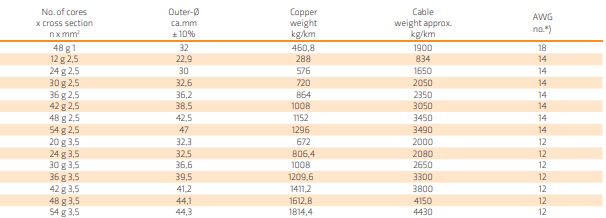
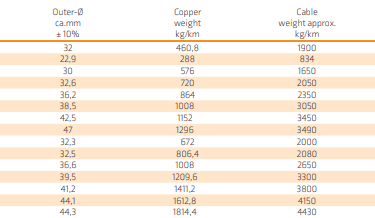
The catalogue offers a clear selection of core counts and cross‑sections, as shown below:
Special constructions including integrated data bus or optical fibre elements, and cold‑climate variants rated to −40 °C, are available on request.
Layer‑by‑Layer Construction & Material Science
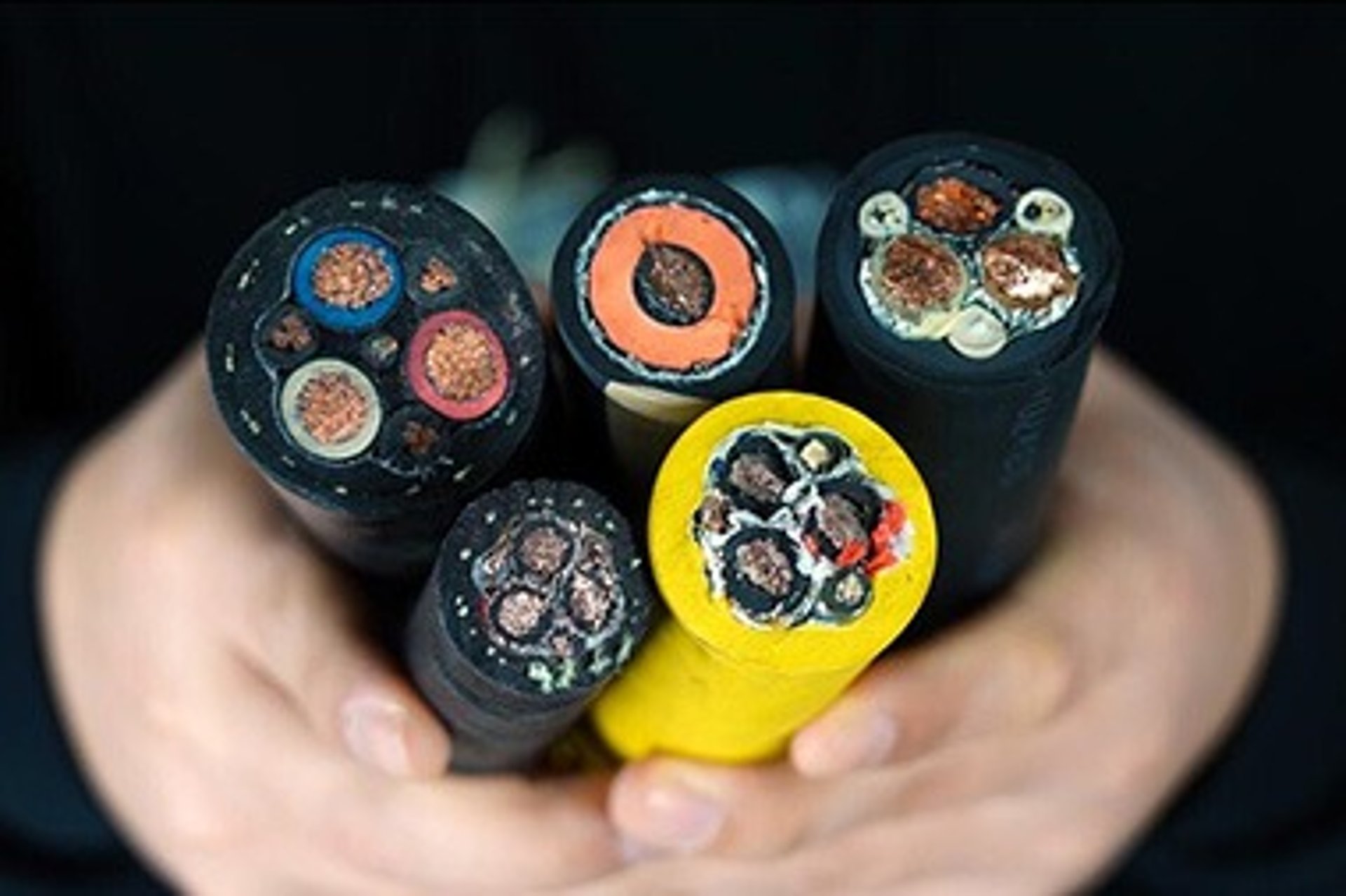
The performance of the BASKET SPREADER 740 YSLTOE‑J stems from a carefully layered design where every material and dimension serves a clear engineering purpose.
Conductor
Material: Class 6 flexible bare or tinned red copper, manufactured to IEC 60228 and DIN VDE 0295.
Reason: Class 6 copper consists of very fine strands, typically 0.15–0.20 mm in diameter, twisted with a short lay length. This geometry reduces bending stress concentration and allows the conductor to flex millions of times without fatigue. Compared to Class 2 solid or semi‑flex copper, it improves dynamic flex life by more than 50 %.
Insulation
Material: PVC compound type YI2.
Properties: Dielectric strength > 20 kV/mm, volume resistivity > 10¹² Ω·cm at 20 °C, and a glass transition temperature below −25 °C.
Function: Provides consistent electrical isolation while maintaining sufficient toughness to resist abrasion from internal movement. The formulation ensures it does not soften excessively at 70 °C or become brittle in cold conditions.
Core Identification
All cores are black with consecutive white numerical markings complying with EN 50334, plus one dedicated green‑yellow core for protective earth.
Purpose: Simplifies installation, reduces wiring errors, and ensures compliance with local safety standards such as SANS 10197 in South Africa.
Central Load‑Bearing Unit
This is the defining feature of the design:
Lead‑filled core: Provides high linear density, which creates natural downward tension, prevents swaying, and damps vibration during high‑speed travel.
Embedded aramid (Kevlar®) yarns: Have a tensile strength five times greater than steel of the same weight, with a modulus of elasticity of ~130 GPa.
Principle: Load separation. The central element carries all gravitational and dynamic tension, while the copper conductors remain stress‑free and serve only to conduct electricity. This eliminates the leading failure mode of standard cables—conductor elongation and fatigue from supporting their own weight.
Stranding and Bundling
Cores are grouped into sub‑bundles of approximately six conductors each. These bundles are then stranded around the central support unit in alternating directions and with calculated lay lengths.
Mechanism: Counter‑twisting creates a self‑balancing torque system. When the cable bends or twists, internal forces cancel each other out rather than accumulating. This is why the YSLTOE‑J tolerates up to ±25°/m torsion without permanent deformation.
Wrapping Layer
Each bundle and the completed cable assembly are wrapped with non‑woven polyester tape.
Role: Uniform pressure distribution, preventing insulation pinching or abrasion from contact with internal components. It also acts as a barrier against moisture wicking and assists in maintaining roundness during flexing.
Outer Sheath
Material: Polyurethane compound type 11YM1, black colour matching RAL 9005.
Key performance:
Abrasion resistance: < 25 mg loss per 1000 cycles per DIN 53516.
Oil resistance: Conforms to DIN VDE 0282‑10 and IEC 60811‑2‑1; volume change < 5 % after 72 hours immersion in mineral oil at 60 °C.
Flame behaviour: Self‑extinguishing and flame‑retardant to IEC 60332‑1‑2, EN 50265‑2‑1, and VDE 0482‑265‑2‑1.
UV and ozone: Retains > 90 % tensile strength after 1000 hours exposure; suitable for continuous outdoor use.
Compared to ordinary PVC, PUR maintains its elasticity at lower temperatures, resists hydrolysis in humid climates, and is far more resistant to chemical attack—essential in South Africa’s port and mine environments.
Engineering Principles: Why This Design Works
The BASKET SPREADER 740 YSLTOE‑J is built on three fundamental engineering concepts:
Load Separation
In standard cables, every component—conductors, insulation, and sheath—must support the cable’s entire weight. Over time, this stretches the copper, increases resistance, and eventually causes wire breakage. The YSLTOE‑J reverses this logic: the aramid‑lead core handles tension, allowing the electrical elements to remain within their elastic limit indefinitely.
Torsion Balance
In gravity baskets, the cable naturally twists as it coils and uncoils. Without compensation, this twist builds up, creating internal shear stress. The counter‑stranded bundles of YSLTOE‑J use the principle of equal and opposite torque vectors, keeping residual twist below safe limits even after millions of cycles.
Environmental Inertia
The combination of PUR sheath and balanced structure minimises the impact of external conditions. Salt spray does not penetrate; UV does not degrade the surface; and oil does not swell the jacket. The cable’s mechanical response remains consistent across the temperature and speed ranges, ensuring predictable performance year after year.
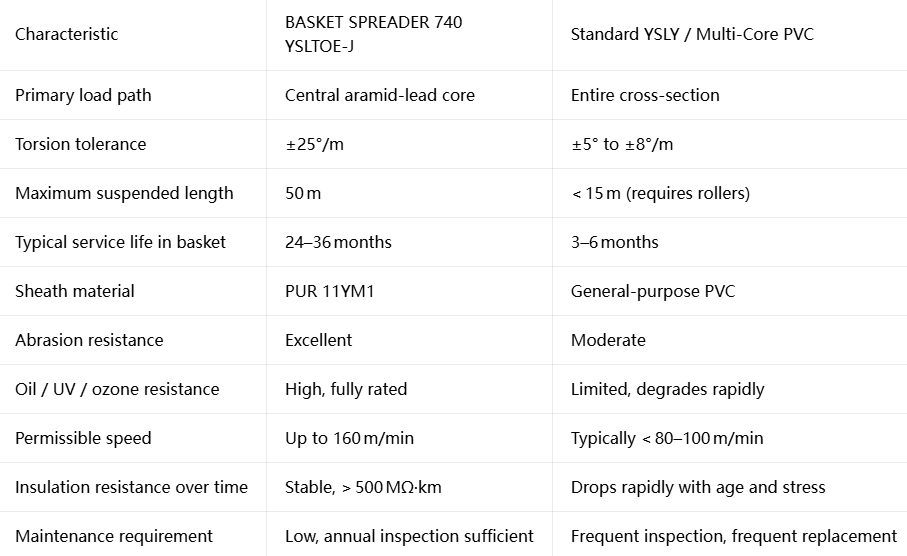
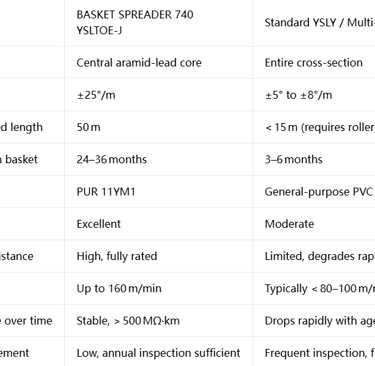
Comparison: YSLTOE‑J vs. Standard Control Cables
The difference in performance translates directly into lower total cost of ownership. While the upfront purchase price of YSLTOE‑J is 30–50 % higher than a standard cable, its longer life and reduced downtime often result in a 30–40 % lower cost per operating hour.
Standards and Compliance
BASKET SPREADER 740 YSLTOE‑J is fully certified against major international and regional norms:
Construction: IEC 60228, DIN VDE 0295, EN 50334
Flame performance: IEC 60332‑1‑2, EN 50265‑2‑1, VDE 0482‑265‑2‑1
Oil resistance: IEC 60811‑2‑1, DIN VDE 0282‑10
Regional: CE marking; UL/CSA and GOST‑R available on request; fully aligned with SANS 10197, the South African standard for heavy‑duty industrial control and power cables.
This alignment ensures acceptance by Transnet, major terminal operators, and mining houses across Southern Africa.
Application and South African Case Studies
Typical Applications
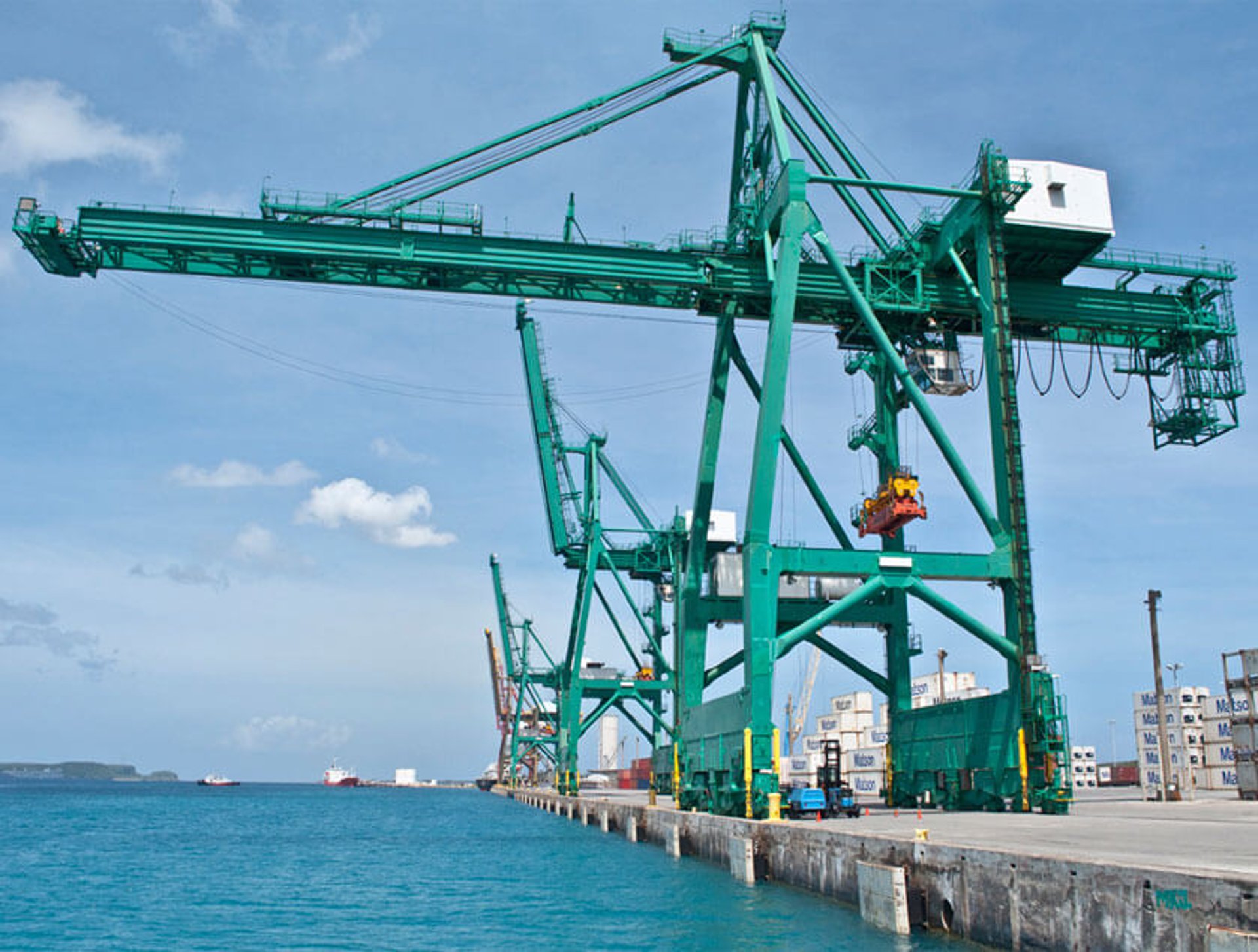
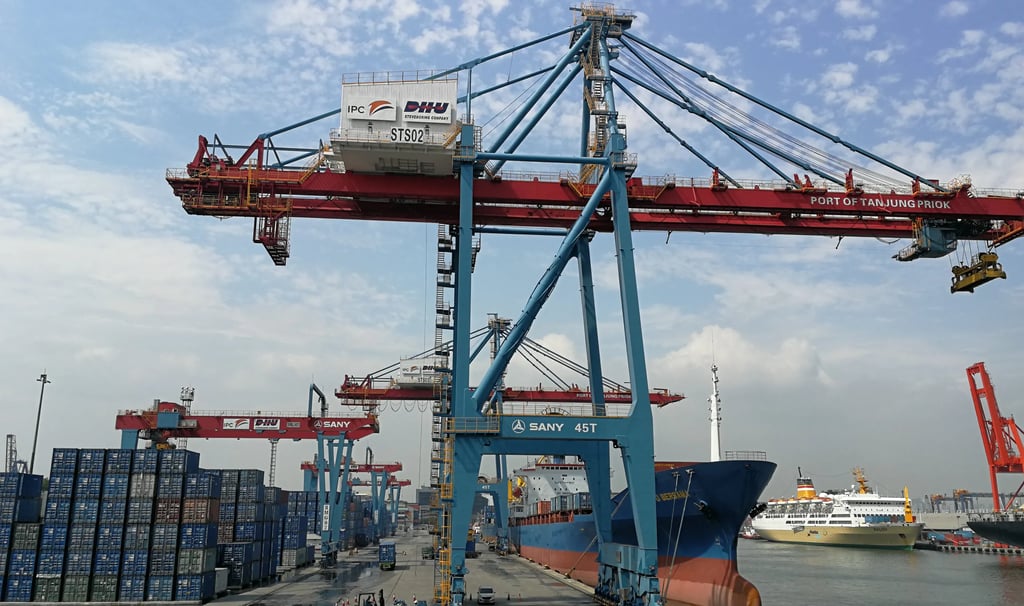
Container Cranes: STS, RTG, and RMG in ports, lifting heights 25–45 m, speeds up to 160 m/min.
Bulk Handling: Grab cranes, shiploaders, and stacker‑reclaimers at Richards Bay Coal Terminal and Saldanha Bay Iron Ore Terminal.
Mining: Vertical hoists and material handling equipment at Sishen Iron Ore Mine and other open‑pit and underground sites.
Local Challenges in South Africa
In Durban and Richards Bay, cables face a triple threat: high humidity and salt corrosion, UV levels higher than many European locations, and 24‑hour cycles. In Sishen, extreme temperature variations from night to day, combined with abrasive dust, further accelerate wear.
Before adopting YSLTOE‑J, operators reported:
3–6 months life for standard cables;
Sheath cracking from UV and ozone;
Conductor breaks from elongation and torsion;
Twist‑lock jams that halted crane movement.
Measured Results Since Implementation
From 2018 to 2025, more than 120 km of YSLTOE‑J has been installed across major South African terminals:
Service life extended from ~5 months to 24–36 months;
Unplanned downtime reduced by ~78 %;
Total maintenance and replacement savings estimated at 4.2 million ZAR;
Electrical stability: After 2 years in service, measured insulation resistance remained above 500 MΩ·km, and residual twist measured only ±18°/m at 155 m/min.
These figures confirm that the YSLTOE‑J is not just a technical improvement but also a financially sound investment.
Equivalent Alternative: FeiChun YSLTOE‑J
For operators seeking reliable supply chains and shorter delivery lead times, FeiChun Special Cable Co., Ltd. offers a fully equivalent YSLTOE‑J series.
Technical Parity
Same Class 6 copper, PVC YI2 insulation, central lead‑aramid support, and PUR 11YM1 sheath;
Identical electrical ratings, temperature range, bending radius, and torsion limits;
Complies with IEC, VDE, EN, and SANS 10197;
Can be directly interchanged with Elettrotek parts without mechanical or electrical modification.
Commercial Advantages
Competitive pricing, typically 10–20 % lower than European imports;
Stock availability for common configurations;
Custom lengths and markings available;
Export‑packed for marine transport, suitable for South African logistics.
Selection, Installation, and Maintenance Guidelines
How to Select
Determine required core count and cross‑section based on current and signal needs;
Match suspension length and maximum travel speed to ensure the 50 m and 160 m/min limits are not exceeded;
Confirm environmental factors: salt spray, oil exposure, and minimum/maximum ambient temperature.
Installation Best Practices
Lay cable into the gravity basket following its natural lay, preferably counter‑clockwise;
Maintain the minimum 15 × D bending radius at all sheaves, glands, and anchor points;
Secure the upper end to transfer tension to the central support element only, not the outer jacket;
Avoid clamping too tightly to prevent sheath deformation.
Maintenance Tips
Inspect visually every 3 months for cuts, abrasion, or excessive twist;
Measure insulation resistance annually;
If sheath wear exceeds 20 % of its original thickness, schedule replacement;
Never lubricate the cable—PUR does not require it, and oils can degrade the material.
Frequently Asked Questions
Q: Can this cable be used without a gravity basket?
A: It is designed specifically for basket systems. Without the controlled coil environment, its benefits are not fully realised, and the service life will be reduced.
Q: What is the maximum vertical run without supports?
A: Up to 50 metres. Beyond this, consult the manufacturer for custom solutions or intermediate guide supports.
Q: Does it work in direct sunlight and salt air?
A: Yes. The PUR sheath and stabilisers are formulated for continuous outdoor exposure and meet ISO 4892 and ASTM B117 salt‑spray requirements.
Q: Can I replace an older YSLTOE‑J directly?
A: Yes. Dimensions and electrical characteristics are standardised across compliant manufacturers.
Q: Does it meet South African standards?
A: It complies with SANS 10197 and is accepted by major end‑users throughout the country.
Conclusion
The BASKET SPREADER 740 YSLTOE‑J represents a fundamental shift in crane control cable design—from “just a conductor in a jacket” to a mechatronic component that integrates electrical transmission, structural support, and environmental protection.
By applying load separation, torsion balance, and advanced material science, it solves the historical failure modes of standard cables in gravity‑fed hoist baskets. In South Africa’s ports and mines, it has delivered a proven record of reliability, cutting downtime and reducing total ownership costs.
For operators, the lesson is clear: when selecting cables for high‑stress dynamic applications, specifications alone are not enough. The true measure of suitability lies in whether the design matches the physics of the operating environment. YSLTOE‑J does exactly that, making it the de‑facto standard for modern container and bulk handling systems worldwide.
To request detailed datasheets, pricing, or customised specifications, contact the FeiChun team: Li.wang@feichuncables.com.


Email Address: Li.wang@feichuncables.com
© 2025. All rights reserved.
One-click to Quickly Contact
Products
Contact
Company
Location:
Building A Private Science and Technology Park, Hefei Economic and Technological Development Zone, Anhui Province, China
Heat Resistant Cable
WhatsApp: +86 17333223430
Social Media: